Kirjojen hintavertailu. Mukana 12 595 353 kirjaa ja 12 kauppaa.

Kirjailija

Susan Gal

Kirjat ja teokset yhdessä paikassa: 7 kirjaa, julkaisuja vuosilta 2000-2020, suosituimpien joukossa Languages and Publics. Vertaile teosten hintoja ja tarkista saatavuus suomalaisista kirjakaupoista.

7 kirjaa

Kirjojen julkaisuhaarukka 2000-2020.

Welcoming Elijah

Welcoming Elijah

Lesléa Newman; Susan Gal

Charlesbridge Publishing,U.S.
2020
sidottu
Celebrated author Lesl a Newman unites a young boy and a stray kitten in a warm, lyrical story about Passover, family, and friendship. Inside, a boy and his family sit around the dinner table to embrace the many traditions of their Passover Seder around the dinner table. Outside, a cat wonders, hungry and alone. When it's time for the symbolic Passover custom of opening the family's front door for the prophet Elijah, both the boy and the cat are in for a remarkable surprise.
Signs of Difference

Signs of Difference

Susan Gal; Judith T. Irvine

Cambridge University Press
2019
pokkari
How are peoples' ideas about languages, ways of speaking and expressive styles shaped by their social positions and values? How is difference, in language and in social life, made - and unmade? How and why are some differences persuasive as the basis for action, while other differences are ignored or erased? Written by two recognised authorities on language and culture, this book argues that ideological work of all kinds is fundamentally communicative, and that social positions, projects and historical moments influence, and are influenced by, people's ideas about communicative practices. Neither true nor false, ideologies are positioned and partial visions of the world, relying on comparison and perspective; they exploit differences in expressive features - linguistic and otherwise - to construct convincing stereotypes of people, spaces and activities. Using detailed ethnographic, historical and contemporary examples, this outstanding book shows readers how to analyse ideological work semiotically.
Signs of Difference

Signs of Difference

Susan Gal; Judith T. Irvine

Cambridge University Press
2019
sidottu
How are peoples' ideas about languages, ways of speaking and expressive styles shaped by their social positions and values? How is difference, in language and in social life, made - and unmade? How and why are some differences persuasive as the basis for action, while other differences are ignored or erased? Written by two recognised authorities on language and culture, this book argues that ideological work of all kinds is fundamentally communicative, and that social positions, projects and historical moments influence, and are influenced by, people's ideas about communicative practices. Neither true nor false, ideologies are positioned and partial visions of the world, relying on comparison and perspective; they exploit differences in expressive features - linguistic and otherwise - to construct convincing stereotypes of people, spaces and activities. Using detailed ethnographic, historical and contemporary examples, this outstanding book shows readers how to analyse ideological work semiotically.
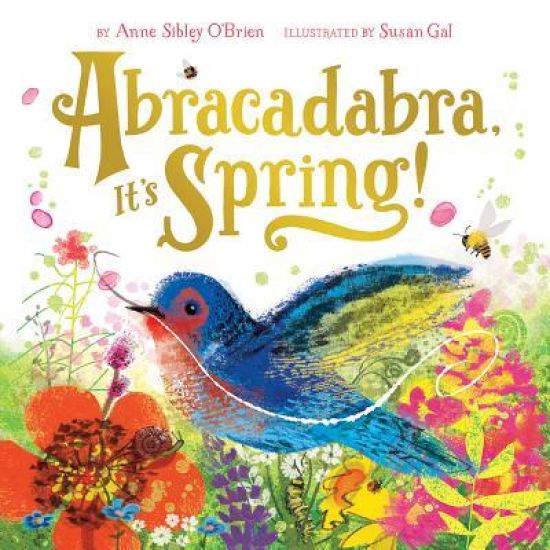
Abracadabra, It's Spring!

Abracadabra, It's Spring!

Anne Sibley O'Brien; Susan Gal

Abrams Appleseed
2016
sidottu
Sun shines on a patch of snow. Hocus pocus! Where did it go? Winter turns to spring in this lyrical book that celebrates the magic of nature and the changing seasons. Eleven gatefolds open to re-create the excitement and surprise of spring’s arrival, revealing what happens when snow melts, trees bud, flowers bloom, birds arrive and eggs and cocoons hatch. Finally, it’s warm enough to pack away winter clothes and go out and play!
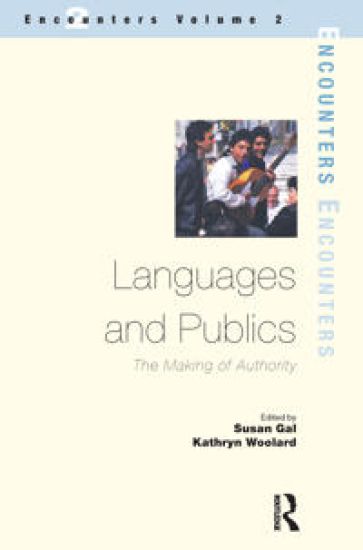
Languages and Publics

Languages and Publics

Susan Gal; Kathryn Woolard

St Jerome Publishing
2014
nidottu
The essays in this collection examine the public construction of languages, the linguistic construction of publics, and the relationship between these two processes. Cultural categories such as named languages, linguistic standards and genres are the products of expert knowledge as well as of linguistic ideologies more widely shared among speakers. Translation, grammars and dictionaries, the policing of correctness, folklore collections and linguistic academies are all part of the work that produces not only languages but also social groups and spheres of action such as "the public". Such representational processes are the topic of inquiry in this voume. They are explored as crucial aspects of power, figuring among the means for establishing inequality, imposing social hierarchy, and mobilizing political action.Contributions to this volume investigate two related questions: first, how different images of linguistic phenomena gain social credibility and political influence; and, secondly, the role of linguistic ideology and practices in the making of political authority. Using both historical and ethnographic approaches, they examine empirical cases ranging from small-scale societies to multi-ethnic empire, from nineteenth-century linguistic theories to contemporary mass media, and from Europe to Oceania to the Americas.Contributors include Susan Gal, Kathryn Woolard, Judith Irvine, Richard Bauman, Michael Silverstein, Jane Hill, Joseph Errington, Bambi Schieffelin, Jacqueline Urla and Ben Lee.
Languages and Publics

Languages and Publics

Susan Gal; Kathryn Woolard

St Jerome Publishing
2001
sidottu
The essays in this collection examine the public construction of languages, the linguistic construction of publics, and the relationship between these two processes. Cultural categories such as named languages, linguistic standards and genres are the products of expert knowledge as well as of linguistic ideologies more widely shared among speakers. Translation, grammars and dictionaries, the policing of correctness, folklore collections and linguistic academies are all part of the work that produces not only languages but also social groups and spheres of action such as "the public". Such representational processes are the topic of inquiry in this voume. They are explored as crucial aspects of power, figuring among the means for establishing inequality, imposing social hierarchy, and mobilizing political action.Contributions to this volume investigate two related questions: first, how different images of linguistic phenomena gain social credibility and political influence; and, secondly, the role of linguistic ideology and practices in the making of political authority. Using both historical and ethnographic approaches, they examine empirical cases ranging from small-scale societies to multi-ethnic empire, from nineteenth-century linguistic theories to contemporary mass media, and from Europe to Oceania to the Americas.Contributors include Susan Gal, Kathryn Woolard, Judith Irvine, Richard Bauman, Michael Silverstein, Jane Hill, Joseph Errington, Bambi Schieffelin, Jacqueline Urla and Ben Lee.

The Politics of Gender after Socialism

The Politics of Gender after Socialism

Susan Gal; Gail Kligman

Princeton University Press
2000
pokkari
With the collapse of communism, a new world seemed to open for the peoples of East Central Europe. The possibilities this world presented, and the costs it exacted, have been experienced differently by men and women. Susan Gal and Gail Kligman explore these differences through a probing analysis of the role of gender in reshaping politics and social relations since 1989. The authors raise two crucial questions: How are gender relations and ideas about gender shaping political and economic change in the region? And what forms of gender inequality are emerging as a result? The book provides a rich understanding of gender relations and their significance in social and institutional transformations. Gal and Kligman offer a systematic comparison of East Central European gender relations with those of western welfare states, and with the presocialist, bourgeois past. Throughout this essay, the authors attend to historical comparisons as well as cross regional interactions and contrasts. Their work contributes importantly to the study of postsocialism, and to the broader feminist literature that critically examines how states and political-economic processes are gendered, and how states and markets regulate gender relations.