Kirjojen hintavertailu. Mukana 12 166 602 kirjaa ja 12 kauppaa.

Kirjailija

Susan Gubar

Kirjat ja teokset yhdessä paikassa: 19 kirjaa, julkaisuja vuosilta 1989-2025, suosituimpien joukossa No Man's Land. Vertaile teosten hintoja ja tarkista saatavuus suomalaisista kirjakaupoista.

19 kirjaa

Kirjojen julkaisuhaarukka 1989-2025.

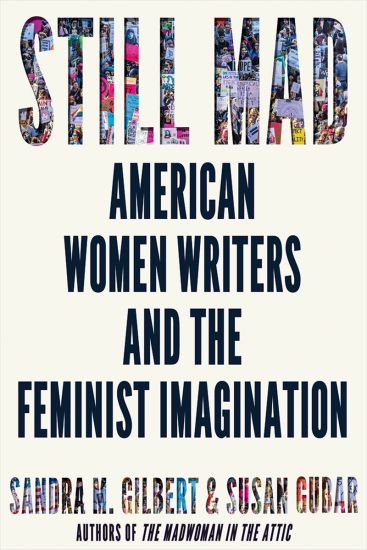
Still Mad

Still Mad

Sandra M. Gilbert; Susan Gubar

WW Norton Co
2021
sidottu
Forty years after their first groundbreaking work of feminist literary theory, The Madwoman in the Attic, award-winning collaborators Sandra M. Gilbert and Susan Gubar map the literary history of feminism’s second wave. In Still Mad, they offer lively readings of major works by such writers as Sylvia Plath, Lorraine Hansberry, Adrienne Rich, Ursula K. Le Guin, Maxine Hong Kingston, Gloria Anzaldúa and Toni Morrison. To address shifting social attitudes over seven decades, they discuss polemics by thinkers from Kate Millett and Susan Sontag to Audre Lorde, Andrea Dworkin and Judith Butler. As Gilbert and Gubar chart feminist gains—including creative new forms of protests and changing attitudes toward gender and sexuality—they show how the legacies of second wave feminists, and the misogynistic culture they fought, extend to the present. In doing so, they celebrate the diversity and urgency of women who have turned passionate rage into powerful writing.
The Madwoman in the Attic

The Madwoman in the Attic

Sandra M. Gilbert; Susan Gubar

Yale University Press
2020
pokkari
"A feminist classic."—Judith Shulevitz, New York Times Book Review“A pivotal book, one of those after which we will never think the same again.”—Carolyn G. Heilbrun, Washington Post Book World A pathbreaking book of literary criticism is now reissued with a new introduction by Lisa Appignanesi that speaks to how The Madwoman in the Attic set the groundwork for subsequent generations of scholars writing about women writers, and why the book still feels fresh some four decades later.
No Man's Land

No Man's Land

Sandra M. Gilbert; Susan Gubar

Yale University Press
1996
pokkari
How do writers and their readers imagine the future in a turbulent time of sex war and sex change? And how have transformations of gender and genre affected literary representations of "woman," "man," "family," and "society"?This final volume in Gilbert and Gubar's landmark three-part No Man's Land: The Place of the Woman Writer in the Twentieth Century argues that throughout the twentieth century women of letters have found themselves on a confusing cultural front and that most, increasingly aware of the artifice of gender, have dispatched missives recording some form of the "future shock" associated with profound changes in the roles and rules governing sexuality.Divided into two parts, Letters from the Front is chronological in organization, with the first section focusing on such writers of the modernist period as Virginia Woolf, Zora Neale Hurston, Edna St. Vincent Millay, Marianne Moore, and H.D., and the second devoted to authors who came to prominence after the Second World War, including Gwendolyn Brooks, Sylvia Plath, Margaret Atwood, Toni Morrison, and A.S. Byatt.Embroiled in the sex antagonism that Gilbert and Gubar traced in The War of the Words and in the sexual experimentations that they studied in Sexchanges, all these artists struggled to envision the inscription of hitherto untold stories on what H.D. called "the blank pages/of the unwritten volume of the new." Through the works of the first group, Gilbert and Gubar focus in particular on the demise of any single normative definition of the feminine and the rise of masquerades of "femininity" amounting to "female female impersonation." In the writings of the second group, the critics pay special attention to proliferating revisions of the family romance—revisions significantly inflected by differences in race, class, and ethnicity—and to the rise of masquerades of masculinity, or "male male impersonation."Throughout, Gilbert and Gubar discuss the impact on literature of such crucial historical events as the Harlem Renaissance, the Second World War, and the "sexual revolution" of the sixties. What kind of future might such a past engender? Their book concludes with a fantasia on "The Further Adventures of Snow White" in which their bravura retellings of the Grimm fairy tale illustrate ways in which future writing about gender might develop.
Masterpiece Theatre

Masterpiece Theatre

Sandra M. Gilbert; Susan Gubar

Rutgers University Press
1995
sidottu
Is there a plot against the life of letters today?!!!! A mysterious assailant has tied a nameless text to a railroad track near Boondock State University. While young untenured English professor Jane Marple enlists a group of odd and oddly rivalrous academicians to help her identify and save the text, a coalition of powerful conservatives begins to suspect and rally against a left-wing conspiracy. But all are foiled when the amnesiac text is abducted on the Euro-Centric Express, where Ms. Marple encounters a number of suspiciously eccentric theorists temporarily set loose from their usual haunts in Marxist, deconstructionist, new historicist, and postcolonial circles. You'll laugh with our heroine, you'll cry with her, but you'll never guess how--using the very latest technology and in the midst of sometimes sinister stage and screen celebrities--she brings the last of three thrilling episodes in the canon wars to an end at a WOW (Writers of the World) conference set in the heart of the Big Apple.In this hilarious romp through the culture wars, Sandra M. Gilbert and Susan Gubar send up everyone including, sometimes, themselves, while at the same time they speculate seriously on the future of literature and literacy in a society where both are increasingly endangered. The cast includes well-known critics, politicians, writers, pop stars, media personalities, and a juicy assortment of technocrats, CEOs, and other culture vultures. Any similarities you find between these characters and actual persons, living or dead, are probably glaring. So, hum the opening notes of Masterpiece Theatre as you sit back, relax, and consider (yes!) the fate of the printed word in Western civilization.Masterpiece Theatre is the latest--and funniest--round in the culture wars. No member of Modern Language Association, lover of literature and literacy, cultural pundit, or talking head should be without a copy.
No Man's Land

No Man's Land

Sandra M. Gilbert; Susan Gubar

Yale University Press
1991
pokkari
What might sex be, and what could sex roles be, in the midst of a war between men and women? What is a "woman," a "man," an "androgyne"? Such questions haunt the works Gilbert and Gubar study in Sexchanges, the second volume of their landmark trilogy No Man's Land. Investigating the connections between the feminine and the modern made by writers from Rider Haggard, Olive Schreiner, and Kate Chopin to Edith Wharton, Willa Cather, D.H. Lawrence, Virginia Woolf, T.S. Eliot, and Caryl Churchill, they show that the "no man's land" of the Great War became a metaphor for a crisis of masculinity—a crisis that was already associated with the decline of imperialism and the rise of the femme fatale at the fin de siecle, with the newly visible lesbian literary community that was formed in those years and with what many thinkers increasingly understood to be the artifice of gender. Throughout this century, the therefore argue, images of sexchanges—explored in fictions about transvestism and transsexualism—constituted a set of striking tropes through which male and female writers sought to combat one another's conceptions of the relation between anatomy and destiny.
No Man's Land

No Man's Land

Sandra M. Gilbert; Susan Gubar

Yale University Press
1989
pokkari
The first book in a landmark three-volume work that brings feminist theory to bear on modern literature in English. Focusing on both male and female writers, Gilbert and Gubar here survey social, literary, and linguistic conflicts between the sexes as revealed in texts by nineteenth- and twentieth-century writers from Tennyson to Woolf, from Hemingway to Plath."An exciting and ground-breaking work."—Carolyn Heilbrun, Columbia University"Fast, funny, profound in its theoretical assertions, and deliciously irreverent in its asides. Male readers and critics will ignore it at their own peril."—Joyce Carol Oates"Should be welcomed both by contemporary women readers and by anyone who has had the experience of modernism but wondered about its meanings."—Christine Froula, New York Times Book Review"No Man’s Land will surely rewrite the history of modernism."—Maureen Corrigan, Village Voice"No Man’s Land promises to be as crucial for our understanding of 20th-century literature as The Madwoman in the Attic has been for our understanding of 19th-century literature."—Clare Hanson, Times Higher Education Supplement
Grand Finales

Grand Finales

Susan Gubar

WW NORTON CO
2025
sidottu
Despite the losses generally associated with ageing, quite a few writers, painters, sculptors, musicians and dancers have managed to extend and repurpose their creative energies. In Grand Finales, author Susan Gubar features women artists—George Eliot, Colette, Georgia O’Keeffe, Isak Dinesen, Marianne Moore, Louise Bourgeois, Gwendolyn Brooks, Mary Lou Williams and Katherine Dunham—who transformed the last stage of existence into a rousing conclusion. She draws on their late lives and works to suggest that seniority can become a time of reinvention and renewal. With pizzazz and bravado, Gubar counters the discrediting of elderly women and clarifies the environments, relationships, activities and attitudes that sponsor a creative old age.
Still Mad

Still Mad

Sandra M. Gilbert; Susan Gubar

WW NORTON CO
2022
nidottu
Forty years after their first ground breaking work of feminist literary theory, The Madwoman in the Attic, award-winning collaborators Sandra M. Gilbert and Susan Gubar map the literary history of feminism’s second wave. From its stirrings in the midcentury—when Sylvia Plath, Betty Friedan and Joan Didion found their voices and Diane di Prima, Lorraine Hansberry and Audre Lorde discovered community in rebellion—to a resurgence in the new millennium in the writings of Alison Bechdel, Claudia Rankine and N. K. Jemisin, Gilbert and Gubar trace the evolution of feminist literature. They offer lucid, compassionate and piercing readings of major works by these writers and others, including Adrienne Rich, Ursula K. Le Guin, Maxine Hong Kingston, Susan Sontag, Gloria Anzaldúa and Toni Morrison. Activists and theorists like Nina Simone, Gloria Steinem, Andrea Dworkin, Eve Kosofsky Sedgwick and Judith Butler also populate these pages as Gilbert and Gubar examine the overlapping terrain of literature and politics in a comprehensive portrait of an expanding movement. As Gilbert and Gubar chart feminist gains—including creative new forms of protests and changing attitudes toward gender and sexuality—they show how the legacies of second wave feminists and the misogynistic culture they fought, extend to the present. In doing so, they celebrate the diversity and urgency of women who have turned passionate rage into powerful writing.
Late-Life Love

Late-Life Love

Susan Gubar

WW Norton Co
2020
nidottu
On Susan Gubar’s seventieth birthday, she receives a beautiful ring from her husband. As she contemplates their sustaining relationship, she begins to consider how older lovers differ from their youthful counterparts—and from ageist stereotypes. While her husband confronts age-related disabilities that effectively ground them, Susan dawdles over the logistics of moving from their cherished country house to a more manageable place in town and starts seeking out literature on the changing seasons of desire. Throughout the complications of devoted caregiving, her own ongoing cancer treatments, apartment hunting, the dismantling of a household and perplexity over the breakdown of a treasured friendship, Susan finds consolation in books and movies. Works by writers from Ovid and Shakespeare to Gabriel García Márquez and Marilynne Robinson lead Susan to appraise the obstacles many senior couples overcome: the unique sexuality of bodies beyond their prime as well as the trials of retirement, adult children, physical infirmities, the multiplications or subtractions of memory and the after effects of trauma. On the page and in life, Susan realises that age cannot wither love. A memoir proving that the heart’s passions have no expiration date, Late-Life Love rejoices in second chances.
Late-Life Love

Late-Life Love

Susan Gubar

WW Norton Co
2018
sidottu
On Susan Gubar’s seventieth birthday, she receives a beautiful ring from her husband. As she contemplates their sustaining relationship, she begins to consider how older lovers differ from their youthful counterparts—and from ageist stereotypes. While her husband confronts age-related disabilities that effectively ground them, Susan dawdles over the logistics of moving from their cherished country house to a more manageable place in town and starts seeking out literature on the changing seasons of desire. Throughout the complications of devoted caregiving, her own ongoing cancer treatments, apartment hunting, the dismantling of a household, and perplexity over the breakdown of a treasured friendship, Susan finds consolation in books and movies. Works by writers from Ovid and Shakespeare to Gabriel García Márquez and Marilynne Robinson lead Susan to appraise the obstacles many senior couples overcome: the unique sexuality of bodies beyond their prime as well as the trials of retirement, adult children, physical infirmities, the multiplications or subtractions of memory, and the aftereffects of trauma. On the page and in life, Susan realizes that age cannot wither love. A memoir proving that the heart’s passions have no expiration date, Late-Life Love rejoices in second chances.
Reading and Writing Cancer: How Words Heal

Reading and Writing Cancer: How Words Heal

Susan Gubar

W. W. Norton Company
2016
sidottu
Elaborating upon her "Living with Cancer" column in the New York Times, Susan Gubar helps patients, caregivers, and the specialists who seek to serve them. In a book both enlightening and practical, she describes how the activities of reading and writing can right some of cancer's wrongs. To stimulate the writing process, she proposes specific exercises, prompts, and models. In discussions of the diary of Fanny Burney, the stories of Leo Tolstoy and Alice Munro, numerous memoirs, novels, paintings, photographs, and blogs, Gubar shows how readers can learn from art that deepens our comprehension of what it means to live or die with the disease.From a writer whose own memoir, Memoir of a Debulked Woman: Enduring Ovarian Cancer, was described by the New York Times Book Review as "moving and instructive...and incredibly brave," this volume opens a path to healing.
Memoir of a Debulked Woman

Memoir of a Debulked Woman

Susan Gubar

WW Norton Co
2013
nidottu
Diagnosed with ovarian cancer in 2008, Susan Gubar underwent radical debulking surgery, an attempt to excise the cancer by removing part or all of many organs in the lower abdomen. Her memoir mines the deepest levels of anguish and devotion as she struggles to come to terms with her body’s betrayal and the frightful protocols of contemporary medicine. She finds solace in the abiding love of her husband, children, and friends while she searches for understanding in works of literature, visual art, and the testimonies of others who suffer with various forms of cancer. Ovarian cancer remains an incurable disease for most of those diagnosed, even those lucky enough to find caring and skilled physicians. Memoir of a Debulked Woman is both a polemic against the ineffectual and injurious medical responses to which thousands of women are subjected and a meditation on the gifts of companionship, art, and literature that sustain people in need.
Memoir of a Debulked Woman

Memoir of a Debulked Woman

Susan Gubar

WW Norton Co
2012
sidottu
Diagnosed with ovarian cancer in 2008, Susan Gubar underwent radical debulking surgery, an attempt to excise the cancer by removing part or all of many organs in the lower abdomen. Her memoir mines the deepest levels of anguish and devotion as she struggles to come to terms with her body’s betrayal and the frightful protocols of contemporary medicine. She finds solace in the abiding love of her husband, children, and friends while she searches for understanding in works of literature, visual art, and the testimonies of others who suffer with various forms of cancer. Ovarian cancer remains an incurable disease for most of those diagnosed, even those lucky enough to find caring and skilled physicians. Memoir of a Debulked Woman is both a polemic against the ineffectual and injurious medical responses to which thousands of women are subjected and a meditation on the gifts of companionship, art, and literature that sustain people in need.
Judas

Judas

Susan Gubar

WW Norton Co
2010
nidottu
Who was Judas Iscariot and why did he betray Jesus? Despite the recent recovery of a Gnostic Gospel bearing his name, the centrality of Judas has gone largely ignored. Yet, because of gaps and incongruities in biblical accounts about him, artists throughout the ages have returned to the twelfth apostle, who inaugurates Jesus' death and resurrection. In this comprehensive, probing book, Susan Gubar explains how Judas came to stand for the Jewish people and how he personifies a composite Judeo-Christianity that illuminates ambivalent relationships between Christians and Jews as well as changing attitudes toward the body, blood, and money; greed and hypocrisy; suicide and repentance; homosexuality and divinity. Over twenty centuries, a figure of disgrace turns into a dignitary. Gubar shows how Jesus' most notorious disciple-known for a kiss-has provoked profound reflections on the problem of evil that still resonate today.
Rooms of Our Own

Rooms of Our Own

Susan Gubar

University of Illinois Press
2006
nidottu
With a little help from Virginia Woolf, Susan Gubar contemplates startling transformations produced by the women's movement in recent decades. What advances have women made and what still needs to be done? Taking Woolf's classic A Room of One's Own as her guide, Gubar engages these questions by recounting one year in the life of an English professor. A meditation on the teaching of literature and on the state of the humanities today, her chapters also provide a crash course on the challenges and changes in feminist intellectual history over the past several decades: the influence of post-structuralism and of critical race, postcolonial, and cultural studies scholarship; the stakes of queer theory and the institutionalization of women's studies; and the effects of globalism and bioengineering on conversations about gender, sex, and sexuality. Yet Rooms of Our Own eschews a scholarly approach. Instead, through narrative criticism it enlists a thoroughly contemporary cast of characters who tell us as much about the comedies and tragedies of campus life today as they do about the sometimes contentious but invariably liberating feminisms of our future.
Poetry After Auschwitz

Poetry After Auschwitz

Susan Gubar

Indiana University Press
2006
pokkari
In this pathbreaking study, Susan Gubar demonstrates that Theodor Adorno's famous injunction against writing poetry after Auschwitz paradoxically inspired an ongoing literary tradition. From the 1960s to the present, as the Shoah receded into a more remote European past, many contemporary writers grappled with personal and political, ethical and aesthetic consequences of the disaster. By speaking about or even as the dead, these poets tell what it means to cite, reconfigure, consume, or envy the traumatic memories of an earlier generation. This moving meditation by a major feminist critic finds in poetry a stimulant to empathy that can help us take to heart what we forget at our own peril.
Racechanges

Racechanges

Susan Gubar

Oxford University Press Inc
2000
nidottu
This book examines racial impersonations - i.e., blackface - in modern American film, fiction, poetry, painting, photography, and journalism. Gubar shows how the white popular imagination has evolved through a series of oppositional identities that are dependent on the idea of black others. She draws from an extensive range of illustrative work, with examples from high and low culture, from turn-of-the century to present day.
Critical Condition

Critical Condition

Susan Gubar

Columbia University Press
2000
sidottu
Is feminism dead, as has been claimed by notable members of the media and the academy? Has feminist knowledge, with its proliferation of methodologies and fields, been purchased at the price of power? Are the conflicts among feminists evidence of self-destructive infighting or do they herald the emergence of innovative modes of inquiry? Given a feminism now ensconced within higher education as specialized or fractious scholarship, Susan Gubar's Critical Condition: Feminism at the Turn of the Century demonstrates that an invigorated concentration on activism and artistry can accentuate not the clinical or disparaging meaning of "critical" but its sense of compelling urgency and irreverent vitality. As a pioneer of feminist studies-and the object of some of the more rancorous criticism lodged against early feminist scholars-Gubar stands in a unique position to comment on current dilemmas. Moving beyond defensiveness produced by generational rivalry, the impasse propagated by smug deployments of identity politics, and the obscurity of poststructuralist theory, she claims that the very controversies that undermine feminism's unity also prove its resilience. Gubar begins by considering the volatile impact of gender on recent redefinitions of race, sexuality, religion, and class proposed by four important groups in contemporary feminism: African-American performance and visual artists, lesbian creative writers, Jewish-American women, and newly institutionalized female academics. She then addresses major divisions-including the rifts between various area studies and women's studies, as well as strains between generations-that both threaten and invigorate feminist inquiry. Gubar's forays into art and activism, politics, and the profession provide a sometimes distressing, sometimes comical, sometimes optimistic view of feminism emerging from a time of contention into a lively period of pluralized perspectives and disciplines.
Racechanges: White Skin, Black Face in American Culture

Racechanges: White Skin, Black Face in American Culture

Susan Gubar

Oxford University Press, USA
1997
sidottu
When the actor Ted Danson appeared in blackface at a 1993 Friars Club roast, he ignited a firestorm of protest that landed him on the front pages of the newspapers, rebuked by everyone from talk show host Montel Williams to New York City's then mayor, David Dinkins. Danson's use of blackface was shocking, but was the furious pitch of the response a triumphant indication of how far society has progressed since the days when blackface performers were the toast of vaudeville, or was it also an uncomfortable reminder of how deep the chasm still is separating black and white America? In Racechanges: White Skin, Black Face in American Culture, Susan Gubar, who fundamentally changed the way we think about women's literature as co-author of the acclaimed The Madwoman in the Attic, turns her attention to the incendiary issue of race. Through a far-reaching exploration of the long overlooked legacy of minstrelsy--cross-racial impersonations or "racechanges"--throughout modern American film, fiction, poetry, painting, photography, and journalism, she documents the indebtedness of "mainstream" artists to African-American culture, and explores the deeply conflicted psychology of white guilt. The fascinating "racechanges" Gubar discusses include whites posing as blacks and blacks "passing" for white; blackface on white actors in The Jazz Singer, Birth of a Nation, and other movies, as well as on the faces of black stage entertainers; African-American deployment of racechange imagery during the Harlem Renaissance, including the poetry of Anne Spencer, theblack-and-white prints of Richard Bruce Nugent, and the early work of Zora Neale Hurston; white poets and novelists from Vachel Lindsay and Gertrude Stein to John Berryman and William Faulkner writing as if they were black; white artists and writers fascinated by hypersexualized stereotypes of black men; and nightmares and visions of the racechanged baby. Gubar shows that unlike African-Americans, who often are forced to adopt white masks to gain their rights, white people have chosen racial masquerades, which range from mockery and mimicry to an evolving emphasis on inter-racial mutuality and mutability. Drawing on a stunning array of illustrations, including paintings, film stills, computer graphics, and even magazine morphings, Racechanges sheds new light on the persistent pervasiveness of racism and exciting aesthetic possibilities for lessening the distance between blacks and whites.