Kirjojen hintavertailu. Mukana 12 390 323 kirjaa ja 12 kauppaa.

Kirjailija

Susan Hallam

Kirjat ja teokset yhdessä paikassa: 11 kirjaa, julkaisuja vuosilta 1995-2022, suosituimpien joukossa Contexts for Music Learning and Participation. Vertaile teosten hintoja ja tarkista saatavuus suomalaisista kirjakaupoista.

11 kirjaa

Kirjojen julkaisuhaarukka 1995-2022.

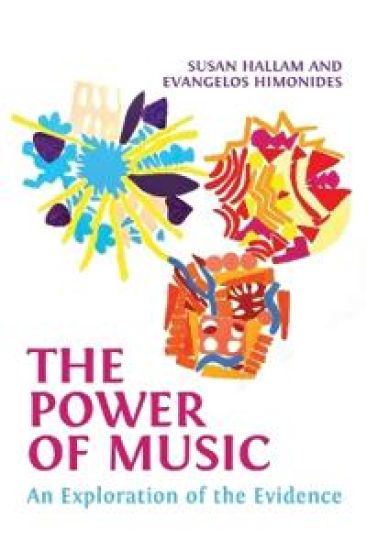
The Power of Music

The Power of Music

Susan Hallam; Evangelos Himonides

Open Book Publishers
2022
pokkari
Building on her earlier work, The Power of Music: A Research Synthesis of the Impact of Actively Making Music on the Intellectual, Social and Personal Development of Children and Young People, this volume by Susan Hallam and Evangelos Himonides is an important new resource in the field of music education, practice, and psychology. A well signposted text with helpful subheadings, The Power of Music: An Exploration of the Evidence gathers and synthesises research in neuroscience, psychology, and education to develop our understanding of the effects of listening to and actively making music. Its chapters address music's relationship with literacy and numeracy, transferable skills, its impact on social cohesion and personal wellbeing, as well as the roles that music plays in our everyday lives.Considering evidence from large population samples to individual case studies and across age groups, the authors also pose important methodological questions to the research community. The Power of Music defends qualitative research against a requirement for randomised control trials that can obscure the diverse and often fraught contexts in which people of all ages and backgrounds are exposed to, and engage with, music. This magnificent and comprehensive volume allows the evidence about the power of music to speak for itself, thus providing an essential directory for those researching music education and its social, personal, and cognitive impact across human ages and experiences.
The Power of Music

The Power of Music

Susan Hallam; Evangelos Himonides

Open Book Publishers
2022
sidottu
Building on her earlier work, The Power of Music: A Research Synthesis of the Impact of Actively Making Music on the Intellectual, Social and Personal Development of Children and Young People, this volume by Susan Hallam and Evangelos Himonides is an important new resource in the field of music education, practice, and psychology. A well signposted text with helpful subheadings, The Power of Music: An Exploration of the Evidence gathers and synthesises research in neuroscience, psychology, and education to develop our understanding of the effects of listening to and actively making music. Its chapters address music's relationship with literacy and numeracy, transferable skills, its impact on social cohesion and personal wellbeing, as well as the roles that music plays in our everyday lives.Considering evidence from large population samples to individual case studies and across age groups, the authors also pose important methodological questions to the research community. The Power of Music defends qualitative research against a requirement for randomised control trials that can obscure the diverse and often fraught contexts in which people of all ages and backgrounds are exposed to, and engage with, music. This magnificent and comprehensive volume allows the evidence about the power of music to speak for itself, thus providing an essential directory for those researching music education and its social, personal, and cognitive impact across human ages and experiences.
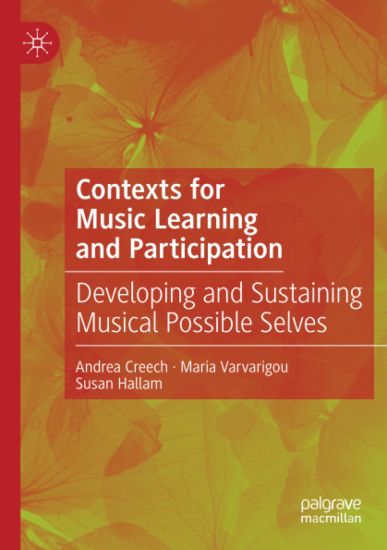
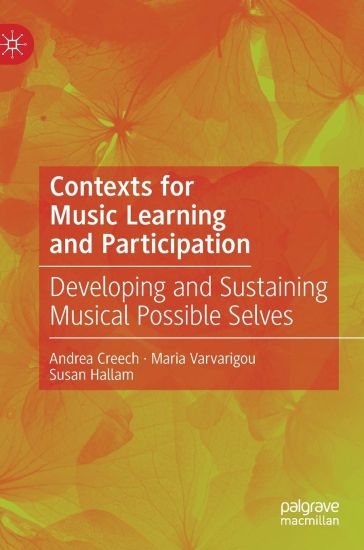
Contexts for Music Learning and Participation

Contexts for Music Learning and Participation

Andrea Creech; Maria Varvarigou; Susan Hallam

Springer Nature Switzerland AG
2021
nidottu
This book sets out a contemporary perspective on music education, highlighting complex intersections between informal, non-formal and formal practices and contexts. At a time when the boundaries between music learning and participation are increasingly blurred, this volume is distinctive in challenging a ‘siloed’ approach to understanding the diverse international music education landscape. Instead, the book proposes a multi-layered continuum of practices that can be applied across a range of formal, informal or non-formal concepts to support the development of musical possible selves. It challenges existing conceptions of learning in music education in part by drawing on research in adult learning, but also by considering the contexts in which learning takes place, and the extent to which this learning can be classified as formal, informal or non-formal.
Contexts for Music Learning and Participation

Contexts for Music Learning and Participation

Andrea Creech; Maria Varvarigou; Susan Hallam

Springer Nature Switzerland AG
2020
sidottu
This book sets out a contemporary perspective on music education, highlighting complex intersections between informal, non-formal and formal practices and contexts. At a time when the boundaries between music learning and participation are increasingly blurred, this volume is distinctive in challenging a ‘siloed’ approach to understanding the diverse international music education landscape. Instead, the book proposes a multi-layered continuum of practices that can be applied across a range of formal, informal or non-formal concepts to support the development of musical possible selves. It challenges existing conceptions of learning in music education in part by drawing on research in adult learning, but also by considering the contexts in which learning takes place, and the extent to which this learning can be classified as formal, informal or non-formal.
Psychology of Music

Psychology of Music

Susan Hallam

Routledge
2018
nidottu
How does music affect our moods?What is the best way to develop musical skills?How does the definition of music vary between cultures?The Psychology of Music explores the important impact music has on our everyday lives, and its influence on society, groups and individual people. It demonstrates how music can benefit our intellectual functioning, and health and well-being, and examines musical ability as both a gift and something that can be developed through learning and practice.Music can enhance our understanding of humanity and modern life and The Psychology of Music shows us the significance of music, and the power it can have over our behaviour.
Psychology of Music

Psychology of Music

Susan Hallam

Routledge
2018
sidottu
How does music affect our moods?What is the best way to develop musical skills?How does the definition of music vary between cultures?The Psychology of Music explores the important impact music has on our everyday lives, and its influence on society, groups and individual people. It demonstrates how music can benefit our intellectual functioning, and health and well-being, and examines musical ability as both a gift and something that can be developed through learning and practice.Music can enhance our understanding of humanity and modern life and The Psychology of Music shows us the significance of music, and the power it can have over our behaviour.
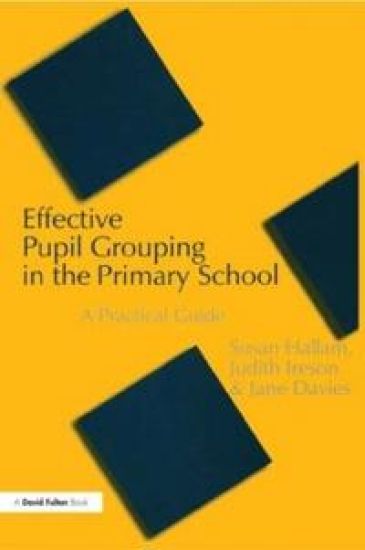
Effective Pupil Grouping in the Primary School

Effective Pupil Grouping in the Primary School

Susan Hallam; Judy Ireson; Jane Davies

CRC Press
2016
sidottu
This book draws on new research exploring the practical experiences of schools and teachers who have used different kinds of grouping. Setting out the issues and discussing the strengths and weaknesses of different types of grouping, this book will help teachers decide which methods are most appropriate for their pupils. The authors offer step-by-step guidance to all aspects of grouping, including setting; streaming; within-class ability grouping; within-class mixed ability grouping; cross-age grouping; assessing and monitoring group placement; and how to implement different types of grouping. The book also discusses children's perceptions of the purposes of groups; moving between groups; and how to liaise with parents about their child moving groups. The book will be welcomed by trainees and teachers alike.
Effective Pupil Grouping in the Primary School

Effective Pupil Grouping in the Primary School

Susan Hallam; Judy Ireson; Jane Davies

David Fulton Publishers Ltd
2002
nidottu
This book draws on new research exploring the practical experiences of schools and teachers who have used different kinds of grouping. Setting out the issues and discussing the strengths and weaknesses of different types of grouping, this book will help teachers decide which methods are most appropriate for their pupils. The authors offer step-by-step guidance to all aspects of grouping, including setting; streaming; within-class ability grouping; within-class mixed ability grouping; cross-age grouping; assessing and monitoring group placement; and how to implement different types of grouping. The book also discusses children's perceptions of the purposes of groups; moving between groups; and how to liaise with parents about their child moving groups. The book will be welcomed by trainees and teachers alike.
Ability Grouping in Education

Ability Grouping in Education

Judith Ireson; Susan Hallam

SAGE Publications Inc
2001
nidottu
`Ability Grouping in Education will provide very useful and timley background for psychologists working with schools where setting or streaming is a major issue' - Educational Psychology in Practice `With an anticipated audience of teachers and policymakers, this book is user-friendly, incorporating detailed research findings illustrated by graphs and tables. A summary is provided at the end of each chapter, offering an overview for the time-conscious wishing to skip through the engaging but largely illustrative statistics and quotations. However, a close reading has its rewards, as the extracts from teachers and students offer poignant insight into the enormous complexity and far-reaching implications of ability grouping' - Cath Lambert, Educational Review In this book, the authors provide an overview of ability grouping in education. They consider selective schooling and ability grouping within schools, such as streaming, banding setting and within-class grouping. Selection by ability is a controversial issue, linked with conflicting ideological positions and reflected in strong differences of opinion about the merits of selective schooling. Educational systems under pressure to produce an educated workforce have led governments to look for ways of raising attainment, and grouping by ability is sometimes seen as an organizational solution. Drawing on their own and others' research in primary and secondary schools, the authors provide an accessible analysis of the issues and latest research on ability grouping; as well as the implications of ability grouping for teachers, managers in education and the wider community. This book is for students and practitioners taking courses in school effectiveness, education management, as well as educational psychologists and local authority professionals. Judy Ireson is Senior Lecturer in Psychology and Special Needs at the Institute of Education , University of London, and Susan Hallam is in the Department of Psychology & Special Needs.
Ability Grouping in Education

Ability Grouping in Education

Judith Ireson; Susan Hallam

SAGE Publications Inc
2001
sidottu
`Ability Grouping in Education will provide very useful and timley background for psychologists working with schools where setting or streaming is a major issue' - Educational Psychology in Practice `With an anticipated audience of teachers and policymakers, this book is user-friendly, incorporating detailed research findings illustrated by graphs and tables. A summary is provided at the end of each chapter, offering an overview for the time-conscious wishing to skip through the engaging but largely illustrative statistics and quotations. However, a close reading has its rewards, as the extracts from teachers and students offer poignant insight into the enormous complexity and far-reaching implications of ability grouping' - Cath Lambert, Educational Review In this book, the authors provide an overview of ability grouping in education. They consider selective schooling and ability grouping within schools, such as streaming, banding setting and within-class grouping. Selection by ability is a controversial issue, linked with conflicting ideological positions and reflected in strong differences of opinion about the merits of selective schooling. Educational systems under pressure to produce an educated workforce have led governments to look for ways of raising attainment, and grouping by ability is sometimes seen as an organizational solution. Drawing on their own and others' research in primary and secondary schools, the authors provide an accessible analysis of the issues and latest research on ability grouping; as well as the implications of ability grouping for teachers, managers in education and the wider community. This book is for students and practitioners taking courses in school effectiveness, education management, as well as educational psychologists and local authority professionals. Judy Ireson is Senior Lecturer in Psychology and Special Needs at the Institute of Education , University of London, and Susan Hallam is in the Department of Psychology & Special Needs.
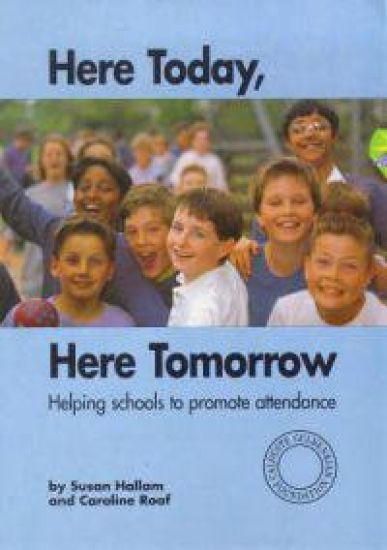
Here Today, Here Tomorrow

Here Today, Here Tomorrow

Susan Hallam; Caroline Roaf

CALOUSTE GULBENKIAN FOUNDATION
1995
Tuntematon sidosasu
Examining the problems of unauthorized absence from school, this work considers the difficulties of establishing levels of truancy, outlines reasons why pupils may not attend, and offers practical advice on what can be done to improve attendance.