Kirjojen hintavertailu. Mukana 12 595 353 kirjaa ja 12 kauppaa.

Kirjailija

Susan Hanson

Kirjat ja teokset yhdessä paikassa: 9 kirjaa, julkaisuja vuosilta 1995-2015, suosituimpien joukossa Key Concepts in Economic Geography. Vertaile teosten hintoja ja tarkista saatavuus suomalaisista kirjakaupoista.

9 kirjaa

Kirjojen julkaisuhaarukka 1995-2015.

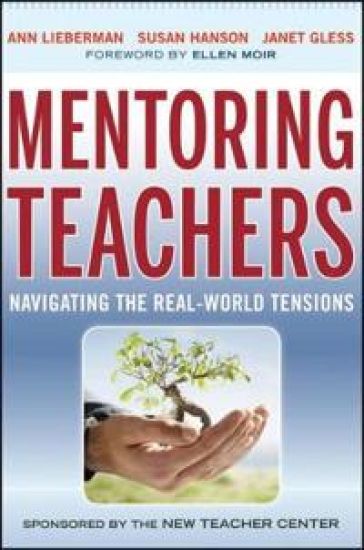
Mentoring Teachers

Mentoring Teachers

Ann Lieberman; Susan Hanson; Janet Gless; Ellen Moir

John Wiley Sons Inc
2012
nidottu
A useful guide for teacher mentors as they face new and difficult challenges in their work New teachers often struggle to apply their knowledge in real-world settings, and the idea of mentoring these teachers during their first years in the classroom has captured the imagination of schools all over the world. Drawn from the experiences over the last twenty years of the New Teacher Center, the book illuminates the subtleties and struggles of becoming an excellent, effective mentor. The book discusses the five big tensions of mentoring: developing a new identity, developing trusting relationships, accelerating teacher growth, mentoring in challenging contexts, and learning leadership skills. Describes in-depth the most common challenges of the mentor roleA wonderful guide for both new and veteran mentorsIncludes engaging firsthand narratives written by mentors working in a variety of settings This book is from the New Teacher Center, an organization whose highly respected mentor training model has served over 50,000 teachers nationwide. The New Teacher Center is dedicated to improving student learning by accelerating the effectiveness of teachers and school leaders through comprehensive mentoring and professional development programs.
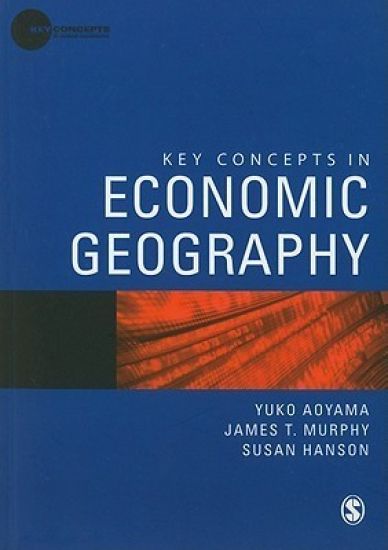
Key Concepts in Economic Geography

Key Concepts in Economic Geography

Yuko Aoyama; James T Murphy; Susan Hanson

SAGE Publications Ltd
2010
sidottu
"A comprehensive and highly readable review of the conceptual underpinnings of economic geography. Students and professional scholars alike will find it extremely useful both as a reference manual and as an authoritative guide to the numerous theoretical debates that characterize the field." - Allen J. Scott, University of California "Guides readers skilfully through the rapidly changing field of economic geography... The key concepts used to structure this narrative range from key actors and processes within global economic change to a discussion of newer areas of research including work on financialisation and consumption. The result is a highly readable synthesis of contemporary debates within economic geography that is also sensitive to the history of the sub-discipline." - Sarah Hall, University of Nottingham "The nice thing about this text is that it is concise but with depth in its coverage. A must have for any library, and a useful desk reference for any serious student of economic geography or political economy." - Adam Dixon, Bristol University Organized around 20 short essays, Key Concepts in Economic Geography provides a cutting edge introduction to the central concepts that define contemporary research in economic geography. Involving detailed and expansive discussions, the book includes: An introductory chapter providing a succinct overview of the recent developments in the field.Over 20 key concept entries with comprehensive explanations, definitions and evolutions of the subject.Extensive pedagogic features that enhance understanding including figures, diagrams and further reading. An ideal companion text for upper-level undergraduate and postgraduate students in economic geography, the book presents the key concepts in the discipline, demonstrating their historical roots and contemporary applications to fully understand the processes of economic change, regional growth and decline, globalization, and the changing locations of firms and industries. Written by an internationally recognized set of authors, the book is an essential addition to any geography student's library.
Key Concepts in Economic Geography

Key Concepts in Economic Geography

Yuko Aoyama; James T Murphy; Susan Hanson

SAGE Publications Ltd
2010
nidottu
"A comprehensive and highly readable review of the conceptual underpinnings of economic geography. Students and professional scholars alike will find it extremely useful both as a reference manual and as an authoritative guide to the numerous theoretical debates that characterize the field." - Allen J. Scott, University of California "Guides readers skilfully through the rapidly changing field of economic geography... The key concepts used to structure this narrative range from key actors and processes within global economic change to a discussion of newer areas of research including work on financialisation and consumption. The result is a highly readable synthesis of contemporary debates within economic geography that is also sensitive to the history of the sub-discipline." - Sarah Hall, University of Nottingham "The nice thing about this text is that it is concise but with depth in its coverage. A must have for any library, and a useful desk reference for any serious student of economic geography or political economy." - Adam Dixon, Bristol University Organized around 20 short essays, Key Concepts in Economic Geography provides a cutting edge introduction to the central concepts that define contemporary research in economic geography. Involving detailed and expansive discussions, the book includes: An introductory chapter providing a succinct overview of the recent developments in the field.Over 20 key concept entries with comprehensive explanations, definitions and evolutions of the subject.Extensive pedagogic features that enhance understanding including figures, diagrams and further reading. An ideal companion text for upper-level undergraduate and postgraduate students in economic geography, the book presents the key concepts in the discipline, demonstrating their historical roots and contemporary applications to fully understand the processes of economic change, regional growth and decline, globalization, and the changing locations of firms and industries. Written by an internationally recognized set of authors, the book is an essential addition to any geography student's library.
Icons of Loss and Grace

Icons of Loss and Grace

Susan Hanson; Melanie Fain

Texas Tech Press,U.S.
2004
sidottu
'Whether Texas State University lecturer and lay Episcopal chaplain Susan Hanson is hiking with her students or grubbing alone in the alkaline soil of her small garden, she sees glimpses of God everywhere...In careful prose that sings on the pages, Hanson eschews pat answers while inviting the reader to explore deeper spiritual truths' - ""Christianity Today"". 'From the marmot in Colorado to the javelina of South Texas, from the False Dayflower in her yard to the palmettos in the Ottine swamp, from the Cooper's hawk to the cormorant Hanson calmly and gracefully informs us. And she relates all of this to the humans who live with these and other things, things natural, every day, and wondrous' - ""Southwestern American Literature"". 'Susan Hanson offers snapshots of all the natural glory that is Texas. Her kaleidoscope of words pixel together scenes of God in nature be it in the small ramblings of a rolly polly, the flight of a butterfly or cardinal, maggots feasting on a roadkill possum or, especially, in the time-sacred act of gardening...This book offers the best of a Walt Whitman flair for poetic natural observation translated into prose...But, most importantly, this collection of 'moments in time' offers a new set of new eyes with which to perceive Texas' vast and minute beauty' - Suzanne L. Moore, ""Times Record News"". 'Susan Hanson finds comfort, meaning, and joy in the natural worldin the turning of the seasons, the growth of a seed, the flight of an owl...Dip into it when you need to be heartened, grounded, and centered' - Lorraine Anderson. It is through brief moments in our lives that the spiritual most often communicates itself. Fleeting as they are, these small encounters with the familiar wild instruct us in dealing with change and loss. They are the icons that point not so much to answers, but to a way of living in the tension between life and death. Each of these essays represents one moment. Most of them occur very close to home. There is nothing exotic about any of the landscapes Susan Hanson depicts the oak mottes and scrub of the South Texas Plains, the rocks and rivers of Central Texas, the soil in her own backyard yet these are the sorts of landscapes that teach and nurture all of us who care to see them. This way of seeing the world as an undivided whole of the physical and the spiritual is nutritive, healthful. The vision is partial, but all vision is partial, and it is in the pieces, the glimpses, the tastes, that we acquire a sense of the whole. Divided into three sections, the book addresses the questions of how we deal with change and loss in our lives. In ""Innocence"", the essays are marked by a spirit of curiosity, wonder, and adventure. The middle section reflects a growing awareness of loss, both personal and in the natural world. In ""Grace"", the final essays point toward the possibility of reconciliation with loss a reconciliation mediated through nature. Written as reflections, rather than full-blown arguments, ""Icons of Loss and Grace"" offers no final resolution to the questions it presents. Yet in these essays we may recognize that delight and sorrow are soul mates, that loss and redemption are a part of the same sacred ground, and that pain can evolve into grace.
Gender, Work and Space

Gender, Work and Space

Susan Hanson; Geraldine Pratt

Routledge
1995
sidottu
Gender, Work and Space explores how social boundaries are constructed between women and men, and among women living in different places. Focusing on work, the segregation of men and women into different occupations, and variations in women's work experiences in different parts of the city, the authors argue that these differences are grounded, constituted in and through, space, place, and situated social networks.The sheer range and depth of this extraordinary study throws new light on the construction of social, geographic, economic, and symbolic boundaries in ordinary lives.
Gender, Work and Space

Gender, Work and Space

Susan Hanson; Geraldine Pratt

Routledge
1995
nidottu
Gender, Work and Space explores how social boundaries are constructed between women and men, and among women living in different places. Focusing on work, the segregation of men and women into different occupations, and variations in women's work experiences in different parts of the city, the authors argue that these differences are grounded, constituted in and through, space, place, and situated social networks.The sheer range and depth of this extraordinary study throws new light on the construction of social, geographic, economic, and symbolic boundaries in ordinary lives.