Kirjojen hintavertailu. Mukana 12 595 353 kirjaa ja 12 kauppaa.
Kirjailija
Susan Harris Rimmer
Kirjat ja teokset yhdessä paikassa: 5 kirjaa, julkaisuja vuosilta 2010-2026, suosituimpien joukossa Future Generations Policy, Governance and Leadership. Vertaile teosten hintoja ja tarkista saatavuus suomalaisista kirjakaupoista.
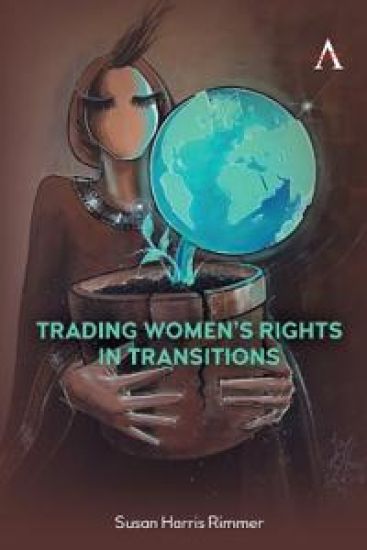
Many nations make lofty claims about their commitment to gender equality through their foreign policy as an expression of values. Trading Women's Rights in Transitions is about how in reality women’s rights are traded away by diplomatic actors directly in exchange for immediate political or other settlements, and indirectly in terms of being left off the international agenda with long-term consequences. Using Afghanistan and Myanmar as case studies, this book makes the case that contemporary diplomatic practice is still unwilling or unable to protect the rights and dignity of women and girls in transitional states.
Australia's ambitions for global climate policy leadership have been seriously undermined in recent years, its reputation reduced by political inertia, policy blind spots and diplomatic isolation. At the same time, Pacific Island nations have gained global traction, their leaders recognising the influence of their regional voice and collective action in the drive to shape international law. These nations have called out Australia's poor performance and questioned its credibility within the Pacific family. The climate crisis now demands a new approach to regional cooperation in Oceania, and a fundamental re-ordering of strategic priorities. It may also require a new set of diplomatic skills and tradecraft. Until Australia demonstrates that it is serious about tackling the climate crisis, it will struggle to pursue strategic interests in the Pacific.Bringing together diverse Australian and Pacific Island voices and perspectives, Climate Politics in Oceania reflects on the shifting debates, and highlights the potential for Australia to engage constructively with regional partners to secure Oceania's interests now and in the future. Canberra must embrace the opportunity while it still can.
Gender and Transitional Justice provides the first comprehensive feminist analysis of the role of international law in formal transitional justice mechanisms. Using East Timor as a case study, it offers reflections on transitional justice administered by a UN transitional administration. Often presented as a UN success story, the author demonstrates that, in spite of women and children’s rights programmes of the UN and other donors, justice for women has deteriorated in post-conflict Timor, and violence has remained a constant in their lives.This book provides a gendered analysis of transitional justice as a discipline. It is also one of the first studies to offer a comprehensive case study of how women engaged in the whole range of transitional mechanisms in a post-conflict state, i.e. domestic trials, internationalised trials and truth commissions. The book reveals the political dynamics in a post-conflict setting around gender and questions of justice, and reframes of the meanings of success and failure of international interventions in the light of them.
Gender and Transitional Justice provides the first comprehensive feminist analysis of the role of international law in formal transitional justice mechanisms. Using East Timor as a case study, it offers reflections on transitional justice administered by a UN transitional administration. Often presented as a UN success story, the author demonstrates that, in spite of women and children’s rights programmes of the UN and other donors, justice for women has deteriorated in post-conflict Timor, and violence has remained a constant in their lives.This book provides a gendered analysis of transitional justice as a discipline. It is also one of the first studies to offer a comprehensive case study of how women engaged in the whole range of transitional mechanisms in a post-conflict state, i.e. domestic trials, internationalised trials and truth commissions. The book reveals the political dynamics in a post-conflict setting around gender and questions of justice, and reframes of the meanings of success and failure of international interventions in the light of them.