Kirjojen hintavertailu. Mukana 12 657 676 kirjaa ja 12 kauppaa.

Kirjailija

Susan J. Palmer

Kirjat ja teokset yhdessä paikassa: 6 kirjaa, julkaisuja vuosilta 1993-2025, suosituimpien joukossa Storming Zion. Vertaile teosten hintoja ja tarkista saatavuus suomalaisista kirjakaupoista.

6 kirjaa

Kirjojen julkaisuhaarukka 1993-2025.

Storming Zion

Storming Zion

Stuart A. Wright; Susan J. Palmer

Oxford University Press Inc
2016
nidottu
While scholars, media, and the public may be aware of a few extraordinary government raids on religious communities, such as the U.S. federal raid on the Branch Davidians in 1993, very few people are aware of the scope and frequency with which these raids occur. Following the Texas state raid on the Fundamentalist Church of Latter-day Saints in 2008, authors Stuart Wright and Susan Palmer decided to study these raids in the aggregate--rather than as individual cases--by collecting data on raids that have taken place over the last six decades. They did this both to establish for the first time an archive of raided groups, and to determine if any patterns could be identified. Even they were surprised at their findings; there were far more raids than expected, and the vast majority of them had occurred since 1990, reflecting a sharp, almost exponential increase. What could account for this sudden and dramatic increase in state control of minority religions? In Storming Zion, Wright and Palmer argue that the increased use of these high-risk and extreme types of enforcement corresponds to expanded organization and initiatives by opponents of unconventional religions. Anti-cult organizations provide strategic "frames" that define potential conflicts or problems in a given community as inherently dangerous, and construct narratives that draw on stereotypes of child and sexual abuse, brainwashing, and even mass suicide. The targeted group is made to appear more dangerous than it is, resulting in an overreaction by authorities. Wright and Palmer explore the implications of heightened state repression and control of minority religions in an increasingly multicultural, globalized world. At a time of rapidly shifting demographics within Western societies this book cautions against state control of marginalized groups and offers insight about why the responses to these groups is often so reactionary.
Storming Zion

Storming Zion

Stuart A. Wright; Susan J. Palmer

Oxford University Press Inc
2016
sidottu
While scholars, media, and the public may be aware of a few extraordinary government raids on religious communities, such as the U.S. federal raid on the Branch Davidians in 1993, very few people are aware of the scope and frequency with which these raids occur. Following the Texas state raid on the Fundamentalist Church of Latter-day Saints in 2008, authors Stuart Wright and Susan Palmer decided to study these raids in the aggregate--rather than as individual cases--by collecting data on raids that have taken place over the last six decades. They did this both to establish for the first time an archive of raided groups, and to determine if any patterns could be identified. Even they were surprised at their findings; there were far more raids than expected, and the vast majority of them had occurred since 1990, reflecting a sharp, almost exponential increase. What could account for this sudden and dramatic increase in state control of minority religions? In Storming Zion, Wright and Palmer argue that the increased use of these high-risk and extreme types of enforcement corresponds to expanded organization and initiatives by opponents of unconventional religions. Anti-cult organizations provide strategic "frames" that define potential conflicts or problems in a given community as inherently dangerous, and construct narratives that draw on stereotypes of child and sexual abuse, brainwashing, and even mass suicide. The targeted group is made to appear more dangerous than it is, resulting in an overreaction by authorities. Wright and Palmer explore the implications of heightened state repression and control of minority religions in an increasingly multicultural, globalized world. At a time of rapidly shifting demographics within Western societies this book cautions against state control of marginalized groups and offers insight about why the responses to these groups is often so reactionary.
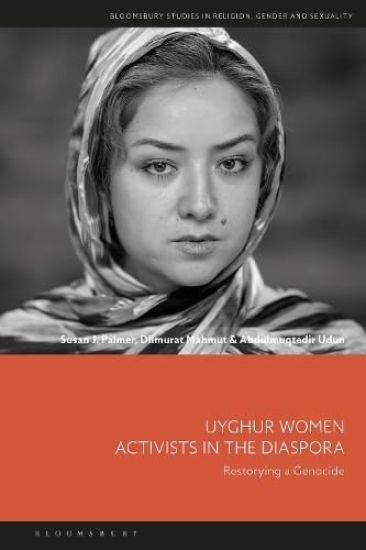
Uyghur Women Activists in the Diaspora

Uyghur Women Activists in the Diaspora

Susan J. Palmer; Dilmurat Mahmut; Abdulmuqtedir Udun

BLOOMSBURY PUBLISHING PLC
2025
nidottu
Presenting the life stories of ten Uyghur women, this book applies the techniques of narrative analysis to explore their changing worldviews and conversions to political engagement. Born and raised in East Turkestan/Xinjiang in the 1970s-90s, each woman, after personally experiencing incidents of ethnic discrimination, chose to leave China before 2005. Settling in a western country, they strive to become the voice of the Turkic people who are silenced or detained in the “re-education” camps.The narratives are based on interviews conducted online between 2020 and 2021, collected as a form of oral history. The book focuses on the escalating tensions, turning points experienced in their youth, and the religious, political and psychological factors that prompted their transformations in self-identity, ideology and the emergence of a new Uyghur–Muslim feminism.Through the women’s stories, the book describes how women activists are navigating the competing reality constructions of the dire situation in the Uyghur Homeland and actively restorying a genocide to bring about social and political change.
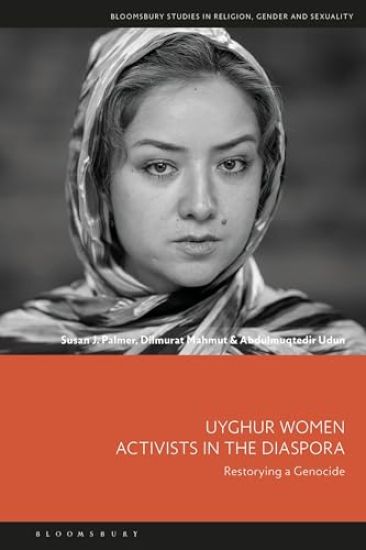
Uyghur Women Activists in the Diaspora

Uyghur Women Activists in the Diaspora

Susan J. Palmer; Dilmurat Mahmut; Abdulmuqtedir Udun

BLOOMSBURY PUBLISHING PLC
2024
sidottu
Presenting the life stories of ten Uyghur women, this book applies the techniques of narrative analysis to explore their changing worldviews and conversions to political engagement. Born and raised in East Turkestan/Xinjiang in the 1970s-90s, each woman, after personally experiencing incidents of ethnic discrimination, chose to leave China before 2005. Settling in a western country, they strive to become the voice of the Turkic people who are silenced or detained in the “re-education” camps.The narratives are based on interviews conducted online between 2020 and 2021, collected as a form of oral history. The book focuses on the escalating tensions, turning points experienced in their youth, and the religious, political and psychological factors that prompted their transformations in self-identity, ideology and the emergence of a new Uyghur–Muslim feminism.Through the women’s stories, the book describes how women activists are navigating the competing reality constructions of the dire situation in the Uyghur Homeland and actively restorying a genocide to bring about social and political change.
Aliens Adored

Aliens Adored

Susan J. Palmer

Rutgers University Press
2004
nidottu
Aliens Adored is the first full length, in-depth look at the Raëlian movement, a fascinating new religion founded in the 1970s by the charismatic prophet, Raël. Born in France as Claude Vorilhon, the former race-car driver founded the religion after he experienced a visitation from the aliens (the "elohim") who, in his cosmology, created humans by cloning themselves. The millenarian movement awaits the return of the alien creators, and in the meantime seeks to develop the potential of its adherents through free love, sexual experimentation, opposition to nuclear proliferation and war, and the development of the science of cloning. Sociologist Susan J. Palmer has studied the Raelian movement for more than a decade, observing meetings and rituals and enjoying unprecedented access to the group's leaders as well as to its rank-and-file members. In this pioneering study she provides a thorough analysis of the movement, focusing on issues of sexuality, millenarianism, and the impact of the scientific worldview on religion and the environment. Rael's radical sexual ethics, his gnostic anthropocentrism, and shallow ecotheology offer us a mirror through which we see how our worldview has been shaped by the forces of globalization, postmodernism, and secular humanism.