Kirjojen hintavertailu. Mukana 12 595 353 kirjaa ja 12 kauppaa.

Kirjailija

Susan J. Smith

Kirjat ja teokset yhdessä paikassa: 9 kirjaa, julkaisuja vuosilta 1989-2024, suosituimpien joukossa Pollen and Micro-Invertebrates from Modern Earthen Canals and Other Fluvial Environments Along the Middle Gila River: Implications for Archaeological. Vertaile teosten hintoja ja tarkista saatavuus suomalaisista kirjakaupoista.

9 kirjaa

Kirjojen julkaisuhaarukka 1989-2024.

Safe as Houses?

Safe as Houses?

Susan J. Smith

Oxford University Press
2024
nidottu
This is a book about the risks and rewards of home ownership in the 21st century. Using a range of vivid examples, it shows how housing markets work to concentrate wealth into property, how the role of mortgage markets has changed, and how financial markets have failed to manage the credit and investment risks to which home occupiers are exposed. A clear-sighted view of the problems of the housing economy, Safe as Houses? makes complex economic ideas accessible to an interdisciplinary readership. It exposes a kaleidoscope of overlapping markets whose workings tie the meagre budgets of the poorest home-buyers to the massive turnover of the world's largest financial exchanges. Home ownership is a risky business. But in a thought-provoking analysis, Susan Smith argues that the precarious financial position of the average home-occupier may benefit as much from the cautious use of innovative instruments as from the wholesale dismantling of financial capitalism. Interdisciplinary in style, drawing from cultural economy, material sociology, and economic anthropology, as well as from mainstream housing economics, this book provides a clear analysis of the housing market in the current financial crisis, with a practical edge, engaging with policy, practice, and everyday life.
Safe as Houses?

Safe as Houses?

Susan J. Smith

Oxford University Press
2024
sidottu
This is a book about the risks and rewards of home ownership in the 21st century. Using a range of vivid examples, it shows how housing markets work to concentrate wealth into property, how the role of mortgage markets has changed, and how financial markets have failed to manage the credit and investment risks to which home occupiers are exposed. A clear-sighted view of the problems of the housing economy, Safe as Houses? makes complex economic ideas accessible to an interdisciplinary readership. It exposes a kaleidoscope of overlapping markets whose workings tie the meagre budgets of the poorest home-buyers to the massive turnover of the world's largest financial exchanges. Home ownership is a risky business. But in a thought-provoking analysis, Susan Smith argues that the precarious financial position of the average home-occupier may benefit as much from the cautious use of innovative instruments as from the wholesale dismantling of financial capitalism. Interdisciplinary in style, drawing from cultural economy, material sociology, and economic anthropology, as well as from mainstream housing economics, this book provides a clear analysis of the housing market in the current financial crisis, with a practical edge, engaging with policy, practice, and everyday life.
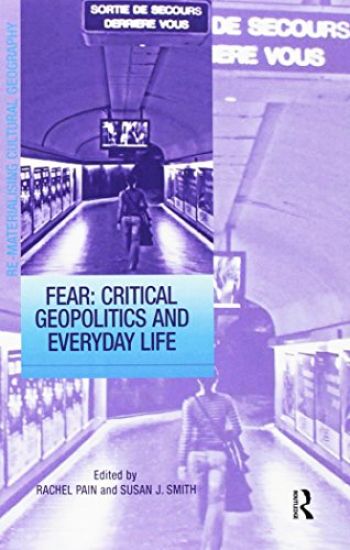
Fear: Critical Geopolitics and Everyday Life
'Fear' in the twenty-first century has greater currency in western societies than ever before. Through scares ranging from cot death, juvenile crime, internet porn, asylum seekers, dirty bombs and avian flu, we are bombarded with messages about emerging risks. This book takes stock of a range of issues of 'fear' and presents new theoretical arguments and research findings that cover topics as diverse as the war on terror, the immigration crisis, stranger danger, global disease epidemics and sectarian violence. This book charts the association of fear discourses with particular spaces, times, social identities and sets of geopolitical relations. It examines the ways in which fear may be manufactured and manipulated for political purposes, sometimes becoming a tool of repression, and relates fear to political, economic and social marginalization at different scales. Furthermore, it highlights the importance and sometimes unpredictability of everyday lived experiences of fear - the many ways in which people recognize, make sense of and manage fear; the extent of resistance to fear; the relation of fear and hope in everyday life; and the role of emotions in galvanizing political and social action and change.
Exploring Social Geography (Routledge Revivals)

Exploring Social Geography (Routledge Revivals)

Peter A. Jackson; Susan J. Smith

Routledge
2015
nidottu
Exploring Social Geography, first published in 1984, offers a challenging yet comprehensive introduction to the wealth of empirical research and theoretical debate that has developed in response to the advent of a social approach to the subject. The argument emphasises the essentially spatial structure of social interaction, and includes a succinct discussion of geographical research on segregation and interaction, which has combined numerical analyses and qualitative ethnographic field research. A distinctive view of social geography is adopted, inspired by the Chicago school of North American pragmatism, but also incorporating the formal sociological theories of Simmel and Weber. Exploring Social Geography will be of value to students of urban geography in particular. However, it will also indicate a wide-ranging and distinctive perspective for all students of the social sciences with a special interest in debates concerning urban, ethnic, racial, anthropological and theoretical issues.
Exploring Social Geography (Routledge Revivals)

Exploring Social Geography (Routledge Revivals)

Peter A. Jackson; Susan J. Smith

Routledge
2013
sidottu
Exploring Social Geography, first published in 1984, offers a challenging yet comprehensive introduction to the wealth of empirical research and theoretical debate that has developed in response to the advent of a social approach to the subject. The argument emphasises the essentially spatial structure of social interaction, and includes a succinct discussion of geographical research on segregation and interaction, which has combined numerical analyses and qualitative ethnographic field research. A distinctive view of social geography is adopted, inspired by the Chicago school of North American pragmatism, but also incorporating the formal sociological theories of Simmel and Weber. Exploring Social Geography will be of value to students of urban geography in particular. However, it will also indicate a wide-ranging and distinctive perspective for all students of the social sciences with a special interest in debates concerning urban, ethnic, racial, anthropological and theoretical issues.
Fear: Critical Geopolitics and Everyday Life

Fear: Critical Geopolitics and Everyday Life

Susan J. Smith

Ashgate Publishing Limited
2008
sidottu
'Fear' in the twenty-first century has greater currency in western societies than ever before. Through scares ranging from cot death, juvenile crime, internet porn, asylum seekers, dirty bombs and avian flu, we are bombarded with messages about emerging risks. This book takes stock of a range of issues of 'fear' and presents new theoretical arguments and research findings that cover topics as diverse as the war on terror, the immigration crisis, stranger danger, global disease epidemics and sectarian violence. This book charts the association of fear discourses with particular spaces, times, social identities and sets of geopolitical relations. It examines the ways in which fear may be manufactured and manipulated for political purposes, sometimes becoming a tool of repression, and relates fear to political, economic and social marginalization at different scales. Furthermore, it highlights the importance and sometimes unpredictability of everyday lived experiences of fear - the many ways in which people recognize, make sense of and manage fear; the extent of resistance to fear; the relation of fear and hope in everyday life; and the role of emotions in galvanizing political and social action and change.
Woodlands in Crisis: A Legacy of Lost Biodiversity on the Colorado Plateau

Woodlands in Crisis: A Legacy of Lost Biodiversity on the Colorado Plateau

Gary Paul Nabhan; Marcelle Coder; Susan J. Smith

Bilby Research Center
2004
nidottu
In recent years, the West has suffered from unprecedented stand-replacing wildfires, and the government has invested more money in preventative forest thinning than ever before. This forest crisis has led to much controversy over the Healthy Forests legislation passed by Congress in 2003. On the Colorado Plateau, it has also spurred heated debates regarding the degree to which thinning can truly serve to restore wooded habitats and what reference conditions and or restoration goals are needed to guide such plans. This book offers a primer for understanding how diverse land-use histories have impacted the health of pine-dominated ecosystems in the West and points to measures for better managing them in the future. It draws on a systematic review of the historic effects of land use and climate on ecosystem health, biodiversity, and non-timber forest products in four specific landscapes on the Colorado Plateau the Jemez Mountains in New Mexico, the Chuska Mountains in Arizona, Mesa Verde in Colorado, and the San Francisco Volcanic Shield in Arizona all of which have long histories of human occupation and use of forest products. The authors evaluate the degree to which livestock grazing and other cultural land uses have historically reduced the frequency, severity and areal extent of fires, the species richness of understory plants, and the availability of non-timber forest products formerly harvested by Native, Hispanic and Anglo American communities. By examining the many natural and cultural influences upon biodiversity and ecosystem health, a much more robust and site-specific understanding of each place is possible. With improved and localized information, management decisions can be guided by a deeper and broader understanding of reference conditions, current threats, and goals for management and restoration. Now that there is new support for forest management, this book considers how that support can be used not merely to reduce the frequency of property-damaging fires over the short-term, but to restore the overall health and diversity of our woodlands."
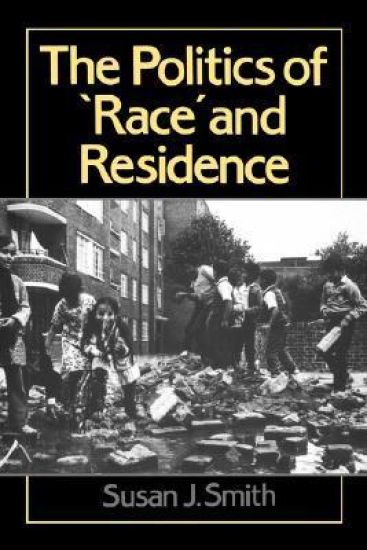
The Politics of Race and Residence

The Politics of Race and Residence

Susan J. Smith

Polity Press
1989
nidottu
Moving beyong traditional concern with pattern and process, this innovative text explores the political and legislative history of 'racial' segregation in Britain. It provides a critical commentary on the development of national and local housing policy, on the operation of the major markets and institutions, and on the organization of urban management. This book rejects the reality of 'race' as an explanatory construct, focusing instead on how and why racial inequality is constituted through economic, political and social activity. It is a contribution to the growing literature in search of an anti-racist social science. To that end, segragation is analysed not just as a spatial form, but also as a politically constructed problem and as a socially constructed way of life. Together, these insights implicate the organization of residential space in the iniquitous dispensation of many economic, welfare and civil rights associated with citizenship in capitalist democracies. The Politics of 'Race' and Residence explores the connections between social geography, social administration and political science. The book gathers together a hitherto fragmented body of data to provide a reinterpretation of 'racial segregation' that is both theoretically innovative and politically relevant. It will therefore serve the needs of advanced undergraduates in a variety of social science disciplines, while providing a useful source of reference for courses offering professional qualifications in housing and urban management.