Kirjojen hintavertailu. Mukana 12 595 353 kirjaa ja 12 kauppaa.

Kirjailija

Susan J. Wolfson

Kirjat ja teokset yhdessä paikassa: 12 kirjaa, julkaisuja vuosilta 2002-2026, suosituimpien joukossa Romanticism's Generative Reading. Vertaile teosten hintoja ja tarkista saatavuus suomalaisista kirjakaupoista.

12 kirjaa

Kirjojen julkaisuhaarukka 2002-2026.

Romanticism's Generative Reading

Romanticism's Generative Reading

Susan J. Wolfson

PRINCETON UNIVERSITY PRESS
2026
sidottu
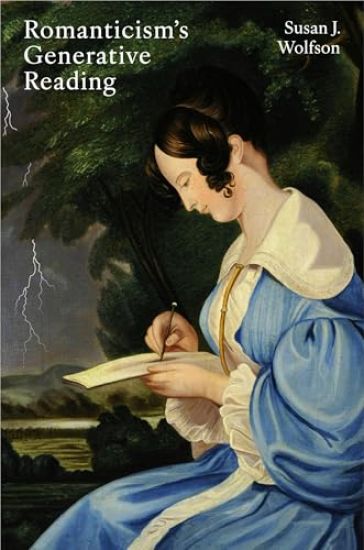
In Romanticism’s Generative Reading, Susan Wolfson convenes an innovative array of subjects, texts, and cultural situations: lightning, Frankenstein, textual editing, Shakespeare read by girls, and William Empson’s revelatory influence. Wolfson reads with close attention to the strange densities of literary language and the multiplicities of literary imagination. Great writers are generative writers, she argues, transforming readers through the energies of reading. Exploring texts and contexts, Wolfson traces literary formations and historical dynamics generating and regenerating one another. Wolfson puts Mary Wollstonecraft into the surprising company of Thomas De Quincey, and casts lightning as the “Spirit of the Age,” forking into promise and peril. She probes the multiple origin stories of Mary Shelley’s durably fascinating genesis novel, Frankenstein, and investigates her editing of her husband Percy Bysshe Shelley’s works after his death, an ongoing textual marriage. She renders counterintuitive readings of three novels by Jane Austen, working from the overabundance of problematic plots; and describes two efforts to present Shakespeare for girls—Bowdler’s Family Shakespeare (hence “bowdlerize”) and Charles and Mary Lamb’s rather more liberal Tales from Shakespeare (or, as Wolfson put it, “Lambsplaining”). Finally, Wolfson turns to the influence of the nineteenth century on the twentieth-century critic William Empson and his generative work with texts and keywords of consequences for Romantic studies. All these formations are magnetized for generative engagement. Romanticism as a school of reading keeps the antennae braced.
Romanticism's Generative Reading

Romanticism's Generative Reading

Susan J. Wolfson

PRINCETON UNIVERSITY PRESS
2026
pokkari
In Romanticism’s Generative Reading, Susan Wolfson convenes an innovative array of subjects, texts, and cultural situations: lightning, Frankenstein, textual editing, Shakespeare read by girls, and William Empson’s revelatory influence. Wolfson reads with close attention to the strange densities of literary language and the multiplicities of literary imagination. Great writers are generative writers, she argues, transforming readers through the energies of reading. Exploring texts and contexts, Wolfson traces literary formations and historical dynamics generating and regenerating one another. Wolfson puts Mary Wollstonecraft into the surprising company of Thomas De Quincey, and casts lightning as the “Spirit of the Age,” forking into promise and peril. She probes the multiple origin stories of Mary Shelley’s durably fascinating genesis novel, Frankenstein, and investigates her editing of her husband Percy Bysshe Shelley’s works after his death, an ongoing textual marriage. She renders counterintuitive readings of three novels by Jane Austen, working from the overabundance of problematic plots; and describes two efforts to present Shakespeare for girls—Bowdler’s Family Shakespeare (hence “bowdlerize”) and Charles and Mary Lamb’s rather more liberal Tales from Shakespeare (or, as Wolfson put it, “Lambsplaining”). Finally, Wolfson turns to the influence of the nineteenth century on the twentieth-century critic William Empson and his generative work with texts and keywords of consequences for Romantic studies. All these formations are magnetized for generative engagement. Romanticism as a school of reading keeps the antennae braced.

On Mary Wollstonecraft's A Vindication of the Rights of Woman

On Mary Wollstonecraft's A Vindication of the Rights of Woman

Susan J. Wolfson

Columbia University Press
2023
sidottu
Mary Wollstonecraft’s A Vindication of the Rights of Woman (1792) made a pioneering and durably influential argument for women’s equality. Emerging from the turbulent decade of the French Revolution, her vindication delivered a systematic critique of the treatment of women across time and place. Drawing on extensive experience teaching and writing about Wollstonecraft, Susan J. Wolfson offers new insight into how Wollstonecraft’s particular methods, style, and energy make this case for her readers.Wolfson places this polemic in its political and literary contexts and in relation to Wollstonecraft’s other works about political rights. She considers how Wollstonecraft balanced advocacy for the seemingly universal ideals of the French Revolution with analysis of the gendered exclusions in the vaunted rights of “man.” This book pays particular attention to Wollstonecraft’s literary craft, highlighting the force of her close reading. Wollstonecraft pinpointed the role of gendered phrases and concepts in political discourse, both in her opponents’ metaphors and received ideas and in her own efforts to craft a new political language with which to defend women’s capabilities. Wolfson reveals her as a pioneer in decoupling sex from gender and shows how she provided an enduring model of how to be a female intellectual. Sharing the excitement of reading Wollstonecraft’s work with care for her literary as well as political genius, this book provides fresh perspectives both for first-time readers and those seeking a nuanced appreciation of her achievements.
On Mary Wollstonecraft's A Vindication of the Rights of Woman

On Mary Wollstonecraft's A Vindication of the Rights of Woman

Susan J. Wolfson

Columbia University Press
2023
pokkari
Mary Wollstonecraft’s A Vindication of the Rights of Woman (1792) made a pioneering and durably influential argument for women’s equality. Emerging from the turbulent decade of the French Revolution, her vindication delivered a systematic critique of the treatment of women across time and place. Drawing on extensive experience teaching and writing about Wollstonecraft, Susan J. Wolfson offers new insight into how Wollstonecraft’s particular methods, style, and energy make this case for her readers.Wolfson places this polemic in its political and literary contexts and in relation to Wollstonecraft’s other works about political rights. She considers how Wollstonecraft balanced advocacy for the seemingly universal ideals of the French Revolution with analysis of the gendered exclusions in the vaunted rights of “man.” This book pays particular attention to Wollstonecraft’s literary craft, highlighting the force of her close reading. Wollstonecraft pinpointed the role of gendered phrases and concepts in political discourse, both in her opponents’ metaphors and received ideas and in her own efforts to craft a new political language with which to defend women’s capabilities. Wolfson reveals her as a pioneer in decoupling sex from gender and shows how she provided an enduring model of how to be a female intellectual. Sharing the excitement of reading Wollstonecraft’s work with care for her literary as well as political genius, this book provides fresh perspectives both for first-time readers and those seeking a nuanced appreciation of her achievements.
A Greeting of the Spirit

A Greeting of the Spirit

Susan J. Wolfson

HARVARD UNIVERSITY PRESS
2022
sidottu
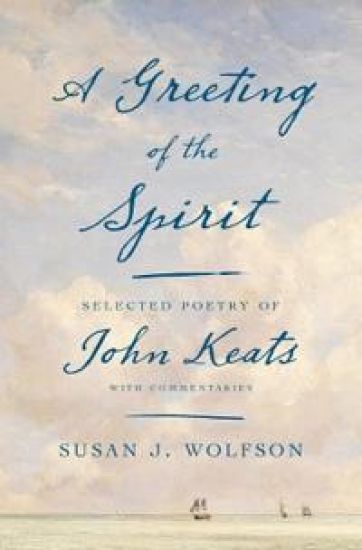
A Times Literary Supplement Book of the YearA renowned Keats scholar illuminates the poet’s extraordinary career, in a new edition featuring seventy-eight verse selections with commentary.John Keats’s career as a published poet spanned scarcely more than four years, cut short by his death early in 1821 at age twenty-five. Yet in this time, he produced a remarkable—and remarkably wide-ranging—body of work that has secured his place as one of the most influential poets in the British literary tradition. Celebrated Keats scholar Susan J. Wolfson presents seventy-eight selections from his work, each accompanied by a commentary on its form, style, meanings, and relevant contexts.In this edition, readers will rediscover a virtuoso poet, by turns lively, experimental, self-ironizing, outrageous, and philosophical. Wolfson includes such well-known favorites as Ode to a Nightingale, Ode on a Grecian Urn, To Autumn, La Belle Dame sans Merci, and The Eve of St. Agnes, as well as less familiar poems, several in letters to family and friends never meant for publication. Her selections redefine the breadth and depth of Keats’s poetic imagination, from intellectual jests and satires to erotic bandying, passionate confessions, and reflections on mortality.The selections, presented in their order of composition, convey a chronicle of Keats’s artistic and personal evolution. Wolfson’s revealing commentaries unfold the lively complexities of his verbal arts and stylistic experiments, his earnest goals and nervous apprehensions, and the pressures of politics and literary criticism in his day. In critically attentive and conversational prose, Wolfson encourages us to experience Keats in the way that he himself imagined the language of poetry: as a living event, a cooperative experience shared between author and reader.
Romantic Shades and Shadows

Romantic Shades and Shadows

Susan J. Wolfson

Johns Hopkins University Press
2018
sidottu
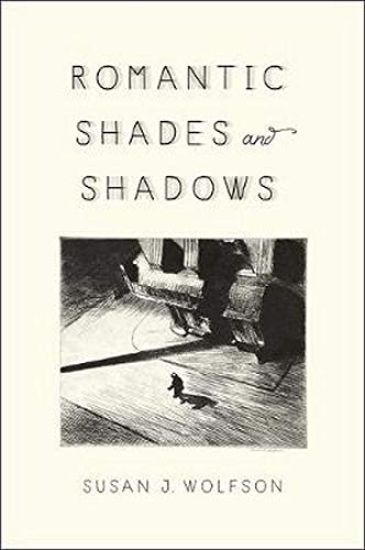
Haunting’s consequences for the literary imagination.Reading is a weirdly phantasmic trade: animating words to revive absent voices, rehearing the past, fantasizing a future. In Romantic Shades and Shadows, Susan J. Wolfson explores spectral language, formations, and sensations, defining an apparitional poetics in the finely grained textures of writing and their effects on present reading. Framed by an introductory chapter on writing and apparition and an afterword on haunted reading, the book includes chapters of sustained, revelatory close attention to the particular, often peculiar, literary imaginations of William Wordsworth, William Hazlitt, Percy Bysshe Shelley, Lord Byron, W. B. Yeats, and John Keats. Wolfson also explores the work of Samuel Taylor Coleridge (a self-confessed Ghost-Theorist), Mary Shelley, and other writers of the Long Romantic era, canonical as well as less familiar. All are encountered in freshly pointed ways on an arc of investigation that builds with generative force.Romantic Shades and Shadows is written with a lucidity, wit, and accessibility that will appeal to general readers, and with a critical sophistication and scholarly expertise that will engage advanced students, critics, and professional peers.
Reading John Keats

Reading John Keats

Susan J. Wolfson

Cambridge University Press
2015
pokkari
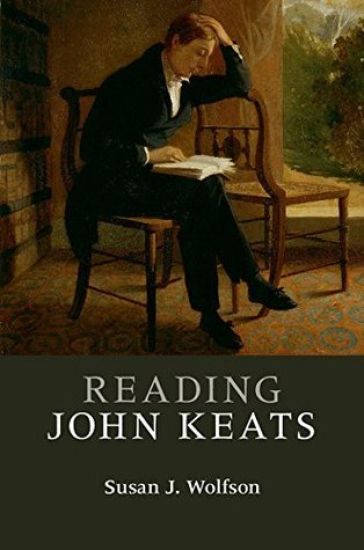
John Keats (1795–1821), one of the best-loved poets of the Romantic period, is ever alive to words, discovering his purposes as he reads - not only books but also the world around him. Leading Keats scholar Susan J. Wolfson explores the breadth of his works, including his longest ever poem Endymion; subsequent romances, Isabella (a Boccaccio tale with a proto-Marxian edge admired by George Bernard Shaw), the passionate Eve of St Agnes and knotty Lamia; intricate sonnets and innovative odes; the unfinished Hyperion project (Keats's existential rethinking of epic agony); and late lyrics involved with Fanny Brawne, the bright (sometimes dark) star of his last years. Illustrated with manuscript pages, title-pages, and two portraits, Reading John Keats investigates the brilliant complexities of Keats's imagination and his genius in wordplay, uncovering surprises and new delights, and encouraging renewed respect for the power of Keats's thinking and the subtle turns of his writing.
Reading John Keats

Reading John Keats

Susan J. Wolfson

Cambridge University Press
2015
sidottu
John Keats (1795–1821), one of the best-loved poets of the Romantic period, is ever alive to words, discovering his purposes as he reads - not only books but also the world around him. Leading Keats scholar Susan J. Wolfson explores the breadth of his works, including his longest ever poem Endymion; subsequent romances, Isabella (a Boccaccio tale with a proto-Marxian edge admired by George Bernard Shaw), the passionate Eve of St Agnes and knotty Lamia; intricate sonnets and innovative odes; the unfinished Hyperion project (Keats's existential rethinking of epic agony); and late lyrics involved with Fanny Brawne, the bright (sometimes dark) star of his last years. Illustrated with manuscript pages, title-pages, and two portraits, Reading John Keats investigates the brilliant complexities of Keats's imagination and his genius in wordplay, uncovering surprises and new delights, and encouraging renewed respect for the power of Keats's thinking and the subtle turns of his writing.
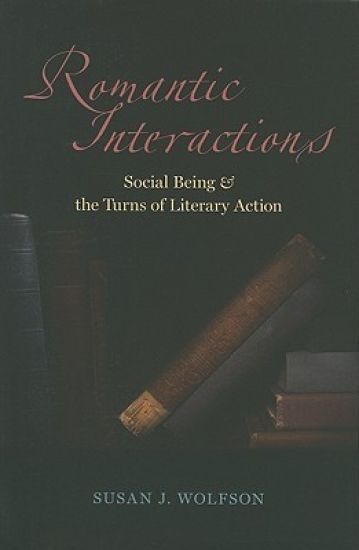
Romantic Interactions

Romantic Interactions

Susan J. Wolfson

Johns Hopkins University Press
2010
pokkari
In Romantic Interactions, Susan J. Wolfson examines how interaction with other authors-whether on the bookshelf, in the embodied company of someone else writing, or in relation to literary celebrity-shaped the work of some of the best-known (and less well-known) writers in the English language. Working across the arc of Long Romanticism, from the 1780s to the 1840s, this lively study involves writing by women and men, in poetry and prose. Combining careful readings with sophisticated literary, historical, and cultural criticism, Wolfson reveals how various writers came to define themselves as "author." The story unfolds not only in deft textual analyses but also by provocatively placing writers in dialogue with what they were reading, with one another, and with the community of readers (and writers) their writings helped bring into being: Mary Wollstonecraft and Charlotte Smith in the Revolution-roiled 1790s; William Wordsworth and Dorothy Wordsworth in the society of the Lake District; Lord Byron, a magnet for writers everywhere, inspired, troubled, but always arrested by what he (and his scandal-ridden celebrity) represented. This fresh, informative account of key writers, important texts, and complex cultural currents promises keen interest for students and scholars, literary critics, and cultural historians.
Romantic Interactions

Romantic Interactions

Susan J. Wolfson

Johns Hopkins University Press
2010
sidottu
In Romantic Interactions, Susan J. Wolfson examines how interaction with other authors-whether on the bookshelf, in the embodied company of someone else writing, or in relation to literary celebrity-shaped the work of some of the best-known (and less well-known) writers in the English language. Working across the arc of Long Romanticism, from the 1780s to the 1840s, this lively study involves writing by women and men, in poetry and prose. Combining careful readings with sophisticated literary, historical, and cultural criticism, Wolfson reveals how various writers came to define themselves as "author." The story unfolds not only in deft textual analyses but also by provocatively placing writers in dialogue with what they were reading, with one another, and with the community of readers (and writers) their writings helped bring into being: Mary Wollstonecraft and Charlotte Smith in the Revolution-roiled 1790s; William Wordsworth and Dorothy Wordsworth in the society of the Lake District; Lord Byron, a magnet for writers everywhere, inspired, troubled, but always arrested by what he (and his scandal-ridden celebrity) represented. This fresh, informative account of key writers, important texts, and complex cultural currents promises keen interest for students and scholars, literary critics, and cultural historians.
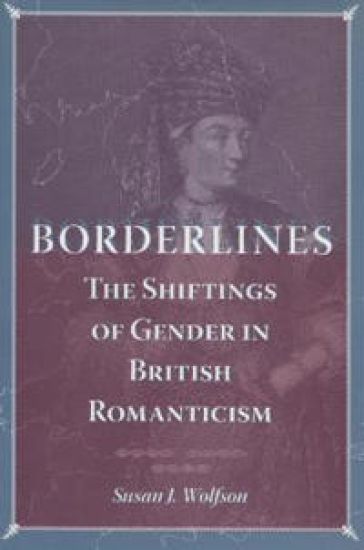
Borderlines

Borderlines

Susan J. Wolfson

Stanford University Press
2008
pokkari
Opening with the revolution-era debates of the 1790s, Borderlines reads Romantic genders across a mobile syntax, tuned to such figures as the stylized "feminine" poetess, the aberrant "masculine" woman, male poets deemed "feminine" or "unmanly," the campy male "effeminate," and hapless or strategic cross-dressers of both sexes. With fresh readings of the works, careers, and volatile receptions of Mary Wollstonecraft, Felicia Hemans, M. J. Jewsbury, Lord Byron, and John Keats, Susan Wolfson shows how senses (and sensations) of gender shape and get shaped by sign systems that prove arbitrary, fluid, and susceptible of lively transformation.
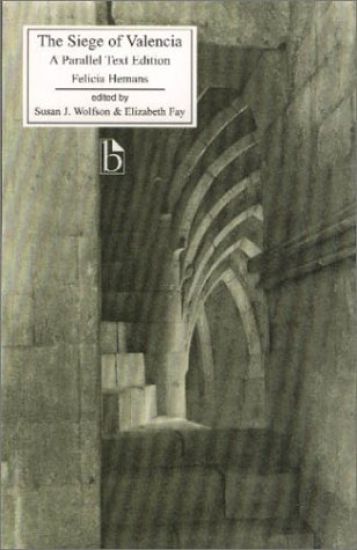
The Siege of Valencia

The Siege of Valencia

Susan J. Wolfson

Broadview Press Ltd
2002
nidottu
"Depicting a city besieged and a family held hostage to a murderous chivalry, The Siege of Valencia is one of Hemans's most discussed works." -- Nanora Sweet, University of Missouri, St. Louis