Kirjojen hintavertailu. Mukana 12 390 323 kirjaa ja 12 kauppaa.

Kirjailija

Susan L. Miller

Kirjat ja teokset yhdessä paikassa: 10 kirjaa, julkaisuja vuosilta 1999-2019, suosituimpien joukossa Communion Of Saints. Vertaile teosten hintoja ja tarkista saatavuus suomalaisista kirjakaupoista.

Mukana myös kirjoitusasut: Susan L Miller

10 kirjaa

Kirjojen julkaisuhaarukka 1999-2019.

Civil Court Responses to Intimate Partner Violence and Abuse

Civil Court Responses to Intimate Partner Violence and Abuse

Ruth E. Fleury-Steiner; M. Kristen Hefner; Susan L. Miller

Cognella Academic Publishing
2019
sidottu
Civil Court Responses to Intimate Partner Violence and Abuse fills a void in existing literature by shifting the conversation about intimate partner violence and abuse away from research that emphasizes criminal system responses and focusing instead on civil court responses. The volume highlights innovative theory and research about civil legal systems, helping readers better understand the interactions between people--survivors, offenders, children, and legal professionals
Journeys

Journeys

Susan L. Miller

University of California Press
2018
pokkari
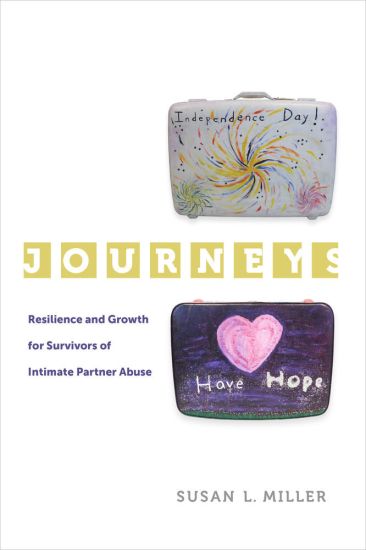
More than one in three women in the United States has experienced rape, physical violence, or stalking by an intimate partner in their lifetime. Luckily, many are able to escape this life—but what happens to them after? Journeys focuses on the desperately understudied topic of the resiliency of long-term (over 5 years) survivors of intimate partner violence and abuse. Drawing on participant observation research and interviews with women years after the end of their abusive relationships, author Susan L. Miller shares these women’s trials and tribulations, and expounds on the factors that facilitated these women’s success in gaining inner strength, personal efficacy, and transformation. Written for researchers, practitioners, students, and policy makers in criminal justice, sociology, and social services, Journeys shares stories that hope to inspire other victims and survivors while illuminating the different paths to resiliency and growth.
Journeys

Journeys

Susan L. Miller

University of California Press
2018
sidottu
More than one in three women in the United States has experienced rape, physical violence, or stalking by an intimate partner in their lifetime. Luckily, many are able to escape this life—but what happens to them after? Journeys focuses on the desperately understudied topic of the resiliency of long-term (over 5 years) survivors of intimate partner violence and abuse. Drawing on participant observation research and interviews with women years after the end of their abusive relationships, author Susan L. Miller shares these women’s trials and tribulations, and expounds on the factors that facilitated these women’s success in gaining inner strength, personal efficacy, and transformation. Written for researchers, practitioners, students, and policy makers in criminal justice, sociology, and social services, Journeys shares stories that hope to inspire other victims and survivors while illuminating the different paths to resiliency and growth.
Communion Of Saints

Communion Of Saints

Susan L Miller

Paraclete Press (MA)
2017
nidottu
Excerpted in Image Magazine - No. 90 This collection of poems explores the saints of the church's history and contemporary persons who embody something of their charism. Three sections are arranged around the themes of the three "theological virtues" faith, portrayed as a source of strength in times of trial; hope, the darkest in the book, dealing with matters of the body's frailty, illness, social discrimination, and the search for a way to live within the constraints of society; and love, offering a panoply of outward-looking characters who give to others in radical or personal ways. The volume ends with a cycle of Franciscan poems that offer a model for the Christian life, not simply in terms of individual moments but also as a complete life-cycle of practice and prayer.Communion of Saints represents an unlikely achievement: deeply spiritual and delicate poems that speak directly to our modern moment. --Yehoshua November, author of God's Optimism
After the Crime

After the Crime

Susan L. Miller

New York University Press
2011
sidottu
2012 Winner of the Outstanding Book Award presented by the Academy of Criminal Justice Sciences Outstanding Academic Title from 2011 by Choice Magazine Too often, the criminal justice system silences victims, which leaves them frustrated, angry, and with many unanswered questions. Despite their rage and pain, many victims want the opportunity to confront their offenders and find resolution. After the Crime explores a victim-offender dialogue program that offers victims of severe violence an opportunity to meet face-to-face with their incarcerated offenders. Using rich in-depth interview data, the book follows the harrowing stories of crimes of stranger rape, domestic violence, marital rape, incest, child sexual abuse, murder, and drunk driving, ultimately moving beyond story-telling to provide an accessible scholarly analysis of restorative justice. Susan Miller argues that the program has significantly helped the victims who chose to face their offenders in very concrete, transformative ways. Likewise, the offenders have also experienced positive changes in their lives in terms of creating greater accountability and greater victim empathy. After the Crime explores their transformative experiences with restorative justice, vividly illustrating how one program has worked in conjunction with the criminal justice system in order to strengthen victim empowerment.
After the Crime

After the Crime

Susan L. Miller

New York University Press
2011
pokkari
2012 Winner of the Outstanding Book Award presented by the Academy of Criminal Justice Sciences Outstanding Academic Title from 2011 by Choice Magazine Too often, the criminal justice system silences victims, which leaves them frustrated, angry, and with many unanswered questions. Despite their rage and pain, many victims want the opportunity to confront their offenders and find resolution. After the Crime explores a victim-offender dialogue program that offers victims of severe violence an opportunity to meet face-to-face with their incarcerated offenders. Using rich in-depth interview data, the book follows the harrowing stories of crimes of stranger rape, domestic violence, marital rape, incest, child sexual abuse, murder, and drunk driving, ultimately moving beyond story-telling to provide an accessible scholarly analysis of restorative justice. Susan Miller argues that the program has significantly helped the victims who chose to face their offenders in very concrete, transformative ways. Likewise, the offenders have also experienced positive changes in their lives in terms of creating greater accountability and greater victim empathy. After the Crime explores their transformative experiences with restorative justice, vividly illustrating how one program has worked in conjunction with the criminal justice system in order to strengthen victim empowerment.
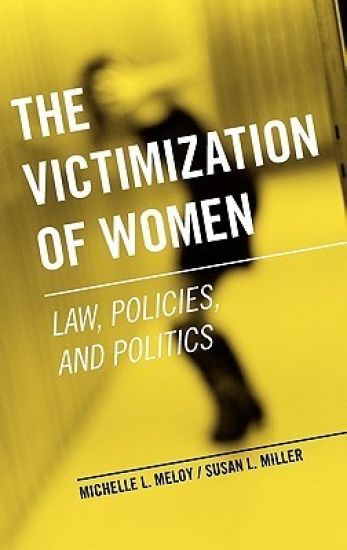
The Victimization of Women

The Victimization of Women

Michelle L. Meloy; Susan L. Miller

Oxford University Press Inc
2011
sidottu
In The Victimization of Women, Michelle Meloy and Susan Miller present a balanced, comprehensive, and objective summary of the most significant research on the victimizations, violence, and victim politics that disproportionately affect women. They examine the history of violence against women, the surrounding debates, the legal reforms and justice system outcomes, the related media and social-service responses, and the current science on intimate partner violence, stalking, sexual harassment, sexual assault, and rape. Plus, they augment these victimization findings with original research on women convicted of domestic battery and men convicted of sexual abuse and other sex-related offenses. In these new data the authors explore the unanticipated consequences associated with changes to the laws governing domestic violence and the newer forms of sex-offender legislation. Both of these investigations are based on qualitative data that involve in-depth offender-based interviews that probe the circumstances surrounding the arrests and victimizations involved in the cases, the significant legal issues, and their experiences with the criminal justice system.
The Victimization of Women

The Victimization of Women

Michelle L. Meloy; Susan L. Miller

Oxford University Press Inc
2011
nidottu
In The Victimization of Women, Michelle Meloy and Susan Miller present a balanced, comprehensive, and objective summary of the most significant research on the victimizations, violence, and victim politics that disproportionately affect women. They examine the history of violence against women, the surrounding debates, the legal reforms and justice system outcomes, the related media and social-service responses, and the current science on intimate partner violence, stalking, sexual harassment, sexual assault, and rape. Plus, they augment these victimization findings with original research on women convicted of domestic battery and men convicted of sexual abuse and other sex-related offenses. In these new data the authors explore the unanticipated consequences associated with changes to the laws governing domestic violence and the newer forms of sex-offender legislation. Both of these investigations are based on qualitative data that involve in-depth offender-based interviews that probe the circumstances surrounding the arrests and victimizations involved in the cases, the significant legal issues, and their experiences with the criminal justice system.
Victims as Offenders

Victims as Offenders

Susan L. Miller

Rutgers University Press
2005
nidottu
Arrests of women for assault increased more than 40 percent over the past decade, while male arrests for this offense have fallen by about one percent. Some studies report that for the first time ever the rate of reported intimate partner abuse among men and women is nearly equal. Susan L. Miller’s timely book explores the important questions raised by these startling statistics. Are women finally closing the gender gap on violence? Or does this phenomenon reflect a backlash shaped by men who batter? How do abusive men use the criminal justice system to increase control over their wives? Do police, courts, and treatment providers support aggressive arrest policies for women? Are these women “victims” or “offenders”? In answering these questions, Miller draws on extensive data from a study of police behavior in the field, interviews with criminal justice professionals and social service providers, and participant observation of female offender programs. She offers a critical analysis of the theoretical assumptions framing the study of violence and provides insight into the often contradictory implications of the mandatory and pro-arrest policies enacted in the 1980s and 1990s. Miller argues that these enforcement strategies, designed to protect women, have often victimized women in different ways. Without sensationalizing, Miller unveils a reality that looks very different from what current statistics on domestic violence imply.
Gender And Community Policing

Gender And Community Policing

Susan L. Miller

Northeastern University Press
1999
nidottu
While traditional policing celebrated male officers as masculine crime fighters who were tough, aloof, and physically intimidating, policewomen were characterized as too soft and emotional for patrol assignments and were relegated to roles focusing on children, other women, or clerical tasks. With the advent of community policing, women's perceived skills are finally finding a legitimate place in police work, and law enforcement structures now encourage such previously undervalued feminine traits as trust, cooperation, compassion, interpersonal communication, and conflict resolution.In this illuminating study of gender and community policing, Susan L. Miller draws on a combination of survey data, forthright interviews with a diverse mix of police officers, and extensive fieldwork conducted in a midwestern city where community policing has been practiced for over a decade. She describes the differences and similarities in policing styles of male and female officers, considers the relationships that develop between neighborhood police on foot and patrol officers in squad cars, and explores the interactions between neighborhood officers and community members.Miller confronts such questions as how police reconcile incompatible images of masculinity and femininity; how actions of neighborhood police officers compare with those of traditional rapid response patrol officers; how community police cope with resistance from the rank and file; and how gender and gender-role expectations shape police activities and the evaluation of new skills.Gender and Community Policing provides both a feminist framework for community policing and a fresh examination of how race, gender, and sexual orientation affect police image, identity, and methods.