Kirjojen hintavertailu. Mukana 12 390 323 kirjaa ja 12 kauppaa.

Kirjailija

Susan M. Reverby

Kirjat ja teokset yhdessä paikassa: 5 kirjaa, julkaisuja vuosilta 1987-2024, suosituimpien joukossa False Dawn. Vertaile teosten hintoja ja tarkista saatavuus suomalaisista kirjakaupoista.

5 kirjaa

Kirjojen julkaisuhaarukka 1987-2024.

Co-conspirator for Justice

Co-conspirator for Justice

Susan M. Reverby

THE UNIVERSITY OF NORTH CAROLINA PRESS
2024
pokkari
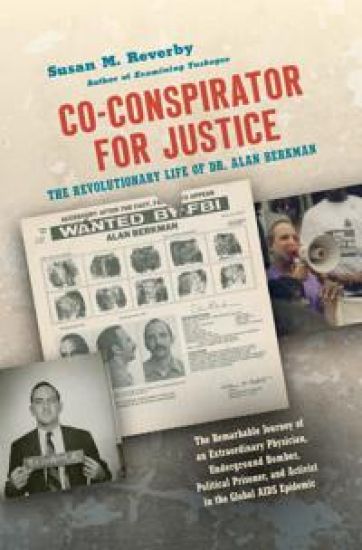
Alan Berkman (1945–2009) was no campus radical in the mid-1960s; he was a promising Ivy League student, football player, Eagle Scout, and fraternity president. But when he was a medical student and doctor, his politics began to change, and soon he was providing covert care to members of revolutionary groups like the Weather Underground and becoming increasingly radicalized by his experiences at the Wounded Knee takeover, at the Attica Prison uprising, and at health clinics for the poor. When the government went after him, he went underground and participated in bombings of government buildings. He was eventually captured and served eight years in some of America's worst penitentiaries, barely surviving two rounds of cancer. After his release in 1992, he returned to medical practice and became an HIV/AIDS physician, teacher, and global health activist. In the final years of his life, he successfully worked to change U.S. policy, making AIDS treatment more widely available in the global south and saving millions of lives around the world.Using Berkman's unfinished prison memoir, FBI records, letters, and hundreds of interviews, Susan M. Reverby sheds fascinating light on questions of political violence and revolutionary zeal in her account of Berkman's extraordinary transformation from doctor to co-conspirator for justice.
False Dawn

False Dawn

Karen Buhler-Wilkerson; Susan M. Reverby; Julie A. Fairman

Rutgers University Press
2021
sidottu
Since its initial publication in 1989 by Garland Publishing, Karen Buhler Wilkerson’s False Dawn: The Rise and Decline of Public Health Nursing remains the definitive work on the creation, work, successes, and failures of public health nursing in the United States. False Dawn explores and answers the provocative question: why did a movement that became a significant vehicle for the delivery of comprehensive health care to individuals and families fail to reach its potential? Through carefully researched chapters, Wilkerson details what she herself called the “rise and fall” narrative of public health nursing: rising to great heights in its patients' homes in the struggle to control infectious diseases, assimilate immigrants, and tame urban areas -- only to flounder during the later growth of hospitals, significant immigration restrictions, and the emergence of chronic diseases as endemic in American society.
False Dawn

False Dawn

Karen Buhler-Wilkerson; Susan M. Reverby; Julie A. Fairman

Rutgers University Press
2021
nidottu
Since its initial publication in 1989 by Garland Publishing, Karen Buhler Wilkerson’s False Dawn: The Rise and Decline of Public Health Nursing remains the definitive work on the creation, work, successes, and failures of public health nursing in the United States. False Dawn explores and answers the provocative question: why did a movement that became a significant vehicle for the delivery of comprehensive health care to individuals and families fail to reach its potential? Through carefully researched chapters, Wilkerson details what she herself called the “rise and fall” narrative of public health nursing: rising to great heights in its patients' homes in the struggle to control infectious diseases, assimilate immigrants, and tame urban areas -- only to flounder during the later growth of hospitals, significant immigration restrictions, and the emergence of chronic diseases as endemic in American society.
Co-conspirator for Justice

Co-conspirator for Justice

Susan M. Reverby

The University of North Carolina Press
2020
sidottu
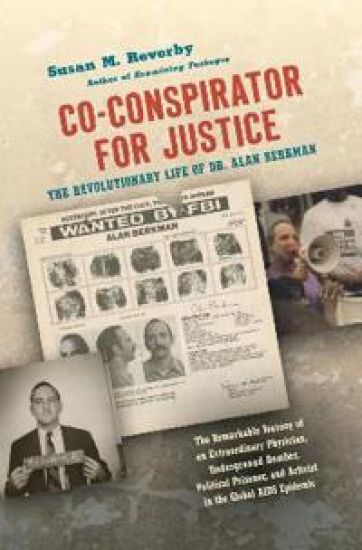
Alan Berkman (1945-2009) was no campus radical in the mid-1960s; he was a promising Ivy League student, football player, Eagle Scout, and fraternity president. But when he was a medical student and doctor, his politics began to change, and soon he was providing covert care to members of revolutionary groups like the Weather Underground and becoming increasingly radicalized by his experiences at the Wounded Knee massacre, at the Attica Prison uprising, and at health clinics for the poor. When the government went after him, he went underground and participated in bombings of government buildings. He was eventually captured and served eight years in some of America's worst penitentiaries, barely surviving two rounds of cancer. After his release in 1992, he returned to medical practice and became an HIV/AIDS physician, teacher, and global health activist. In the final years of his life, he successfully worked to change U.S. policy, making AIDS treatment more widely available in the global south and saving millions of lives around the world.Using Berkman's unfinished prison memoir, FBI records, letters, and hundreds of interviews, Susan M. Reverby sheds fascinating light on questions of political violence and revolutionary zeal in her account of Berkman's extraordinary transformation from doctor to co-conspirator for justice.
Ordered to Care

Ordered to Care

Susan M. Reverby

Cambridge University Press
1987
pokkari
An engaging study of the dilemmas faced by American nursing, which examines the ideology, practice, and efforts at reform of both trained and untrained nurses in the years between 1850 and 1945. Ordered to Care provides an overall history of nursing's development and places that growth within the context of new questions raised by women's history and the social history of health care. Building upon extensive use of primary and quantitative data, the author creates a collective portrait of nursing, from the work of the individual nurse to the political efforts of its organizations. Dr Reverby contends that nursing's contemporary difficulties are caused by its historical obligation to care in a society that refuses to value caring. She examines the historical consequences of this critical dilemma and concludes with a discussion of why nursing will have to move beyond its obligation to care, and what the implications of this change would be for all of us.