Kirjojen hintavertailu. Mukana 12 595 353 kirjaa ja 12 kauppaa.

Kirjailija

Susan Manning

Kirjat ja teokset yhdessä paikassa: 11 kirjaa, julkaisuja vuosilta 1990-2025, suosituimpien joukossa Learning to Change. Vertaile teosten hintoja ja tarkista saatavuus suomalaisista kirjakaupoista.

11 kirjaa

Kirjojen julkaisuhaarukka 1990-2025.

Learning to Change

Learning to Change

Andy Hargreaves; Lorna Earl; Shawn Moore; Susan Manning

Jossey-Bass Inc.,U.S.
2001
sidottu
The success of school reform measures greatly depends on the support and commitment of teachers. This book examines the realities of educational change from the frontline perspective of reform-minded teachers. It charts the perceptions and experiences of twenty-nine teachers in grades 7 and 8 from four school districts--showing how they grappled with such initiatives as integrated curriculum, common learning standards, and alternative modes of assessment.This book moves beyond the bandwagons of rhetorical change and examines how these changes work in practice for better and for worse. Authors Andy Hargreaves and Lorna Earl focus on how reform proposals have brought new complexities to teaching practice and why major investments of time and support are required if teaching innovations are to become lasting and effective. Most importantly, they highlight the intense emotional demands that school change imposes on teachers, and they outline practical strategies for helping teachers through the difficult transition process--thus ensuring that worthwhile reforms flourish and endure.
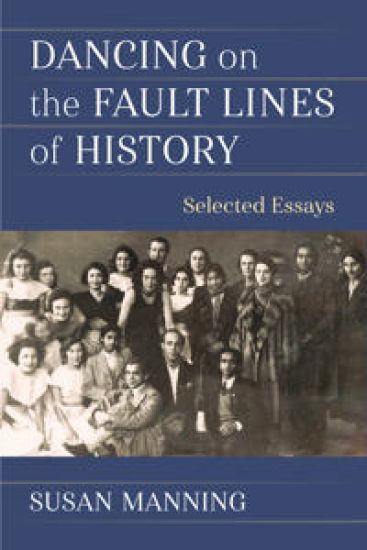
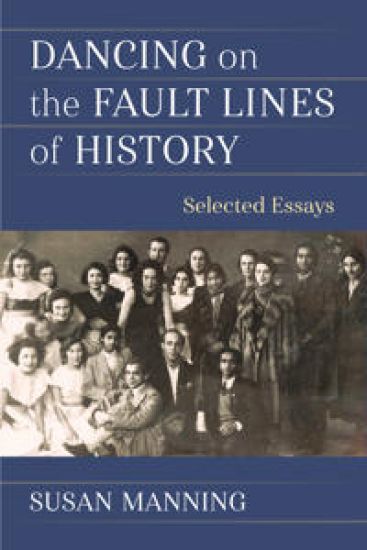
Dancing on the Fault Lines of History

Dancing on the Fault Lines of History

Susan Manning

THE UNIVERSITY OF MICHIGAN PRESS
2025
sidottu
Dancing on the Fault Lines of History collects essential essays by Susan Manning, one of the founders of critical dance studies, recounting her career writing and rewriting the history of modern dance. Three sets of keywords—gender and sexuality, whiteness and Blackness, nationality and globalization—illuminate modern dance histories from multiple angles, coming together in varied combinations, shifting positions from foreground to background. Among the many artists discussed are Isadora Duncan, Vaslav Nijinsky, Ted Shawn, Helen Tamiris, Katherine Dunham, José Limón, Pina Bausch, Reggie Wilson, and Nelisiwe Xaba. Calling for a comparative and transnational historiography, Manning ends with an extended case study of Mary Wigman’s multidimensional exchange with artists from Indonesia, India, China, Korea, and Japan. Like the artists at the center of her research, Manning’s writing dances on the fault lines of history. Her introduction and annotations to the essays reflect on how and why these keywords became central to her research, revealing the autobiographical resonances of her scholarship as she confronts the cultural politics of the late twentieth and early twenty-first centuries.
Dancing on the Fault Lines of History

Dancing on the Fault Lines of History

Susan Manning

THE UNIVERSITY OF MICHIGAN PRESS
2025
nidottu
Dancing on the Fault Lines of History collects essential essays by Susan Manning, one of the founders of critical dance studies, recounting her career writing and rewriting the history of modern dance. Three sets of keywords—gender and sexuality, whiteness and Blackness, nationality and globalization—illuminate modern dance histories from multiple angles, coming together in varied combinations, shifting positions from foreground to background. Among the many artists discussed are Isadora Duncan, Vaslav Nijinsky, Ted Shawn, Helen Tamiris, Katherine Dunham, José Limón, Pina Bausch, Reggie Wilson, and Nelisiwe Xaba. Calling for a comparative and transnational historiography, Manning ends with an extended case study of Mary Wigman’s multidimensional exchange with artists from Indonesia, India, China, Korea, and Japan. Like the artists at the center of her research, Manning’s writing dances on the fault lines of history. Her introduction and annotations to the essays reflect on how and why these keywords became central to her research, revealing the autobiographical resonances of her scholarship as she confronts the cultural politics of the late twentieth and early twenty-first centuries.
Online Learning For Dummies

Online Learning For Dummies

Susan Manning; Kevin E. Johnson

John Wiley Sons Inc
2020
nidottu
Get great grades from a distance New to online academia and need someone to show you around? You're in the right place—and you're not alone! As more of everything goes online—fueled by tech trends as well as unexpected events like the COVID-19 crisis—it's no surprise that many of us are getting our educations there, too. Online Learning For Dummies is here to welcome you to the gigantic (and gigantically exciting!) virtual campus, and help you get settled in by providing an overview of the endless opportunities offered by distance learning, as well as offering practical advice to make sure you have the right equipment, mindset, and study techniques for success. In a step-by-step style, this friendly guide takes you from the process of determining what sort of online program is right for you, through applying and enrolling, to building the skills you'll need to succeed. You'll learn how to navigate the common features of the online learning classroom, explore the digital etiquette that will help you get the most out of your instructors and fellow students, and discover how to effectively and professionally present your work. You'll also find out how to develop good online study habits to help you avoid distraction, and how to set aside undisturbed time in between juggling the demands of work, family, and social life. Evaluate the latest courses and opportunitiesMake sure you have the correct hardware and softwareDevelop your online study skills via best practicesAvoid digital fatigue Regardless of age or experience, we can all do with a few pointers on how to get more from the vast array of educational opportunities offered online. This book has them all: Get reading, get online, and get the most from that education you've been dreaming about.
Poetics of Character

Poetics of Character

Susan Manning

Cambridge University Press
2014
pokkari
This study of character in a comparative context presents a new approach to transatlantic literary history. Rereading Romanticism across national, generic and chronological boundaries, and through close textual comparisons, it offers exciting possibilities for rediscovering how literature engages and persuades readers of the reality of character. Historically grounded in the eighteenth-century philosophical, political and cultural conditions that generated nation-based literary history, it reveals alternative narratives to those of origin and succession, influence and reception. It also reintroduces rhetoric and poetics as ways of addressing questions about uniqueness and representativeness in character creation, epistemological issues of identity and impersonation, and the generation of literary value. Drawing comparisons between works from Alexander Pope and Cotton Mather through Robert Burns, Jane Austen, John Keats, Nathaniel Hawthorne, Edgar Allan Poe, R. W. Emerson, Margaret Fuller and Herman Melville, to George Eliot and Henry James, Susan Manning reveals surprising metaphorical, metonymic and performative connections.
Poetics of Character

Poetics of Character

Susan Manning

Cambridge University Press
2013
sidottu
This study of character in a comparative context presents a new approach to transatlantic literary history. Rereading Romanticism across national, generic and chronological boundaries, and through close textual comparisons, it offers exciting possibilities for rediscovering how literature engages and persuades readers of the reality of character. Historically grounded in the eighteenth-century philosophical, political and cultural conditions that generated nation-based literary history, it reveals alternative narratives to those of origin and succession, influence and reception. It also reintroduces rhetoric and poetics as ways of addressing questions about uniqueness and representativeness in character creation, epistemological issues of identity and impersonation, and the generation of literary value. Drawing comparisons between works from Alexander Pope and Cotton Mather through Robert Burns, Jane Austen, John Keats, Nathaniel Hawthorne, Edgar Allan Poe, R. W. Emerson, Margaret Fuller and Herman Melville, to George Eliot and Henry James, Susan Manning reveals surprising metaphorical, metonymic and performative connections.
The Technology Toolbelt for Teaching

The Technology Toolbelt for Teaching

Susan Manning; Kevin E. Johnson

John Wiley Sons Inc
2011
nidottu
Instructors are under pressure to integrate technology into their traditional or online instruction, but often they aren't sure what to do or why they should do it. The Technology Toolbelt for Teaching offers instructors a down-to-earth guide to common technologies, explains the pedagogical purposes they serve, and shows how they can be used effectively in online or face-to-face classrooms. Designed to be easy to use, the book includes a decision-making matrix for each technology tool: a series of questions that teachers can use to decide whether these tools support their teaching goals. This comprehensive resource contains an array of useful tools that address problems of organization such as a time management calendar, aids for scheduling meetings, and mind-mapping or graphic organizers. The authors also include a variety of online tools for communication and collaboration, and tools to present content, help establish presence, and assess learning. Praise for The Technology Toolbelt for Teaching "Feeling overwhelmed and even afraid of integrating technology into your course? Fear no more! Susan Manning and Kevin Johnson have provided the ultimate guide that explains not only the various technology tools that can support faculty work and enhance coursework but also provides sound advice to help faculty choose the right tool for the job. This is a must-read for all faculty regardless of their experience with technology."?Rena M. Palloff and Keith Pratt, managing partners, Crossroads Consulting Group, and authors, Building Online Learning Communities and Collaborating Online "The Technology Toolbelt for Teaching delivers exactly what it promises: a concrete overview of a wide variety of tools, complete with examples specific to practitioners in both K?12 and higher education. Authors Susan Manning and Kevin Johnson provide practical applications rather than philosophy, and solutions rather than platitudes. This is a must for any teacher working with?or wanting to start working with?technology."?Jane Bozarth, author, Social Media for Trainers; eLearning coordinator, State of North Carolina "Creating compelling learning experiences for students is fraught with decision points. Add one or more technology options to the equation, and the number of directions to take learners seems to grow limitlessly, and can either paralyze the instructional design process or cause us to take on too much. Enter The Technology Toolbelt for Teaching. Manning and Johnson's handy guide ? and the decision-making matrix that frames each of the tools it demystifies ? is an essential resource for choosing paths wisely."?Jonathan Finkelstein, author, Learning in Real Time; founder and executive producer, LearningTimes Includes 50+ fresh and useful technology tools for teaching A decision matrix for choosing and using the right tools Examples for using each tool in higher education and K?12
The Puritan-Provincial Vision

The Puritan-Provincial Vision

Susan Manning

Cambridge University Press
2009
pokkari
This book suggests an interpretation of the characteristic qualities of Scottish and American literatures. Considering the self-consciously different stance which sets them apart from English literature, the author develops the constituents of the 'puritan-provincial vision': a particular way of looking at life and man's relationship to what lies beyond himself. The book begins with the writings of Calvin and culminates in detailed comparisons of individual works of Scottish and American nineteenth-century prose, questioning the literary and human consequences of this vision through theological, philosophical, political and literary contexts. This puritan-provincial vision is not exclusive to Scottish and American literature so the features discussed here will interest those concerned with other literatures written in English.
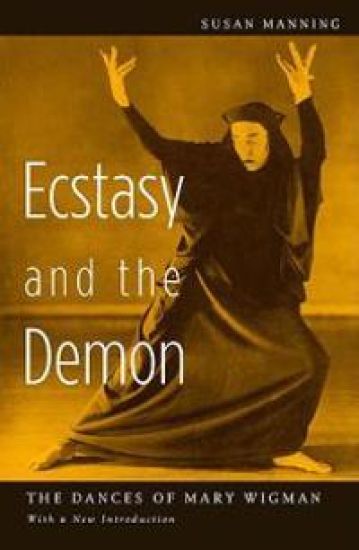
Ecstasy and the Demon

Ecstasy and the Demon

Susan Manning

University of Minnesota Press
2006
nidottu
Mary Wigman, Germany's premier dancer between the two world wars, envisioned the performer in the thrall of ecstatic and demonic forces. Widely hailed as an innovator of dance modernism, she never acknowledged her complex relationship with National Socialism. In Ecstasy and the Demon, Susan Manning advances a sociological explanation for the collaboration between German modern dancers and National Socialism. She models methods for dance studies that contextualize choreography in relation to changing sociopolitical conditions, bringing dance scholarship into conversation with intellectual trends across the humanities.The introduction to this second edition brings Manning's groundbreaking work to bear on dance studies today and reconsiders Wigman's career from the perspective of queer theory and globalization, further illuminating the interplay of dance and politics in the twentieth century.Susan Manning is professor of English, theater, and performance studies at Northwestern University.
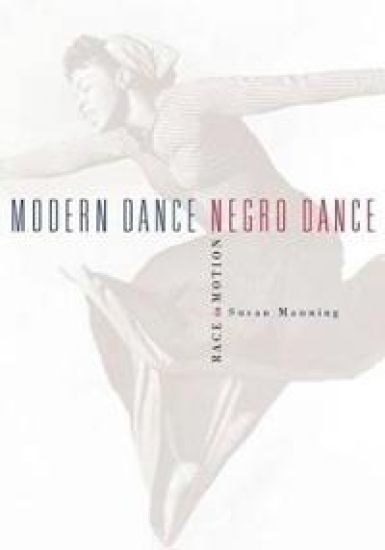
Modern Dance, Negro Dance

Modern Dance, Negro Dance

Susan Manning

University of Minnesota Press
2006
nidottu
At the New School for Social Research in 1931, the dance critic for the New York Times announced the arrival of modern dance, touting the "serious art" of such dancers as Mary Wigman, Martha Graham, and Doris Humphrey. Across town, Hemsley Winfield and Edna Guy were staging what they called "The First Negro Dance Recital in America," which Dance Magazine proclaimed "the beginnings of great and important choreographic creations." Yet never have the two parallel traditions converged in the annals of American dance in the twentieth century.Modern Dance, Negro Dance is the first book to bring together these two vibrant strains of American dance in the modern era. Susan Manning traces the paths of modern dance and Negro dance from their beginnings in the Depression to their ultimate transformations in the postwar years, from Helen Tamiris's and Ted Shawn's suites of Negro Spirituals to concerts sponsored by the Workers Dance League, from Graham's American Document to the debuts of Katherine Dunham and Pearl Primus, from José Limón's 1954 work The Traitor to Merce Cunningham's 1958 dances Summerspace and Antic Meet, to Ailey's 1960 masterpiece Revelations.Through photographs and reviews, documentary film and oral history, Manning intricately and inextricably links the two historically divided traditions. The result is a unique view of American dance history across the divisions of black and white, radical and liberal, gay and straight, performer and spectator, and into the multiple, interdependent meanings of bodies in motion. Susan Manning is associate professor of English, theater, and performance studies at Northwestern University. She is the author of Ecstasy and the Demon: Feminism and Nationalism in the Dances of Mary Wigman, winner of the 1994 de la Torre Bueno Prize for the year's most important contribution to dance studies.
The Puritan-Provincial Vision

The Puritan-Provincial Vision

Susan Manning

Cambridge University Press
1990
sidottu
This book suggests an interpretation of the characteristic qualities of Scottish and American literatures. Considering the self-consciously different stance which sets them apart from English literature, the author develops the constituents of the 'puritan-provincial vision': a particular way of looking at life and man's relationship to what lies beyond himself. The book begins with the writings of Calvin and culminates in detailed comparisons of individual works of Scottish and American nineteenth-century prose, questioning the literary and human consequences of this vision through theological, philosophical, political and literary contexts. This puritan-provincial vision is not exclusive to Scottish and American literature so the features discussed here will interest those concerned with other literatures written in English.