Kirjojen hintavertailu. Mukana 12 595 353 kirjaa ja 12 kauppaa.

Kirjailija

Susan McClary

Kirjat ja teokset yhdessä paikassa: 15 kirjaa, julkaisuja vuosilta 1993-2025, suosituimpien joukossa Cadencias femeninas. Vertaile teosten hintoja ja tarkista saatavuus suomalaisista kirjakaupoista.

15 kirjaa

Kirjojen julkaisuhaarukka 1993-2025.

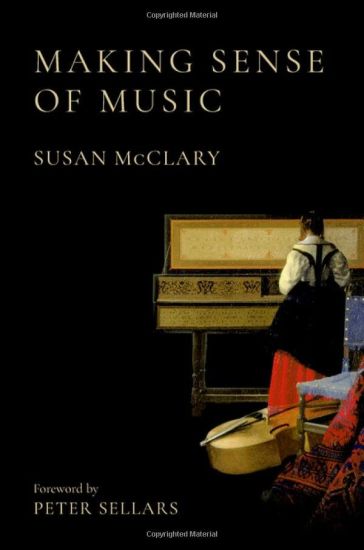
Making Sense of Music

Making Sense of Music

Susan McClary

OXFORD UNIVERSITY PRESS INC
2025
nidottu
One of the best-known prose stylists in contemporary musicology, Susan McClary brings together a fascinating set of essays in Making Sense of Music that focus on temporality and the body as ways of understanding music. Prefaced by a Foreword from celebrated theatre director Peter Sellars, the chapters engage variously with ribald songs of the Renaissance, the performance of Bach fugues, time-bending in seventeenth-century keyboard works, Grieg's Norwegian swerve, Florence Price's reclaiming of the spiritual, erotic scenarios in Mahler, representations of motherhood in Kaija Saariaho's operas, and queer elements in classical and popular repertories. McClary grounds her readings within the specifics of historical time and place, even as she shows how the music itself relies on gesture and the body. In sum, this book demonstrates in case studies taken from a wide variety of practices how music draws upon and shapes human subjective experience.
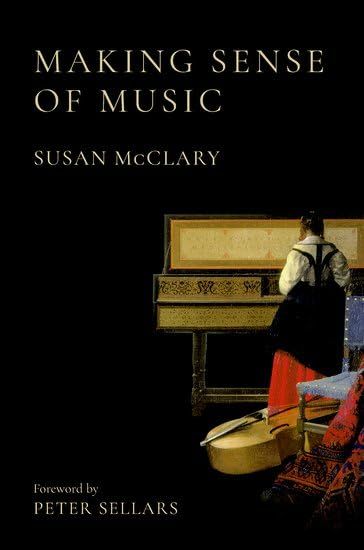
Making Sense of Music

Making Sense of Music

Susan McClary

OXFORD UNIVERSITY PRESS INC
2025
sidottu
One of the best-known prose stylists in contemporary musicology, Susan McClary brings together a fascinating set of essays in Making Sense of Music that focus on temporality and the body as ways of understanding music. Prefaced by a Foreword from celebrated theatre director Peter Sellars, the chapters engage variously with ribald songs of the Renaissance, the performance of Bach fugues, time-bending in seventeenth-century keyboard works, Grieg's Norwegian swerve, Florence Price's reclaiming of the spiritual, erotic scenarios in Mahler, representations of motherhood in Kaija Saariaho's operas, and queer elements in classical and popular repertories. McClary grounds her readings within the specifics of historical time and place, even as she shows how the music itself relies on gesture and the body. In sum, this book demonstrates in case studies taken from a wide variety of practices how music draws upon and shapes human subjective experience.
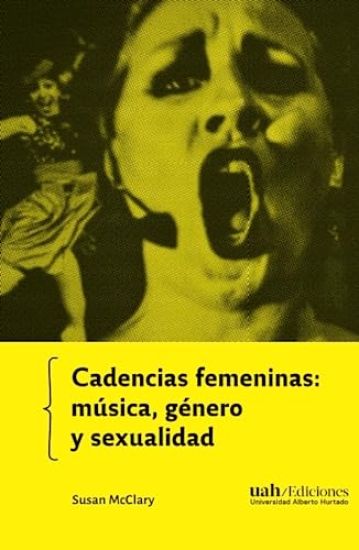
Cadencias femeninas

Cadencias femeninas

Susan McClary

Ediciones Universidad Alberto Hurtado
2023
nidottu
Qu c digos musicales representan la masculinidad y la feminidad en la pera temprana del siglo XVII? De qu manera contribuye el sonido a la organizaci n social de la sexualidad? C mo se ha manifestado una distinci n dualista entre lo masculino y lo femenino en la teor a musical tradicional? C mo se explica la frecuente representaci n de la locura femenina en la pera? Qu estrategias han utilizado las mujeres creadoras para transgredir las convenciones de un medio primordialmente masculino?
Modal Subjectivities

Modal Subjectivities

Susan McClary

University of California Press
2019
pokkari
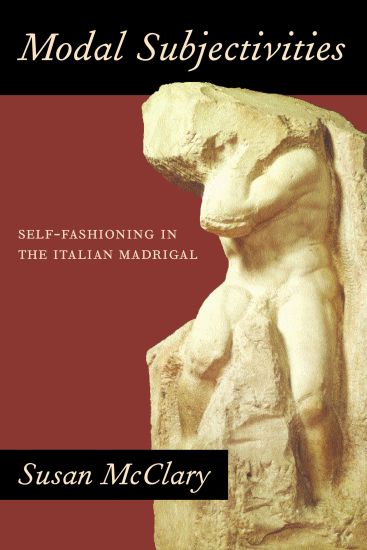
In this boldly innovative book, renowned musicologist Susan McClary presents an illuminating cultural interpretation of the Italian madrigal, one of the most influential repertories of the Renaissance. A genre that sought to produce simulations in sound of complex interiorities, the madrigal introduced into music a vast range of new signifying practices: musical representations of emotions, desire, gender stereotypes, reason, madness, tensions between mind and body, and much more. In doing so, it not only greatly expanded the expressive agendas of European music but also recorded certain assumptions of the time concerning selfhood, making it an invaluable resource for understanding the history of Western subjectivity. Modal Subjectivities covers the span of the sixteenth-century polyphonic madrigal, from its early manifestations in Philippe Verdelot's settings of Machiavelli in the 1520s through the tortured chromatic experiments of Carlo Gesualdo. Although McClary takes the lyrics into account in shaping her readings, she focuses particularly on the details of the music itself—the principal site of the genre's self-fashionings. In order to work effectively with musical meanings in this pretonal repertory, she also develops an analytical method that allows her to unravel the sophisticated allegorical structures characteristic of the madrigal. This pathbreaking book demonstrates how we might glean insights into a culture on the basis of its nonverbal artistic enterprises.
The Passions of Peter Sellars

The Passions of Peter Sellars

Susan McClary

The University of Michigan Press
2019
sidottu
Recognized as one of the most innovative and influential directors of our time, Peter Sellars has produced acclaimed—and often controversial—versions of many beloved operas and oratorios. He has also collaborated with several composers, including John C. Adams and Kaija Saariaho, to create challenging new operas. The Passions of Peter Sellars follows the development of his style, beginning with his interpretations of the Mozart-Da Ponte operas, proceeding to works for which he assembled the libretti and even the music, and concluding with his celebrated stagings of Bach’s passions with the Berlin Philharmonic. Many directors leave the musical aspects of opera entirely to the singers and conductor. Sellars, however, immerses himself in the score, and has created a distinctive visual vocabulary to embody musical gesture on stage, drawing on the energies of the music as he shapes characters, ensemble interaction, and large-scale dramatic trajectories. As a leading scholar of gender and music, and the history of opera, Susan McClary is ideally positioned to illuminate Sellars’s goal to address both the social tensions embodied in these operas as well as the spiritual dimensions of operatic performance. McClary considers Sellars’s productions of Mozart’s Le nozze di Figaro, Don Giovanni, and Così fan tutte; Handel’s Theodora; Messiaen’s Saint François d’Assise; John C. Adams’s Nixon in China, The Death of Klinghoffer, El Niño, and Doctor Atomic; Kaija Saariaho’s L’amour de loin, La Passion de Simone, and Only the Sound Remains; Purcell’s The Indian Queen; and Bach’s passions of Saint Matthew and Saint John. Approaching Sellars’s theatrical strategies from a musicological perspective, McClary blends insights from theater, film, and literary scholarship to explore the work of one of the most brilliant living interpreters of opera.
Just Vibrations

Just Vibrations

William Cheng; Susan McClary

The University of Michigan Press
2016
sidottu
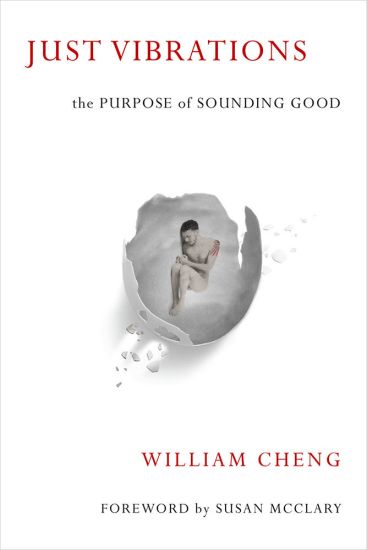
Modern academic criticism bursts with what Eve Kosofsky Sedgwick once termed paranoid readings—interpretative feats that aim to prove a point, persuade an audience, and subtly denigrate anyone who disagrees. Driven by strategies of negation and suspicion, such rhetoric tends to drown out softer-spoken reparative efforts, which forego forceful argument in favor of ruminations on pleasure, love, sentiment, reform, care, and accessibility.Just Vibrations: The Purpose of Sounding Good calls for a time-out in our serious games of critical exchange. Charting the divergent paths of paranoid and reparative affects through illness narratives, academic work, queer life, noise pollution, sonic torture, and other touchy subjects, William Cheng exposes a host of stubborn norms in our daily orientations toward scholarship, self, and sound. How we choose to think about the perpetration and tolerance of critical and acoustic offenses may ultimately lead us down avenues of ethical ruin—or, if we choose, repair. With recourse to experimental rhetoric, interdisciplinary discretion, and the playful wisdoms of childhood, Cheng contends that reparative attitudes toward music and musicology can serve as barometers of better worlds.
Just Vibrations

Just Vibrations

William Cheng; Susan McClary

The University of Michigan Press
2016
nidottu
Modern academic criticism bursts with what Eve Kosofsky Sedgwick once termed paranoid readings—interpretative feats that aim to prove a point, persuade an audience, and subtly denigrate anyone who disagrees. Driven by strategies of negation and suspicion, such rhetoric tends to drown out softer-spoken reparative efforts, which forego forceful argument in favor of ruminations on pleasure, love, sentiment, reform, care, and accessibility.Just Vibrations: The Purpose of Sounding Good calls for a time-out in our serious games of critical exchange. Charting the divergent paths of paranoid and reparative affects through illness narratives, academic work, queer life, noise pollution, sonic torture, and other touchy subjects, William Cheng exposes a host of stubborn norms in our daily orientations toward scholarship, self, and sound. How we choose to think about the perpetration and tolerance of critical and acoustic offenses may ultimately lead us down avenues of ethical ruin—or, if we choose, repair. With recourse to experimental rhetoric, interdisciplinary discretion, and the playful wisdoms of childhood, Cheng contends that reparative attitudes toward music and musicology can serve as barometers of better worlds.
Structures of Feeling in Seventeenth-Century Cultural Expression
Between the waning of the Renaissance and the beginning of the Enlightenment, many fundamental aspects of human behaviour - from expressions of gender to the experience of time - underwent radical changes. While some of these transformations were recorded in words, others have survived in non-verbal cultural media, notably the visual arts, poetry, theatre, music, and dance. Structures of Feeling in Seventeenth-Century Cultural Expression explores how artists made use of these various cultural forms to grapple with human values in the increasingly heterodox world of the 1600s. Essays from prominent historians, musicologists, and art critics examine methods of non-verbal cultural expression through the broad themes of time, motion, the body, and global relations. Together, they show that seventeenth-century cultural expression was more than just an embryonic stage within Western artistic development. Instead, the contributors argue that this period marks some of the most profound changes in European subjectivities.
Desire and Pleasure in Seventeenth-Century Music

Desire and Pleasure in Seventeenth-Century Music

Susan McClary

University of California Press
2012
sidottu
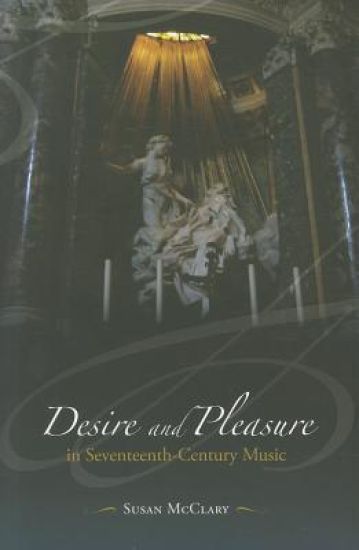
In this book, Susan McClary examines the mechanisms through which seventeenth-century musicians simulated extreme affective states - desire, divine rapture, and ecstatic pleasure. She demonstrates how every major genre of the period, from opera to religious music to instrumental pieces based on dances, was part of this striving for heightened passions by performers and listeners. While she analyzes the social and historical reasons for the high value placed on expressive intensity in both secular and sacred music, and she also links desire and pleasure to the many technical innovations of the period. McClary shows how musicians - whether working within the contexts of the Reformation or Counter-Reformation, Absolutists courts or commercial enterprises in Venice - were able to manipulate known procedures to produce radically new ways of experiencing time and the Self.
Reading Music

Reading Music

Susan McClary

Ashgate Publishing Limited
2007
sidottu
This outstanding collection of Susan McClary's work exemplifies her contribution to a bridging of the gap between historical context, culture and musical practice. The selection includes essays which have had a major impact on the field and others which are less known and reproduced here from hard-to-find sources. The volume is divided into four parts: Interpretation and Polemics, Gender and Sexuality, Popular Music, and Early Music. Each of the essays treats music as cultural text and has a strong interdisciplinary appeal. Together with the autobiographical introduction they will prove essential reading for anyone interested in the life and times of a renegade musicologist.
Towards Tonality

Towards Tonality

Thomas Christensen; Penelope Gouk; Gérard Geay; Susan McClary; Markus Jans

Leuven University Press
2007
pokkari
This is a collection of essays based on lectures presented at the International Orpheus Academy for Music and Theory on "Historical Theory, Performance, and Meaning in Baroque Music". The often complex connections and intersections between, e.g., modal and tonal idioms, contrapuntal and harmonic organisation, were considered from various perspectives as to the transition (towards tonality) from the Renaissance to the Baroque era.
Modal Subjectivities

Modal Subjectivities

Susan McClary

University of California Press
2004
sidottu
In this boldly innovative book, renowned musicologist Susan McClary presents an illuminating cultural interpretation of the Italian madrigal, one of the most influential repertories of the Renaissance. A genre that sought to produce simulations in sound of complex interiorities, the madrigal introduced into music a vast range of new signifying practices: musical representations of emotions, desire, gender stereotypes, reason, madness, tensions between mind and body, and much more. In doing so, it not only greatly expanded the expressive agendas of European music but also recorded certain assumptions of the time concerning selfhood, making it an invaluable resource for understanding the history of Western subjectivity. Modal Subjectivities covers the span of the sixteenth-century polyphonic madrigal, from its early manifestations in Philippe Verdelot's settings of Machiavelli in the 1520s through the tortured chromatic experiments of Carlo Gesualdo. Although McClary takes the lyrics into account in shaping her readings, she focuses particularly on the details of the music itself - the principal site of the genre's self-fashionings. In order to work effectively with musical meanings in this pretonal repertory, she also develops an analytical method that allows her to unravel the sophisticated allegorical structures characteristic of the madrigal. This pathbreaking book demonstrates how we might glean insights into a culture on the basis of its nonverbal artistic enterprises.
Feminine Endings

Feminine Endings

Susan Mcclary

University of Minnesota Press
2002
nidottu
A groundbreaking collection of essays in feminist music criticism, this book addresses problems of gender and sexuality in repertoires ranging from the early seventeenth century to rock and performance art. ". . . this is a major book . . . [McClary's] achievement borders on the miraculous." The Village Voice"No one will read these essays without thinking about and hearing music in new and interesting ways. Exciting reading for adventurous students and staid professionals." Choice"Feminine Endings, a provocative 'sexual politics' of Western classical or art music, rocks conservative musicology at its core. No review can do justice to the wealth of ideas and possibilities [McClary's] book presents. All music-lovers should read it, and cheer." The Women's Review of Books"McClary writes with a racy, vigorous, and consistently entertaining style. . . . What she has to say specifically about the music and the text is sharp, accurate, and telling; she hears what takes place musically with unusual sensitivity."-The New York Review of Books
Conventional Wisdom

Conventional Wisdom

Susan McClary

University of California Press
2001
pokkari
With her usual combination of erudition, innovation, and spirited prose, Susan McClary reexamines the concept of musical convention in this fast-moving and refreshingly accessible book. Exploring the ways that shared musical practices transmit social knowledge, "Conventional Wisdom" offers an account of our own cultural moment in terms of two dominant traditions: tonality and blues. McClary looks at musical history from new and unexpected angles and moves easily across a broad range of repertoires - the blues, eighteenth-century tonal music, late Beethoven, and rap. As one of the most influential trailblazers in contemporary musical understanding, McClary once again moves beyond the borders of the 'purely musical' into the larger world of history and society, and beyond the idea of a socially stratified core canon toward a musical pluralism. Those who know McClary only as a feminist writer will discover her many other sides, but not at the expense of gender issues, which are smoothly integrated into the general argument. In considering the need for a different way of telling the story of Western music, "Conventional Wisdom" bravely tackles big issues concerning classical, popular, and postmodern repertoires and their relations to the broader musical worlds that create and enjoy them.
Cecilia Reclaimed

Cecilia Reclaimed

Susan McClary

University of Illinois Press
1993
nidottu
Cecilia, a fifteenth-century Christian martyr, has long been considered the patron saint of music. In this pathbreaking volume, ten of the best known scholars in the newly emerging field of feminist musicology explore both how gender has helped shape genres and works of music and how music has contributed to prevailing notions of gender. The musical subjects include concert music, both instrumental and vocal, and the vernacular genres of ballads, salon music, and contemporary African American rap. The essays raise issues not only of gender but also of race and class, moving among musical practices of the courtly ruling class and the elite discourse of the twentieth-century modernist movement to practices surrounding marginal girls in Renaissance Venice and the largely white middle-class experiences of magazine and balladry.