Kirjojen hintavertailu. Mukana 12 302 127 kirjaa ja 12 kauppaa.

Kirjailija

Susan Rubin Suleiman

Kirjat ja teokset yhdessä paikassa: 5 kirjaa, julkaisuja vuosilta 1999-2024, suosituimpien joukossa István Szabó. Vertaile teosten hintoja ja tarkista saatavuus suomalaisista kirjakaupoista.

5 kirjaa

Kirjojen julkaisuhaarukka 1999-2024.

István Szabó

István Szabó

Susan Rubin Suleiman

BLOOMSBURY PUBLISHING PLC
2024
nidottu
István Szabó is one of the few Hungarian filmmakers to have earned a major international reputation over the past half century. This thoughtful and original book is the first examination of Szabó’s contribution to contemporary thought, engaging the troubled history of Europe in the 20th and 21st centuries. István Szabó’s importance as a filmmaker lies not only in his attention to film’s formal elements but in his deep and ongoing engagement with some of the most urgent ethical and existential questions of our time. With detailed analyses of István Szabó’s major films, from his 1960s works to his Academy Award for Best Foreign Film winner, Mephisto, and on through Szabó’s last film in 2020, Final Report, Susan Rubin Suleiman focuses on four important questions pertaining to existential choice: to leave home or to stay in a communist country? To collaborate or not with an authoritarian regime? To affirm or to deny one’s Jewishness in the face of antisemitism? To seek or to give up on community in the face of individual or national conflicts? Above all, Suleiman addresses the single most important philosophical question that haunts Szabó’s work, as it does that of many other Central European intellectuals and filmmakers of our time. That is, how do individuals attempt, through the life choices they make or that are foisted on them, to create a viable self in extreme historical situations over which they have no control?
István Szabó

István Szabó

Susan Rubin Suleiman

BLOOMSBURY PUBLISHING PLC
2024
sidottu
István Szabó is one of the few Hungarian filmmakers to have earned a major international reputation over the past half century. This thoughtful and original book is the first examination of Szabó’s contribution to contemporary thought, engaging the troubled history of Europe in the 20th and 21st centuries. István Szabó’s importance as a filmmaker lies not only in his attention to film’s formal elements but in his deep and ongoing engagement with some of the most urgent ethical and existential questions of our time. With detailed analyses of István Szabó’s major films, from his 1960s works to his Academy Award for Best Foreign Film winner, Mephisto, and on through Szabó’s last film in 2020, Final Report, Susan Rubin Suleiman focuses on four important questions pertaining to existential choice: to leave home or to stay in a communist country? To collaborate or not with an authoritarian regime? To affirm or to deny one’s Jewishness in the face of antisemitism? To seek or to give up on community in the face of individual or national conflicts? Above all, Suleiman addresses the single most important philosophical question that haunts Szabó’s work, as it does that of many other Central European intellectuals and filmmakers of our time. That is, how do individuals attempt, through the life choices they make or that are foisted on them, to create a viable self in extreme historical situations over which they have no control?
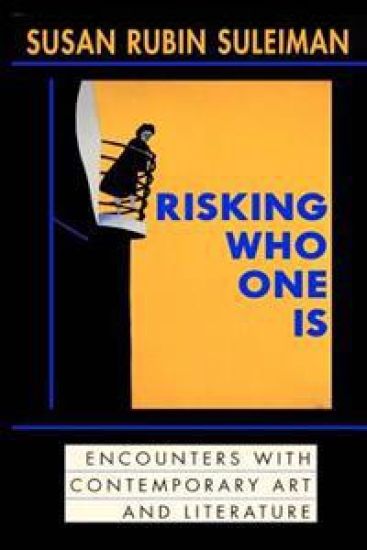
Risking Who One Is: : Encounters with Contemporary Art and Literature

Risking Who One Is: : Encounters with Contemporary Art and Literature

Susan Rubin Suleiman

Createspace Independent Publishing Platform
2013
nidottu
Susan Suleiman sets forth in this insightful work an intimate and provocative exchange with contemporary writers and artists such as Simone de Beauvoir, Hé lè ne Cixous, Elie Wiesel, Mary Gordon, Max Ernst and Angela Carter. Suleiman includes us in her voyages of self-discovery as she confronts the conflicts between the problematic and crucial relations between individual life-story and collective history.
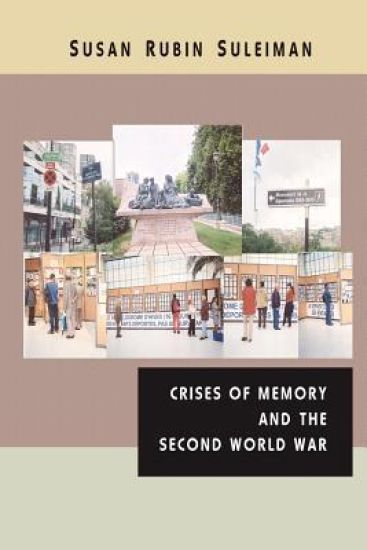
Crises of Memory and the Second World War

Crises of Memory and the Second World War

Susan Rubin Suleiman

Createspace Independent Publishing Platform
2012
nidottu
In this acclaimed book, renowned Harvard scholar Susan Rubin Suleiman discusses individual and collective memories of World War II, as reflected in literary memoirs, autobiographical novels, works of history and philosophy, and films. Suleiman argues that memories of World War II transcend national boundaries, due not only to the global nature of the war but also to the increasingly global presence of the Holocaust as a site of collective memory. Among the works she discusses are Jean-Paul Sartre's essays on the Occupation and Resistance in France; Marcel Ophuls's innovative documentary on the Nazi interrogator Klaus Barbie, who was tried for crimes against humanity in 1987; Istv n Szab 's film "Sunshine," a chronicle of Jewish identity in central Europe; literary memoirs by Jorge Semprun and Elie Wiesel; and experimental writing by child survivors of the Holocaust, Georges Perec and Raymond Federman.
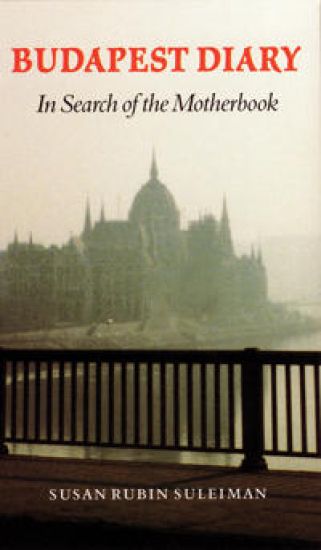
Budapest Diary

Budapest Diary

Susan Rubin Suleiman

University of Nebraska Press
1999
pokkari
Can you forget the place you once called home? What does it take to make you recapture it? In this moving memoir, Susan Rubin Suleiman describes her returns to the city of her birth-where she speaks the language like a native but with an accent. Suleiman left Budapest in 1949 as a young child with her parents, fleeing communism; thirty-five years later, she returned with her two sons from a brief vacation and began to remember her childhood. Her earliest memories, of Nazi persecution in the final year of World War II, came back to her in fragments, as did memories of her first school years after the war of the stormy marriage between her father, a brilliant Talmudic scholar, and her mother, a cosmopolitan woman from a more secular Jewish family. In 1993, after the fall of communism and the death of her mother, Suleiman returned to Budapest for six-month stay. She recounts her ongoing quest for personal history, interweaving it with the stories of present-day Hungarians struggling to make sense of the changes in their individual and collective lives. Suleiman's search for documents relating to her childhood, the lives of her parents and their families, and the Jewish communities of Hungary and Poland takes her on a series of fascinating journeys within and outside Budapest. Emerging from this eloquent, often suspenseful diary is the portrait of an intellectual who recaptures her past and comes into contact with the vital, troubling world of contemporary Eastern Europe. Suleiman's vivid descriptions of her encounters with a proud, old city and its people in a time of historical change remind us that every life story is at once unique and part of a larger history.