Kirjojen hintavertailu. Mukana 12 390 323 kirjaa ja 12 kauppaa.

Kirjailija

Susan Stewart

Kirjat ja teokset yhdessä paikassa: 40 kirjaa, julkaisuja vuosilta 1981-2026, suosituimpien joukossa Cinder: New and Selected Poems. Vertaile teosten hintoja ja tarkista saatavuus suomalaisista kirjakaupoista.

40 kirjaa

Kirjojen julkaisuhaarukka 1981-2026.

Red Rover

Red Rover

Susan Stewart

University of Chicago Press
2011
nidottu
Red Rover is both the name of a children's game and a formless spirit, a god of release and permission, called upon in the course of that game. The "red rover" is also a thread of desire, and a clue to the forces of love and antipathy that shape our fate. In her most innovative work to date, award-winning poet and critic Susan Stewart remembers the antithetical forces - falling and rising, coming and going, circling and centering - revealed in such games and traces them out to many other cycles. Ranging among traditional, open, and newly invented forms, and including a series of free translations of medieval dream visions and love poems, "Red Rover" begins as a historical meditation on our fall and grows into a song of praise for the green and turning world.
Red Rover

Red Rover

Susan Stewart

University of Chicago Press
2008
sidottu
Red Rover is both the name of a children's game and a formless spirit, a god of release and permission, called upon in the course of that game. The "red rover" is also a thread of desire, and a clue to the forces of love and antipathy that shape our fate. In her most innovative work to date, award-winning poet and critic Susan Stewart remembers the antithetical forces - falling and rising, coming and going, circling and centering - revealed in such games and traces them out to many other cycles. Ranging among traditional, open, and newly invented forms, and including a series of free translations of medieval dream visions and love poems, "Red Rover" begins as a historical meditation on our fall and grows into a song of praise for the green and turning world.
The Hive

The Hive

Susan Stewart

University of Georgia Press
2008
pokkari
The Hive, Susan Stewart’s second collection of poetry, brings together new work into three sections that telescope out from private speech to the public and more deeply historical language of the witness. Recurring poems explore the possibilities of language as ceremony while others are rewritings of romanticism and its places. Of Susan Stewart’s first collection, Yellow Stars and Ice, James Cory wrote in the Philadelphia Inquirer that it is “a reading experience to exult in,” and Library Journal stated that “there is magic as well as finesse in this beautiful collection.”
Navigating Through Fear: Learn To Live An Enriched Life Using Spirit's Compass To Guide You
The greatest deterrent to a good life is fear. Anxiety traps far too many of us in lifestyles, jobs and relationships that are mundane and unfulfilling, while causing our self-esteem and self-confidence to suffer. In "Navigating Through Fear," family therapist Susan Stewart takes you along with her as she backpacks solo through Europe as a 50-year old, while teaching her well-proven methods for navigating through fear and expanding risk-taking behaviors. Each chapter contains practical workbook questions, giving you a hands-on opportunity to explore your own limiting patterns. A sample of what you will learn: to replace cautiousness with a delightful zest for living, to let go, lighten up & become more playful, to improve self-confidence and feelings of worthiness, and to discover your spiritual strength through surrender.
Cosmetics and Perfumes in the Roman World

Cosmetics and Perfumes in the Roman World

Susan Stewart

The History Press Ltd
2007
nidottu
Presents a survey of the perception and reality of the use of cosmetics and perfumes under the Roman Empire. This work, a companion to "Roman Clothing and Fashion" draws on literary, non-literary, visual and archaeological evidence to show, among other things, the importance of cosmetics and perfumes for health.
Columbarium

Columbarium

Susan Stewart

University of Chicago Press
2005
nidottu
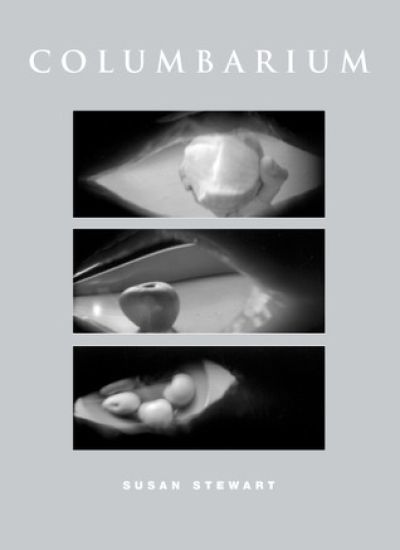
In Columbarium, Susan Stewart gives us a series of splendid, numinous poems about truths learned with the mind but set free through the senses. Modeled on the seventeenth-century practice of century forms, or books of one hundred pages, Columbarium expresses the bond between the living and the dead in voices of parent to child, lover to beloved, and mortal to the gods. Questions of mortality, of goodness and suffering, and of the fragility and power of memory animate this text. Columbarium is both a memorial to the dead and a testament to life.
The Open Studio

The Open Studio

Susan Stewart

University of Chicago Press
2005
nidottu
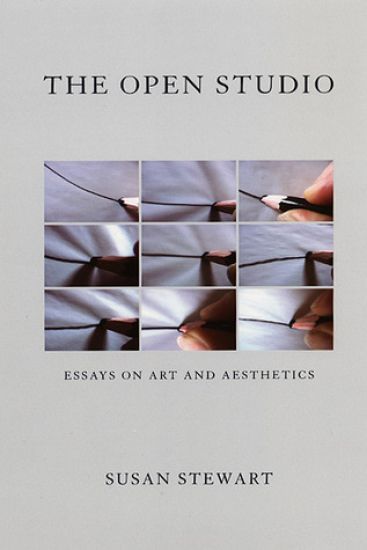
Poets often have responded vitally to the art of their time, and ever since Susan Stewart began writing about art in the early 1980s, her work has resonated with practicing artists, curators, art historians, and art critics. Rooted in a broad and learned range of references, Stewart's fresh and independent essays bridge the fields of literature, aesthetics, and contemporary art.Gathering most of Stewart's writing on contemporary art—long and short pieces first published in small magazines, museum and gallery publications, and edited collections—The Open Studio illuminates work ranging from the installation art of Ann Hamilton to the sculptures and watercolors of Thomas Schütte, the prints and animations of William Kentridge to the films of Tacita Dean. Stewart's essays are often the record of studio conversations with living artists and curators, and of the afterlife of those experiences in the solitude of her own study. Considering a wide variety of art forms, Stewart finds pathbreaking ways to explore them. Whether she is following central traditions of painting, drawing, sculpture, film, photography, and printmaking or exploring the less well-known realms of portrait miniatures, collecting practices, doll-making, music boxes, and gardening, Stewart speaks to the creative process in general and to the relation between art and ethics.The Open Studio will be read eagerly by scholars of art, poetry, and visual theory; by historians interested in the links between contemporary and classic literature and art; and by teachers, students, and practitioners of the visual arts.
The Open Studio

The Open Studio

Susan Stewart

University of Chicago Press
2005
sidottu
Poets often have responded vitally to the art of their time, and ever since Susan Stewart began writing about art in the early 1980s, her work has resonated with practicing artists, curators, art historians, and art critics. Rooted in a broad and learned range of references, Stewart's fresh and independent essays bridge the fields of literature, aesthetics, and contemporary art.Gathering most of Stewart's writing on contemporary art—long and short pieces first published in small magazines, museum and gallery publications, and edited collections—The Open Studio illuminates work ranging from the installation art of Ann Hamilton to the sculptures and watercolors of Thomas Schütte, the prints and animations of William Kentridge to the films of Tacita Dean. Stewart's essays are often the record of studio conversations with living artists and curators, and of the afterlife of those experiences in the solitude of her own study. Considering a wide variety of art forms, Stewart finds pathbreaking ways to explore them. Whether she is following central traditions of painting, drawing, sculpture, film, photography, and printmaking or exploring the less well-known realms of portrait miniatures, collecting practices, doll-making, music boxes, and gardening, Stewart speaks to the creative process in general and to the relation between art and ethics.The Open Studio will be read eagerly by scholars of art, poetry, and visual theory; by historians interested in the links between contemporary and classic literature and art; and by teachers, students, and practitioners of the visual arts.
Columbarium

Columbarium

Susan Stewart

University of Chicago Press
2003
sidottu
Winner of the 2003 National Book Critics Circle Award in the category of poetry.In her long-awaited fourth book of poetry, Susan Stewart gives us a series of splendid, numinous poems about truths learned with the mind but set free through the senses. Modeled on the seventeenth-century practice of century forms, or books of one hundred pages, Columbarium expresses the bond between the living and the dead in voices of parent to child, lover to beloved, and mortal to the gods. The book arrives as a meditative gift from one of our most respected poet-critics. Stewart frames her Columbarium with four poems paying homage to the elements-to their destructive and creative aspects and to their roles in the human and more than human worlds. Both nest and crypt, the book's center holds an alphabet of "shadow georgics," poems of instruction and doubt that link knowledge and the unconscious. Questions of mortality, of goodness and suffering, and of the fragility and power of memory animate these poems. In one poem an apple calls the narrator back from the dead to savor the echoes of its varieties in myth and literature. In another, the seeds of a pear tree reveal the essential unity that makes the diversity of existence possible.Stewart's Columbarium is both a memorial to the dead and a testament to life.
Flying Solo

Flying Solo

Carol M. Anderson; Susan Stewart

WW Norton Co
2002
nidottu
Unmarried at 40—could there be anything worse? Our culture dictates that women who have failed to catch or hold the golden ring of marriage are destined to be deprived and depressed, perhaps even dangerous. Add the burden of age and you have a woman headed for disaster. Not necessarily so, say the authors of Flying Solo, who talked with never-married, divorced, and widowed women in midlife across the country. These women's stories offer blueprints for living, as well as inspiration, for other women "flying solo." Most of these women did not intend to be single at midlife. Yet they have given up the dream of "happily ever after" to create lives on their own that are rich and rewarding. The authors share these women's stories as well as their practical advice on managing the mechanics of being single, transforming loneliness, redefining the place of work, developing friendship and support networks, living with and without intimacy and sex with men, and choosing to have and raise children. In the process they define not just a new American lifestyle but a new American Dream.
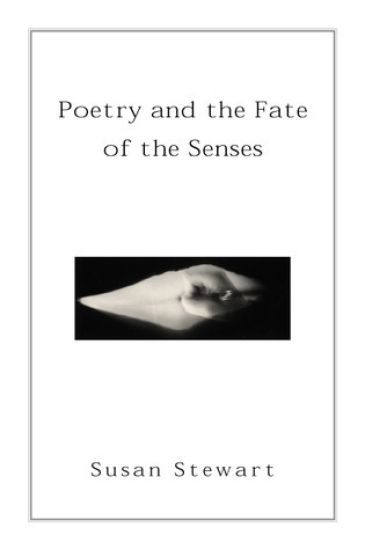
Poetry and the Fate of the Senses

Poetry and the Fate of the Senses

Susan Stewart

University of Chicago Press
2002
nidottu
What is the role of the senses in the creation and reception of poetry? How does poetry carry on the long tradition of making experience and suffering understood by others? With Poetry and the Fate of the Senses, Susan Stewart traces the path of the aesthetic in search of an explanation for the role of poetry in our culture. The task of poetry, she tells us, is to counter the loneliness of the mind, or to help it glean, out of the darkness of solitude, the outline of others. Poetry, she contends, makes tangible, visible, and audible the contours of our shared humanity. It sustains and transforms the threshold between individual and social existence.Herself an acclaimed poet, Stewart not only brings the intelligence of a critic to the question of poetry, but the insight of a practitioner as well. Her new study draws on reading from the ancient Greeks to the postmoderns to explain how poetry creates meanings between persons. Poetry and the Fate of the Senses includes close discussions of poems by Stevens, Hopkins, Keats, Hardy, Bishop, and Traherne, of the sense of vertigo in Baroque and Romantic works, and of the rich tradition of nocturnes in visual, musical, and verbal art. Ultimately, Stewart explores the pivotal role of poetry in contemporary culture. She argues that poetry can counter the denigration of the senses and can expand our imagination of the range of human expression.Poetry and the Fate of the Senses won the 2004 Truman Capote Award for Literary Criticism in Memory of Newton Arvin, administered for the Truman Capote Estate by the University of Iowa Writers' Workshop. It also won the Phi Beta Kappa Society's 2002 Christian Gauss Award for Literary Criticism.
Conflict Resolution

Conflict Resolution

Susan Stewart

Waterside Press
1998
nidottu
Conflict Resolution will be of interest to people who deal with disputes - of whatever kind - including through mediation and alternative dispute resolution procedures. Contents What is Conflict? Strategies for Resolving Conflict Approach to the Territory Family Mediation Mediation Between Neighbours Restorative Justice Mediation in Schools Cross-Cultural and Multi-Faith Mediation Environmental Conflict David and Goliath The World of Work Training Academic Study and Research Issues for the Future Author Susan Stewart has taught conflict resolution and mediation and been involved in the development of innovative university courses covering these topics. She has published extensively in the education field, including works on adult learning. In recent years she has been engaged in mediation as a teacher, researcher and community consultant.
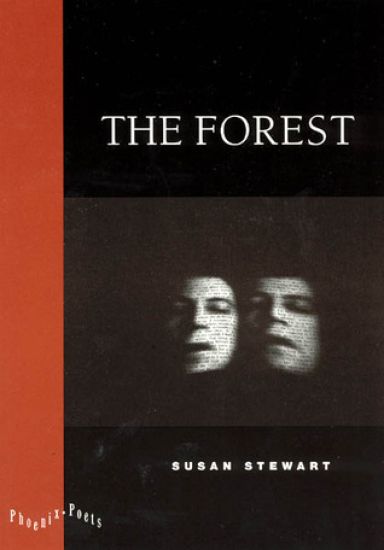
The Forest

The Forest

Susan Stewart

University of Chicago Press
1995
sidottu
Susan Stewart plumbs human history in an attempt to articulate the way language, memory, and art join in evoking consciousness. The Forest is about violence and memory: the violence we do to our surroundings and to ourselves; and the propensity of the human mind to exploit and rationalize in its longing for truth.
The Forest

The Forest

Susan Stewart

University of Chicago Press
1995
nidottu
Susan Stewart plumbs human history in an attempt to articulate the way language, memory, and art join in evoking consciousness. The Forest is about violence and memory: the violence we do to our surroundings and to ourselves; and the propensity of the human mind to exploit and rationalize in its longing for truth.
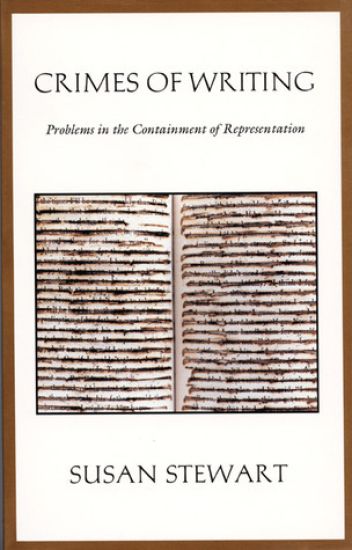
Crimes of Writing

Crimes of Writing

Susan Stewart

Duke University Press
1994
pokkari
From the origins of modern copyright in early eighteenth-century culture to the efforts to represent nature and death in postmodern fiction, this book explores a series of problems regarding the containment of representation. Stewart focuses on specific cases of "crimes of writing"-the forgeries of George Psalmanazar; the production of "fakelore"; the "ballad scandals" of the eighteenth and nineteenth centuries; the imposture of Thomas Chatterton; and contemporary legislation regarding graffiti and pornography. She emphasizes the issues that arise once language is seen as a matter of property, and authorship is viewed as a matter of originality. Finally, Stewart demonstrates that crimes of writing are delineated by the law because they specifically undermine the status of the law itself: the crimes illuminate the irreducible fact that law is written and therefore subject to temporality and interpretation. This valuable and pioneering work, originally published in 1991 (Oxford University Press), will be of interest to literary and legal theorists, folklorists, anthropologists, and scholars of eighteenth-century and postmodern culture.
On Longing

On Longing

Susan Stewart

Duke University Press
1992
pokkari
Miniature books, eighteenth-century novels, Tom Thumb weddings, tall tales, and objects of tourism and nostalgia: this diverse group of cultural forms is the subject of On Longing, a fascinating analysis of the ways in which everyday objects are narrated to animate or realize certain versions of the world. Originally published in 1984 (Johns Hopkins University Press), and now available in paperback for the first time, this highly original book draws on insights from semiotics and from psychoanalytic, feminist, and Marxist criticism. Addressing the relations of language to experience, the body to scale, and narratives to objects, Susan Stewart looks at the "miniature" as a metaphor for interiority and at the "gigantic" as an exaggeration of aspects of the exterior. In the final part of her essay Stewart examines the ways in which the "souvenir" and the "collection" are objects mediating experience in time and space.
Crimes of Writing

Crimes of Writing

Susan Stewart

Oxford University Press Inc
1992
sidottu
Crimes of Writings examines questions surrounding subjectivity, authenticity, and writing. First, Stewart examines cases of forgery, literary imposture, pornography and graffiti, and the development, from the early eighteenth century onward, of the laws articulating such crimes. Second, she uses `crimes of writing' to connote the ways in which such practices are in fact inversions or negations of cultural rules. Finally, she claims that crimes of writing are delineated by law because they specifically undermine the status of the Law itself.
Mastering Resistance

Mastering Resistance

Carol M. Anderson; Susan Stewart

Guilford Publications
1983
sidottu
Resistance--any attitude or behavior of the therapist, patient, or system that resists change--is integral to every therapeutic relationship. Family therapists are all too familiar with challenges to their professional credentials, families' reluctance to convene for treatment, cancellations, rejection of therapy, requests to exclude a family member, and numerous other maneuvers that frustrate therapeutic goals. Mastering Resistance presents concrete, accessible strategies for coping directly with specific, commonly encountered problems of resistance. Moreover, it demonstrates how resistance can effectively be used to foster a stronger therapist-client alliance.
Yellow Stars and Ice

Yellow Stars and Ice

Susan Stewart

Princeton University Press
1981
pokkari
From a sequence, "The Countries Surrounding the Garden of Eden": Gihon, that compasseth the whole land At the first frost we found our sheep with strangled hearts, lying on their backs in the frozen clover, their eyes wide open as if they were surprised by a constellation of drought or endless winter. The wolves walked into the snow, like men who have given up living without love; cows would no longer let go of their calves, hiding them deep in the birch groves. Everywhere the roads gave off their wild animal cries, running toward the edge of what we had thought was the world. And the names of things as we knew them would no longer bring them to us.