Kirjojen hintavertailu. Mukana 12 390 323 kirjaa ja 12 kauppaa.

Kirjailija

Susana Nuccetelli

Kirjat ja teokset yhdessä paikassa: 8 kirjaa, julkaisuja vuosilta 2012-2023, suosituimpien joukossa How to Think Logically. Vertaile teosten hintoja ja tarkista saatavuus suomalaisista kirjakaupoista.

8 kirjaa

Kirjojen julkaisuhaarukka 2012-2023.

Engaging Bioethics

Engaging Bioethics

Gary Seay; Susana Nuccetelli

TAYLOR FRANCIS LTD
2023
nidottu
Presuming readers start with no background in philosophy, this enhanced introduction to bioethics first provides balanced, philosophically based coverage of moral reasoning, moral theories, and the law. It then leads the newly equipped reader to explore a range of important ethical issues in health care and biomedical research.Engaging Bioethics, Second Edition is designed for undergraduates throughout the humanities and social sciences as well as for healthcare professionals-in-training, including students in medical school, pre-medicine, nursing, public health, and those studying to assist physicians in various capacities. Along with coverage of standard bioethical issues—such as vaccination, access to health care, new reproductive technologies, genetics, research on human and animal subjects, abortion, medical confidentiality, and disclosure—it now addresses ethical aspects of the Covid-19 pandemic, the US Supreme Court’s Dobbs v Jackson decision, use of CRISPR for human gene editing, and the expansion of medically assisted death globally.Key Features Flexibility for the instructor, with chapters that can be read independently and in an order that fits the course structureIntegration with case studies and primary sourcesAttention to issues of gender, race, cultural diversity, and justice in health carePedagogical features to help instructors and studentsA companion website (www.routledge.com/cw/seay) with a virtual anthology linking to key primary sources, a test bank, topics for papers, and PowerPoints for lectures and class discussionKey Updates to the Second EditionAn expanded treatment of vaccination ethicsA new chapter wholly devoted to the tools of moral thinkingAdditional topics on the patient–healthcare professional relationship such as social nudging in health care and public health, and the limits of beneficence in connection with the burnout of frontline healthcare workers during the Covid-19 pandemicNew, up-to-date cases and questions for further discussion throughout the chaptersUpdated learning objectives and overviews for each chapter

Engaging Bioethics

Engaging Bioethics

Gary Seay; Susana Nuccetelli

TAYLOR FRANCIS LTD
2023
sidottu
Presuming readers start with no background in philosophy, this enhanced introduction to bioethics first provides balanced, philosophically based coverage of moral reasoning, moral theories, and the law. It then leads the newly equipped reader to explore a range of important ethical issues in health care and biomedical research.Engaging Bioethics, Second Edition is designed for undergraduates throughout the humanities and social sciences as well as for healthcare professionals-in-training, including students in medical school, pre-medicine, nursing, public health, and those studying to assist physicians in various capacities. Along with coverage of standard bioethical issues—such as vaccination, access to health care, new reproductive technologies, genetics, research on human and animal subjects, abortion, medical confidentiality, and disclosure—it now addresses ethical aspects of the Covid-19 pandemic, the US Supreme Court’s Dobbs v Jackson decision, use of CRISPR for human gene editing, and the expansion of medically assisted death globally.Key Features Flexibility for the instructor, with chapters that can be read independently and in an order that fits the course structureIntegration with case studies and primary sourcesAttention to issues of gender, race, cultural diversity, and justice in health carePedagogical features to help instructors and studentsA companion website (www.routledge.com/cw/seay) with a virtual anthology linking to key primary sources, a test bank, topics for papers, and PowerPoints for lectures and class discussionKey Updates to the Second EditionAn expanded treatment of vaccination ethicsA new chapter wholly devoted to the tools of moral thinkingAdditional topics on the patient–healthcare professional relationship such as social nudging in health care and public health, and the limits of beneficence in connection with the burnout of frontline healthcare workers during the Covid-19 pandemicNew, up-to-date cases and questions for further discussion throughout the chaptersUpdated learning objectives and overviews for each chapter
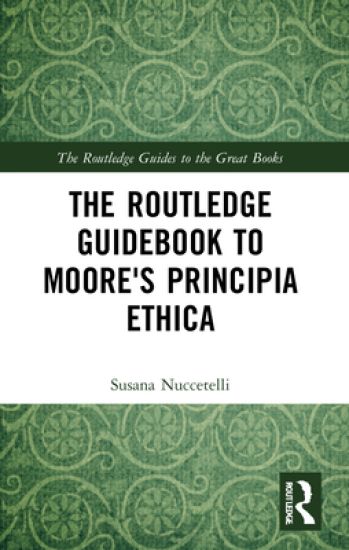
The Routledge Guidebook to Moore's Principia Ethica
G.E. Moore’s Principia Ethica is a landmark publication in twentieth-century moral philosophy. Through focusing on the origin and evolution of his main doctrines, this guidebook makes it clear that Moore was an innovator whose provocative take on traditional philosophical problems ignited heated debates among philosophers. Principia Ethica is an important text for those attempting to understand and engage with some major philosophical debates in ethics today.The Routledge Guidebook to Moore's Principia Ethica provides a comprehensive introduction to this historic text, examining key Moorean themes including: ethical non-naturalismthe naturalistic fallacythe Open Question Argumentmoral ontology and epistemologyideal utilitarianismvindictive punishment and organicitymoral intuition for epistemic justification in ethicstheory of valueIdeal for anyone wanting to understand and gain perspective on Moore’s seminal work, the book is essential reading for students of moral philosophy, metaethics, normative ethics, philosophical analysis, and related fields.
The Routledge Guidebook to Moore's Principia Ethica
G.E. Moore’s Principia Ethica is a landmark publication in twentieth-century moral philosophy. Through focusing on the origin and evolution of his main doctrines, this guidebook makes it clear that Moore was an innovator whose provocative take on traditional philosophical problems ignited heated debates among philosophers. Principia Ethica is an important text for those attempting to understand and engage with some major philosophical debates in ethics today.The Routledge Guidebook to Moore's Principia Ethica provides a comprehensive introduction to this historic text, examining key Moorean themes including: ethical non-naturalismthe naturalistic fallacythe Open Question Argumentmoral ontology and epistemologyideal utilitarianismvindictive punishment and organicitymoral intuition for epistemic justification in ethicstheory of valueIdeal for anyone wanting to understand and gain perspective on Moore’s seminal work, the book is essential reading for students of moral philosophy, metaethics, normative ethics, philosophical analysis, and related fields.
An Introduction to Latin American Philosophy

An Introduction to Latin American Philosophy

Susana Nuccetelli

Cambridge University Press
2020
sidottu
Latin American philosophy is best understood as a type of applied philosophy devoted to issues related to the culture and politics of Latin America. This introduction provides a comprehensive overview of its central topics. It explores not only the unique insights offered by Latin American thinkers into the traditional pre-established fields of Western philosophy, but also the many 'isms' developed as a direct result of Latin American thought. Many concern matters of practical ethics and social and political philosophy, such as Lascasianism, Arielism, Bolívarism, modest and immodest feminisms, republicanism, positivism, Marxism, and liberationism. But there are also meta-philosophical 'isms' such as originalism and perspectivism. Together with clear and accessible discussions of the major issues and arguments, the book offers helpful summaries, suggestions for further reading, and a glossary of terms. It will be valuable for all readers wanting to explore the richness and diversity of Latin American philosophy.
An Introduction to Latin American Philosophy

An Introduction to Latin American Philosophy

Susana Nuccetelli

Cambridge University Press
2020
pokkari
Latin American philosophy is best understood as a type of applied philosophy devoted to issues related to the culture and politics of Latin America. This introduction provides a comprehensive overview of its central topics. It explores not only the unique insights offered by Latin American thinkers into the traditional pre-established fields of Western philosophy, but also the many 'isms' developed as a direct result of Latin American thought. Many concern matters of practical ethics and social and political philosophy, such as Lascasianism, Arielism, Bolívarism, modest and immodest feminisms, republicanism, positivism, Marxism, and liberationism. But there are also meta-philosophical 'isms' such as originalism and perspectivism. Together with clear and accessible discussions of the major issues and arguments, the book offers helpful summaries, suggestions for further reading, and a glossary of terms. It will be valuable for all readers wanting to explore the richness and diversity of Latin American philosophy.
Engaging Bioethics

Engaging Bioethics

Gary Seay; Susana Nuccetelli

Routledge
2017
nidottu
Engaging Bioethics: An Introduction with Case Studies draws students into this rapidly changing field, helping them to actively untangle the many issues at the intersection of medicine and moral concern. Presuming readers start with no background in philosophy, it offers balanced, philosophically based, and rigorous inquiry for undergraduates throughout the humanities and social sciences as well as for health care professionals-in-training, including students in medical school, pre-medicine, nursing, public health, and those studying to assist physicians in various capacities. Written by an author team with more than three decades of combined experience teaching bioethics, this book offers Flexibility to the instructor, with chapters that can be read independently and in an order that fits the course structure Up-to-date coverage of current controversies on topics such as vaccination, access to health care, new reproductive technologies, genetics, biomedical research on human and animal subjects, medically assisted death, abortion, medical confidentiality, and disclosure Attention to issues of gender, race, cultural diversity, and justice in health care Integration with case studies and primary sources Pedagogical features to help instructors and students, including Chapter learning objectives Text boxes and figures to explain important terms, concepts, and cases End-of-chapter summaries, key words, and annotated further readings Discussion cases and questions Appendices on moral reasoning and the history of ethical issues at the end and beginning of life An index of cases discussed in the book and extensive glossary/index A companion website (http://www.routledgetextbooks.com/textbooks/9780415837958/) with a virtual anthology linking to key primary sources, a test bank, topics for papers, and PowerPoints for lectures and class discussion
How to Think Logically

How to Think Logically

Gary Seay; Susana Nuccetelli

Pearson
2012
nidottu
ALERT: Before you purchase, check with your instructor or review your course syllabus to ensure that you select the correct ISBN. Several versions of Pearson's MyLab & Mastering products exist for each title, including customized versions for individual schools, and registrations are not transferable. In addition, you may need a CourseID, provided by your instructor, to register for and use Pearson's MyLab & Mastering products. Packages Access codes for Pearson's MyLab & Mastering products may not be included when purchasing or renting from companies other than Pearson; check with the seller before completing your purchase. Used or rental books If you rent or purchase a used book with an access code, the access code may have been redeemed previously and you may have to purchase a new access code. Access codes Access codes that are purchased from sellers other than Pearson carry a higher risk of being either the wrong ISBN or a previously redeemed code. Check with the seller prior to purchase. -- Concise Principles of Reasoning Concise, yet covering all the basics of a 15-week course in informal logic or critical reasoning, this text engages students with a lively format and clear writing style. The small scale of the book keeps the cost low, a vital consideration in today’s economy, yet without compromising on logical rigor. The author’s presentation strikes a careful balance: it offers clear, jargon-free writing while preserving rigor. Brimming with numerous pedagogical features, this accessible text assists students with analysis, reconstruction, and evaluation of arguments and helps them become independent, analytical thinkers. Introductory students are exposed to the basic principles of reasoning while also having their appetites whetted for future courses in philosophy. Teaching and Learning Experience Improve Critical Thinking - Abundant pedagogical aids -- including exercises and study questions within each chapter -- encourage students to examine their assumptions, discern hidden values, evaluate evidence, assess their conclusions, and more! Engage Students - Chapter and section outlines, summaries, illustrative examples, special-emphasis boxes and key terms present new ideas in manageable-sized units of information so students can digest each concept before moving on to the next one, and ensure students key-in on crucial points to remember. Support Instructors -Teaching your course just got easier! You can create a Customized Text or use our Instructor’s Manual, or PowerPoint Presentation Slides. Plus, this concise textbook contains only as much material as you can cover in a course, creating an affordable alternative you can assign with confidence to a cost-conscious student population. Additionally, each chapter in How to Think Logically is designed as a self-contained unit so that you can choose the combination and order of chapters according to the needs of your courses; making the text a flexible base for courses in logic, critical thinking, and rhetoric.