Kirjojen hintavertailu. Mukana 12 332 780 kirjaa ja 12 kauppaa.

Kirjailija

Susanne Witzgall

Kirjat ja teokset yhdessä paikassa: 6 kirjaa, julkaisuja vuosilta 2013-2022, suosituimpien joukossa Hybrid Ecologies. Vertaile teosten hintoja ja tarkista saatavuus suomalaisista kirjakaupoista.

6 kirjaa

Kirjojen julkaisuhaarukka 2013-2022.

Hybrid Ecologies

Hybrid Ecologies

Susanne Witzgall; Marietta Kesting; Maria Muhle; Jenny Nachtigall

Diaphanes AG
2022
nidottu
A new approach to the notion of ecology emphasizing its relevance for art and design. The notion of ecology not only figures centrally in current debates around climate change, but also traverses contemporary discourses in the arts, the humanities, and the social and techno sciences. In this present form, ecology refers to the multilayered and multidimensional nexus of living processes and technological and media practices—that is, to the complex relations of human and nonhuman agents. Hybrid Ecologies understands ecology as an ambivalent notion, whose very broadness simultaneously opens up new fields of action and raises provocative questions, not least concerning its genealogy. This interdisciplinary volume explores the political and social effects of rethinking community in ecological terms, with a particular emphasis on what the contemporary notion of ecology might mean for artistic and design practices. The result of the fifth annual program of the cx centre for interdisciplinary studies, which was conceived in cooperation with the Chair of Philosophy | Aesthetic Theory at the Academy of Fine Arts in Munich, Hybrid Ecologies is a timely and thought-provoking study of one of the most important themes of our time.
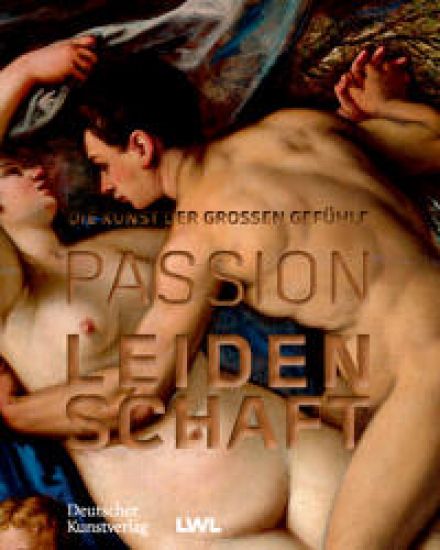
Passion Leidenschaft

Passion Leidenschaft

Petra Marx; Ute Frevert; Ursula Frohne; Stephanie Eichberg; Ulrich Heinen; Klaus Niehr; Kerstin Thomas; Susanne Witzgall

Deutscher Kunstverlag
2020
sidottu
Envy and anger, love and hate, desire and jealousy—the depiction of heartrending, very dramatic, deeply exhilarating, or deeply upsetting figures and scenes has been a central theme throughout the history of European art. Great emotions change the world, influence our thinking and beliefs, and lead to war and resistance. In politics and society, emotions are more relevant than ever. In a large special exhibition at the LWL-Museum für Kunst und Kultur in Münster and the accompanying catalogue, some artworks provide a historical overview from the beginnings in antiquity until the present day. Brought together are paintings, sculptures, photos, and video installations by Matthias Grünewald, Leonardo da Vinci, Peter Paul Rubens, Camille Claudel, Edvard Munch, Käthe Kollwitz, Bill Viola, Maria Lassnig, and many more.
The Present of the Future

The Present of the Future

Susanne Witzgall; Kerstin Stakemeier

Diaphanes AG
2018
nidottu
As the world teeters on the brink of crisis and potentially catastrophic change, outlooks for the future have come to be characterized by anxiety. The skepticism that meets utopian visions of the future has given rise to collective nostalgia for seemingly reliable ideas. But rather than stagnate in idealism, how can artists and scholars create the potential for real change? The result of a lecture series held at the cx centre for interdisciplinary studies at the Academy of Fine Arts, Munich, The Present of the Future explores our current relationship to the future and considers strategies for artists and scholars to establish effective action for shaping alternative futures. Contributors to the book approach this problem from the perspective of diverse disciplines, including art, design, architecture, and philosophy.
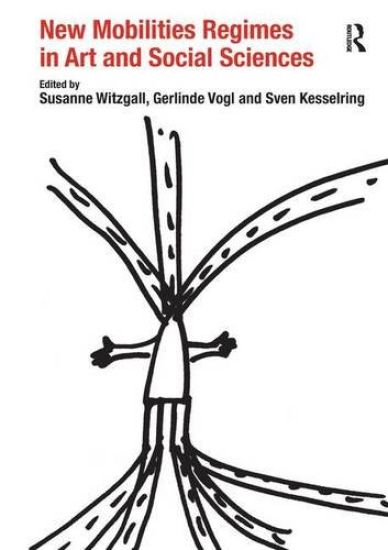
New Mobilities Regimes in Art and Social Sciences

New Mobilities Regimes in Art and Social Sciences

Susanne Witzgall; Gerlinde Vogl

Routledge
2016
nidottu
New Mobilities Regimes analyses how global mobilities are changing the world of today and the role of political and economic power. Bringing together essays by leading scholars and social scientists, including Mimi Sheller and Bülent Diken with the work of well-known artists and art theorists such as Jordan Crandall, Ursula Bieman, Gülsün Karamustafa and Dan Perjovschi this book is a unique document of the cross-disciplinary mobility and power discourse. The specific design, integrating the text and art elements to create a singular dialogue makes for an exciting intellectual and aesthetic experience. Illustrated by a range of studies which examine the regulation and structure of mobility, such as the daily routines of teleworkers, Ukrainian cleaners in Western Europe, the mobility policies of global corporations, and the impact of bicycle policies on public space, New Mobilities Regimes emphasizes the routes and crossroads of migration flows as well as at the interaction of mobility and new spatial concepts. The contributors are concerned with both the positive outcomes and the disappointments of the global mobilizations in modern lives. This book is ground-breaking in that it calls for the reassessment of the figurative arts in providing independent and insightful knowledge-generating research on the nature of mobility and highlights the new appreciation of visual representations in sociology, cultural geography and anthropology.
New Mobilities Regimes in Art and Social Sciences

New Mobilities Regimes in Art and Social Sciences

Susanne Witzgall; Gerlinde Vogl

Ashgate Publishing Limited
2013
sidottu
New Mobilities Regimes analyses how global mobilities are changing the world of today and the role of political and economic power. Bringing together essays by leading scholars and social scientists, including Mimi Sheller and Bülent Diken with the work of well-known artists and art theorists such as Jordan Crandall, Ursula Bieman, Gülsün Karamustafa and Dan Perjovschi this book is a unique document of the cross-disciplinary mobility and power discourse. The specific design, integrating the text and art elements to create a singular dialogue makes for an exciting intellectual and aesthetic experience. Illustrated by a range of studies which examine the regulation and structure of mobility, such as the daily routines of teleworkers, Ukrainian cleaners in Western Europe, the mobility policies of global corporations, and the impact of bicycle policies on public space, New Mobilities Regimes emphasizes the routes and crossroads of migration flows as well as at the interaction of mobility and new spatial concepts. The contributors are concerned with both the positive outcomes and the disappointments of the global mobilizations in modern lives. This book is ground-breaking in that it calls for the reassessment of the figurative arts in providing independent and insightful knowledge-generating research on the nature of mobility and highlights the new appreciation of visual representations in sociology, cultural geography and anthropology.