

Kirjailija
Susie Orbach
Kirjat ja teokset yhdessä paikassa: 17 kirjaa, julkaisuja vuosilta 1989-2022, suosituimpien joukossa What Do Women Want?: Exploding the Myth of Dependency. Vertaile teosten hintoja ja tarkista saatavuus suomalaisista kirjakaupoista.
17 kirjaa
Kirjojen julkaisuhaarukka 1989-2022.

In these intriguing accounts, The author, the celebrated author of Fat is a Feminist Issue, presents us with six imaginary clinical cases, including Adam, the serial seducer; Belle, the compulsive liar; and Joanne, the self-mutilator. Through them, the author presents an intriguing look into the hidden world of the consulting room. She demonstra

In this classic text, originally published in 1986, Susie Orbach brilliantly examines the anorectic's struggle. Anorexia is a battle; a battle to be thin; a battle of wills, denial versus desire. It is also about control; by conquering feelings of hunger, the anorectic woman aspires to conquer her emotional feelings as well. For Orbach, the stru
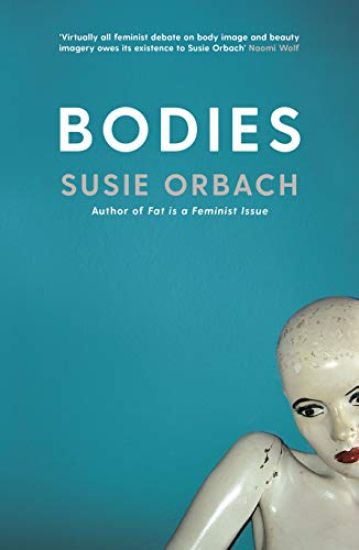
'A smart and rich compendium of what is going on within and without our bodies today ... in this brave and significant book, Orbach does battle with a full quiver of her own fire-tipped arrows, her blazing firebrand levelled at self-hatred in all its forms.' the Times In the past decades, the pressure to perfect and design our bodies has been unprecedented. Men are encouraged to surgically pump up their pecs, breast enhancement is a sweet sixteen birthday present in the suburbs of America, and eating problems - from bulimia to obesity - are growing daily, affecting children as young as six. In China, women are having their legs broken and extended by 5cms. In Iran there are 35,000 cosmetic nose reconstructions a year. The body is no longer a given and to possess a flawless one has become the ambition of millions. In her years of practice as a psychoanalyst, Susie Orbach has come to realise that the way we view our bodies is the mirror of how we view ourselves: our body becomes the measure of our worth. In this updated edition of Bodies, she addresses the modern challenges to body-image, exposing how social media has exacerbated existing issues and creates new ways we relate to our bodies. In the past decade, despite campaigns promoting body positivity, often unproven and unregulated dietary products have proliferated throughout the world. Meanwhile, movements such as #MeToo have revealed what has changed in our attitudes to bodies and what has, unfortunately, remained the same.

Worldwide, increasingly large numbers of people are seeing therapists on a regular basis. In the UK alone, 1.5 million people are in therapy. We go to address past traumas, to break patterns of behaviour, to confront eating disorders or addiction, to talk about relationships, or simply because we want to find out more about what makes us tick. Susie Orbach, the bestselling author of Fat is a Feminist Issue and Bodies, has been a psychotherapist for over forty years. Here, she explores what goes on in the process of therapy - what she thinks, feels and believes about the people who seek her help - through five dramatised case studies. Originally broadcast as a Radio 4 series, here the improvised dialogue is replicated as a playscript, and Orbach offers us the experience of reading along with a session, while revealing what is going on behind each exchange between analyst and client. Insightful and honest about a process often necessarily shrouded in secrecy, In Therapy is an essential read for those curious about, or considering entering, therapy.
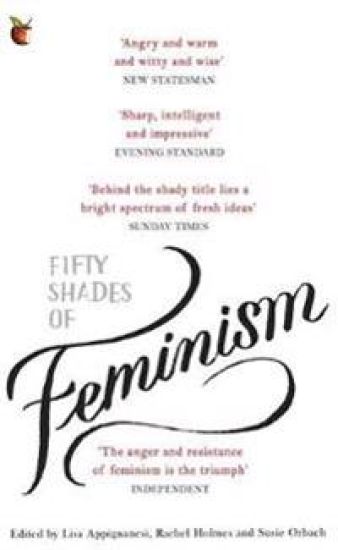
Fifty Shades of Feminism
Lisa Appignanesi; Susie Orbach; Rachel Holmes
Virago Press Ltd
2016
nidottu
Half a century after the publication of The Feminine Mystique, have women really exchanged purity and maternity to become desiring machines inspired only by variations of sex, shopping and masochism - all coloured a brilliant neuro-pink?In this volume, fifty women young and old - writers, politicians, actors, scientists, mothers - reflect on the shades that inspired them and what being woman means to them today. Contributors include: Margaret Atwood, Joan Bakewell, Bidisha, Lydia Cacho, Shami Chakrabarti, Lennie Goodings, Linda Grant, Natalie Haynes, Siri Hustvedt, Kathy Lette, Kate Mosse, Pussy Riot, Bee Rowlatt, Elif Shafak, Ahdaf Soueif, Sandi Toksvig, Natasha Walter, Timberlake Wertenbaker Jeanette Winterson - alongside the three editors.
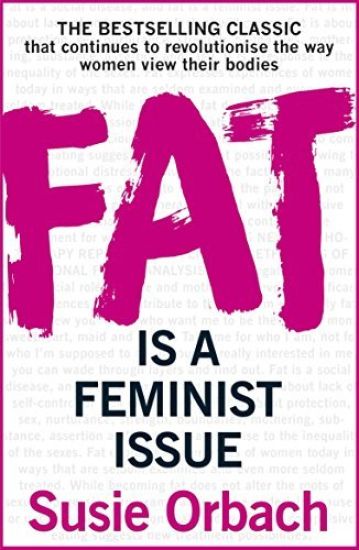
THE ORIGINAL ANTI-DIET BOOK IS BACK - in one volume together with its best-selling sequel. When it was first published, Fat Is A Feminist Issue became an instant classic and it is as relevant today as it was then.
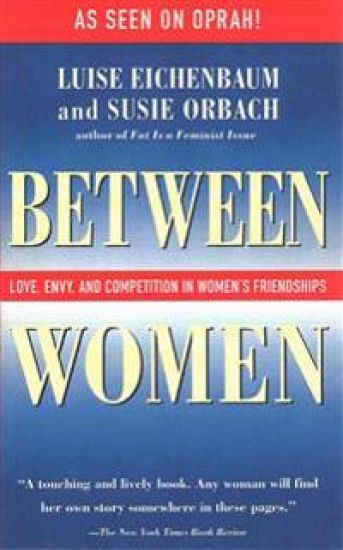
Between Women: Love, Envy, and Competition in Women's Friendships
Luise Eichenbaum; Susie Orbach
Createspace Independent Publishing Platform
2014
nidottu
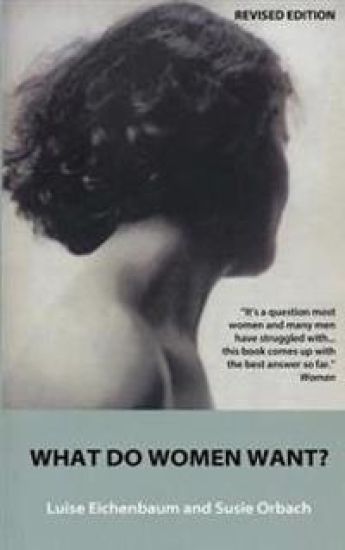
What Do Women Want?: Exploding the Myth of Dependency
Luise Eichenbaum; Susie Orbach
Createspace Independent Publishing Platform
2014
nidottu

Understanding Women: A Feminist Psychoanalytic Approach
Susie Orbach; Luise Eichenbaum
Createspace Independent Publishing Platform
2013
nidottu
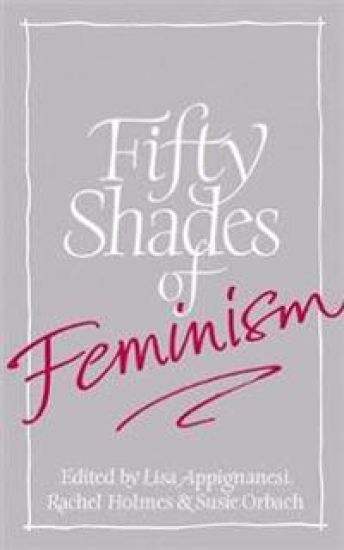
Fifty Shades of Feminism
Lisa Appignanesi; Susie Orbach; Rachel Holmes
Virago Press Ltd
2013
sidottu
Fifty years after the publication of The Feminine Mystique, have women really exchanged purity and maternity to become desiring machines inspired only by variations of sex, shopping and masochism - all coloured a brilliant neuro-pink?In this volume, fifty women young and old - writers, politicians, actors, scientists, mothers - reflect on the shades that inspired them and what being woman means to them today. Contributors include: Tahmima Anam, Joan Bakewell, Bidisha, Lydia Cacho, Shami Chakrabarti, Lennie Goodings, Linda Grant, Natalie Haynes, Siri Hustvedt, Jude Kelly, Kathy Lette, Kate Mosse, Bee Rowlatt, Elif Shafak, Ahdaf Soueif, Shirley Thompson, Natasha Walter, Jeanette Winterson - alongside the three editors.
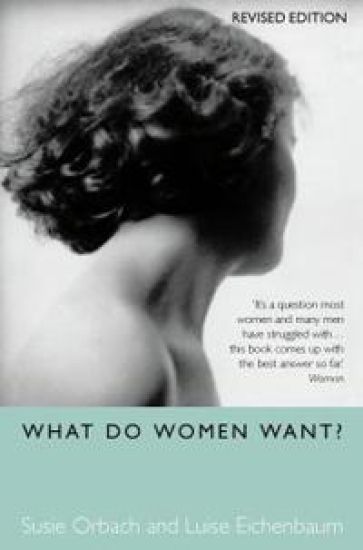
'This book highlights the fact that women are brought up to understand men's emotional needs but men are not brought up to understand women's.' Woman
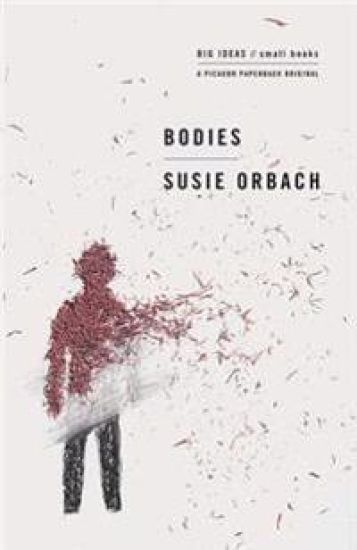
Esteemed Psychotherapist and writer Susie Orbach diagnoses the crisis in our relationship to our bodies and points the way toward a process of healing. Throughout the Western world, people have come to believe that general dissatisfaction can be relieved by some change in their bodies. Here Susie Orbach explains the origins of this condition, and examines its implications for all of us. Challenging the Freudian view that bodily disorders originate and progress in the mind, Orbach argues that we should look at self-mutilation, obesity, anorexia, and plastic surgery on their own terms, through a reading of the body itself. Incorporating the latest research from neuropsychology, as well as case studies from her own practice, she traces many of these fixations back to the relationship between mothers and babies, to anxieties that are transferred unconsciously, at a very deep level, between the two. Orbach reveals how vulnerable our bodies are, how susceptible to every kind of negative stimulus--from a nursing infant sensing a mother's discomfort to a grown man or woman feeling inadequate because of a model on a billboard. That vulnerability makes the stakes right now tremendously high. In the past several decades, a globalized media has overwhelmed us with images of an idealized, westernized body, and conditioned us to see any exception to that ideal as a problem. The body has become an object, a site of production and commerce in and of itself. Instead of our bodies making things, we now make our bodies. Susie Orbach reveals the true dimensions of the crisis, and points the way toward healing and acceptance.
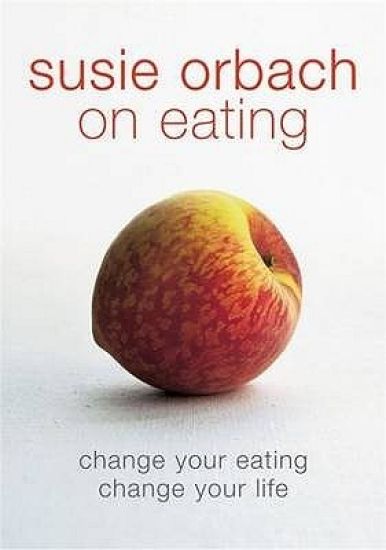
'Eating is pleasurable, eating is delicious, eating is sensual' says Susie. But for so many of us eating is associated with anguish and abstinence. From the first page this little book shows us how to think and feel differently about what we eat. So that we eat when we are hungry, eat what we want to eat to satisfy us and stop when we are full. Each page contains an easily absorbed bite-sized statement to transform eating that hurts into eating that nourishes and calms. This book isn't magic but it feels as if it is.
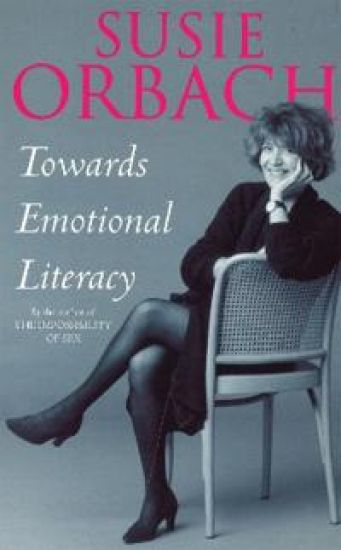
Emotional literacy means being able to recognise what you are feeling so that it enhances rather than interferes with thinking - a contrast with emotional expression which can mean one is driven by emotions so that it isn't possible to think.' In this, the second collection of her Guardian columns (one of the longest running and most popular of the paper) Susie Orbach again proves herself to be a clear-sighted and intelligent guide to understanding what's really going on around and within us. Her belief that we must learn how to validate emotion in public and private life remains the cornerstone of her work and has at long last, become a part of public debate.
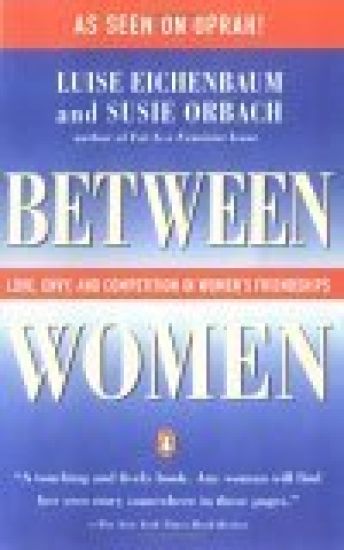
Between Women: Love, Envy and Competition in Women's Friendships
Luise Eichenbaum; Susie Orbach
PENGUIN BOOKS
1989
nidottu
When your best friend makes you angry, why can't you tell her? As women pursue professional and personal goals, the support needed from female friends can be undermined by feelings of envy, competition, and anger. In this groundbreaking book, Luise Eichenbaum and Susie Orbach show: - How mother-daughter relationships affect women's desire to forge close adult friendships- How to stop hiding painful feelings and speak up to your friends- How to enhance feelings of autonomy and self-development while remaining "connected" to others- Why "daring to differ" with friends can strengthen your value to each other as you strive for individuality Compassionate and insightful, Between Women: Love, Envy, and Competition in Women's Friendships will help you achieve a strong sense of self and enjoy richer and more enduring relationships with your friends. "A touching and lively book. Any woman will find her own story somewhere in these pages." -- The New York Times Book Review "The book's message will ring true for all women." -- New York Woman

Highlights the fact that women are brought up to understand men's emotional needs but men are not brought up to understand women's. This book explores relationships between the sexes and provides some answers as to why women feel they are all one-sided while men feel totally baffled.