Kirjojen hintavertailu. Mukana 12 390 323 kirjaa ja 12 kauppaa.
Kirjailija
Sussan Babaie
Kirjat ja teokset yhdessä paikassa: 7 kirjaa, julkaisuja vuosilta 2004-2026, suosituimpien joukossa MYAL - My Aleppo. Vertaile teosten hintoja ja tarkista saatavuus suomalaisista kirjakaupoista.
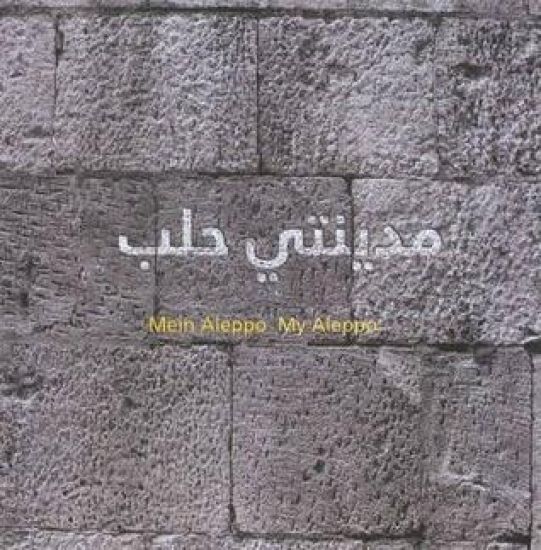
This title includes a book & CD. Aleppo is not perceived outside the Arab world as a "metropolis" - at the same limo, though, the city with a five thousand year old history is one of the world's oldest cities. In this way, "MYAL (My Aleppo)" is to be understood as a special study about the development of the term metropolis and asks the fundamental question how a "metropolis" should be defined. Today, the city of almost three million people is the industrial and commercial capital of Syria, where, in a fascinating way, tradition and modernity, and East and West meet. "MYAL (My Aleppo)" attempts not only to show the "sights" of Aleppo, but to show the "inner sights" from the life of the Aleppines: city structures as well as life and customs that have been developed over centuries and now are subject to a rapid process of transformation due to altered social, economic, and political conditions.These are more everyday images of local people and foreigners, visible and invisible, from the narrow quarters of the Old City and the Souk with its noisy intimacy, the view from the Citadel out across the city, and from submerging into the partially strange and hidden worlds of Aleppo and its inhabitants. At the heart of the book are photos from the period around 1900 taken, among others, from the archive of Poche-Marrache and the archive from Thierry, Grandin, as well as photographs of different photographers from more recent years. These images are supplemented by articles From different authors about daily life in Aleppo. During the production of this book, a mood of change manifested itself in Syrian society, the results of which are not yet foreseeable. So, the articles in this volume perhaps document something that will (or may) soon belong in part to the past. The CD with songs from Abed Azrie from Aleppo completes the triad of the city along with the articles and photographs.
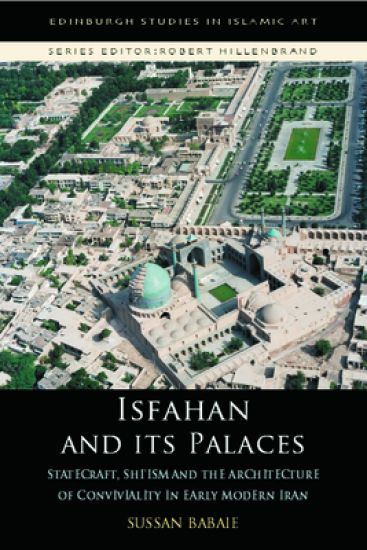
This beautifully illustrated history of Safavid Isfahan (15011722) explores the architectural and urban forms and networks of socio-cultural action that reflected a distinctly early-modern and Perso-Shi'i practice of kingship.An immense building campaign, initiated in 1590-91, transformed Isfahan from a provincial, medieval, and largely Sunni city into an urban-centered representation of the first Imami Shi'i empire in the history of Islam. The historical process of Shi'ification of Safavid Iran and the deployment of the arts in situating the shifts in the politico-religious agenda of the imperial household informs Sussan Babaie's study of palatial architecture and urban environments of Isfahan and the earlier capitals of Tabriz and Qazvin.Babaie argues that since the Safavid claim presumed the inheritance both of the charisma of the Shi'i Imams and of the aura of royal splendor integral to ancient Persian notions of kingship, a ceremonial regime was gradually devised in which access and proximity to the shah assumed the contours of an institutionalized form of feasting. Talar-palaces, a new typology in Islamic palatial designs, and the urban-spatial articulation of access and proximity are the architectural anchors of this argument. Cast in the comparative light of urban spaces and palace complexes elsewhere and earlier-in the Timurid, Ottoman, and Mughal realms as well as in the early modern European capitals-Safavid Isfahan emerges as the epitome of a new architectural-urban paradigm in the early modern age.
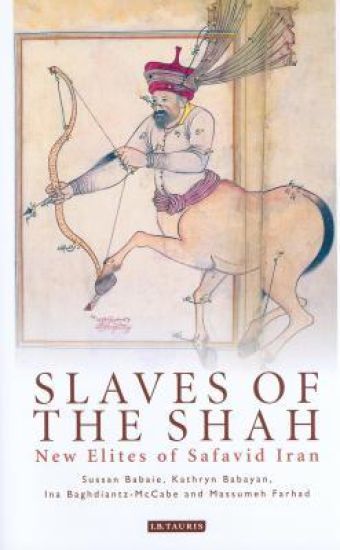
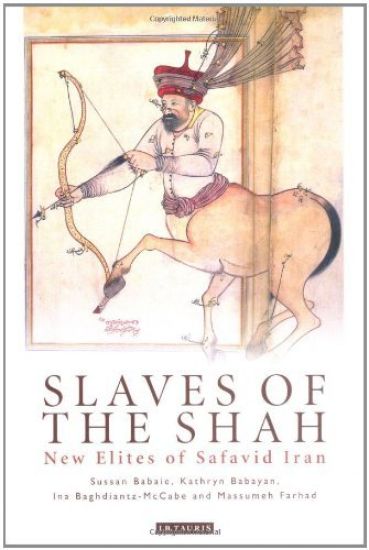
The Safavid dynasty represented the pinnacle of Iran's power and influence in its early modern history. The evidence of this - the creation of a nation state, military expansion and success, economic dynamism and the exquisite art and architecture of the period is well-known. What is less understood is the extent to which the Safavid success depended on an elite originating from outside Iran: the slaves of Caucasian descent and the Armenian merchants of Isfahan. This book describes how these elites, following their conversion to Islam, helped to transform Isfahan's urban, artistic and social landscape.
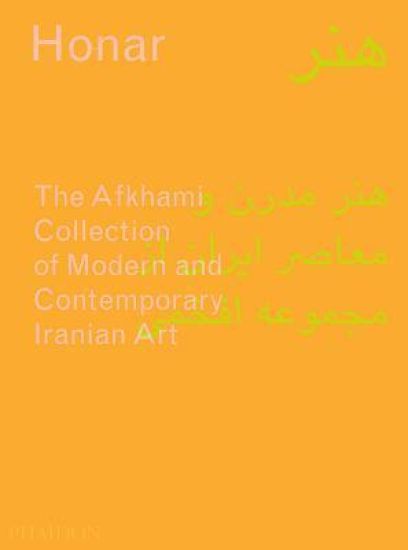
The first and only book on one of the finest private collections of contemporary Iranian art This sumptuous volume features almost 250 contemporary artworks and a selection of medieval and early modern Islamic art - the heralded collection of Mohammed Afkhami, a prominent player at the cultural and regional front line of Middle Eastern art. Honar (meaning 'art' in Farsi, the language of Iran), includes works ranging from the disturbingly subversive to exquisitely inclusive, exhibiting the pain of exile, the querying of ideology, and the artistic insistence on personal independence.
The Savafid dynasty represented, in political, cultural and economic terms the pinnacle of Iran's power and influence in its early modern history. The evidence for this -the creation of a nation state, military expansion and success, economic dynamism and the exquisite art and architecture of the period - is well-known. What is less understood is the extent to which the Safavid success depended on - and was a product of - a class of elite originating from outside Iran: the slaves of Caucasian descent and the Armenian merchants of New Julfa in the city of Isfahan. It was these groups, bolstered by Shah Abbas the Great (1589 - 1629) and his successors, who became the pillars of Safavid political, economic and cultural life. This book describes how these elites, following their conversion to Islam, helped to form a new language of Savafid absolutism. It documents their contributions, financed by the Armenian trade in Safavid silk, to the transformation of Isfahan's urban, artistic and social landscape. The insights provided here into the multi-faceted roles of the Safavid royal household offer an original and comprehensive study of slave elites in imperial systems common to the political economies of the Malmuk, Ottoman and Safavid courts as well as contributing to the earlier Abbasid, Ghaznavid and Saljuq eras. As such this book makes an original and important contribution to our understanding of the history of the Islamic world from the 16th to the 18th centuries and will prove invaluable for students and scholars of the period.