Kirjojen hintavertailu. Mukana 12 276 918 kirjaa ja 12 kauppaa.

Kirjailija

Suzanne Carrington

Kirjat ja teokset yhdessä paikassa: 6 kirjaa, julkaisuja vuosilta 2017-2021, suosituimpien joukossa Promoting Equity in Schools. Vertaile teosten hintoja ja tarkista saatavuus suomalaisista kirjakaupoista.

6 kirjaa

Kirjojen julkaisuhaarukka 2017-2021.

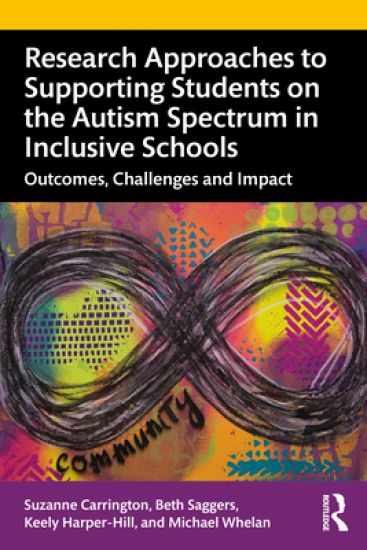
Research Approaches to Supporting Students on the Autism Spectrum in Inclusive Schools

Research Approaches to Supporting Students on the Autism Spectrum in Inclusive Schools

Suzanne Carrington; Beth Saggers; Keely Harper-Hill; Michael Whelan

Routledge
2021
nidottu
This book will support researchers in the field of education disability by outlining inclusive research approaches and their challenges, outcomes, and impact. Each chapter reports on school/university-based research supporting inclusion for young people on the autism spectrum. This research has been developed in Australian schools with students, families, teachers, and specialists. The intent of this approach is to mobilise new knowledge to the benefit of all students, including students on the autism spectrum, their families, teachers, and school communities. This book showcases how research can be more inclusive with a move to collaborative, participatory, and co-produced research that will impact on young people, families, and educators. The authors highlight the complex challenges and the positive outcomes of conducting research in inclusive ways and provide detailed practical strategies for researchers.Inclusive education is socially, emotionally, and academically beneficial for all students and positively impacts on respectful attitudes to difference. This book provides a groundbreaking approach to research that by design is inclusive and therefore provides an invaluable opportunity for building the foundations of an inclusive society for all. This book will be invaluable to researchers, educators, and professional learning in schools.

Research Approaches to Supporting Students on the Autism Spectrum in Inclusive Schools

Research Approaches to Supporting Students on the Autism Spectrum in Inclusive Schools

Suzanne Carrington; Beth Saggers; Keely Harper-Hill; Michael Whelan

Routledge
2021
sidottu
This book will support researchers in the field of education disability by outlining inclusive research approaches and their challenges, outcomes, and impact. Each chapter reports on school/university-based research supporting inclusion for young people on the autism spectrum. This research has been developed in Australian schools with students, families, teachers, and specialists. The intent of this approach is to mobilise new knowledge to the benefit of all students, including students on the autism spectrum, their families, teachers, and school communities. This book showcases how research can be more inclusive with a move to collaborative, participatory, and co-produced research that will impact on young people, families, and educators. The authors highlight the complex challenges and the positive outcomes of conducting research in inclusive ways and provide detailed practical strategies for researchers.Inclusive education is socially, emotionally, and academically beneficial for all students and positively impacts on respectful attitudes to difference. This book provides a groundbreaking approach to research that by design is inclusive and therefore provides an invaluable opportunity for building the foundations of an inclusive society for all. This book will be invaluable to researchers, educators, and professional learning in schools.

Supporting Students on the Autism Spectrum in Inclusive Schools

Supporting Students on the Autism Spectrum in Inclusive Schools

Suzanne Carrington; Beth Saggers; Keely Harper-Hill; Michael Whelan

Routledge
2021
nidottu
Inclusive education has grown as an international movement to not only support students with disabilities but also promote equitable access, participation, and success for all students. This book will transform the capacity of teachers and specialists working with students and families to effectively support an inclusive approach to education for students on the autism spectrum.This book addresses the urgent need to identify inclusive educational environments and strategies for students on the autism spectrum so that they have the best chance of social, behavioural, and academic success at school. Teachers who include students on the autism spectrum in primary and secondary classrooms require greater knowledge of how they can best support the learning, social, and behavioural needs of their students. Without such knowledge, the consequences can include unsatisfactory learning experiences for all students, and interrupted schooling for the student on the autism spectrum through reduced attendance and retention, lower academic performance, exclusion, disengagement, and pressure on parents to make alternative arrangements for their child’s education.Inclusive education is socially, emotionally, and academically beneficial for all students and positively impacts on respectful attitudes to difference. This book presents innovative, evidence-based practices that will build the capacity of teachers and specialists implementing an inclusive and contextually relevant approach to education that will support students on the autism spectrum and meet the diverse needs of all students in their classrooms.
Supporting Students on the Autism Spectrum in Inclusive Schools

Supporting Students on the Autism Spectrum in Inclusive Schools

Suzanne Carrington; Beth Saggers; Keely Harper-Hill; Michael Whelan

Routledge
2021
sidottu
Inclusive education has grown as an international movement to not only support students with disabilities but also promote equitable access, participation, and success for all students. This book will transform the capacity of teachers and specialists working with students and families to effectively support an inclusive approach to education for students on the autism spectrum.This book addresses the urgent need to identify inclusive educational environments and strategies for students on the autism spectrum so that they have the best chance of social, behavioural, and academic success at school. Teachers who include students on the autism spectrum in primary and secondary classrooms require greater knowledge of how they can best support the learning, social, and behavioural needs of their students. Without such knowledge, the consequences can include unsatisfactory learning experiences for all students, and interrupted schooling for the student on the autism spectrum through reduced attendance and retention, lower academic performance, exclusion, disengagement, and pressure on parents to make alternative arrangements for their child’s education.Inclusive education is socially, emotionally, and academically beneficial for all students and positively impacts on respectful attitudes to difference. This book presents innovative, evidence-based practices that will build the capacity of teachers and specialists implementing an inclusive and contextually relevant approach to education that will support students on the autism spectrum and meet the diverse needs of all students in their classrooms.
Promoting Equity in Schools

Promoting Equity in Schools

Jess Harris; Suzanne Carrington; Mel Ainscow

Routledge
2017
sidottu
Around the world, countries are searching for ways of making their schools more effective for all children and young people. This book offers a new way of thinking about how to address this challenge. It sees improvement as requiring a collective effort that involves contributions from all members of a school community. Crucial to this is the idea of ethical leadership.Promoting Equity in Schools is written by a team of academic researchers who had a most unusual opportunity to work with a network of schools over three years, experimenting to find more effective ways of including hard to reach learners. Bringing together practitioner knowledge and ideas from research carried out from a variety of perspectives, the authors provide rich accounts of what happened when the schools attempted to become more inclusive and fairer. In so doing, they throw light on the challenges this presents for school leaders.The accounts presented in the book are located in Queensland, Australia, where the school system faces significant difficulties in relation to equity that resonate with similar difficulties around the world. These difficulties relate to policies that emphasize high-stakes testing and school choice, which tend to promote increased segregation, to the particular disadvantage of young people from low income and minority backgrounds. The arguments presented suggest that even where worrying policies are in place, with leadership driven by a commitment to equity, schools can still find space to develop more equitable ways of working.
Promoting Equity in Schools

Promoting Equity in Schools

Jess Harris; Suzanne Carrington; Mel Ainscow

Routledge
2017
nidottu
Around the world, countries are searching for ways of making their schools more effective for all children and young people. This book offers a new way of thinking about how to address this challenge. It sees improvement as requiring a collective effort that involves contributions from all members of a school community. Crucial to this is the idea of ethical leadership.Promoting Equity in Schools is written by a team of academic researchers who had a most unusual opportunity to work with a network of schools over three years, experimenting to find more effective ways of including hard-to-reach learners. Bringing together practitioner knowledge and ideas from research carried out from a variety of perspectives, the authors provide rich accounts of what happened when the schools attempted to become more inclusive and fairer. In so doing, they throw light on the challenges this presents for school leaders.The accounts presented in the book are located in Queensland, Australia, where the school system faces significant difficulties in relation to equity that resonate with similar difficulties around the world. These difficulties relate to policies that emphasise high-stakes testing and school choice, which tend to promote increased segregation, to the particular disadvantage of young people from low-income and minority backgrounds. The arguments presented suggest that even where worrying policies are in place, schools with leadership driven by a commitment to equity can still find space to develop more equitable ways of working.