Kirjojen hintavertailu. Mukana 12 595 353 kirjaa ja 12 kauppaa.

Kirjailija

Suzanne Fitzpatrick

Kirjat ja teokset yhdessä paikassa: 8 kirjaa, julkaisuja vuosilta 2007-2018, suosituimpien joukossa The impact of enforcement on street users in England. Vertaile teosten hintoja ja tarkista saatavuus suomalaisista kirjakaupoista.

8 kirjaa

Kirjojen julkaisuhaarukka 2007-2018.

Welfare Conditionality

Welfare Conditionality

Beth Watts; Suzanne Fitzpatrick

Routledge
2018
sidottu
Welfare conditionality has become an idea of global significance in recent years. A ‘hot topic’ in North America, Australia, and across Europe, it has been linked to austerity politics, and the rise of foodbanks and destitution. In the Global South, where publicly funded welfare protection systems are often absent, conditional approaches have become a key tool employed by organisations pursuing human development goals.The essence of welfare conditionality lies in requirements for people to behave in prescribed ways in order to access cash benefits or other welfare support. These conditions are typically enforced through benefit ‘sanctions’ of various kinds, reflecting a new vision of ‘welfare’, focused more on promoting ‘pro-social’ behaviour than on protecting people against classic ‘social risks’ like unemployment. This new book in Routledge’s Key Ideas series charts the rise of behavioural conditionality in welfare systems across the globe, its appeal to politicians of Right and Left, and its application to a growing range of social problems. Crucially it explores why, in the context of widespread use of conditional approaches as well as apparently strong public support, both the efficacy and the ethics of welfare conditionality remain so controversial. As such, Welfare Conditionality is essential reading for students, researchers, and commentators in social and public policy, as well as those designing and implementing welfare policies.
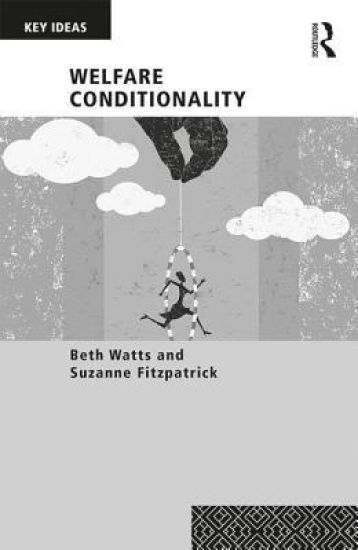
Welfare Conditionality

Welfare Conditionality

Beth Watts; Suzanne Fitzpatrick

Routledge
2018
nidottu
Welfare conditionality has become an idea of global significance in recent years. A ‘hot topic’ in North America, Australia, and across Europe, it has been linked to austerity politics, and the rise of foodbanks and destitution. In the Global South, where publicly funded welfare protection systems are often absent, conditional approaches have become a key tool employed by organisations pursuing human development goals.The essence of welfare conditionality lies in requirements for people to behave in prescribed ways in order to access cash benefits or other welfare support. These conditions are typically enforced through benefit ‘sanctions’ of various kinds, reflecting a new vision of ‘welfare’, focused more on promoting ‘pro-social’ behaviour than on protecting people against classic ‘social risks’ like unemployment. This new book in Routledge’s Key Ideas series charts the rise of behavioural conditionality in welfare systems across the globe, its appeal to politicians of Right and Left, and its application to a growing range of social problems. Crucially it explores why, in the context of widespread use of conditional approaches as well as apparently strong public support, both the efficacy and the ethics of welfare conditionality remain so controversial. As such, Welfare Conditionality is essential reading for students, researchers, and commentators in social and public policy, as well as those designing and implementing welfare policies.

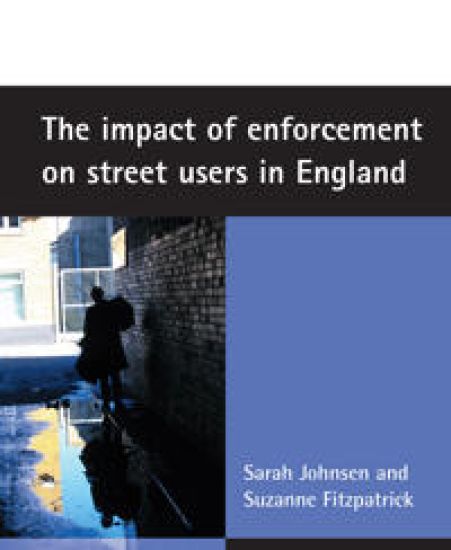
The impact of enforcement on street users in England

The impact of enforcement on street users in England

Sarah Johnsen; Suzanne Fitzpatrick

Policy Press
2007
nidottu
Concerns have mounted in recent years about the 'problematic street culture' sometimes associated with rough sleeping, especially begging and street drinking. There has been a significant shift towards enforcement interventions aimed at the 'street users' involved in these activities. This report evaluates the impact of these enforcement interventions on the welfare of street users in England. Drawing on evidence from five in-depth case studies, it provides the first research-based exploration of the range of enforcement interventions currently undertaken to address 'street culture'; the circumstances associated with positive and negative outcomes of enforcement action for street users; the extent to which enforcement action is linked to supportive interventions; the impact of enforcement measures on other stakeholders in the local community, and in particular residents and businesses. The report is aimed at policy-makers, practitioners and students in the fields of homelessness, anti-social behaviour and social exclusion. It provides detailed evidence on the impact of enforcement measures on street users, and explores the circumstances and approaches most likely to bring about positive or negative outcomes.