Kirjailija
Suzanne Gordon
Kirjat ja teokset yhdessä paikassa: 14 kirjaa, julkaisuja vuosilta 2004-2022, suosituimpien joukossa Der Pflege eine Stimme geben. Vertaile teosten hintoja ja tarkista saatavuus suomalaisista kirjakaupoista.
14 kirjaa
Kirjojen julkaisuhaarukka 2004-2022.
In Our Veterans, Suzanne Gordon, Steve Early, and Jasper Craven explore the physical, emotional, social, economic, and psychological impact of military service and the problems that veterans face when they return to civilian life. The authors critically examine the role of advocacy organizations, philanthropies, corporations, and politicians who purport to be “pro-veteran.” They describe the ongoing debate about the cost, quality, and effectiveness of healthcare provided or outsourced by the Department of Veterans Affairs (VA). They also examine generational divisions and political tensions among veterans, as revealed in the tumultuous events of 2020, from Black Lives Matter protests to the Trump-Biden presidential contest. Frank and revealing, Our Veterans proposes a new agenda for veterans affairs linking service provision to veterans to the quest for broader social programs benefiting all Americans.
U.S. military conflicts abroad have left nine million Americans dependent on the Veterans Health Administration (VHA) for medical care. Their "wounds of war" are treated by the largest hospital system in the country-one that has come under fire from critics in the White House, on Capitol Hill, and in the nation's media. In Wounds of War, Suzanne Gordon draws on five years of observational research to describe how the VHA does a better job than private sector institutions offering primary and geriatric care, mental health and home care services, and support for patients nearing the end of life. In the unusual culture of solidarity between patients and providers that the VHA has fostered, Gordon finds a working model for higher-quality health care and a much-needed alternative to the practice of for-profit medicine.
In The Battle for Veterans' Healthcare, award-winning author Suzanne Gordon takes us to the front lines of federal policymaking and healthcare delivery, as it affects eight million Americans whose military service makes them eligible for Veterans Health Administration (VHA) coverage. Gordon's collected dispatches provide insight and information too often missing from mainstream media reporting on the VHA and from Capitol Hill debates about its future. Drawing on interviews with veterans and their families, VHA staff and administrators, health care policy experts and Congressional decision makers, Gordon describes a federal agency under siege that nevertheless accomplishes its difficult mission of serving men and women injured, in myriad ways, while on active duty. The Battle for Veterans' Healthcare is an essential primer on VHA care and a call to action by veterans, their advocacy organizations, and political allies. Without lobbying efforts and broader public understanding of what's at stake, a system now functioning far better than most private hospital systems may end up looking more like them, to the detriment of patients and providers alike.
In recent years, there has been growing awareness of the need for interprofessional cooperation in healthcare. Countless studies have shown that genuine teamwork and team intelligence are critical to patient safety. Poor communication among health care personnel is a major factor in hospital errors, even more so than the level of staff competence and experience. This is why many schools for health professionals and major health care employers now promote interprofessional education and cooperation. Bedside Manners is a play about workplace relations among physicians, nurses, others who work in health care, and patients—and how their interaction affects the quality of patient care, for better or worse. The accompanying workbook helps educators, managers, patient safety advocates, administrators, and union representatives to analyze and discuss the issues raised in the play. When presented in hospitals, universities, and health care conferences all over the United States, Bedside Manners invariably sparks a vibrant conversation about patient safety problems and how to solve them, job satisfaction and stress, and the importance of information sharing and mutual respect. As text or script, this play is a unique teaching tool for medical and nursing schools, and other health professional schools and continuing education programs involving health care clinicians and staff of all kinds.
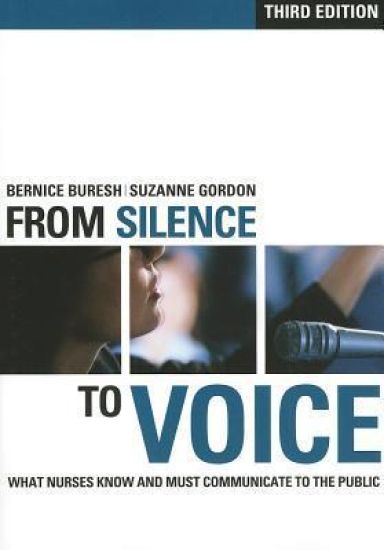
This is an invaluable book for all nurses, especially those who are proud of being nurses and who have always wanted to make others understand our passion.â• Nursing Standard For more than a decade, From Silence to Voice has been providing nurses with communication tools they can use to win the resources and respect they deserve. Now, in a timely third edition, authors Bernice Buresh and Suzanne Gordon focus on how nurses can describe and frame their work to seize unprecedented opportunities to advance their profession and lead improvements in health care systems.The authors, both journalists, argue that because nursing needs the support and cooperation of others to fulfill its potential, it is critical that nurses communicate the full scope of nursing practice. Nurses must go beyond describing nursing in terms of dedication and caring and articulate nurses' specialized knowledge and expertise. From Silence to Voice helps nurses explain their contributions to patient safety, satisfaction, and outcomes. It shows how nurses can communicate with various publics about important aspects of their work, such as how they master and employ complex medical technologies and regimens, and how they use their clinical judgment in life-and-death situations. "Nurses and nursing organizations," the authors write, "must go out and tell the public what nurses really do so that patients can actually get the benefit of their expert care." This comprehensively revised and updated third edition helps nurses use a range of traditional and social media to accurately describe the true nature of their work. Its analyses of images that are projected by nursing campaigns and its detailed guidance in helping nurses construct positive and powerful narratives of their work make From Silence to Voice a must-read in nursing schools and organizations and by individual nurses in all areas of the profession. Because nurses are busy, many of the communication techniques in this book are designed to integrate naturally into nurses’ everyday lives and to complement nurses’ work with patients and families.
Beyond the Checklist
Suzanne Gordon; Patrick Mendenhall; Bonnie Blair O'toole; Chesley "Sully" Sullenberger
ILR Press
2012
pokkari
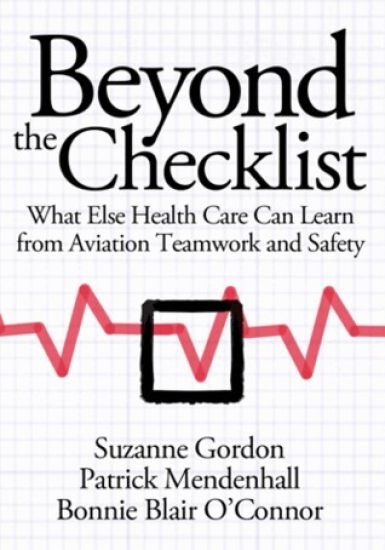
The U.S. healthcare system is now spending many millions of dollars to improve "patient safety" and "inter-professional practice." Nevertheless, an estimated 100,000 patients still succumb to preventable medical errors or infections every year. How can health care providers reduce the terrible financial and human toll of medical errors and injuries that harm rather than heal? Beyond the Checklist argues that lives could be saved and patient care enhanced by adapting the relevant lessons of aviation safety and teamwork. In response to a series of human-error caused crashes, the airline industry developed the system of job training and information sharing known as Crew Resource Management (CRM). Under the new industry-wide system of CRM, pilots, flight attendants, and ground crews now communicate and cooperate in ways that have greatly reduced the hazards of commercial air travel. The coauthors of this book sought out the aviation professionals who made this transformation possible. Beyond the Checklist gives us an inside look at CRM training and shows how airline staff interaction that once suffered from the same dysfunction that too often undermines real teamwork in health care today has dramatically improved. Drawing on the experience of doctors, nurses, medical educators, and administrators, Beyond the Checklist demonstrates how CRM can be adapted, more widely and effectively, to health care delivery. The authors provide case studies of three institutions that have successfully incorporated CRM-like principles into the fabric of their clinical culture by embracing practices that promote common patient safety knowledge and skills. The coauthors infuse this study with their own diverse experience and collaborative spirit: Patrick Mendenhall is a commercial airline pilot who teaches CRM; Suzanne Gordon is a nationally known health care journalist, training consultant, and speaker on issues related to nursing; and Bonnie Blair O'Connor is an ethnographer and medical educator who has spent more than two decades observing medical training and teamwork from the inside.
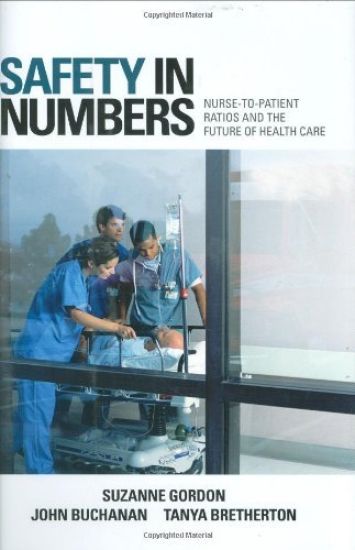
Legally mandated nurse-to-patient ratios are one of the most controversial topics in health care today. Ratio advocates believe that minimum staffing levels are essential for quality care, better working conditions, and higher rates of RN recruitment and retention that would alleviate the current global nursing shortage. Opponents claim that ratios will unfairly burden hospital budgets, while reducing management flexibility in addressing patient needs. Safety in Numbers is the first book to examine the arguments for and against ratios. Utilizing survey data, interviews, and other original research, Suzanne Gordon, John Buchanan, and Tanya Bretherton weigh the cost, benefits, and effectiveness of ratios in California and the state of Victoria in Australia, the two places where RN staffing levels have been mandated the longest. They show how hospital cost cutting and layoffs in the 1990s created larger workloads and deteriorating conditions for both nurses and their patients—leading nursing organizations to embrace staffing level regulation. The authors provide an in-depth account of the difficult but ultimately successful campaigns waged by nurses and their allies to win mandated ratios. Safety in Numbers then reports on how nurses, hospital administrators, and health care policymakers handled ratio implementation. With at least fourteen states in the United States and several other countries now considering staffing level regulation, this balanced assessment of the impact of ratios on patient outcomes and RN job performance and satisfaction could not be timelier. The authors' history and analysis of the nurse-to-patient ratios debate will be welcomed as an invaluable guide for patient advocates, nurses, health care managers, public officials, and anyone else concerned about the quality of patient care in the United States and the world.
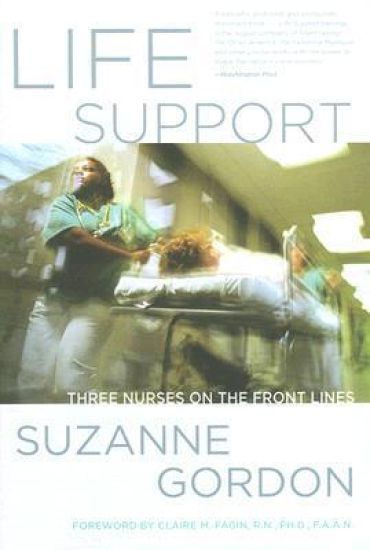
In this book, Suzanne Gordon describes the everyday work of three RNs in Boston—a nurse practitioner, an oncology nurse, and a clinical nurse specialist on a medical unit. At a time when nursing is often undervalued and nurses themselves in short supply, Life Support provides a vivid, engaging, and intimate portrait of health care's largest profession and the important role it plays in patients' lives. Life Support is essential reading for working nurses, nursing students, and anyone considering a career in nursing as well as for physicians and health policy makers seeking a better understanding of what nurses do and why we need them. For the Cornell edition of this landmark work, Gordon has written a new introduction that describes the current nursing crisis and its impact on bedside nurses like those she profiled in the book.
Alles, was Pflegende wissen müssen, um ihre Leistungen und Interessen öffentlich gegenüber Kollegen, Journalisten, Entscheidern und Politikern darzustellen und zu vertreten.
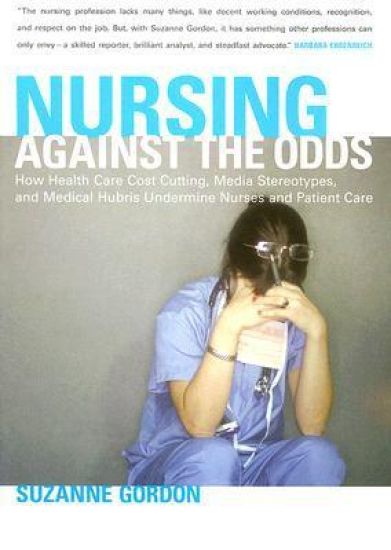
In the United States and throughout the industrialized world, just as the population of older and sicker patients is about to explode, we have a major shortage of nurses. Why are so many RNs dropping out of health care's largest profession? How will the lack of skilled, experienced caregivers affect patients? These are some of the questions addressed by Suzanne Gordon's definitive account of the world's nursing crisis. In Nursing against the Odds, one of North America's leading health care journalists draws on in-depth interviews, research studies, and extensive firsthand reporting to help readers better understand the myriad causes of and possible solutions to the current crisis. Gordon examines how health care cost cutting and hospital restructuring undermine the working conditions necessary for quality care. She shows how the historically troubled workplace relationships between RNs and physicians become even more dysfunctional in modern hospitals. In Gordon's view, the public image of nurses continues to suffer from negative media stereotyping in medical shows on television and from shoddy press coverage of the important role RNs play in the delivery of health care. Gordon also identifies the class and status divisions within the profession that hinder a much-needed defense of bedside nursing. She explains why some policy panaceas—hiring more temporary workers, importing RNs from less-developed countries—fail to address the forces that drive nurses out of their workplaces. To promote better care, Gordon calls for a broad agenda that includes safer staffing, improved scheduling, and other policy changes that would give nurses a greater voice at work. She explores how doctors and nurses can collaborate more effectively and what medical and nursing education must do to foster such cooperation. Finally, Gordon outlines ways in which RNs can successfully take their case to the public while campaigning for health care system reform that actually funds necessary nursing care.
We are on the verge of the nation's worst nursing shortage in history. Dedicated nurses are leaving hospitals in droves, and there are not enough new recruits to the profession to meet demand. Even hospitals that were once very highly regarded for the quality of their nursing care, such as Boston's Beth Israel Deaconess Medical Center, now struggle to fill vacant positions. What happened? Dana Beth Weinberg argues that hospital restructuring in the 1990s is to blame. In their attempts to retain profit margins or even just to stay afloat, hospitals adopted a common set of practices to cut costs and increase revenues. Many strategies squeezed greater productivity out of nurses and other hospital workers. Nurses' workloads increased to the point that even the most skilled nurses questioned whether they could provide minimal, safe care to patients. As hospitals hemorrhaged money, it seemed that no one—not hospital administrators, not doctors—felt they could afford to listen to nurses. Through a careful look at the effects of the restructuring strategies chosen and implemented by Beth Israel Deaconess Medical Center, the author examines management's efforts to balance service and survival. By showing the effects of hospital restructuring on nurses' ability to plan, evaluate, and deliver excellent care, Weinberg provides a stinging indictment of standard industry practices that underestimate the contribution nurses make both to hospitals and to patient care.