Kirjojen hintavertailu. Mukana 12 159 236 kirjaa ja 12 kauppaa.

Kirjailija

Suzanne Williams

Kirjat ja teokset yhdessä paikassa: 154 kirjaa, julkaisuja vuosilta 1995-2026, suosituimpien joukossa Pheme the Gossip. Vertaile teosten hintoja ja tarkista saatavuus suomalaisista kirjakaupoista.

154 kirjaa

Kirjojen julkaisuhaarukka 1995-2026.

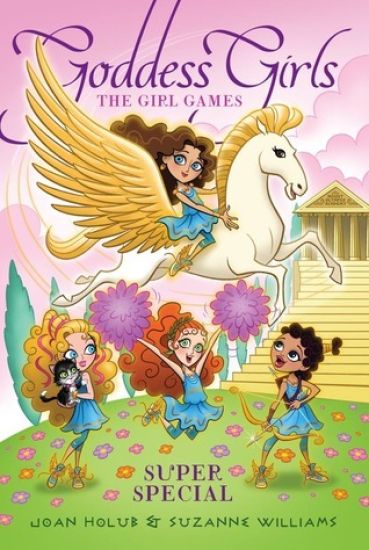
The Girl Games: Super Special

The Girl Games: Super Special

Joan Holub; Suzanne Williams

Aladdin Paperbacks
2012
nidottu
The first-ever standalone superspecial in the Goddess Girls series--let the games begin Athena, Medusa, Artemis, and Persephone are sick and tired of being left out of the annual boys-only Olympic Games. Their solution? The Girl Games But as the Goddess Girls work to make their dream into a reality, they come up against plenty of chaos and competition. Told in alternating points of view, this superspecial is packed with Olympic spirit
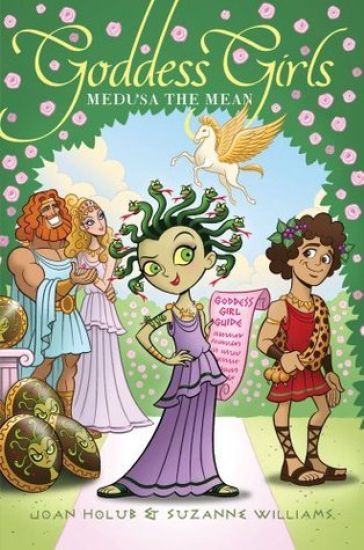
Medusa the Mean

Medusa the Mean

Joan Holub; Suzanne Williams

Aladdin Paperbacks
2012
nidottu
Medusa is the ultimate mean girl in this series that blends modern drama with ancient myths. Well researched and true to the original myths, each volume in the Goddess Girls series addresses contemporary issues, like friendships and relationships, from a classically accurate--and entertaining--perspective. In Medusa the Mean, Medusa is sick and tired of being the only mortal at Mount Olympus Academy. Not only is she surrounded by beautiful, powerful, immortal classmates, but she also has snakes for hair and a reputation for being mean. Immortality, she thinks, will solve everything. So when she finds out about a necklace that promises just that, she's sure it will help her get the two things she covets most: to be as popular as the four Goddess Girls and to have her supercrush, Poseidon, finally notice her. But when the necklace brings about popularity in the totally wrong way, things go from bad to worse. Can Medusa overcome her "meanie" status and prove that there's more to her that meets the eye?
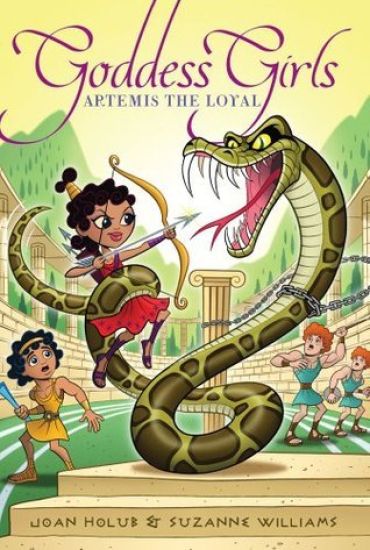
Artemis the Loyal

Artemis the Loyal

Joan Holub; Suzanne Williams

Aladdin Paperbacks
2011
nidottu
It's time for the annual Olympic Games, and the four goddessgirls are not happy It's boys only--and the girls at MOA are not pleased. Led by Artemis, Athena, Persphone and Aphrodite, the ladies of Mount Olympus hatch a plan to get Zeus to open up the games to everyone. Will they succeed--or end up watching from the sidelines again? These classic myths from the Greek pantheon are given a modern twist that contemporary tweens can relate to, from dealing with bullies like Medusa to a first crush on an unlikely boy. Goddess Girls follows four goddesses-in-training - Athena, Persephone, Aphrodite, and Artemis - as they navigate the ins and outs of divine social life at Mount Olympus Academy, where the most priviledged gods and goddesses of the Greek pantheon hone their mythical skills.
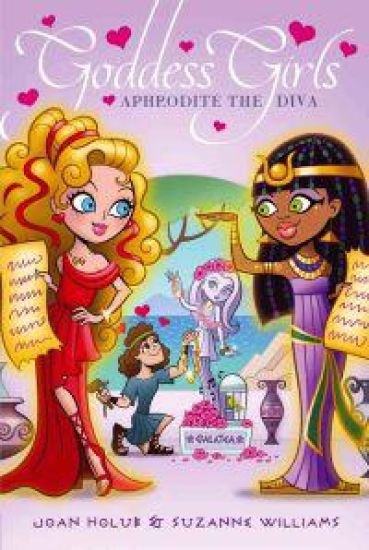
Aphrodite the Diva

Aphrodite the Diva

Joan Holub; Suzanne Williams

Aladdin
2011
pokkari
These classic myths from the Greek pantheon are given a modern twist that contemporary tweens can relate to, from dealing with bullies like Medusa to a first crush on an unlikely boy. Goddess Girls follows four goddesses-in-training – Athena, Persephone, Aphrodite, and Artemis – as they navigate the ins and outs of divine social life at Mount Olympus Academy, where the most priviledged gods and goddesses of the Greek pantheon hone their mythical skills. In book 6, an exchange student from Egypt, Isis, is encroaching on Aphrodite's match-making turf. Will she also edge Aphrodite out of her group of friends?
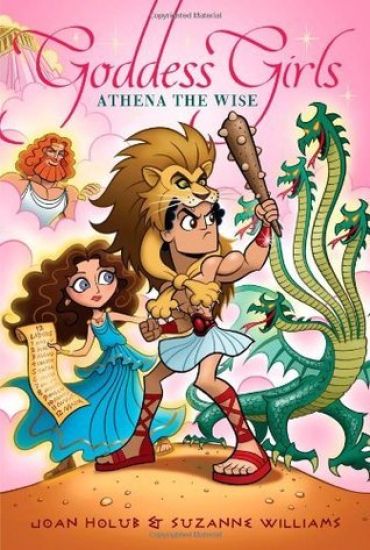
Athena the Wise

Athena the Wise

Joan Holub; Suzanne Williams

Aladdin
2011
pokkari
These classic myths from the Greek pantheon are given a modern twist that contemporary tweens can relate to, from dealing with bullies like Medusa to a first crush on an unlikely boy. Goddess Girls follows four goddesses-in-training – Athena, Persephone, Aphrodite, and Artemis – as they navigate the ins and outs of divine social life at Mount Olympus Academy, where the most priviledged gods and goddesses of the Greek pantheon hone their mythical skills. In book 5, Principal Zeus asks Athena to help Heracles (aka Hercules in the Roman pantheon) complete his twelve labors. But when Heracles starts borrowing Athena's friends things without asking, will she be able to help him set things straight?
Artemis the Brave

Artemis the Brave

Joan Holub; Suzanne Williams

Aladdin Paperbacks
2010
nidottu
Well-researched and true to the original myths, each volume in the Goddess Girls series addresses contemporary issues, like friendships and relationships, from a classically accurate--and entertaining--perspective. In Artemis the Brave, Artemis, goddess of the hunt, is always perceived as the bravest goddessgirl at Mount Olympus Academy. What her classmates and best friends don't realize is that sometimes she isn't as courageous as she looks. And when Orion--a foreign exchange student from Earth--enters the picture, she is even more nervous than usual Can Artemis prove to her friends, and herself, that she can live up to her goddess name?
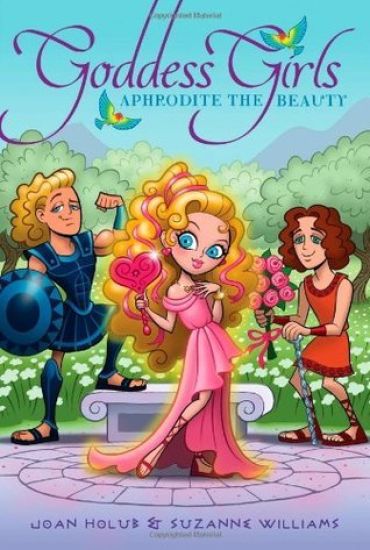
Aphrodite the Beauty

Aphrodite the Beauty

Joan Holub; Suzanne Williams

Aladdin Paperbacks
2010
nidottu
Well-researched and true to the original myths, each volume in the Goddess Girls series addresses contemporary issues like friendships and relationships from a classically accurate--and entertaining--persepective. In Aphrodite the Beauty, Aphrodite, goddessgirl of love, must deal with jealousy after giving Athena a makeover. It doesn't seem fair that the godboys pay more attention to her friend when Aphrodite is supposed to be destined for love She also copes with a crush from an unlikely source--the nerdy Hephaestus (god of the smith)--and learns that love comes in many forms.
Persephone the Phony

Persephone the Phony

Joan Holub; Suzanne Williams

Aladdin Paperbacks
2010
nidottu
Persephone learns that it's ok to stand up for herself in the second book in the Goddess Girls series Persephone usually goes along with whatever everyone else wants instead of doing what makes her happy. So when she meets Mount Olympus Academy bad-boy Hades, she finally feels like she has found someone with whom she can be herself. But her mom (Ceres) and her friends don't exactly approve. If Hades can make her feel so special, is he really that bad, or just misunderstood?
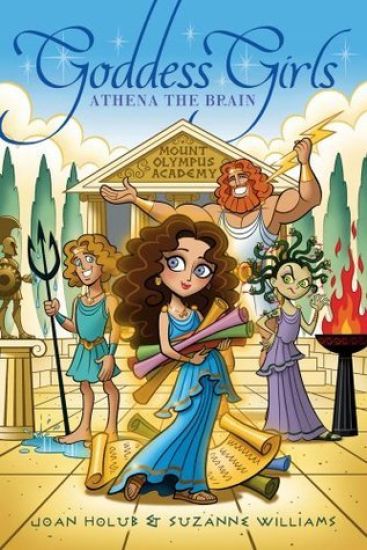
Athena the Brain

Athena the Brain

Joan Holub; Suzanne Williams

Aladdin Paperbacks
2010
nidottu
In Athena the Brain, Athena always knew she was smart and special, but she didn't realize that she was a goddess When she's whisked away to Mount Olympus Academy, she worries about fitting in and dealing with her dad (Zeus). Luckily, she meets the Goddess Girls and finds the best friends she's ever had.
Ending Violence Against Women

Ending Violence Against Women

Francine Pickup; Suzanne Williams; Caroline Sweetman

Oxfam
2000
sidottu
Violence, and women's fear of it, limits women's choices in virtually all spheres of life. It has long-term, as well as short-term consequences on women's physical and emotional well-being. It detrimentally affects women's ability to gain an education, earn a livelihood, develop human relationships and participate in public activities, including development programmes. In this book addressing violence against women, development workers go to the heart of how members of communities relate to one another and how they are able to shape their own lives. The first section of the book examines the many different definitions of violence against woman and offers theories about why it happens in all societies across the world. It discusses the current momentum around the issue and asks why development organizations have been slow to take up the struggle to end violence against woman. The second section focuses on strategies to counter violence against women and support the survivors. Case studies come from times of peace and times of armed conflict.Sections suggest strategies for transforming attitudes and beliefs in different societies that condone such violence; for supporting individual survivors; and to ensure that governments and NGOs fulfil their duty to protect women.
Ending Violence Against Women

Ending Violence Against Women

Francine Pickup; Suzanne Williams; Caroline Sweetman

Oxfam
2000
nidottu
Violence and women's fear of it limits women's choices in virtually all spheres of life. It has long-term as well as short-term consequences on women's physical and emotional well-being. It detrimentally affects women's ability to gain an education, earn a livelihood, develop human relationships and participate in public activities, including development programmes. In this book addressing violence against women development workers go to the heart of how members of communities relate to one another and how they are able to shape their own lives. The first section of the book examines the many different definitions of violence against woman and offers theories about why it happens in all societies across the world. It discusses the current momentum around the issue and asks why development organizations have been slow to take up the struggle to end violence against woman. The second section focuses on strategies to counter violence against women and support the survivors. Case studies come from times of peace and times of armed conflict.Sections suggest strategies for transforming attitudes and beliefs in different societies that condone such violence, for supporting individual survivors and to ensure that governments and NGOs fulfil their duty to protect women.
Manual de Formacao em Genero da Oxfam
This comprehensive approach to gender training in development encompasses work on gender awareness-raising and gender analysis at the individual, community and global level. An important reference source for development agency trainers and academics. This is a large, comprehensive manual that acknowledges the work of the gender trainers throughout the world who have developed the material. It contains everything you need to know to organise, run and evaluate group workshops on gender, with many practical exercises. Important concepts are explained at the beginning, such as defining gender and its relation to other issues. There are excellent guidelines for the facilitators: key issues, the seven steps of planning and running the training, are all explained. There is also guidance in preparing further case studies.The manual is made up of activities, handouts and facilitator's notes on the following broad areas: * Training techniques - suggests and explains a wide range of ideas and methods such as icebreakers and exercises to use when participants are tired or to encourage group feeling; * Getting started - looks at introductions, expectations, and sharing experience; * Gender awareness - building gender- and self-awareness, analysing roles and needs; * Gender and global issues - conflict, environment and culture; * Working with women and men- listening and working to include women; * Communicating gender, strategies for change and evaluation - images of gender, introducing gender to our organisations and creative evaluation. The book is written in a straightforward way. There is a guide to the manual to help readers find their way around. The index gives the title of the activity, timing and details of handouts needed. Handouts can be copied and there is a reference section of addresses, resources and further reading. The book is aimed at NGO staff with some experience in running workshops, and experienced gender trainers.
The Oxfam Handbook of Development and Relief

The Oxfam Handbook of Development and Relief

Deborah Eade; Suzanne Williams

Oxfam Professional
1995
nidottu
This handbook is the product of the experience of Oxfam UK and Ireland in its work in over 70 countries around the world. It offers an expression of Oxfam's fundamental principles: that all the people have the right to an equitable share in the world's resources, and the right to make decisions about their own development. The denial of such rights is at the heart of poverty and suffering. This reference work analyzes policy, procedure and practice in such fields as health, human rights, emergency relief, capacity-building and agricultural production.
The Oxfam Handbook of Development and Relief

The Oxfam Handbook of Development and Relief

Deborah Eade; Suzanne Williams

Oxfam Professional
1995
nidottu
This handbook is the product of the experience of Oxfam UK and Ireland in its work in over 70 countries around the world. It offers an expression of Oxfam's fundamental principles: that all the people have the right to an equitable share in the world's resources, and the right to make decisions about their own development. The denial of such rights is at the heart of poverty and suffering. This reference work analyzes policy, procedure and practice in such fields as health, human rights, emergency relief, capacity-building and agricultural production.