Kirjojen hintavertailu. Mukana 12 595 353 kirjaa ja 12 kauppaa.
Kirjailija
Sven Ouzman
Kirjat ja teokset yhdessä paikassa: 2 kirjaa, julkaisuja vuosilta 2010-2025, suosituimpien joukossa Seeing and Knowing. Vertaile teosten hintoja ja tarkista saatavuus suomalaisista kirjakaupoista.
Blundell Geoffrey; Christopher Chippindale; Clottes Jean; Conkey Margaret W.; Edward B. Eastwood; Francis Julie E.; Helskog Knut; Imogene L. Lim; Loendorf Lawrence L.; Johannes Loubser; David Morris; Sven Ouzman; Neil Price; Saetersdal Tore; Benjamin Smith; Patricia Vinnicombe; Eva Walderhaug; Walker Nick; Whitley David S.
This collection focuses on David Lewis-Williams and the extent of his personal impact on the field of rock art research. It is largely through his work that San rock art has come to be understood so well, as a complex symbolic and metaphoric representation of San religious beliefs and practices. The purpose of this volume is to demonstrate the depth and wide geographical impact of Lewis-Williams' contribution, with particular emphasis on the use of theory and methodology drawn from ethnography that he has used with inspirational effect in understanding the meaning and context of rock art in various parts of the world. Seeing and Knowing explores how best archaeologists study rock art when there exist ethnographic or ethno - historic bases of insight, and how they study rock art when there do not appear to exist ethnographic or ethnohistoric bases of insight - in short, how to understand and learn from rock art with and without ethnography. Because many of the chapters are based on solid fieldwork and ethnographic research, they offer a new body of work that provides the evidence for differentiation between knowing and simply seeing.
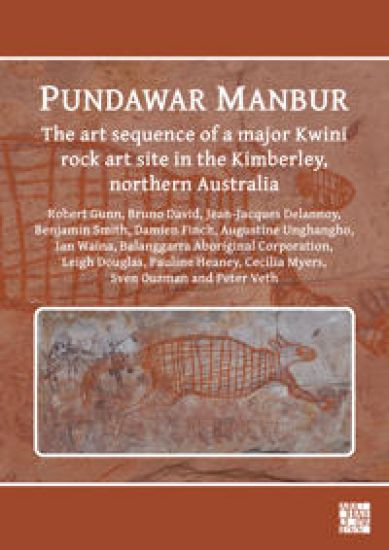
Robert G. Gunn; Bruno David; Jean-Jacques Delannoy; Benjamin Smith; Damien Finch; Augustine Unghangho; Ian Waina; Leigh Douglas; Pauline Heaney; Cecilia Myers; Sven Ouzman; Peter Veth
Pundawar Manbur is one of the largest painted rock shelters in the Drysdale River valley of the Kimberley, Western Australia. It contains more than 600 rock paintings, engravings and rock markings with a complex series of overlapping styles of rock art. It is a cultural jewel of Kwini Country, within the lands of the Balanggarra Native Title determination. This monograph presents the first detailed recording and analysis of the site and its art. There are many figures in superposition, and many also in carefully targeted patterns of superimposition, making for a rich story of sequential engagements going back many thousands of years. There is much figurative art, including images from the earliest purported phase of Kimberley art, the Irregular Infill Animal Period, but there are also stencils and other markings. There is evidence of additive reuse – some of the figures have been repainted. There is also fascinating evidence of subtractive reuse, some of the images showing signs of having been ‘battered’ and/or scratched, that is, directly engaged with subsequent to their painting. This monograph is unusual in Australian archaeology as it does not focus on an excavated site; it focuses solely on the rock art of Pundawar Manbur and gives it the attention it deserves.