Kirjojen hintavertailu. Mukana 12 595 353 kirjaa ja 12 kauppaa.

Kirjailija

Svenja Adolphs

Kirjat ja teokset yhdessä paikassa: 8 kirjaa, julkaisuja vuosilta 2006-2024, suosituimpien joukossa Corpus Linguistics for Virtual Workplace Discourse. Vertaile teosten hintoja ja tarkista saatavuus suomalaisista kirjakaupoista.

8 kirjaa

Kirjojen julkaisuhaarukka 2006-2024.

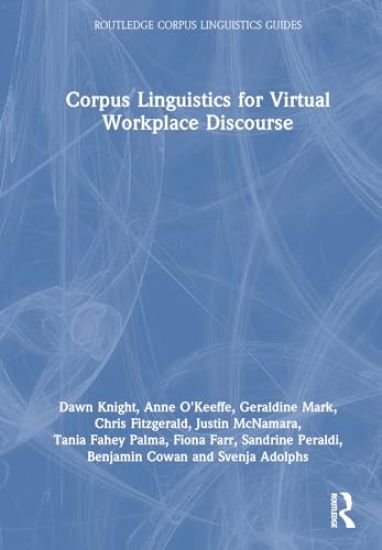
Corpus Linguistics for Virtual Workplace Discourse

Corpus Linguistics for Virtual Workplace Discourse

Dawn Knight; Anne O'Keeffe; Christopher Fitzgerald; Justin McNamara; Geraldine Mark; Sandrine Peraldi; Tania Fahey Palma; Fiona Farr; Benjamin Cowan; Svenja Adolphs

TAYLOR FRANCIS LTD
2024
sidottu
Corpus Linguistics for Virtual Workplace Discourse provides a thorough and practical step-by-step guide to constructing and analysing a multi-modal corpus of virtual meetings. It draws from original data from video recordings of virtual meetings with a variety of participant profiles from various industries, alongside examples of images and transcriptions from this data to illustrate key points.This cutting-edge volume contextualises the field through previous corpus studies of interaction in a workplace context, as well as a description of various technology mediated interactions, culminating in video-mediated interaction, before outlining the cross-section of these two areas in describing the characteristics of virtual meetings. An overview of multi-modal corpus analysis provides examples and analysis of virtual meetings from a multi-modal perspective, demonstrating what is unique about virtual workplace discourse. The text concludes by presenting how multi-modal corpus analysis can aid understanding and delivery of virtual meetings through suggestions regarding meeting management. At various stages throughout the book, readers will engage with tasks that promote critical thinking at each phase of background research and data analysis. This will ensure that practical learning outcomes are achieved as well as broad insights gained into multi-modal corpus analysis of virtual meetings.This timely, prescient text is essential reading to students and researchers in corpus linguistics and any applied linguistics scholar interested in workplace communication, as well as valuable reading for any students or scholars in business communication.
Corpus Linguistics for Virtual Workplace Discourse

Corpus Linguistics for Virtual Workplace Discourse

Dawn Knight; Anne O'Keeffe; Christopher Fitzgerald; Justin McNamara; Geraldine Mark; Sandrine Peraldi; Tania Fahey Palma; Fiona Farr; Benjamin Cowan; Svenja Adolphs

TAYLOR FRANCIS LTD
2024
nidottu
Corpus Linguistics for Virtual Workplace Discourse provides a thorough and practical step-by-step guide to constructing and analysing a multi-modal corpus of virtual meetings. It draws from original data from video recordings of virtual meetings with a variety of participant profiles from various industries, alongside examples of images and transcriptions from this data to illustrate key points.This cutting-edge volume contextualises the field through previous corpus studies of interaction in a workplace context, as well as a description of various technology mediated interactions, culminating in video-mediated interaction, before outlining the cross-section of these two areas in describing the characteristics of virtual meetings. An overview of multi-modal corpus analysis provides examples and analysis of virtual meetings from a multi-modal perspective, demonstrating what is unique about virtual workplace discourse. The text concludes by presenting how multi-modal corpus analysis can aid understanding and delivery of virtual meetings through suggestions regarding meeting management. At various stages throughout the book, readers will engage with tasks that promote critical thinking at each phase of background research and data analysis. This will ensure that practical learning outcomes are achieved as well as broad insights gained into multi-modal corpus analysis of virtual meetings.This timely, prescient text is essential reading to students and researchers in corpus linguistics and any applied linguistics scholar interested in workplace communication, as well as valuable reading for any students or scholars in business communication.
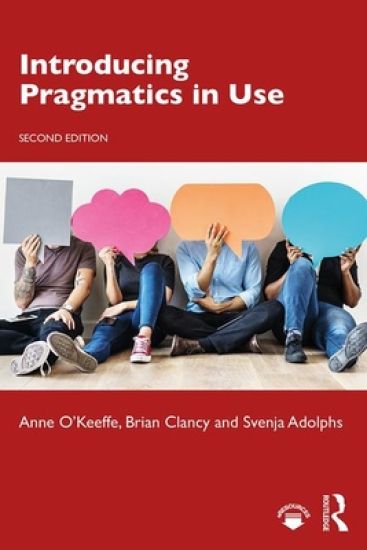
Introducing Pragmatics in Use

Introducing Pragmatics in Use

Anne O'Keeffe; Brian Clancy; Svenja Adolphs

Routledge
2019
nidottu
Introducing Pragmatics in Use is a lively and accessible introduction to pragmatics which both covers theory and applies it to real spoken and written data. This textbook systematically draws on a number of different language corpora and the corresponding software applications. Its primary focus is the application of a corpus methodology in order to examine core component areas such as deixis, politeness, speech acts, language variation and register. The main goal of the book is to contextualise pragmatics in the study of language through the analysis of different language contexts provided by spoken and written corpora.Substantially revised and updated, this second edition covers a wider range of topics, corpora and software packages. It consistently demonstrates the benefits of innovative analytical synergies and extends this to how corpus pragmatics can be further blended with, for example, conversation analysis or variational pragmatics. The second edition also offers a new chapter specifically dedicated to corpus pragmatics which proposes a framework for both form-to-function and function-to-form approaches. The book also addresses the – sometimes thorny – area of the integration of the teaching of pragmatics into the language classroom. All chapters in the second edition include a number of cohesive, step-by-step tasks that can be done in small groups in class or can be used as self-study resources. A wide range of illustrative language samples drawn from a number of English language corpora, coupled with instructive tasks and annotated further reading sections, make this an ideal textbook for advanced undergraduate or postgraduate students of pragmatics, discourse analysis and corpus linguistics within applied languages / linguistics or TESOL programmes.
Introducing Pragmatics in Use

Introducing Pragmatics in Use

Anne O'Keeffe; Brian Clancy; Svenja Adolphs

Routledge
2019
sidottu
Introducing Pragmatics in Use is a lively and accessible introduction to pragmatics which both covers theory and applies it to real spoken and written data. This textbook systematically draws on a number of different language corpora and the corresponding software applications. Its primary focus is the application of a corpus methodology in order to examine core component areas such as deixis, politeness, speech acts, language variation and register. The main goal of the book is to contextualise pragmatics in the study of language through the analysis of different language contexts provided by spoken and written corpora.Substantially revised and updated, this second edition covers a wider range of topics, corpora and software packages. It consistently demonstrates the benefits of innovative analytical synergies and extends this to how corpus pragmatics can be further blended with, for example, conversation analysis or variational pragmatics. The second edition also offers a new chapter specifically dedicated to corpus pragmatics which proposes a framework for both form-to-function and function-to-form approaches. The book also addresses the – sometimes thorny – area of the integration of the teaching of pragmatics into the language classroom. All chapters in the second edition include a number of cohesive, step-by-step tasks that can be done in small groups in class or can be used as self-study resources. A wide range of illustrative language samples drawn from a number of English language corpora, coupled with instructive tasks and annotated further reading sections, make this an ideal textbook for advanced undergraduate or postgraduate students of pragmatics, discourse analysis and corpus linguistics within applied languages / linguistics or TESOL programmes.
Spoken Corpus Linguistics

Spoken Corpus Linguistics

Svenja Adolphs; Ronald Carter

Routledge
2015
nidottu
In this book, Adolphs and Carter explore key approaches to work in spoken corpus linguistics. The book discusses some of the pioneering challenges faced in designing, building and utilising insights from the analysis of spoken corpora, arguing that, even though writing is heavily privileged in corpus research, the spoken language can reveal patterns of language use that are both different and distinctive and that this has important implications for the way in which language is described, for the study of human communication and for the field of applied linguistics as a whole. Spoken Corpus Linguistics is divided into two main parts. The first part sets the scene by discussing traditional and new approaches to monomodal spoken corpus analysis, with a focus on discourse organisation and conversational interaction and with particular attention to forms of language such as discourse markers and multi-word units, areas of language not conventionally described but which are argued to be of importance to spoken language description and to spoken language learning and teaching research within the field of applied linguistics. The second part of the book moves into the multimodal domain and focuses on alignments between language and gesture in a spoken corpus, with particular reference to gestural movements of the head and the hand and to the different ways in which prosody might be used to enhance communication. A brief final chapter discusses new developments in the area of spoken corpus research, including the relationship between language and context, emerging research methods as well as discussing possible shifts in scope and emphasis in spoken corpus research in the future.
Spoken Corpus Linguistics

Spoken Corpus Linguistics

Svenja Adolphs; Ronald Carter

Routledge
2013
sidottu
In this book, Adolphs and Carter explore key approaches to work in spoken corpus linguistics. The book discusses some of the pioneering challenges faced in designing, building and utilising insights from the analysis of spoken corpora, arguing that, even though writing is heavily privileged in corpus research, the spoken language can reveal patterns of language use that are both different and distinctive and that this has important implications for the way in which language is described, for the study of human communication and for the field of applied linguistics as a whole. Spoken Corpus Linguistics is divided into two main parts. The first part sets the scene by discussing traditional and new approaches to monomodal spoken corpus analysis, with a focus on discourse organisation and conversational interaction and with particular attention to forms of language such as discourse markers and multi-word units, areas of language not conventionally described but which are argued to be of importance to spoken language description and to spoken language learning and teaching research within the field of applied linguistics. The second part of the book moves into the multimodal domain and focuses on alignments between language and gesture in a spoken corpus, with particular reference to gestural movements of the head and the hand and to the different ways in which prosody might be used to enhance communication. A brief final chapter discusses new developments in the area of spoken corpus research, including the relationship between language and context, emerging research methods as well as discussing possible shifts in scope and emphasis in spoken corpus research in the future.
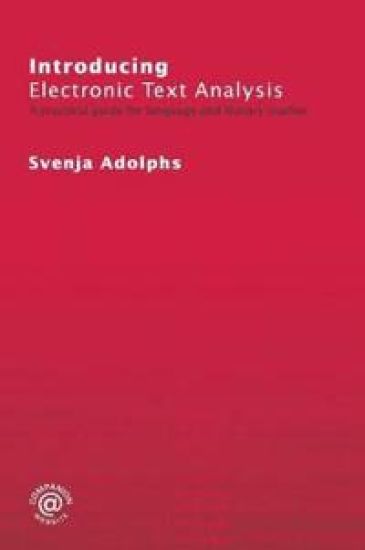
Introducing Electronic Text Analysis
Introducing Electronic Text Analysis is a practical and much needed introduction to corpora – bodies of linguistic data. Written specifically for students studying this topic for the first time, the book begins with a discussion of the underlying principles of electronic text analysis. It then examines how these corpora enhance our understanding of literary and non-literary works. In the first section the author introduces the concepts of concordance and lexical frequency, concepts which are then applied to a range of areas of language study. Key areas examined are the use of on-line corpora to complement traditional stylistic analysis, and the ways in which methods such as concordance and frequency counts can reveal a particular ideology within a text. Presenting an accessible and thorough understanding of the underlying principles of electronic text analysis, the book contains abundant illustrative examples and a glossary with definitions of main concepts. It will also be supported by a companion website with links to on-line corpora so that students can apply their knowledge to further study. The accompanying website to this book can be found at http://www.routledge.com/textbooks/0415320216
Introducing Electronic Text Analysis
Introducing Electronic Text Analysis is a practical and much needed introduction to corpora – bodies of linguistic data. Written specifically for students studying this topic for the first time, the book begins with a discussion of the underlying principles of electronic text analysis. It then examines how these corpora enhance our understanding of literary and non-literary works. In the first section the author introduces the concepts of concordance and lexical frequency, concepts which are then applied to a range of areas of language study. Key areas examined are the use of on-line corpora to complement traditional stylistic analysis, and the ways in which methods such as concordance and frequency counts can reveal a particular ideology within a text. Presenting an accessible and thorough understanding of the underlying principles of electronic text analysis, the book contains abundant illustrative examples and a glossary with definitions of main concepts. It will also be supported by a companion website with links to on-line corpora so that students can apply their knowledge to further study. The accompanying website to this book can be found at http://www.routledge.com/textbooks/0415320216