Kirjojen hintavertailu. Mukana 12 595 353 kirjaa ja 12 kauppaa.

Kirjailija

Svetlana Alpers

Kirjat ja teokset yhdessä paikassa: 7 kirjaa, julkaisuja vuosilta 1971-2023, suosituimpien joukossa The Studio Reader – On the Space of Artists. Vertaile teosten hintoja ja tarkista saatavuus suomalaisista kirjakaupoista.

7 kirjaa

Kirjojen julkaisuhaarukka 1971-2023.

The Studio Reader – On the Space of Artists

The Studio Reader – On the Space of Artists

Mary Jane Jacob; Glenn Adamson; Svetlana Alpers; John Badlessari; Alice Bellony–rewold; Mary Bergstein; Walead Beshty; Andrea Bowers; Daniel Buren; Rochelle Feinstein; David J Getsy; Michelle Grabner; Rodney Graham; Amy Granat; Karl Haendel; Rachel Harrison; Caroline A Jones; Suzanne Lacy; Thomas Lawson; Lynn Lester Hershman; Shana Lutker; Annika Marie; Courtney Martin; Carrie Moyer; Bruce Nauman; Michael Peppiatt; David Reed; Lane Relyea; David Robbins; Judith Rodenbeck; Joe Scanlan; Brenda Schmahmann; Carolee Schneemann

University of Chicago Press
2010
nidottu
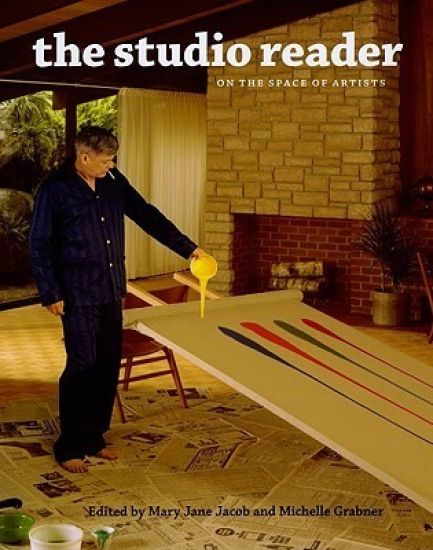
The image of a tortured genius working in near isolation has long dominated our conceptions of the artist's studio. Examples are abound: think Jackson Pollock dripping resin on a cicada carcass in his shed in the Hamptons. But times have changed; ever since Andy Warhol declared his art space a 'factory', artists have begun to envision themselves as the leaders of production teams, and their sense of what it means to be in the studio has altered just as dramatically as their practices. "The Studio Reader" pulls back the curtain from the art world to reveal the real activities behind artistic production. What does it mean to be in the studio? What is the space of the studio in the artist's practice? How do studios help artists envision their agency and, beyond that, their own lives? This forward-thinking anthology features an all-star array of contributors, ranging from Svetlana Alpers, Bruce Nauman, and Robert Storr to Daniel Buren, Carolee Schneemann, and Buzz Spector, each of whom locates the studio both spatially and conceptually - at the center of an art world that careens across institutions, markets, and disciplines. A companion for anyone engaged with the spectacular sites of art at its making, "The Studio Reader" reconsiders this crucial space as an actual way of being that illuminates our understanding of both artists and the world they inhabit.
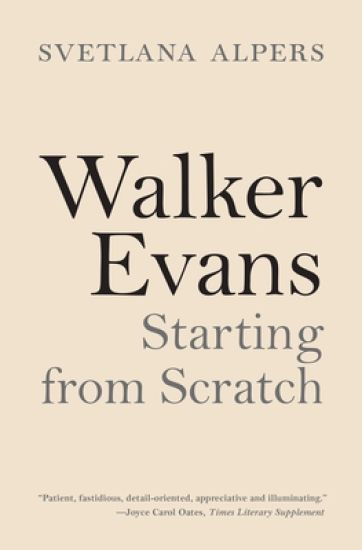
Walker Evans

Walker Evans

Svetlana Alpers

PRINCETON UNIVERSITY PRESS
2023
pokkari
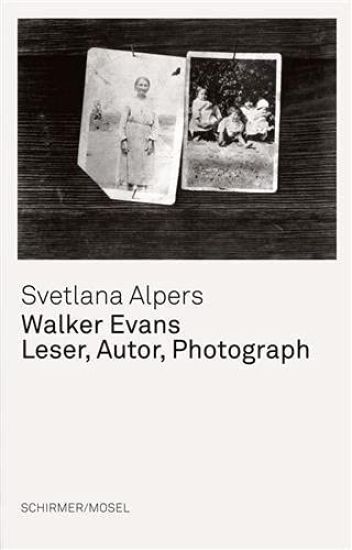
A magisterial study of celebrated photographer Walker EvansWalker Evans (1903–75) was a great American artist photographing people and places in the United States in unforgettable ways. He is known for his work for the Farm Security Administration, addressing the Great Depression, but what he actually saw was the diversity of people and the damage of the long Civil War. In Walker Evans, renowned art historian Svetlana Alpers explores how Evans made his distinctive photographs. Delving into a lavish selection of Evans’s work, Alpers uncovers rich parallels between his creative approach and those of numerous literary and cultural figures, locating Evans within the wide context of a truly international circle.Alpers demonstrates that Evans’s practice relied on his camera choices and willingness to edit multiple versions of a shot, as well as his keen eye and his distant straight-on view of visual objects. Illustrating the vital role of Evans’s dual love of text and images, Alpers places his writings in conversation with his photographs. She brings his techniques into dialogue with the work of a global cast of important artists—from Flaubert and Baudelaire to Elizabeth Bishop and William Faulkner—underscoring how Evans’s travels abroad in such places as France and Cuba, along with his expansive literary and artistic tastes, informed his quintessentially American photographic style.A magisterial account of a great twentieth-century artist, Walker Evans urges us to look anew at the act of seeing the world—to reconsider how Evans saw his subjects, how he saw his photographs, and how we can see his images as if for the first time.
Walker Evans

Walker Evans

Svetlana Alpers

PRINCETON UNIVERSITY PRESS
2020
sidottu
A magisterial study of celebrated photographer Walker EvansWalker Evans (1903–75) was a great American artist photographing people and places in the United States in unforgettable ways. He is known for his work for the Farm Security Administration, addressing the Great Depression, but what he actually saw was the diversity of people and the damage of the long Civil War. In Walker Evans, renowned art historian Svetlana Alpers explores how Evans made his distinctive photographs. Delving into a lavish selection of Evans’s work, Alpers uncovers rich parallels between his creative approach and those of numerous literary and cultural figures, locating Evans within the wide context of a truly international circle.Alpers demonstrates that Evans’s practice relied on his camera choices and willingness to edit multiple versions of a shot, as well as his keen eye and his distant straight-on view of visual objects. Illustrating the vital role of Evans’s dual love of text and images, Alpers places his writings in conversation with his photographs. She brings his techniques into dialogue with the work of a global cast of important artists—from Flaubert and Baudelaire to Elizabeth Bishop and William Faulkner—underscoring how Evans’s travels abroad in such places as France and Cuba, along with his expansive literary and artistic tastes, informed his quintessentially American photographic style.A magisterial account of a great twentieth-century artist, Walker Evans urges us to look anew at the act of seeing the world—to reconsider how Evans saw his subjects, how he saw his photographs, and how we can see his images as if for the first time.
Rembrandt's Enterprise

Rembrandt's Enterprise

Svetlana Alpers

University of Chicago Press
1995
nidottu
Singularly interesting and stimulating. . . . A passionate and original work of scholarship.--Richard Wollheim, Times Literary Supplement With the publication [of Rembrandt's Enterprise], Svetlana Alpers has firmly established herself in the front ranks of art historians at work today. . . . The book is not a long one. Yet, there is more perceptive scholarship packed into its four chapters than is typically found in a whole shelf of the more common outpourings of academic writers. Rembrandt's Enterprise is less a book of archival discoveries than of fresh interpretation of the revered artist and his milieu. . . . Alpers makes us see how Rembrandt's complex and enormously popular art has embedded itself in our ways of thinking about who we are and how we live, even in the late 20th century.--Christopher Knight, Los Angeles Herald Examiner
The Art of Describing

The Art of Describing

Svetlana Alpers

University of Chicago Press
1984
nidottu
"The art historian after Erwin Panofsky and Ernst Gombrich is not only participating in an activity of great intellectual excitement; he is raising and exploring issues which lie very much at the centre of psychology, of the sciences and of history itself. Svetlana Alpers's study of 17th-century Dutch painting is a splendid example of this excitement and of the centrality of art history among current disciples. Professor Alpers puts forward a vividly argued thesis. There is, she says, a truly fundamental dichotomy between the art of the Italian Renaissance and that of the Dutch masters. . . . Italian art is the primary expression of a 'textual culture,' this is to say of a culture which seeks emblematic, allegorical or philosophical meanings in a serious painting. Alberti, Vasari and the many other theoreticians of the Italian Renaissance teach us to 'read' a painting, and to read it in depth so as to elicit and construe its several levels of signification. The world of Dutch art, by the contrast, arises from and enacts a truly 'visual culture.' It serves and energises a system of values in which meaning is not 'read' but 'seen,' in which new knowledge is visually recorded."—George Steiner, Sunday Times"There is no doubt that thanks to Alpers's highly original book the study of the Dutch masters of the seventeenth century will be thoroughly reformed and rejuvenated. . . . She herself has the verve, the knowledge, and the sensitivity to make us see familiar sights in a new light."—E. H. Gombrich, New York Review of Books
Decoration of the Torre de la Parada

Decoration of the Torre de la Parada

Svetlana Alpers

Harvey Miller Publishers
1971
sidottu
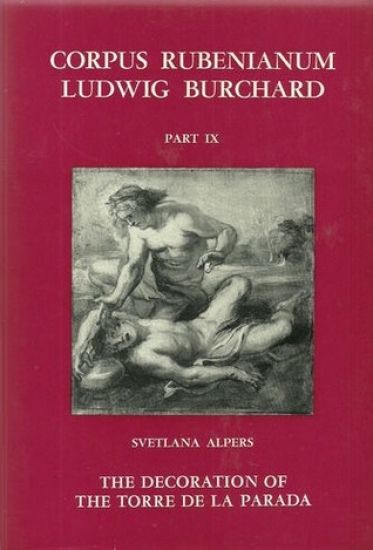
This series, edited by Professor d'Hulst, is a definitive multi-volumed catalogue raisonne of the work of the great Flemish painter Peter Paul Rubens. Part III provides sixty-seven outstanding examples of Rubens's gift as a narrator, bearing witness to the fertility of his imagination, the accuracy of his drawings, and the inspired skill of his brushwork. Each work is considered in light of the best scholarship, with full provenances for the originals and the copies, a record of exhibitions in which they have been shown, as well as the literature in which they have been discussed. Everything catalogued is also illustrated with additional comparative illustrations.