Kirjojen hintavertailu. Mukana 12 657 676 kirjaa ja 12 kauppaa.

Kirjailija

Svetlana Boym

Kirjat ja teokset yhdessä paikassa: 14 kirjaa, julkaisuja vuosilta 1991-2026, suosituimpien joukossa ???ó???. Vertaile teosten hintoja ja tarkista saatavuus suomalaisista kirjakaupoista.

14 kirjaa

Kirjojen julkaisuhaarukka 1991-2026.

Bone China, or Letters Not about Love

Bone China, or Letters Not about Love

Svetlana Boym

Academic Studies Press
2026
sidottu
Bone China, or Letters Not about Love is an unconventional murder mystery that blends suspense with lyrical storytelling. Its protagonist Mila Freeman is recovering from a broken leg when she receives the news that her old friend—an artist and human rights activist—has been found dead under suspicious circumstances. The death is officially ruled a suicide, but the truth lingers unresolved, seeping into Mila’s world despite her friends’ vow to avoid the subject. What unfolds is a witty and haunting meditation on exile, nostalgia, fractured bodies, and lost loves. Through digressive folktales, etymologies, and a chorus of emails woven into the narrative, Bone China explores the tension between silence and revelation, grief and resilience, intimacy and estrangement. A genre-defying novel, it invites readers into a mystery that is as much about memory and identity as it is about uncovering a death. With sharp wit and emotional depth, Bone China is perfect for readers who crave literary fiction that pushes boundaries while keeping them enthralled by the puzzle at its core.
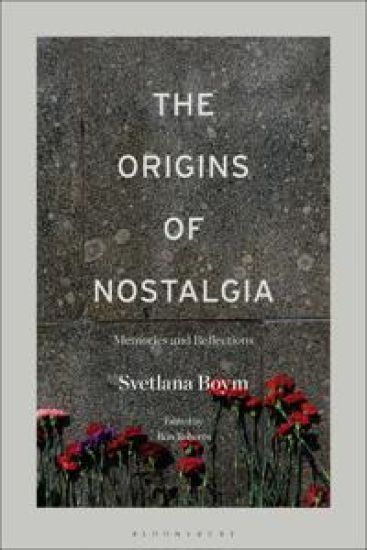
The Origins of Nostalgia

The Origins of Nostalgia

Svetlana Boym

BLOOMSBURY PUBLISHING PLC
2023
nidottu
This collection of previously unpublished autobiographical and semi-autobiographical “snippets of experience” written by Svetlana Boym in the final period of her life capture her penchant for seamlessly melding, poetically and dream-like, the intensively personal with the everyday and the world-historical. They illuminate the formative conditions for the thinking which she was to develop into her majestic work on nostalgia.Importantly, these pieces fill in gaps in understanding the genesis and scope of her take on the world. For readers both familiar with her work and for those new to it, The Origins of Nostalgia will enable our own cultural past as well as that of the former Soviet Union to be viewed in a different light.
The Origins of Nostalgia

The Origins of Nostalgia

Svetlana Boym

BLOOMSBURY PUBLISHING PLC
2022
sidottu
This collection of previously unpublished autobiographical and semi-autobiographical “snippets of experience” written by Svetlana Boym in the final period of her life capture her penchant for seamlessly melding, poetically and dream-like, the intensively personal with the everyday and the world-historical. They illuminate the formative conditions for the thinking which she was to develop into her majestic work on nostalgia.Importantly, these pieces fill in gaps in understanding the genesis and scope of her take on the world. For readers both familiar with her work and for those new to it, The Origins of Nostalgia will enable our own cultural past as well as that of the former Soviet Union to be viewed in a different light.
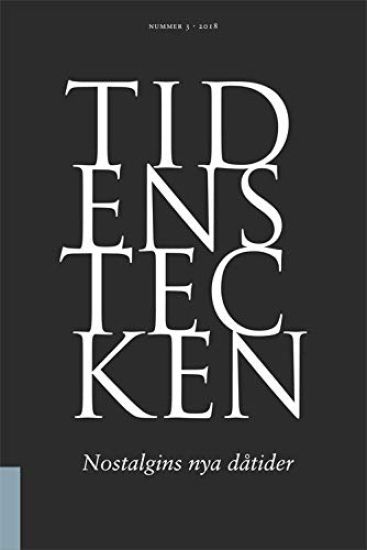
Nostalgins nya dåtider

Nostalgins nya dåtider

Mikael Kurkiala; Svetlana Boym; Marcia sá Cavalcante Shuback; Urban Claesson; Bengt Kristensson Uggla; Vibeke Olsson Falk; Hans Ruin

Artos Norma Bokförlag
2018
nidottu
Tidens Tecken ges ut en gång per år och erbjuder ett forum där samhälleliga och existentiella teman centrala för Svenska kyrkans verksamhet, vision och identitet belyses ur olika perspektiv. I detta nummer, Nostalgins nya dåtider, utforskar artikelförfattarna nostalgins återkomst i en globaliserad värld. Gemensamt för nostalgins olika uttryck tycks vara känslan av förlust, av att ett tomrum har öppnat sig i det kollektiva och individuella livet. Det som skiljer dem åt är tolkningen av vari denna förlust består, vem som bär skulden för den och hur, och med vad den ska ersättas.
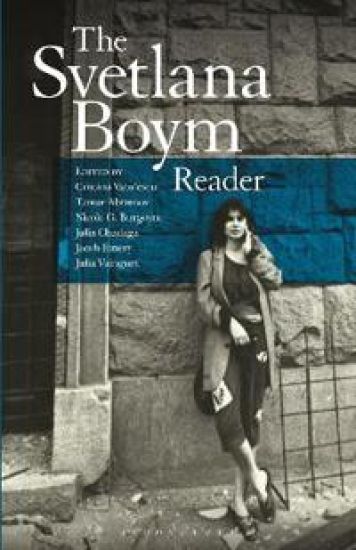
The Svetlana Boym Reader

The Svetlana Boym Reader

Svetlana Boym

Bloomsbury Academic USA
2018
sidottu
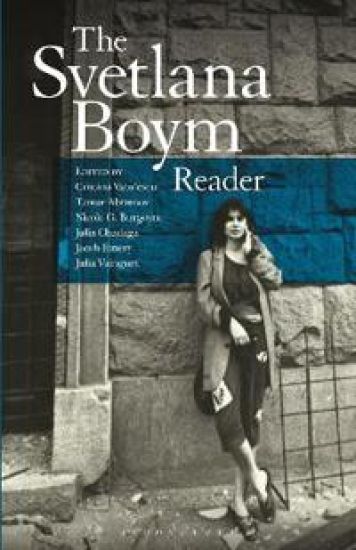
Svetlana Boym was a prolific writer, a charismatic professor, a novelist, and a public intellectual. She was also a fiercely resourceful and reflective immigrant; her most resonant book, The Future of Nostalgia, was deeply rooted in that experience. Even after The Future of Nostalgia carried her fame beyond academic circles, few readers were aware of all of her creative personas. She was simply too prolific, and her work migrated across most people’s disciplinary boundaries—from literary and cultural studies through film, visual, and material culture studies, performance, intermedia, and new media.The Svetlana Boym Reader presents a comprehensive view of Boym’s singularly creative work in all its aspects. It includes Boym’s classic essays, carefully chosen excerpts from her five books, and journalistic gems. Showcasing her roles both as curator and curated, the reader includes interviews and excerpts from exhibition catalogues as well as samples of intermedial works like Hydrant Immigrants. It also features autobiographical pieces that shed light on the genealogy of her scholarly work and rarities like an excerpt from Boym’s first graduate school essay on Russian literature, complete with marginalia by her mentor Donald Fanger. Last but not least, the reader includes late pieces that Boym did not live to see through publication, as well as transcripts of her memorable last lectures and performances.
The Svetlana Boym Reader

The Svetlana Boym Reader

Svetlana Boym

Bloomsbury Academic USA
2018
nidottu
Svetlana Boym was a prolific writer, a charismatic professor, a novelist, and a public intellectual. She was also a fiercely resourceful and reflective immigrant; her most resonant book, The Future of Nostalgia, was deeply rooted in that experience. Even after The Future of Nostalgia carried her fame beyond academic circles, few readers were aware of all of her creative personas. She was simply too prolific, and her work migrated across most people’s disciplinary boundaries—from literary and cultural studies through film, visual, and material culture studies, performance, intermedia, and new media.The Svetlana Boym Reader presents a comprehensive view of Boym’s singularly creative work in all its aspects. It includes Boym’s classic essays, carefully chosen excerpts from her five books, and journalistic gems. Showcasing her roles both as curator and curated, the reader includes interviews and excerpts from exhibition catalogues as well as samples of intermedial works like Hydrant Immigrants. It also features autobiographical pieces that shed light on the genealogy of her scholarly work and rarities like an excerpt from Boym’s first graduate school essay on Russian literature, complete with marginalia by her mentor Donald Fanger. Last but not least, the reader includes late pieces that Boym did not live to see through publication, as well as transcripts of her memorable last lectures and performances.
The Off-Modern

The Off-Modern

Svetlana Boym

Bloomsbury Academic USA
2017
nidottu
Svetlana Boym writes a new genealogy of modernity, moving beyond older debates between modernism and postmodernism to focus on the intersection of art, architecture, technology, and philosophy in the early twenty-first century. Drawing on theories of Georg Simmel, Henri Bergson, Aby Warburg, and Jacques Derrida, Boym presents the off-modern as an eccentric, self-questioning, anti-authoritarian perspective with roots in the Russian avant-garde, now developed in surprising ways by contemporary artists, architects, and curators around the world. She illustrates the off-modern in discussions of (and with) figures as diverse as architect Rem Koolhaas, Albanian artist-turned-mayor Edi Rama, an art collective in Delhi, and the creator of the Museum of Jurassic Technology in Los Angeles. Both a manifesto and a memoir, The Off-Modern often returns to themes of travel and immigration, exploring issues of diasporic intimacy and productive estrangement amid nostalgic landscapes of urban ruins.
Another Freedom

Another Freedom

Svetlana Boym

University of Chicago Press
2012
nidottu
The word "freedom" is so used and abused that it is always in danger of becoming nothing but a cliche. In "Another Freedom", Svetlana Boym offers us a refreshing new portrait of the age-old concept that plays such a crucial role in today's politics. Exploring the rich cross-cultural history of the idea of freedom, from its origins in ancient Greece to the present day, she argues that our attempts to imagine freedom should occupy the space of not only "what is" but also "what if". Beginning with notions of sacrifice and the emergence of a public sphere for politics and art, Boym expands her account to include the relationships between freedom and liberation, personal and political freedom, modernity and terror, and public dissent and creative estrangement. While depicting a world of differences, she affirms lasting solidarities based on the commitment to the public sphere and passionate thinking that reflections on freedom require. To do so, Boym assembles a remarkable cast of characters: Aeschylus and Euripides, Kafka and Mandelstam, Arendt and Heidegger, and a virtual encounter between Dostoevsky and Marx on the streets of Paris. By offering a fresh look at the strange history of this idea, "Another Freedom" delivers a nuanced portrait of freedom, one whose repercussions inform our present and future.
Another Freedom

Another Freedom

Svetlana Boym

University of Chicago Press
2010
sidottu
From political debates about global free markets to local free lunches, today the word 'freedom' is in danger of becoming a distorted and tired cliche. In "Another Freedom", Svetlana Boym explores the rich history of the idea of freedom, from its origins in ancient Greece through the present day, suggesting that our attempts to imagine freedom should occupy the space of not only 'what is' but also 'what if'. Beginning with notions of sacrifice and the emergence of a public sphere for politics and art, Boym expands her account to include the relationships between freedom and liberty, modernity and terror, political dissent and creative estrangement, and love and freedom of the other. While depicting a world of differences, Boym affirms lasting cross-cultural solidarities with the commitment to passionate thinking that reflection on freedom requires. "Another Freedom" is filled with stories that illuminate our own sense of what it means to be free, and it assembles a truly remarkable cast of characters: Warburg and Euripides, Pushkin and Tocqueville, Kafka and Osip Mandelshtam, Arendt and Heidegger, and an imagined encounter between Dostoevsky and Marx on the streets of Paris. What are the limits of freedom and how can it be imagined anew? Reflecting upon her experience as a Leningrad native transplanted to the United States, Boym dares to ask whether American freedom can be transported across the national border. With these questions in mind, Boym attempts to reinvent freedom as something 'infinitely improbable' - yet nevertheless still possible. By offering a fresh look at the strange history of this idea and opening a new arena of inquiry, "Another Freedom" delivers a nuanced portrait of freedom's unpredictable occurrences and unexplored plots, one whose repercussions will be felt well into the future.
The Future of Nostalgia

The Future of Nostalgia

Svetlana Boym

Basic Books
2002
pokkari
Combining personal memoir, philosophical essay, and historical analysis, Svetlana Boym explores the spaces of collective nostalgia that connect national biography and personal self-fashioning in the twenty-first century. She guides us through the ruins and construction sites of post-communist cities-St. Petersburg, Moscow, Berlin, and Prague-and the imagined homelands of exiles-Benjamin, Nabokov, Mandelstahm, and Brodsky. From Jurassic Park to the Totalitarian Sculpture Garden, Boym unravels the threads of this global epidemic of longing and its antidotes.
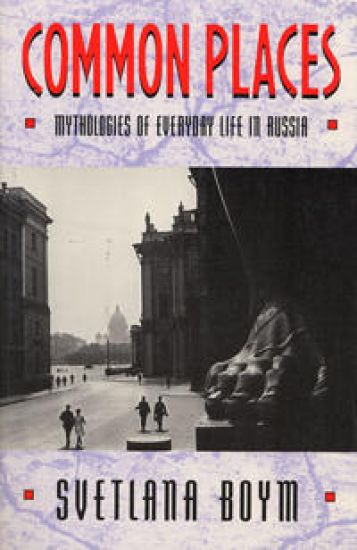
Common Places

Common Places

Svetlana Boym

Harvard University Press
1995
nidottu
What is the “real Russia”? What is the relationship between national dreams and kitsch, between political and artistic utopia and everyday existence? Commonplaces of daily living would be perfect clues for those seeking to understand a culture. But all who write big books on Russian life confess their failure to get properly inside Russia, to understand its “doublespeak.”Svetlana Boym is a unique guide. A member of the last Soviet Generation, the Russian equivalent of our Generation X, she grew up in Leningrad and has lived in the West for the past thirteen years. Her book provides a view of Russia that is historically informed, replete with unexpected detail, and everywhere stamped with authority. Alternating analysis with personal accounts of Russian life, Boym conveys the foreignness of Russia and examines its peculiar conceptions of private life and common good, of Culture and Trash, of sincerity and banality. Armed with a Dictionary of Untranslatable Terms, we step around Uncle Fedia asleep in the hall, surrounded by a puddle of urine, and enter the Communal Apartment, the central exhibit of the book. It is the ruin of the communal utopia and a unique institution of Soviet daily life; a model Soviet home and a breeding ground for grassroots informants. Here, privacy is forbidden; here the inhabitants defiantly treasure their bits of “domestic trash,” targets of ideological campaigns for the transformation (perestroika) of everyday life.Against the Russian and Soviet myths of national destiny, the trivial, the ordinary, even the trashy, take on a utopian dimension. Boym studies Russian culture in a broad sense of the word; she ranges from nineteenth- and twentieth-century intellectual thought to art and popular culture. With her we go walking in Moscow and Leningrad, eavesdrop on domestic life, and discover jokes, films, and TV programs. Boym then reflects on the 1991 coup that marked the end of the Soviet Union and evoked fin-de-siècle apocalyptic visions. The book ends with a poignant reflection on the nature of communal utopia and nostalgia, on homesickness and the sickness of being home.