Kirjojen hintavertailu. Mukana 12 595 353 kirjaa ja 12 kauppaa.

Kirjailija

Swanee Hunt

Kirjat ja teokset yhdessä paikassa: 7 kirjaa, julkaisuja vuosilta 2004-2017, suosituimpien joukossa The Hillary Doctrine. Vertaile teosten hintoja ja tarkista saatavuus suomalaisista kirjakaupoista.

7 kirjaa

Kirjojen julkaisuhaarukka 2004-2017.

Rwandan Women Rising

Rwandan Women Rising

Swanee Hunt

Duke University Press
2017
sidottu
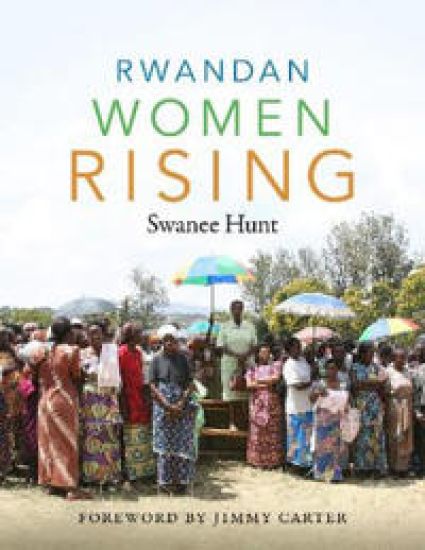
In the spring of 1994, the tiny African nation of Rwanda was ripped apart by a genocide that left nearly a million dead. Neighbors attacked neighbors. Family members turned against their own. After the violence subsided, Rwanda's women-drawn by the necessity of protecting their families-carved out unlikely new roles for themselves as visionary pioneers creating stability and reconciliation in genocide's wake. Today, 64 percent of the seats in Rwanda's elected house of Parliament are held by women, a number unrivaled by any other nation. While news of the Rwandan genocide reached all corners of the globe, the nation's recovery and the key role of women are less well known. In Rwandan Women Rising, Swanee Hunt shares the stories of some seventy women-heralded activists and unsung heroes alike-who overcame unfathomable brutality, unrecoverable loss, and unending challenges to rebuild Rwandan society. Hunt, who has worked with women leaders in sixty countries for over two decades, points out that Rwandan women did not seek the limelight or set out to build a movement; rather, they organized around common problems such as health care, housing, and poverty to serve the greater good. Their victories were usually in groups and wide ranging, addressing issues such as rape, equality in marriage, female entrepreneurship, reproductive rights, education for girls, and mental health. These women's accomplishments provide important lessons for policy makers and activists who are working toward equality elsewhere in Africa and other postconflict societies. Their stories, told in their own words via interviews woven throughout the book, demonstrate that the best way to reduce suffering and to prevent and end conflicts is to elevate the status of women throughout the world.

The Hillary Doctrine

The Hillary Doctrine

Valerie Hudson; Patricia Leidl; Swanee Hunt

Columbia University Press
2017
pokkari
Hillary Rodham Clinton was the first Secretary of State to declare the subjugation of women worldwide a serious threat to U.S. national security. Known as the Hillary Doctrine, her stance was the impetus behind the 2010 Quadrennial Diplomatic and Development Review of U.S. foreign policy, formally committing America to the proposition that the empowerment of women is a stabilizing force for domestic and international peace. Blending history, fieldwork, theory, and policy analysis while incorporating perspectives from officials and activists on the front lines of implementation, this book is the first to thoroughly investigate the Hillary Doctrine in principle and practice. Does the insecurity of women make nations less secure? How has the doctrine changed the foreign policy of the United States and altered its relationship with other countries such as China and Saudi Arabia? With studies focusing on Guatemala, Afghanistan, and Yemen, this invaluable policy text closes the gap between rhetoric and reality, confronting head-on what the future of fighting such an entrenched enemy entails. The research reports directly on the work being done by U.S. government agencies, including the Office of Global Women's Issues, established by Clinton during her tenure at the State Department, and explores the complexity and pitfalls of attempting to improve the lives of women while safeguarding the national interest.
The Hillary Doctrine

The Hillary Doctrine

Valerie Hudson; Patricia Leidl; Swanee Hunt

Columbia University Press
2015
sidottu
Hillary Rodham Clinton was the first Secretary of State to declare the subjugation of women worldwide a serious threat to U.S. national security. Known as the Hillary Doctrine, her stance was the impetus behind the 2010 Quadrennial Diplomatic and Development Review of U.S. foreign policy, formally committing America to the proposition that the empowerment of women is a stabilizing force for domestic and international peace. Blending history, fieldwork, theory, and policy analysis while incorporating perspectives from officials and activists on the front lines of implementation, this book is the first to thoroughly investigate the Hillary Doctrine in principle and practice. Does the insecurity of women make nations less secure? How has the doctrine changed the foreign policy of the United States and altered its relationship with other countries such as China and Saudi Arabia? With studies focusing on Guatemala, Afghanistan, and Yemen, this invaluable policy text closes the gap between rhetoric and reality, confronting head-on what the future of fighting such an entrenched enemy entails. The research reports directly on the work being done by U.S. government agencies, including the Office of Global Women's Issues, established by Clinton during her tenure at the State Department, and explores the complexity and pitfalls of attempting to improve the lives of women while safeguarding the national interest.
This Was not Our War

This Was not Our War

Swanee Hunt

Duke University Press
2011
pokkari
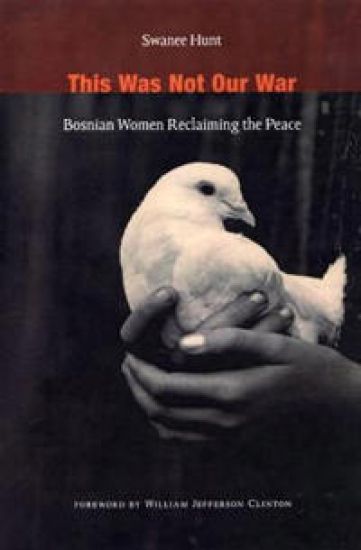
"Replacing tyranny with justice, healing deep scars, exchanging hatred for hope . . . the women in This Was Not Our War teach us how."-William Jefferson ClintonThis Was Not Our War shares amazing first-person accounts of twenty-six Bosnian women who are reconstructing their society following years of devastating warfare. A university student working to resettle refugees, a paramedic who founded a veterans’ aid group, a fashion designer running two nonprofit organizations, a government minister and professor who survived Auschwitz-these women are advocates, politicians, farmers, journalists, students, doctors, businesswomen, engineers, wives, and mothers. They are from all parts of Bosnia and represent the full range of ethnic traditions and mixed heritages. Their ages spread across sixty years, and their wealth ranges from expensive jewels to a few chickens. For all their differences, they have this much in common: all survived the war with enough emotional strength to work toward rebuilding their country. Swanee Hunt met these women through her diplomatic and humanitarian work in the 1990s. Over the course of seven years, she conducted multiple interviews with each one. In presenting those interviews here, Hunt provides a narrative framework that connects the women’s stories, allowing them to speak to one another.The women describe what it was like living in a vibrant multicultural community that suddenly imploded in an onslaught of violence. They relate the chaos; the atrocities, including the rapes of many neighbors and friends; the hurried decisions whether to stay or flee; the extraordinary efforts to care for children and elderly parents and to find food and clean drinking water. Reflecting on the causes of the war, they vehemently reject the idea that age-old ethnic hatreds made the war inevitable. The women share their reactions to the Dayton Accords, the end of hostilities, and international relief efforts. While they are candid about the difficulties they face, they are committed to rebuilding Bosnia based on ideals of truth, justice, and a common humanity encompassing those of all faiths and ethnicities. Their wisdom is instructive, their courage and fortitude inspirational.
Worlds Apart

Worlds Apart

Swanee Hunt

Duke University Press
2011
sidottu
Worlds Apart tells of a well-meaning foreign policy establishment often deaf to the voices of everyday people. Its focus is the Bosnian War, but its implications extend to any situation that prompts the consideration of military intervention on humanitarian grounds. Ambassador Swanee Hunt served in Vienna during the Bosnian War and was intimately involved in American policy toward the Balkans. During her tenure as ambassador and after, she made scores of trips throughout Bosnia and the rest of the former Yugoslavia, attempting to understand the costly delays in foreign military intervention. To that end, she had hundreds of conversations with a wide range of politicians, refugees, journalists, farmers, clergy, aid workers, diplomats, soldiers, and others. In Worlds Apart, Hunt’s eighty vignettes alternate between the people living out the war and “the internationals” deciding whether or how to intervene. From these stories, most of which she witnessed firsthand, she draws six lessons applicable to current conflicts throughout the world. These lessons cannot be learned from afar, Hunt says, with insiders and outsiders working apart. Only by bridging those worlds can we build a stronger paradigm of inclusive international security.
Half-Life of a Zealot

Half-Life of a Zealot

Swanee Hunt

Duke University Press
2006
sidottu
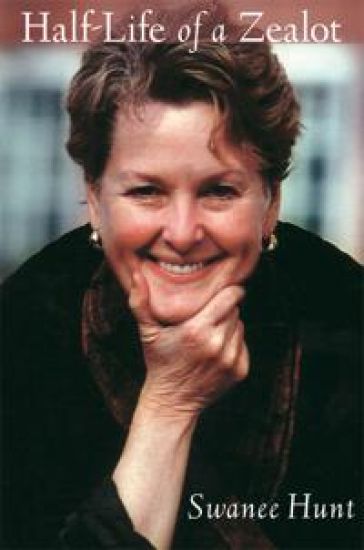
Swanee Hunt’s life has lived up to her Texas-size childhood. Daughter of legendary oil magnate H. L. Hunt, she grew up in a household dominated by an arch-conservative patriarch who spawned a brood of colorful offspring. Her family was nothing if not zealous, and that zeal-albeit for more compassionate causes-propelled her into a mission that reaches around the world.Half-Life of a Zealot tells how the girl who spoke against “Reds” alongside her father became a fierce advocate for progressive change in America and abroad, an innovative philanthropist, and Bill Clinton’s Ambassador to Austria. In captivating prose, Hunt describes the warmth and wear of Southern Baptist culture, which instilled in her a calling to help those who are vulnerable. The reader is drawn into her full-throttle professional life as it competes with critical family needs. Hunt gives a remarkably frank account of her triumphs and shortcomings; her sorrows, including a miscarriage and the failure of a marriage; the joys and struggles of her second marriage; and her angst over the life-threatening illness of one of her three children. She is candid about the opportunities her fortune has created, as well as the challenge of life as an heiress.Much of Swanee Hunt’s professional life is devoted to expanding women’s roles in making and shaping public policy. She is the founding director of Harvard’s Women and Public Policy Program at the Kennedy School of Government, chair of the Initiative for Inclusive Security, and president of the Hunt Alternatives Fund.Swanee Hunt’s autobiography brims over with strong women: her mother, whose religious faith and optimism were an inspiration; her daughter, who fights the social stigma of mental disorders; the women of war-torn Bosnia, who transformed their grief into action; and friends like Hillary Clinton, who used her position as First Lady to strengthen the voices of others. Hunt is one more strong woman. Half-Life of a Zealot is her story-so far.
This Was not Our War

This Was not Our War

Swanee Hunt

Duke University Press
2004
sidottu
A collection of first-person accounts by twenty-six Bosnian women--representing a range of ethnic traditions and heritages--who are reconstructing their society following years of warfare offers a narrative framework designed to connect the women's stories to their experiences.