Kirjojen hintavertailu. Mukana 12 390 323 kirjaa ja 12 kauppaa.
Kirjailija
Swati Parashar
Kirjat ja teokset yhdessä paikassa: 6 kirjaa, julkaisuja vuosilta 2014-2025, suosituimpien joukossa Feministiska perspektiv på global politik. Vertaile teosten hintoja ja tarkista saatavuus suomalaisista kirjakaupoista.
Emil Edenborg; Sofie Tornhill; Cecilia Åse; Seema Arora-Jonsson; Annika Bergman Rosamond; Kristoffer Ekberg; Maria Eriksson Baaz; Catia Gregoratti; Jenny Gunnarsson Payne; Martin Hultman; Katharina Kehl; Elzbieta Bekiesza-Korolczuk; Paula Mählck; Elisabeth Olivius; Swati Parashar; Maja Sager; Maria Stern; Sanna Strand; Fia Sundevall; Johan Svanberg; Yvonne Svanström; Aina Tollefsen; Maria Wendt; Annick Wibben; Annica Young Kronsell; Linda Åhäll
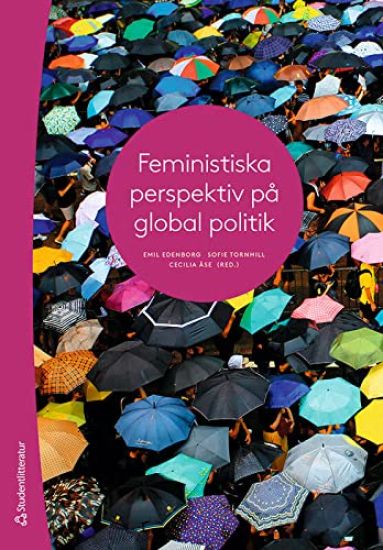
Klimatkris, högerpopulism, systematiskt våld och ojämlika livsvillkor världen över. Feministiska perspektiv på global politik visar att feministisk forskning ger oss verktyg för att analysera dessa brännande politiska problem. När vi ställer frågor om kön och undersöker maktordningar som innefattar sexualitet, klass, ras och nation, ökar kunskapen om hur hierarkier och orättvisor skapas och kan utmanas.Inom ramen för fem teman - klimatpolitik och hållbarhet, institutioner och styrning, ekonomi och arbete, transnationell mobilisering och aktivism samt krig, våld och militarisering - presenteras centrala feministiska teorier genom nedslag i aktuell forskning. Dessutom ingår ett kapitel som ger vägledning i att genomföra egna studier av global politik. Boken riktar sig till studenter i ämnen som genusvetenskap, statsvetenskap och internationella relationer och alla andra som är intresserade av globala frågor.
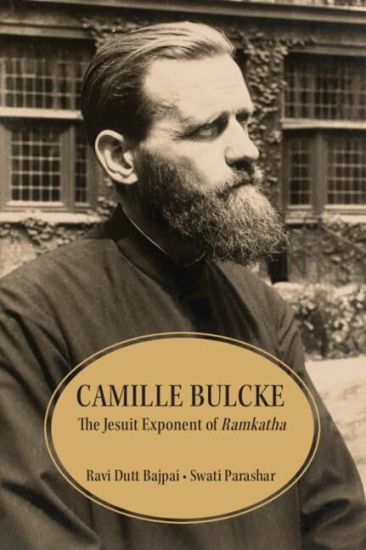
This is the first English biography of the Belgian Jesuit, Padma Bhushan recipient and renowned scholar of Hindi, Awadhi and Sanskrit: Father Camille Bulcke (1909–1982). Father Bulcke came to India when it was still a British colony, found spiritual inspiration in the life and compositions of the great Indian poet Goswami Tulsidas, and emerged as one of the renowned exponents of the Ramkatha (The Story of Rama) and the Hindi language. This book attempts to read and critically examine his life, while also analysing his writings on comparative religious studies. In doing so, it provides a brief overview of the world of Hindi literature and its development in postcolonial India through the contributions of Father Bulcke, and highlights the cultural and religious encounters between the West and the East, Europe and India, Christianity and Hinduism.
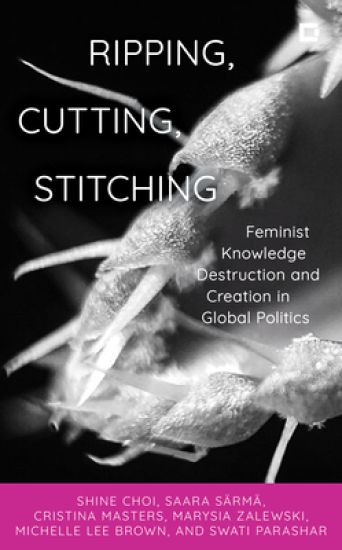
This book presents a collective mediation on writing, methods, violences, and un/becomings in global politics. It combines narratives, fictional stories, academic discussions, passionate unwindings, imagined futures, and more. The editor's intention is to offer a theoretically creative work which engages extensively with the visual and affective to un-discipline knowledge and modes of expression. The book’s point of departure is a conventional academic conference and its peculiar academic concerns (which many readers will only be too familiar with), using this to open up to broader and deeper concerns about everyday-level decisions, realities, and perspectives that feed into and make global politics. It is a polyvocal text that collects traces of thinking, learning, conversing, embodying and ‘finding out’, in an attempt to make visible some of the avalanches of discarded knowing practices. In this sense, this book is a methods book as much as a political/theoretical text that demands we (better) understand or know the worlds we enter, inhabit, to make it quiver otherwise.
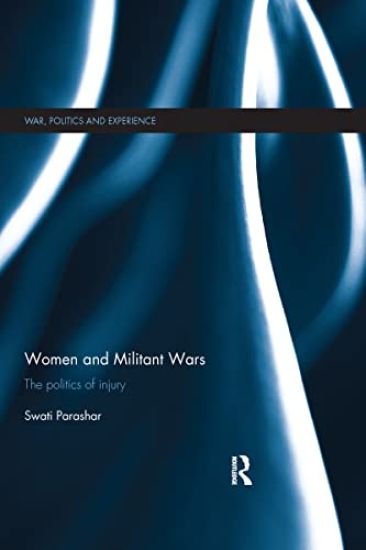
This book explores women’s militant activities in insurgent wars and seeks to understand what women ‘do’ in wars.In International Relations, inter-state conflict, anti-state armed insurgency and armed militancy are essentially seen as wars where collective violence (against civilians and security forces) is used to achieve political objectives. Extending the notion of war as ‘politics of injury' to the armed militancy in Indian administered Kashmir and the Tamil armed insurgency in Sri Lanka, this book explores how women participate in militant wars, and how that politics not only shapes the gendered understandings of women’s identities and bodies but is in turn shaped by them. The case studies discussed in the book offer new comparative insight into two different and most prevalent forms of insurgent wars today: religio-political and ethno-nationalist. Empirical analyses of women’s roles in the Sri Lankan Tamil militant group, the LTTE and the logistical, ideological support women provide to militant groups active in Indian administered Kashmir suggest that these insurgent wars have their own gender dynamics in recruitment and operational strategies. Thus, Women and Militant Wars provides an excellent insight into the gender politics of these insurgencies and women’s roles and experiences within them. This book will be of much interest to students and scholars of critical war and security studies, feminist international relations, gender studies, terrorism and political violence, South Asia studies and IR in general.