Kirjojen hintavertailu. Mukana 12 650 118 kirjaa ja 12 kauppaa.
Kirjailija
Syed S. H. Rizvi
Kirjat ja teokset yhdessä paikassa: 12 kirjaa, julkaisuja vuosilta 1992-2025, suosituimpien joukossa Studies on Mechanical Properties of Edible Films. Vertaile teosten hintoja ja tarkista saatavuus suomalaisista kirjakaupoista.
Mukana myös kirjoitusasut: Syed S H Rizvi, Syed S.H. Rizvi
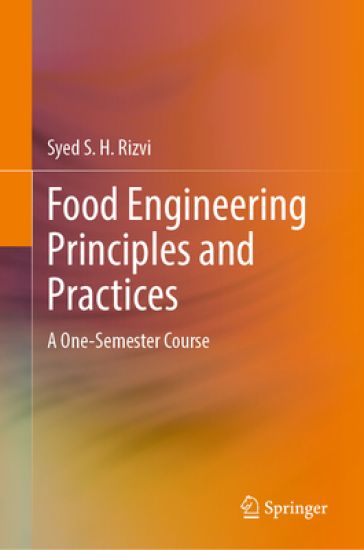
This textbook is designed for a one-semester course on Food Engineering, and it offers a concise, in-depth and integrated introduction to the fundamental engineering and physicochemical principles and practices of utility in food processing and manufacturing operations.
This textbook is designed for a one-semester course on Food Engineering, and it offers a concise, in-depth and integrated introduction to the fundamental engineering and physicochemical principles and practices of utility in food processing and manufacturing operations. The textbook includes topics mandated by the Institute of Food Technologists for accreditation of Food Science curricula and helps prepare the students better for taking advance courses related to unit operations in food manufacturing. It is also relevant for Food Process Engineering courses, containing materials that most instructors can cover in three semester hours of instruction. In the first three chapters, readers will find an overview of the basic knowledge of physics and chemistry and an introduction to the engineering language needed to eliminate confusion going forward. In the following chapters, the author covers the main concepts of food thermodynamics, heat transfer–radiation in foodmaterials, mass transfer and fluid dynamics in food, along with real-life examples and exercises to help students relate better to the topics. The author also gives a brief introduction to the main mathematical and analytical concepts required in food engineering.This textbook equips readers to understand a diversity of food engineering related topics and each chapter is enriched with practical examples and Check Your Understanding sections, as well as several problems. The textbook is aimed at undergraduate food science students in their first required introductory food engineering course, but practitioners involved in designing, optimizing, and managing the processing of food products will also find it a useful account.
Les films comestibles sont des moyens compl mentaires int ressants et souvent indispensables pour contr ler la qualit et la stabilit de nombreux produits alimentaires. Il existe de nombreuses utilisations potentielles des films comestibles (par exemple, l'emballage de divers produits, la protection individuelle des fruits secs, de la viande et du poisson, le contr le du transfert d'humidit interne dans les pizzas, les tartes, etc.) qui sont bas es sur les propri t s des films (par exemple, organoleptiques, m caniques, barri re aux gaz et aux solut s). Les films base de polysaccharides (cellulose, amidon, dextrine, gommes v g tales et autres, etc.) et de prot ines (prot ines de lactos rum, prot ines de soja, g latine, gluten, cas ine, etc.) ont des propri t s m caniques et organoleptiques appropri es, tandis que les films base de cire (cire d'abeille, cire de carnauba, etc.) et de lipides ou de d riv s de lipides ont des propri t s de barri re la vapeur d'eau am lior es. La technologie de formation du film, les caract ristiques du solvant, les agents plastifiants, les effets de la temp rature, la vitesse d' vaporation du solvant, l'op ration de rev tement et les conditions d'utilisation du film (humidit relative, temp rature) peuvent galement modifier sensiblement les propri t s finales du film.
Os filmes comest veis s o meios complementares interessantes e muitas vezes essenciais para controlar a qualidade e estabilidade de numerosos produtos alimentares. Existem muitas utiliza es potenciais das pel culas comest veis (por exemplo, embalagem de v rios produtos, protec o individual de frutos secos, carne e peixe, controlo da transfer ncia interna de humidade em pizzas, tortas, etc.) que se baseiam nas propriedades das pel culas (por exemplo, barreira organol ptica, mec nica, g s e soluto). Os filmes base de polissacar deos (celulose, amido, dextrina, vegetais e outras gomas, etc.) e prote nas (prote na de soro de leite, prote na de soja, gelatina, gl ten, case na, etc.) t m propriedades mec nicas e organol pticas adequadas, enquanto as pel culas de cera (cera de abelha, cera de carna ba, etc.) e as pel culas de derivados lip dicos ou lip dicos t m propriedades refor adas de barreira ao vapor de gua. A tecnologia de forma o da pel cula, caracter sticas de solvente, agentes plastificantes, efeitos de temperatura, taxa de evapora o de solvente, opera o de revestimento e condi es de utiliza o da pel cula (humidade relativa, temperatura) podem tamb m modificar substancialmente as propriedades finais da pel cula.
Le pellicole commestibili sono mezzi complementari interessanti e spesso essenziali per controllare la qualit e la stabilit di numerosi prodotti alimentari. Le pellicole commestibili possono essere utilizzate in molti modi (ad esempio per l'avvolgimento di vari prodotti, per la protezione individuale di frutta secca, carne e pesce, per il controllo del trasferimento di umidit interna in pizze e torte, ecc. I film a base di polisaccaridi (cellulosa, amido, destrina, gomme vegetali e di altro tipo, ecc.) e di proteine (proteine del siero di latte, proteine della soia, gelatina, glutine, caseina, ecc.) hanno propriet meccaniche e organolettiche adeguate, mentre i film a base di cera (cera d'api, cera carnauba, ecc.) e di lipidi o derivati lipidici hanno propriet di barriera al vapore acqueo superiori. Anche la tecnologia di formazione del film, le caratteristiche del solvente, gli agenti plastificanti, gli effetti della temperatura, la velocit di evaporazione del solvente, l'operazione di rivestimento e le condizioni di utilizzo del film (umidit relativa, temperatura) possono modificare sostanzialmente le propriet finali del film.
Essbare Folien sind ein interessantes und oft unverzichtbares erg nzendes Mittel zur Kontrolle der Qualit t und Stabilit t zahlreicher Lebensmittelprodukte. Es gibt viele potenzielle Verwendungszwecke f r essbare Folien (z. B. Umh llung verschiedener Produkte, individueller Schutz von getrockneten Fr chten, Fleisch und Fisch, Kontrolle der internen Feuchtigkeits bertragung in Pizzen, Pasteten usw.), die auf den Eigenschaften der Folien beruhen (z. B. organoleptische, mechanische, Gas- und L sungsbarriere). Folien auf der Basis von Polysacchariden (Cellulose, St rke, Dextrin, pflanzliche und andere Gummen usw.) und Proteinen (Molkenprotein, Sojaprotein, Gelatine, Gluten, Kasein usw.) haben geeignete mechanische und organoleptische Eigenschaften, w hrend Folien aus Wachs (Bienenwachs, Carnaubawachs usw.) und Lipiden oder Lipidderivaten verbesserte Wasserdampfbarriereeigenschaften aufweisen. Die Technologie der Filmbildung, die L sungsmitteleigenschaften, die Weichmacher, die Temperatureinfl sse, die Verdampfungsrate der L sungsmittel, die Beschichtungsvorg nge und die Verwendungsbedingungen des Films (relative Luftfeuchtigkeit, Temperatur) k nnen die endg ltigen Eigenschaften des Films ebenfalls erheblich beeinflussen.
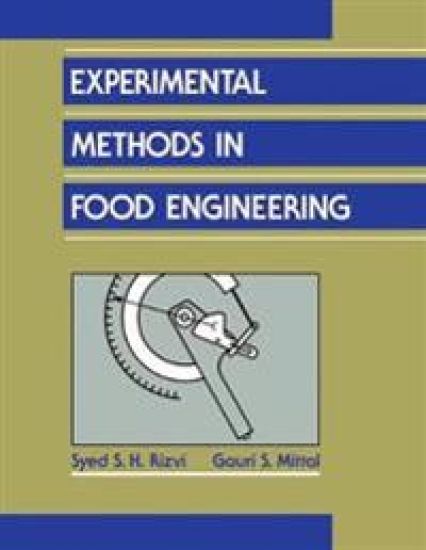
This lab manual covers both principles and laboratory applications of food process engineering. * Complete step-by-step procedures for laboratory experiment * Thorough description of necessary equipment, including proper operating procedures * Work-out examples provided for important calculations (e.g., Poisson ratio, flex modulus, lethal rate, etc.) * Several computer simulation tests provided and information on use of computer spreadsheets is also provided * Each experiment is preceded by questions and objectives; each experiment followed by data analysis and interpretation for a complete treatment
Designed for food engineers and workers in food science laboratories, this lab manual provides a set of experiments that can be conducted in most food science laboratories or pilot plants. Covering important food engineering principles, each experiment contains a summary of the purpose of the lab, background information on significant theoretical concepts, and mathematical equations to be used for each given experiment. Question and problem sets are also included to expedite understanding.