Kirjojen hintavertailu. Mukana 12 595 353 kirjaa ja 12 kauppaa.

Kirjailija

Sylvia Wynter

Kirjat ja teokset yhdessä paikassa: 3 kirjaa, julkaisuja vuosilta 2012-2026, suosituimpien joukossa Demonic Grounds. Vertaile teosten hintoja ja tarkista saatavuus suomalaisista kirjakaupoista.

3 kirjaa

Kirjojen julkaisuhaarukka 2012-2026.

Demonic Grounds

Demonic Grounds

Katherine McKittrick; Simone Browne; Sylvia Wynter

UNIVERSITY OF MINNESOTA PRESS
2026
nidottu
The field-defining text for black geographies - now with a new foreword and afterword The initial publication of Demonic Grounds in 2006 marked a watershed for the field of geography: revealing how human geographies are a result of racialized connections and black placemaking practices, this book opened the discipline to feminist, interdisciplinary, and black perspectives. Katherine McKittrick traces the geographies of black women across the diaspora, arguing that the spaces they inhabit are marked by legacies of violence and slavery while also being sites of unacknowledged political power. Making a forceful claim, she identifies rich opportunities within black geographies for social and cultural change and rebellion. With a new foreword by Simone Browne and comments from Sylvia Wynter on the original edition as an afterword, this twentieth-anniversary edition celebrates Demonic Grounds and its ongoing influence on twenty-first century geography. Retail e-book files for this title are screen-reader friendly.
We Must Learn to Sit Down Together and Talk About a Little Culture
The Event of the anti-colonial struggle which began in the case of a then British Jamaica in the late 1930s, cut across the childhood and early adolescence of Sylvia Wynter, providing the raison d'etre of the first phase of her important body of work seen in this collection. The imperative of decolonizing the order of discourse that had legitimated the then imperial order (that is, to the colonizer as well to the colonized), gave rise to a theoretically sustained argument manifest here in a set of seminal critical and historical essays. At the time of their writing, Wynter was a practicing novelist, an innovative playwright, a scholar of Spanish Caribbean history, and an incisive literary critic with a gift for the liveliest kind of polemics. This intellectual virtuosity is evident in these wide-ranging essays that include an exploration of C.L.R. James's writings on cricket, Bob Marley and the counter-cosmogony of the Rastafari, and the Spanish epoch of Jamaican history (including a pioneering examination of Bernado de Balbuena, epic poet and Abbot of Jamaica 1562-1627).Across this varied range of topics, a coherent and consistent thread of argument emerges from Wynter's oeuvre. In the vein of C. L. R. James, she placed the history of Spanish Jamaica (and therefore the Caribbean) in the context of the founding of the post-1492 European settler colonies in the New World, which remained an indispensable element in the first stage of the institutionalization of the Western world system. Therefore, a central imperative of her initial work has always been to reconceptualize the history of the region, and therefore of the modern world, but doing so, from a world-systemic perspective; that is, no longer from the normative perspective of the settler archipelago, but rather more inclusively, from those of the neo-serf (i.e. Indian) and that of ex-slave (i.e. Negro) archipelagos; this latter, as what she defines, adapting Enrique Dussel's terms, as the "gaze from below" perspective of "the ultimate underside of modernity."Strongly influenced by Marx together with Black thinkers such as Aime Cesaire, Jean Price-Mars (seen in the Jonkunnu essay), W. E. B. Du Bois and Frantz Fanon, and with an appreciation of the insights brought by the New Studies of the Sixties (including that of Black redemptive co-humanist thought, feminism), Wynter's work has sought, from its origin, to find a comprehensive explanatory system able to integrate these knowledges, ones born of struggle.This volume makes an important contribution to restoring to view an essential strand in the 500-year emergent thought generated from the slave/ex-slave archipelago of the Caribbean and the Americas--thought important to what our increasingly integrated world-system, the first such in human history.
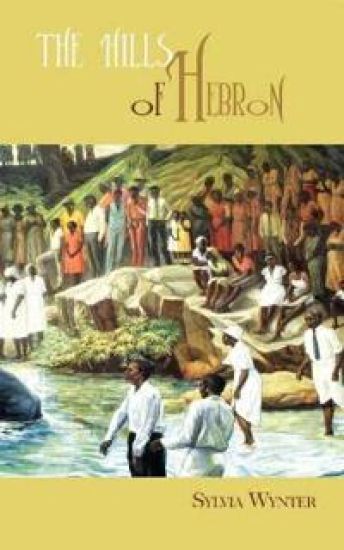
The Hills of Hebron

The Hills of Hebron

Sylvia Wynter

Ian Randle Publishers,Jamaica
2012
nidottu
When Sister Rose, the beautiful young wife of Obadiah, the leader of the Church of New Believers, becomes pregnant, the hillside community of Hebron is thrown into a whirlwind of suspicion, disbelief and doubt. For Obadiah had taken a vow of chastity, not to lay with Rose for one year and one month. Obadiah protests his innocence to the congregation but the revelation of the pregnancy is the climax of the continuing power struggle between Obadiah and the jealous and ambitious Miss Gatha, Rose’s adoptive mother. Unrelenting and scathing in her attacks on Obadiah, Miss Gatha seeks to secure the succession of her son, the clubfooted Isaac, to his rightful place as leader of the new Believers, a position held by his father, the Prophet Moses who had led the New Believers into exile to build their Utopian community, the promised land in Hebron. Written in the late 1950s on the cusp of Jamaica’s independence from Britain, The Hills of Hebron tells the story of a group of formerly enslaved Jamaicans as they attempt to create a new life and assert themselves against the colonial power. Strongly anti-colonial, the novel depicts Hebron as a Revivalist community embracing Afro-Caribbean religious practices and gives voice to the social forces of that period in Jamaican and Caribbean history. Based on the early twentieth century Bedwardism movement (a revivalist group led by Alexander Bedward), The Hills of Hebron, was one of the first attempts to present the lives of black Jamaicans not as colonial subjects, but as independent human beings.