Kirjojen hintavertailu. Mukana 12 595 353 kirjaa ja 12 kauppaa.

Kirjailija

T. C. W. Blanning

Kirjat ja teokset yhdessä paikassa: 9 kirjaa, julkaisuja vuosilta 1983-2017, suosituimpien joukossa The French Revolution. Vertaile teosten hintoja ja tarkista saatavuus suomalaisista kirjakaupoista.

Mukana myös kirjoitusasut: T.C.W. Blanning, T C W Blanning

9 kirjaa

Kirjojen julkaisuhaarukka 1983-2017.

Joseph II

Joseph II

T C W Blanning

Routledge
2015
sidottu
Joseph II (1741--90) -- son and eventual successor of Maria Theresa -- has conventionally been seen in the context of the "Enlightened Despot'' reformers. Today's turmoil in his former territories invites a rather different perspective, however, as Joseph grapples with the familiar and intractable problems of creating a viable unitary state out of his multi-national empire in Central Europe. Professor Blanning's brilliant short study, based on extensive archival research, offers a history of the Habsburg monarchy in the eighteenth century, as well as a revaluation of the emperor's complex personality and his ill-fated reform programme.
Reform and Revolution in Mainz 1743–1803

Reform and Revolution in Mainz 1743–1803

T. C. W. Blanning

Cambridge University Press
2008
pokkari
On one level a history of the Electorate of Mainz in the eighteenth century, this book also seeks to illuminate a much wider area. In particular it is intended to be a contribution to the debate on the 'German Problem' - the growing cultural and political divergence between Germany and Western Europe in the modern period. Many historians have identified the crucial phase of this development in the nineteenth century; Dr Blanning argues that the eighteenth century was of equal if not greater importance.
The Culture of Power and the Power of Culture

The Culture of Power and the Power of Culture

T. C. W. Blanning

Oxford University Press
2003
nidottu
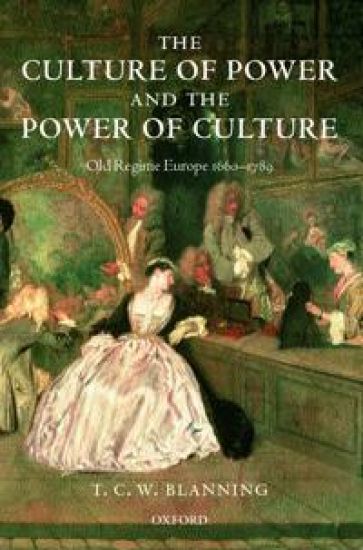
A cultural revolution struck Europe in the 18th century with the arrival of the public sphere. Public opinion in the form of new cultural institutions such as the newspaper and the coffee house challenged established regimes. This new book explores the interaction of politics and culture during these final years of Old Regime Europe.
The Culture of Power and the Power of Culture

The Culture of Power and the Power of Culture

T. C. W. Blanning

Oxford University Press
2002
sidottu
In this fascinating new account of Old Regime Europe, T.C.W. Blanning explores the cultural revolution which transformed eighteenth-century Europe. During this period the court culture exemplified by Louis XIV's Versailles was pushed from the centre to the margins by the emergence of a new kind of space - the public sphere. The author shows how many of the world's most important cultural institutions developed in this space: the periodical, the newspaper, the novel, the lending library, the coffee house, the voluntary association, the journalist, and the critic. It was here that public opinion staked its claim to be the ultimate arbiter of culture and politics. For the established order this new force was to prove both a challenge and an opportunity and the author's comparative study of power and culture shows how regimes sought to keep their balance as the ground moved beneath their feet. In the process he explains, among other things, why Britain won the 'Second Hundred Years War' against France, how Prussia rose to become the dominant power in German-speaking Europe, and why the French monarchy collapsed.
The French Revolution

The French Revolution

T.C.W. Blanning

Red Globe Press
1997
nidottu
Few historical events have inspired so much controversy and debate as the French Revolution. The origins, nature and effects of the Revolution have been the themes of a voluminous literature, especially since the 1950s, and there has been sharp disagreement among historians about them. This book discusses the present state of the controversy and provides detailed suggestions for further reading. Blanning explains the different interpretations advanced by Marxist, revisionist and post-revisionist historians in order to provide students with access to the literature and to help them to form their own views.
Joseph II

Joseph II

T.C.W. Blanning

Routledge
1994
nidottu
Joseph II (1741--90) -- son and eventual successor of Maria Theresa -- has conventionally been seen in the context of the "Enlightened Despot'' reformers. Today's turmoil in his former territories invites a rather different perspective, however, as Joseph grapples with the familiar and intractable problems of creating a viable unitary state out of his multi-national empire in Central Europe. Professor Blanning's brilliant short study, based on extensive archival research, offers a history of the Habsburg monarchy in the eighteenth century, as well as a revaluation of the emperor's complex personality and his ill-fated reform programme.