Kirjojen hintavertailu. Mukana 12 595 353 kirjaa ja 12 kauppaa.

Kirjailija

T. Denean Sharpley-Whiting

Kirjat ja teokset yhdessä paikassa: 5 kirjaa, julkaisuja vuosilta 2002-2018, suosituimpien joukossa Bricktop's Paris. Vertaile teosten hintoja ja tarkista saatavuus suomalaisista kirjakaupoista.

5 kirjaa

Kirjojen julkaisuhaarukka 2002-2018.

Black French Women and the Struggle for Equality, 1848-2016

Black French Women and the Struggle for Equality, 1848-2016

T. Denean Sharpley-Whiting

University of Nebraska Press
2018
pokkari
Black French Women and the Struggle for Equality, 1848–2016 explores how black women in France itself, the French Caribbean, Gorée, Dakar, Rufisque, and Saint-Louis experienced and reacted to French colonialism and how gendered readings of colonization, decolonization, and social movements cast new light on the history of French colonization and of black France. In addition to delineating the powerful contributions of black French women in the struggle for equality, contributors also look at the experiences of African American women in Paris and in so doing integrate into colonial and postcolonial conversations the strategies black women have engaged in negotiating gender and race relations à la française. Drawing on research by scholars from different disciplinary backgrounds and countries, this collection offers a fresh, multidimensional perspective on race, class, and gender relations in France and its former colonies, exploring how black women have negotiated the boundaries of patriarchy and racism from their emancipation from slavery to the second decade of the twenty-first century.

Lovable Racists, Magical Negroes, and White Messiahs

Lovable Racists, Magical Negroes, and White Messiahs

David Ikard; T. Denean Sharpley-Whiting

University of Chicago Press
2017
nidottu
In this incredibly timely book, David Ikard dismantles popular white supremacist tropes, which effectively devalue black life, and trivialize black oppression. Lovable Racists, Magical Negroes, and White Messiahs investigates the tenacity and cultural capital of white redemption narratives in literature and popular media from Uncle Tom's Cabin to The Help. In the book, Ikard explodes the fiction of a post-racial society while awakening us to the sobering reality that we must continue to fight for racial equality or risk losing the hard-fought gains of the Civil Rights movement. Through his close reading of novels, films, journalism, and political campaigns, he analyzes willful white blindness and attendant master narratives of white redemption arguing powerfully that he who controls the master narrative controls the perception of reality. The book sounds the alarm about seemingly innocuous tropes of white redemption that abound in our society and generate the notion that blacks are perpetually indebted to whites for liberating, civilizing, and enlightening them. In Lovable Racists, Magical Negroes, and White Messiahs, Ikard expertly and unflinchingly gives us a necessary critical historical intervention.
Lovable Racists, Magical Negroes, and White Messiahs

Lovable Racists, Magical Negroes, and White Messiahs

David Ikard; T. Denean Sharpley-Whiting

University of Chicago Press
2017
sidottu
In this incredibly timely book, David Ikard dismantles popular white supremacist tropes, which effectively devalue black life, and trivialize black oppression. Lovable Racists, Magical Negroes, and White Messiahs investigates the tenacity and cultural capital of white redemption narratives in literature and popular media from Uncle Tom's Cabin to The Help. In the book, Ikard explodes the fiction of a post-racial society while awakening us to the sobering reality that we must continue to fight for racial equality or risk losing the hard-fought gains of the Civil Rights movement. Through his close reading of novels, films, journalism, and political campaigns, he analyzes willful white blindness and attendant master narratives of white redemption arguing powerfully that he who controls the master narrative controls the perception of reality. The book sounds the alarm about seemingly innocuous tropes of white redemption that abound in our society and generate the notion that blacks are perpetually indebted to whites for liberating, civilizing, and enlightening them. In Lovable Racists, Magical Negroes, and White Messiahs, Ikard expertly and unflinchingly gives us a necessary critical historical intervention.
Bricktop's Paris

Bricktop's Paris

T. Denean Sharpley-Whiting

State University of New York Press
2015
sidottu
Tells the fascinating story of African American women who traveled to France to seek freedom of expression. 2015 CHOICE Outstanding Academic Title Longlisted for the 2015 American Library in Paris Book Award During the Jazz Age, France became a place where an African American woman could realize personal freedom and creativity, in narrative or in performance, in clay or on canvas, in life and in love. These women were participants in the life of the American expatriate colony, which included F. Scott Fitzgerald, Gertrude Stein, and Cole Porter, and they commingled with bohemian avant-garde writers and artists like Picasso, Breton, Colette, and Matisse. Bricktop's Paris introduces the reader to twenty-five of these women and the city they encountered. Following this nonfiction account, T. Denean Sharpley-Whiting provides a fictionalized autobiography of Ada "Bricktop" Smith, which brings the players from the world of nonfiction into a Paris whose elegance masks a thriving underworld.
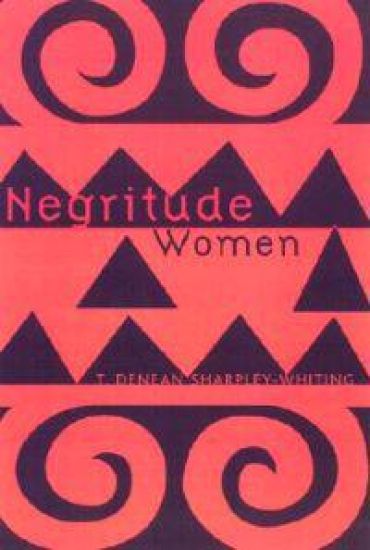
Negritude Women

Negritude Women

T. Denean Sharpley-Whiting

University of Minnesota Press
2002
nidottu
Rediscovers the crucial role that women played in the influential Negritude movement.The Negritude movement, which signaled the awakening of a pan-African consciousness among black French intellectuals, has been understood almost exclusively in terms of the contributions of its male founders: Aimé Césaire, Léopold Sédar Senghor, and Léon G. Damas. This masculine genealogy has completely overshadowed the central role played by French-speaking black women in its creation and evolution. In Negritude Women, T. Denean Sharpley-Whiting offers a long-overdue corrective, revealing the contributions made by the women who were not merely integral to the success of the movement, but often in its vanguard.Through such disparate tactics as Lacascade’s use of Creole expressions in her French prose writings, the literary salon and journal founded by the Martinique-born Nardal sisters, and Roussy-Césaire’s revolutionary blend of surrealism and Negritude in the pages of Tropiques, the journal she founded with her husband, these four remarkable women made vital contributions. In exploring their influence on the development of themes central to Negritude-black humanism, the affirmation of black peoples and their cultures, and the rehabilitation of Africa-Sharpley-Whiting provides the movement’s first genuinely inclusive history.