Kirjojen hintavertailu. Mukana 12 366 664 kirjaa ja 12 kauppaa.

Kirjailija

T. H. Meyer

Kirjat ja teokset yhdessä paikassa: 6 kirjaa, julkaisuja vuosilta 2005-2018, suosituimpien joukossa The First Class of the Michael School. Vertaile teosten hintoja ja tarkista saatavuus suomalaisista kirjakaupoista.

Mukana myös kirjoitusasut: T H Meyer

6 kirjaa

Kirjojen julkaisuhaarukka 2005-2018.

The First Class of the Michael School

The First Class of the Michael School

Rudolf Steiner; T H Meyer

SteinerBooks, Inc
2018
sidottu
This volume supplements Rudolf Steiner's First Class Lessons and Mantras: The Michael School Meditative Path in Nineteen Steps 2017). It contains the so-called recapitulation lessons given in various places, including Dornach, from April 3 to September 20, 1924. While the book does not introduce any new mantras, it offers new forms of presenting and explaining many of them.This supplemental volume presents a real discovery--two recapitulation lessons given in Breslau, Germany (now Wroclaw, Poland), on June 12 and 13, 1924. The lessons were discovered only recently in the archive of Eugen and Lili Kolisko. The lessons (first published in German by Perseus Basel in 2016) were written in shorthand and deciphered by Elea Gradenwitz, published here in English for the first time, with the kind permission of Andrew Clunies-Ross, grandson of the Koliskos. Attentive readers will find in these Breslau lessons a discussion of the Guardian of the Threshold not found in any other lessons.The commentary in this volume by the editor T. H. Meyer sheds light on two striking modifications in the lessons. First is the introduction of Rudolf Steiner's Michael and Rosicrucian signs. Second is the new function assigned to Ita Wegman following Rudolf Steiner's return from England at the end of August 1924. Both actions were motivated by, as Steiner called it, a "betrayal" of the mantras that occurred in London.
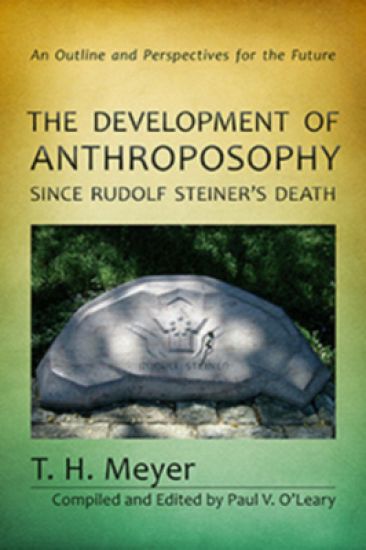
The Development of Anthroposophy Since Rudolf Steiner's Death
This volume begins with Thomas Meyer's assessment of Anthroposophy's evolution since Rudolf Steiner's death and its future prospects. He offers an overview of the eighty-seven years of the development of the anthroposophic movement and the Anthroposophical Society, the worldwide organization headquartered in Dornach, Switzerland, since the death of its founder. The Society went through a very difficult and controversial period in the ten years following Steiner's death, which culminated at its Annual Meeting in 1935. The result was the expulsion from the Society of two members appointed by Rudolf Steiner to its Executive Board (Vorstand)--Ita Wegman and Elizabeth Vreede--as well as the British and Dutch branches of the Society and many important anthroposophists who opposed the expulsions. Meyer--whose many books include Rudolf Steiner's Core Mission--reveals the extraordinary concordance of four November 17 dates highly significant in the development of Anthroposophy. On November 17, 1901, the anniversary of the founding of the Theosophical Society in 1875, Marie von Sivers asked Rudolf Steiner to create an esoteric path suited to the Western mind, which set Steiner on his mission. On November 17, 1923, Ita Wegman urged Steiner to establish a new Society, with Steiner himself joining as both a member and its president. Twelve years later, on November 17, 1935, the remaining three individuals of the Executive Board wrote to Adolf Hitler to plea for the Society's continued existence in Germany after being banned in Germany by the Nazi regime. Profound connections underlie these events.Four appendices supplement the present volume. Appendix 1 presents a Chronology that denotes, by year and day, significant episodes in Steiner's life and in the development of Anthroposophy. The remaining appendices feature, for the first time in English in one volume, significant documents pertinent to the Anthroposophical Society's Easter 1935 Annual Meeting. Appendix 2 contains the "Memorandum," written by supporters of Marie Steiner, setting forth a list of grievances in support of the expulsion motions adopted at the 1935 Annual Meeting. Appendix 3 records Ludwig Polzer-Hoditz's address in response to the 1935 Annual Meeting, counseling against the expulsion measures. Appendix 4 contains the letter (in English and German) written by the Society's Executive Board to Adolf Hitler.This important book offers profound insights into the struggles for individual freedom and voice during the early years of the Anthroposophical Society. Seeing the dynamics of that struggle can help us today to overcome differences to work toward common purpose, both in the context of our everyday lives and within a spiritually oriented community.
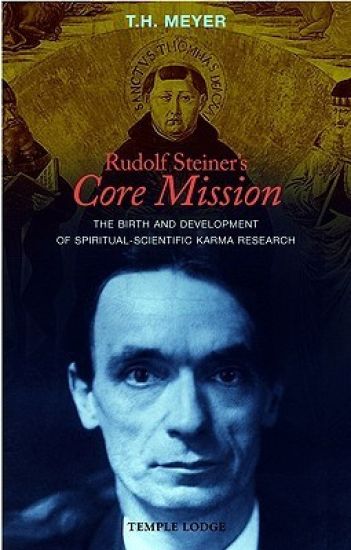
Rudolf Steiner's Core Mission

Rudolf Steiner's Core Mission

T. H. Meyer

Temple Lodge
2010
pokkari
Rudolf Steiner's core mission, repeatedly delayed due to the incapacity of colleagues, was to pursue contemporary spiritual-scientific research into the phenomena of reincarnation and karma. This stimulating book describes the winding biographical path this mission took, and in particular focuses on the mystery of Rudolf Steiner's connection with the influential medieval philosopher and theologian, Thomas Aquinas. Utilizing numerous archival sources and publications, Thomas Meyer reveals many facts relating to Steiner's core mission, and shows the critical roles played by Wilhelm Anton Neumann and Karl Julius Schroer in its genesis and development. Meyer examines how Steiner's pupils responded to his insights into karma, and places this 'most intrinsic mission' into the context of current divisions within the anthroposophic movement. In particular, he highlights the place of spiritual science within culture and history, showing how Steiner developed the great scientific ideas of evolution propounded by Darwin by raising them to the plane of each individual's soul and spiritual development.As Steiner stated in 1903: 'Scientific researchers explain the skull forms of higher animals as a transformation of a lower type of skull. In the same way one should explain a soul's biography through the soul biography which the former evolved from.'
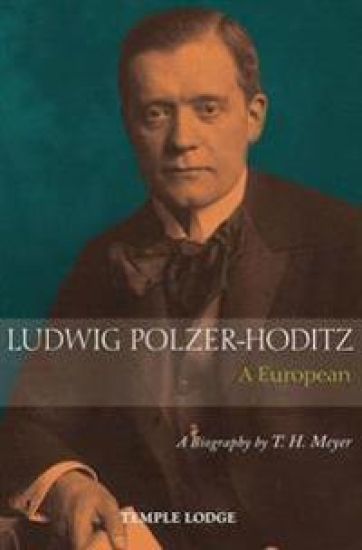
Ludwig Polzer-Hoditz, a European

Ludwig Polzer-Hoditz, a European

T. H. Meyer

Temple Lodge Publishing
2014
nidottu
Finally available in English, Thomas Meyer's major biography of Ludwig Polzer-Hoditz (1869-1945) offers a panoramic view of an exceptional life. One of Rudolf Steiner's most valued and independent-minded colleagues, Polzer-Hoditz was born in Prague - in the midst of the Austro-Hungarian Empire - to an aristocratic family with royal connections. Leaving behind the traditions of his background, he was to become a key actor in Steiner's regenerative 'threefold' social impulses, working tirelessly for a genuinely unified and free Europe. Polzer-Hoditz also fought to protect Rudolf Steiner's esoteric legacy and the integrity of the Anthroposophical Society that had been founded to further his work. Following Steiner's untimely death, Polzer-Hoditz fostered a broad range of friendships and alliances with key figures such as D.N. Dunlop, Walter Johannes Stein and Ita Wegman. In a bid to avoid further division and conflict, he made significant interventions to alter the tragic course of events that consumed the Anthroposophical Society, although he was unable to stop the major split within the membership that was to follow. In the final decade of his life he concentrated his energies on world issues, seeking to influence events in Europe in particular, lecturing widely and writing a number of books and memoranda. In contrast to the destructive 'special interests' of the national and religious groups that craved dominion and power, Polzer-Hoditz sought to build a true understanding between Central and Eastern Europe and to cultivate a spiritual connection with the West. Meyer's book is a pioneering work in biographical literature, structured in four main sections that reflect the stages of an individual's personal development. In the concluding section he studies world events up to the present day, practising a method referred to as a 'symptomatological observation of history', which Polzer-Hoditz himself sought to develop. Much more than a standard biography, Ludwig Polzer-Hoditz presents a vibrantly living picture of how a spiritual individuality can work in human culture and history - in past, present and future. This first English edition is based on the latest German version and features additional material.
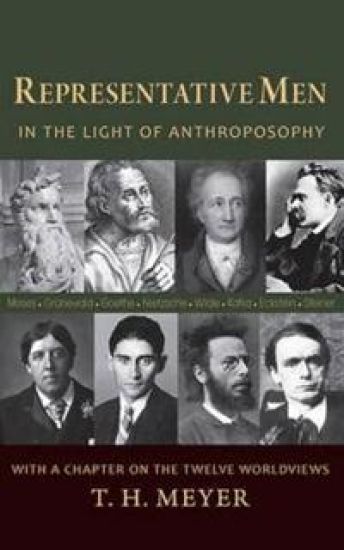
Representative Men

Representative Men

T. H. Meyer

Lindisfarne Books
2013
nidottu
Different individuals have had particular impacts on human history and thinking. This unique book considers the contributions of eight people, and shows how they can be considered representative of one or several aspects of human nature and human striving. The book includes chapters on Moses, Grünewald, Goethe, Nietzsche, Oscar Wilde, Kafka, Eckstein and Rudolf Steiner.
Reality, Truth and Evil

Reality, Truth and Evil

T. H. Meyer

Temple Lodge Publishing
2005
nidottu
Using the events of 9/11 and Pearl Harbor as his backdrop, T.H. Meyer studies questions of reality, truth and evil, offering important new perspectives. He shows that Anglo-American political practice (influenced by secret societies such as Skull and Bones) is based on an ideology of polarity and conflict. Meyer offers instances of this tendency, encouraging what Huntington famously referred to as a 'clash of civilizations'. For example, a week before George Bush senior spoke in Congress about the need for a 'new world order', a 'humorous' cartoon map in the Economist divided the world's continents into religious and philosophical blocks, creating a new region called 'Islamistan'. In 1997, Brzezinski wrote openly of US geostrategic plans, stating that it would be hard to achieve such goals 'except in the circumstances of a truly massive and widely perceived direct external threat'. This, apparently, was granted with the events of 9/11, and the subsequent launch of a 'war on terror'. The immediate comparisons, led by George W. Bush, with Pearl Harbor demand a reassessment of the events of 1941. Meyer points to conclusive evidence which suggests that Roosevelt deliberately provoked the attacks and failed to pass on intelligence to US Navy chiefs. Could it be possible that certain members of the US elite likewise deliberately remained passive before 9/11? Why, only two weeks after the attacks, were celebrations held at CIA headquarters in which Bush profusely thanked the secret services '...on behalf of the American people'? In contrast to the divisive thinking and 'conflict-management' of leading representatives of the Anglo-American elite (inspired by a contorted reading of some basic insights of the philosopher Hegel), the author shows how the holistic approach of Rudolf Steiner and Mabel Collins offers a radical, alternative way to deal with polarities, leading to the overcoming of conflict.