Kirjojen hintavertailu. Mukana 12 525 639 kirjaa ja 12 kauppaa.

Kirjailija

Tadeusz Lewandowski

Kirjat ja teokset yhdessä paikassa: 5 kirjaa, julkaisuja vuosilta 2013-2022, suosituimpien joukossa Dwight Macdonald on Culture. Vertaile teosten hintoja ja tarkista saatavuus suomalaisista kirjakaupoista.

5 kirjaa

Kirjojen julkaisuhaarukka 2013-2022.

The Life of Sherman Coolidge, Arapaho Activist

The Life of Sherman Coolidge, Arapaho Activist

Tadeusz Lewandowski

University of Nebraska Press
2022
sidottu
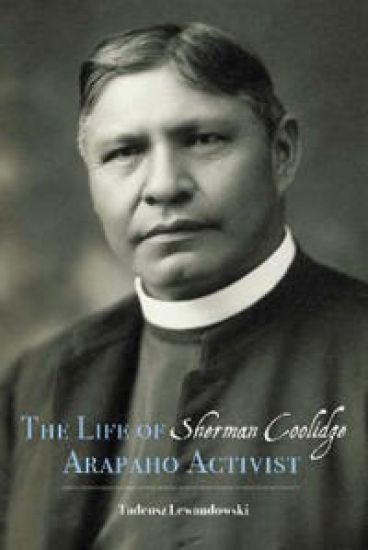
Sherman Coolidge’s (1860–1932) panoramic life as survivor of the Indian Wars, witness to the maladministration of the reservation system, mediator between Native and white worlds, and ultimate defender of Native rights and heritage made him the embodiment of his era in American Indian history. Born to a band of Northern Arapaho in present-day Wyoming, Des-che-wa-wah (Runs On Top) endured a series of harrowing tragedies against the brutal backdrop of the nineteenth-century Indian Wars. As a boy he experienced the merciless killings of his family in vicious raids and attacks, surviving only to be given up by his starving mother to U.S. officers stationed at a western military base. Des-che-wa-wah was eventually adopted by a sympathetic infantry lieutenant who changed his name and set his life on a radically different course. Over the next sixty years Coolidge inhabited western plains and eastern cities, rode in military campaigns against the Lakota, entered the Episcopal priesthood, labored as missionary to his tribe on the Wind River Reservation, fomented dangerous conspiracies, married a wealthy New York heiress, met with presidents and congressmen, and became one of the nation’s most prominent Indigenous persons as leader of the Native-run reform group the Society of American Indians. Coolidge’s fascinating biography is essential for understanding the myriad ways Native Americans faced modernity at the turn of the century.
Ojibwe, Activist, Priest

Ojibwe, Activist, Priest

Tadeusz Lewandowski

University of Wisconsin Press
2019
sidottu
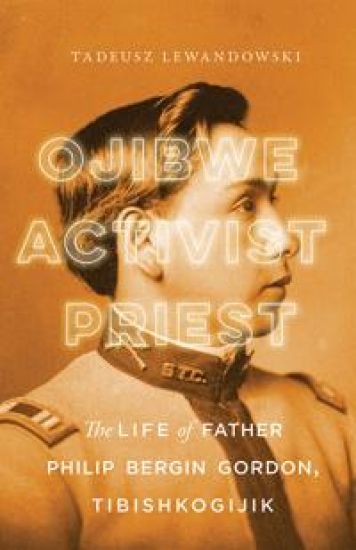
Born in Wisconsin, Philip Bergin Gordon—whose Ojibwe name Tibishkogijik is said to mean Looking into the Sky—became one of the first Native Americans to be ordained as a Catholic priest in the United States. Gordon's devotion to Catholicism was matched only by his dedication to the protection of his people. A notable Native rights activist, his bold efforts to expose poverty and corruption on reservations and his reputation for agitation earned him the nickname "Wisconsin's Fighting Priest."Drawing on previously unexplored materials, Tadeusz Lewandowski paints a portrait of a contentious life. Ojibwe, Activist, Priest examines Gordon's efforts to abolish the Bureau of Indian Affairs, his membership in the Society of American Indians, and his dismissal from his Ojibwe parish and exile to a tiny community where he'd be less likely to stir up controversy. Lewandowski illuminates a significant chapter in the struggle for Native American rights through the views and experiences of a key Native progressive.
Red Bird, Red Power

Red Bird, Red Power

Tadeusz Lewandowski

University of Oklahoma Press
2019
nidottu
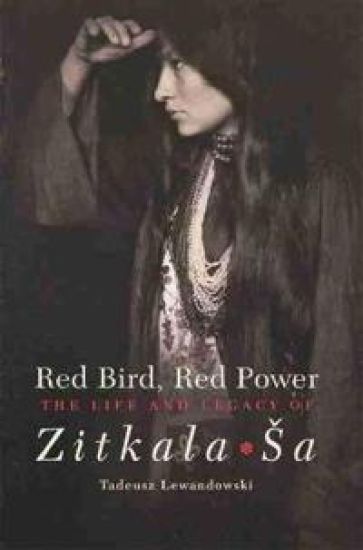
Red Bird, Red Power tells the story of one of the most influential - and controversial - American Indian activists of the twentieth century. Zitkala-Ša (1876-1938), also known as Gertrude Simmons Bonnin, was a highly gifted writer, editor, and musician who dedicated her life to achieving justice for Native peoples. Here, Tadeusz Lewandowski offers the first full-scale biography of the woman whose passionate commitment to improving the lives of her people propelled her to the forefront of Progressive-era reform movements. Lewandowski draws on a vast array of sources, including previously unpublished letters and diaries, to recount Zitkala-Ša's unique life journey. Her story begins on the Dakota plains, where she was born to a Yankton Sioux mother and a white father. Zitkala-Ša, whose name translates as ""Red Bird"" in English, left home at age eight to attend a Quaker boarding school, eventually working as a teacher at Carlisle Indian Industrial School. By her early twenties, she was the toast of East Coast literary society. Her short stories for the Atlantic Monthly (1900) are, to this day, the focus of scholarly analysis and debate. In collaboration with William F. Hanson, she wrote the libretto and songs for the innovative Sun Dance Opera (1913). And yet, as Lewandowski demonstrates, Zitkala-Ša's successes could not fill the void of her lost cultural heritage, nor dampen her fury toward the Euro-American establishment that had robbed her people of their land. In 1926, she founded the National Council of American Indians with the aim of redressing American Indian grievances. Zitkala-Ša's complex identity has made her an intriguing - if elusive - subject for scholars. In Lewandowski's sensitive interpretation, she emerges as a multifaceted human being whose work entailed constant negotiation. In the end, Lewandowski argues, Zitkala-Ša's achievements distinguish her as a forerunner of the Red Power movement and an important agent of change.
Red Bird, Red Power

Red Bird, Red Power

Tadeusz Lewandowski

University of Oklahoma Press
2016
sidottu
Red Bird, Red Power tells the story of one of the most influential - and controversial - American Indian activists of the twentieth century. Zitkala-Ša (1876-1938), also known as Gertrude Simmons Bonnin, was a highly gifted writer, editor, and musician who dedicated her life to achieving justice for Native peoples. Here, Tadeusz Lewandowski offers the first full-scale biography of the woman whose passionate commitment to improving the lives of her people propelled her to the forefront of Progressive-era reform movements. Lewandowski draws on a vast array of sources, including previously unpublished letters and diaries, to recount Zitkala-Ša's unique life journey. Her story begins on the Dakota plains, where she was born to a Yankton Sioux mother and a white father. Zitkala-Ša, whose name translates as ""Red Bird"" in English, left home at age eight to attend a Quaker boarding school, eventually working as a teacher at Carlisle Indian Industrial School. By her early twenties, she was the toast of East Coast literary society. Her short stories for the Atlantic Monthly (1900) are, to this day, the focus of scholarly analysis and debate. In collaboration with William F. Hanson, she wrote the libretto and songs for the innovative Sun Dance Opera (1913). And yet, as Lewandowski demonstrates, Zitkala-Ša's successes could not fill the void of her lost cultural heritage, nor dampen her fury toward the Euro-American establishment that had robbed her people of their land. In 1926, she founded the National Council of American Indians with the aim of redressing American Indian grievances. Zitkala-Ša's complex identity has made her an intriguing - if elusive - subject for scholars. In Lewandowski's sensitive interpretation, she emerges as a multifaceted human being whose work entailed constant negotiation. In the end, Lewandowski argues, Zitkala-Ša's achievements distinguish her as a forerunner of the Red Power movement and an important agent of change.
Dwight Macdonald on Culture

Dwight Macdonald on Culture

Tadeusz Lewandowski

Peter Lang AG
2013
sidottu
Dwight Macdonald was the most prominent excoriator of mass culture in the 1950s and ’60s. Since that time his reputation has not fared well. Derided as elitist and passé, his tracts now represent everything wrong-headed about mid-century cultural criticism. Nonetheless, Macdonald remains relevant and deserves reconsideration. His detractors, though uncovering many of Macdonald’s failings, have in part misunderstood him, while the field of cultural studies has misclassified his essays in the radical rather than conservative tradition of criticism. Dwight Macdonald on Culture seeks to amend previous misconceptions, offering new perspectives on a figure who grappled with issues of culture that remain ever-pertinent.