Kirjojen hintavertailu. Mukana 12 595 353 kirjaa ja 12 kauppaa.

Kirjailija

Tadeusz Sawik

Kirjat ja teokset yhdessä paikassa: 8 kirjaa, julkaisuja vuosilta 1998-2025, suosituimpien joukossa Stochastic Programming in Supply Chain Risk Management. Vertaile teosten hintoja ja tarkista saatavuus suomalaisista kirjakaupoista.

8 kirjaa

Kirjojen julkaisuhaarukka 1998-2025.

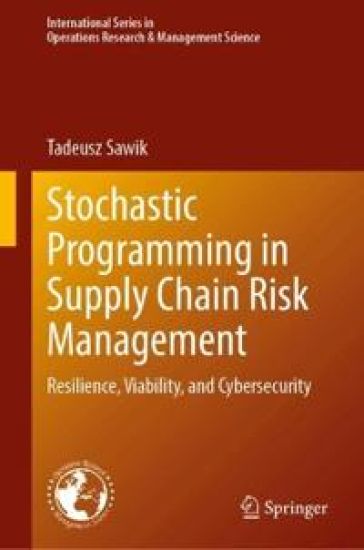
Stochastic Programming in Supply Chain Risk Management

Stochastic Programming in Supply Chain Risk Management

Tadeusz Sawik

Springer International Publishing AG
2025
nidottu
This book offers a novel multi-portfolio approach and stochastic programming formulations for modeling and solving contemporary supply chain risk management problems. The focus of the book is on supply chain resilience under propagated disruptions, supply chain viability under severe crises, and supply chain cybersecurity under direct and indirect cyber risks. The content is illustrated with numerous computational examples, some of which are modeled on real-world supply chains subject to severe multi-regional or global crises, such as pandemics. In the computational examples, the proposed stochastic programming models are solved using an advanced algebraic modeling language AMPL and GUROBI solver. The book seamlessly continues the journey begun in the author's previously published book "Supply Chain Disruption Management: Using Stochastic Mixed Integer Programming." It equips readers with the knowledge, tools, and managerial insights needed to effectively model and address modern supply chain risk management challenges. As such, the book is designed for practitioners and researchers who are interested in supply chain risk management. Master's and Ph.D. students in disciplines like supply chain management, operations research, industrial engineering, applied mathematics, and computer science will also find the book a valuable resource.
Stochastic Programming in Supply Chain Risk Management

Stochastic Programming in Supply Chain Risk Management

Tadeusz Sawik

Springer International Publishing AG
2024
sidottu
This book offers a novel multi-portfolio approach and stochastic programming formulations for modeling and solving contemporary supply chain risk management problems. The focus of the book is on supply chain resilience under propagated disruptions, supply chain viability under severe crises, and supply chain cybersecurity under direct and indirect cyber risks. The content is illustrated with numerous computational examples, some of which are modeled on real-world supply chains subject to severe multi-regional or global crises, such as pandemics. In the computational examples, the proposed stochastic programming models are solved using an advanced algebraic modeling language AMPL and GUROBI solver. The book seamlessly continues the journey begun in the author’s previously published book “Supply Chain Disruption Management: Using Stochastic Mixed Integer Programming.” It equips readers with the knowledge, tools, and managerial insights needed to effectively model and address modern supply chain risk management challenges. As such, the book is designed for practitioners and researchers who are interested in supply chain risk management. Master’s and Ph.D. students in disciplines like supply chain management, operations research, industrial engineering, applied mathematics, and computer science will also find the book a valuable resource.
Supply Chain Disruption Management

Supply Chain Disruption Management

Tadeusz Sawik

Springer Nature Switzerland AG
2021
nidottu
This book deals with stochastic combinatorial optimization problems in supply chain disruption management, with a particular focus on management of disrupted flows in customer-driven supply chains. The problems are modeled using a scenario based stochastic mixed integer programming to address riskneutral, risk-averse and mean-risk decision-making in the presence of supply chain disruption risks. The book focuses on integrated disruption mitigation and recovery decision-making and innovative, computationally efficient multi-portfolio approach to supply chain disruption management, e.g., selection of primary and recovery supply portfolios, demand portfolios, capacity portfolios, etc. Numerous computational examples throughout the book, modeled in part on realworld supply chain disruption management problems, illustrate the material presented and provide managerial insights. Many propositions formulated in the book lead to a deep understanding of the properties of developed stochastic mixed integer programs and optimal solutions. In the computational examples, the proposed mathematical programming models are solved using an advanced algebraic modeling language such as AMPL and CPLEX, GUROBI and XPRESS solvers. The knowledge and tools provided in the book allow the reader to model and solve supply chain disruption management problems using commercially available software for mixed integer programming. Using the end-of chapter problems and exercises, the monograph can also be used as a textbook for an advanced course in supply chain risk management. After an introductory chapter, the book is then divided into six main parts. Part I addresses selection of a supply portfolio; Part II considers integrated selection of supply portfolio and scheduling; Part III looks at integrated, equitably efficient selection of supply portfolio and scheduling; Part IV examines integrated selection of primary and recovery supply and demand portfolios and production and inventory scheduling, Part V deals with selection of resilient supply portfolio in multitier supply chain networks; and Part VI addresses selection of cybersecurity safequards portfolio for disruption management of information flows in supply chains.
Supply Chain Disruption Management

Supply Chain Disruption Management

Tadeusz Sawik

Springer Nature Switzerland AG
2020
sidottu
This book deals with stochastic combinatorial optimization problems in supply chain disruption management, with a particular focus on management of disrupted flows in customer-driven supply chains. The problems are modeled using a scenario based stochastic mixed integer programming to address riskneutral, risk-averse and mean-risk decision-making in the presence of supply chain disruption risks. The book focuses on integrated disruption mitigation and recovery decision-making and innovative, computationally efficient multi-portfolio approach to supply chain disruption management, e.g., selection of primary and recovery supply portfolios, demand portfolios, capacity portfolios, etc. Numerous computational examples throughout the book, modeled in part on realworld supply chain disruption management problems, illustrate the material presented and provide managerial insights. Many propositions formulated in the book lead to a deep understanding of the properties of developed stochastic mixed integer programs and optimal solutions. In the computational examples, the proposed mathematical programming models are solved using an advanced algebraic modeling language such as AMPL and CPLEX, GUROBI and XPRESS solvers. The knowledge and tools provided in the book allow the reader to model and solve supply chain disruption management problems using commercially available software for mixed integer programming. Using the end-of chapter problems and exercises, the monograph can also be used as a textbook for an advanced course in supply chain risk management. After an introductory chapter, the book is then divided into six main parts. Part I addresses selection of a supply portfolio; Part II considers integrated selection of supply portfolio and scheduling; Part III looks at integrated, equitably efficient selection of supply portfolio and scheduling; Part IV examines integrated selection of primary and recovery supply and demand portfolios and production and inventory scheduling, Part V deals with selection of resilient supply portfolio in multitier supply chain networks; and Part VI addresses selection of cybersecurity safequards portfolio for disruption management of information flows in supply chains.
Supply Chain Disruption Management Using Stochastic Mixed Integer Programming
This book deals with stochastic combinatorial optimization problems in supply chain disruption management, with a particular focus on management of disrupted flows in customer-driven supply chains. The problems are modeled using a scenario based stochastic mixed integer programming to address risk-neutral, risk-averse and mean-risk decision-making in the presence of supply chain disruption risks. The book focuses on innovative, computationally efficient portfolio approaches to supply chain disruption management, e.g., selection of primary and recovery supply portfolios, demand portfolios, capacity portfolios, etc.Numerous computational examples throughout the book, modeled in part on real-world supply chain disruption management problems, illustrate the material presented and provide managerial insights. In the computational examples, the proposed mathematical programming models are solved using an advanced algebraic modeling language such as AMPL and CPLEX, GUROBI and XPRESS solvers. The knowledge and tools provided in the book allow the reader to model and solve supply chain disruption management problems using commercially available software for mixed integer programming. Using the end-of chapter problems and exercises, the monograph can also be used as a textbook for an advanced course in supply chain risk management.After an introductory chapter, the book is then divided into five main parts. Part I addresses selection of a supply portfolio; Part II considers integrated selection of supply portfolio and scheduling; Part III looks at integrated, equitably efficient selection of supply portfolio and scheduling; Part IV examines integrated selection of primary and recovery supply (and demand) portfolios and scheduling; and Part V addresses disruption management of information flows in supply chains.
Production Planning and Scheduling in Flexible Assembly Systems

Production Planning and Scheduling in Flexible Assembly Systems

Tadeusz Sawik

Springer-Verlag Berlin and Heidelberg GmbH Co. K
2012
nidottu
Flexibleassemblysystems(FASs)haveemergedasaresultofthedevelop- mentsinmanufacturingandcomputertechnology. Currentmarketrequire- mentscharacterizedby -increasingnumberofdifferenttypesandversionsofproducts, -smallerbatchsizes,and -shorterlife-timeofproducts, stronglydeterminethecompetitivenessinproductionassemblyandaddi- tionallycontributetothedevelopmentofflexibleautomatedassembly. For example,attheendof1986[33]40%ofJapaneserobotswerespecialized inassemblyascomparedwithonly10%ofEuropeanrobots. Theremain- ing90%wereusedinwelding,painting,andhandling. Theintroductionof flexibleautomatedassemblytohigh-techsectorswhereassemblycostsare criticalistheaimofmajorEuropeanprojectssuchasESPRITandBRITE programmesandtheFAMOS-EUREKAproject,e. g. ,[33,34]. Thebookdealswithproductionplanningandschedulinginflexibleassem- blysystems. ThereaderisfamiliarizedwiththeFASplanningandschedul- ingissuesforwhichvariousoperationsresearchmodellingandsolutionap- proachesarediscussed. Inparticular,applicationsofintegerprogrammingto theFASshort-termplanningandfastcombinatorialheuristicstotheFAS schedulingarediscussed. Thematerialinthebookhasbeendividedintosevenchapters. Chapter1presentstheoverallstructureandhardwarecomponentsand featuresofaflexibleassemblysystem. TheFASsclassificationisprovided andillustratedwithindustrialapplicationsofmechanicalpartassemblyand printedcircuitboard(PCB)assembly. Chapter2discussesmajorissuesinthedesign,planningandschedulingof flexibleassembly. BasicconfigurationsofFASsandmaterialflownetworksare presentedandvariousapproachestodesignforautomatedassemblyandto assemblyplanningarediscussed. TheFASproductionplanningandschedul- ingareconsideredwithinahierarchicalframeworkwithmachineloadingand assemblyroutingatanupperlevelandmachineandvehicleschedulingata lowerlevel. Finally,specificissuesinplanningandschedulingofPCBassem- blyarediscussed. VIII Preface InChapter3variousbi-objectiveintegerprogrammingmodelsandso- lutionapproachesarepresentedformachineloadingandassembly-routing inFASs. Aninteractiveprocedureisproposedforsimultaneousloadingand routingbasedonweightingapproachandalexicographicalgorithmisgiven forsequentialloadingandroutingwithalinearrelaxationloadingheuristic andanetworkflowroutingmodel. Numericalexamplesillustratepossible applicationsofthemodellingandsolutionapproachespresented. InChapter4thesequentialmodellingandsolutionapproachproposedin Chapter3hasbeenextendedforabicriterionmachineloadingandassembly routingwithsimultaneousassemblyplanselectioninageneralFASandina flexibleassemblyline. Numericalexamplesareprovidedtoillustratepossible applicationsoftheapproachproposed. Chapter5presentsmathematicalprogrammingformulationsforsimul- taneousloadingandschedulinginflexibleassemblycells. Theformulations areillustratedwithpracticalapplicationsinmechanicalpartassemblywith arobotassemblycellandinPCBassemblyonacomponentplacementma- chine. Chapter6isdevotedtoproductionschedulinginflexibleassemblylines whereseveralassemblystagesinseriesareeitherseparatedbyfiniteinter- mediatebuffersortherearenobuffersbetweenthestages,andeachstage consistsofoneormoreidenticalparallelmachines. Fastpush-typeschedul- ingheuristicsareproposedforthelinewithlimitedintermediatebuffersor thelinewithnoin-processbuffers. Foracomparison,apull-typeschedul- ingstrategyisillustratedwithsomerecentresultsfortheJust-In-Timeand multilevelschedulingofflexibleassemblylines. Numericalexamplesprovide thereaderwithpossibleapplicationsofthevariousmodellingandsolution approachespresented. InChapter7simultaneousschedulingofassemblystationsandautomated guidedvehiclesisdiscussedforageneralFASandtwodifferentsolutionap- proachesarepresented:(i)amulti-levelapproach,inwhichfirstmachine loadingandassemblyroutingproblemissolvedandthen,giventaskassign- mentsandassemblyroutesselected,detailedmachineandvehicleschedules aredetermined;(ii)asingle-levelapproach,inwhichmachineandvehicle schedulesaredirectlydeterminedwithnoinitialloadingandroutingdeci- mentscharacterizedby -increasingnumberofdifferenttypesandversionsofproducts, -smallerbatchsizes,and -shorterlife-timeofproducts, stronglydeterminethecompetitivenessinproductionassemblyandaddi- tionallycontributetothedevelopmentofflexibleautomatedassembly. For example,attheendof1986[33]40%ofJapaneserobotswerespecialized inassemblyascomparedwithonly10%ofEuropeanrobots. Theremain- ing90%wereusedinwelding,painting,andhandling. Theintroductionof flexibleautomatedassemblytohigh-techsectorswhereassemblycostsare criticalistheaimofmajorEuropeanprojectssuchasESPRITandBRITE programmesandtheFAMOS-EUREKAproject,e. g. ,[33,34]. Thebookdealswithproductionplanningandschedulinginflexibleassem- blysystems. ThereaderisfamiliarizedwiththeFASplanningandschedul- ingissuesforwhichvariousoperationsresearchmodellingandsolutionap- proachesarediscussed. Inparticular,applicationsofintegerprogrammingto theFASshort-termplanningandfastcombinatorialheuristicstotheFAS schedulingarediscussed. Thematerialinthebookhasbeendividedintosevenchapters. Chapter1presentstheoverallstructureandhardwarecomponentsand featuresofaflexibleassemblysystem. TheFASsclassificationisprovided andillustratedwithindustrialapplicationsofmechanicalpartassemblyand printedcircuitboard(PCB)assembly. Chapter2discussesmajorissuesinthedesign,planningandschedulingof flexibleassembly. BasicconfigurationsofFASsandmaterialflownetworksare presentedandvariousapproachestodesignforautomatedassemblyandto assemblyplanningarediscussed. TheFASproductionplanningandschedul- ingareconsideredwithinahierarchicalframeworkwithmachineloadingand assemblyroutingatanupperlevelandmachineandvehicleschedulingata lowerlevel. Finally,specificissuesinplanningandschedulingofPCBassem- blyarediscussed. VIII Preface InChapter3variousbi-objectiveintegerprogrammingmodelsandso- lutionapproachesarepresentedformachineloadingandassembly-routing inFASs. Aninteractiveprocedureisproposedforsimultaneousloadingand routingbasedonweightingapproachandalexicographicalgorithmisgiven forsequentialloadingandroutingwithalinearrelaxationloadingheuristic andanetworkflowroutingmodel. Numericalexamplesillustratepossible applicationsofthemodellingandsolutionapproachespresented. InChapter4thesequentialmodellingandsolutionapproachproposedin Chapter3hasbeenextendedforabicriterionmachineloadingandassembly routingwithsimultaneousassemblyplanselectioninageneralFASandina flexibleassemblyline. Numericalexamplesareprovidedtoillustratepossible applicationsoftheapproachproposed. Chapter5presentsmathematicalprogrammingformulationsforsimul- taneousloadingandschedulinginflexibleassemblycells. Theformulations areillustratedwithpracticalapplicationsinmechanicalpartassemblywith arobotassemblycellandinPCBassemblyonacomponentplacementma- chine. Chapter6isdevotedtoproductionschedulinginflexibleassemblylines whereseveralassemblystagesinseriesareeitherseparatedbyfiniteinter- mediatebuffersortherearenobuffersbetweenthestages,andeachstage consistsofoneormoreidenticalparallelmachines. Fastpush-typeschedul- ingheuristicsareproposedforthelinewithlimitedintermediatebuffersor thelinewithnoin-processbuffers. Foracomparison,apull-typeschedul- ingstrategyisillustratedwithsomerecentresultsfortheJust-In-Timeand multilevelschedulingofflexibleassemblylines. Numericalexamplesprovide thereaderwithpossibleapplicationsofthevariousmodellingandsolution approachespresented. InChapter7simultaneousschedulingofassemblystationsandautomated guidedvehiclesisdiscussedforageneralFASandtwodifferentsolutionap- proachesarepresented:(i)amulti-levelapproach,inwhichfirstmachine loadingandassemblyroutingproblemissolvedandthen,giventaskassign- mentsandassemblyroutesselected,detailedmachineandvehicleschedules aredetermined;(ii)asingle-levelapproach,inwhichmachineandvehicle schedulesaredirectlydeterminedwithnoinitialloadingandroutingdeci- sionsrequired. Foreachapproachaschedulingalgorithmbasedondynamic complexdispatchingrulesisproposedandnumericalexamplesareprovided toillustrateandcomparethetwoschedulingapproaches. Thematerialpresentedinthebookisillustratedwithnumerousexamples, figuresandextensivetables. Thereaderisprovidedwithdetailedmathemat- icalmodelsoftheFASplanningandschedulingproblemsanddescriptions ofthesolutionalgorithmsproposed. Theirapplicationsareillustratedwith manynumericalexamplesandresultsofvariouscomputationalexperiments withthemodelsandalgorithmsarereported. Preface IX Thebookisaimedprimarilyatstudentsandprofessionalsinproduction andoperationsmanagement,industrialandsystemsengineering,andauto- matedmanufacturing. Thisbookbenefitedfromnumerousdiscussionswithmycolleagues. Pro- fessorAndreasDrexlandDr. RainerKolischfromtheChristian-Albrechts UniversityofKieldeservespecialthanksforthecarefulreadingofvarious partsofthemanuscriptandtheirvaluablecomments. ThebookhasbeenpreparedwithpartialsupportbyKBNresearchgrant #8TllF01513,AGHgrant#10. 200. 10,andTEMPUS-PHAREproject #S_JEP-09434-95. TadeuszSawik DepartmentofComputerIntegratedManufacturing FacultyofManagement UniversityofMiningandMetallurgy Krakow,Poland TableofContents 1. FlexibleAssemblySystems-HardwareComponentsand Features...1 1. 1 BasiccomponentsofaFAS...1 1. 1. 1Robots...1 1. 1. 2 PeripheraJequipment...4 1. 2 Classificationof'flexibleassemblysystems 5 1. 3 Examplesofindustrialinstallations...8 1. 3. 1 Mechanicalassembly...8 1. 3. 2 Printedcircuitboardassembly...9 2. IssuesinDesign,PlanningandSchedulingofFlexible Assembly...17 2. 1 FASdesignissues...18 2. 2 Networkdesignformaterialflowsystems...22 2. 3 Designforassembly...27 2. 4 Assemblyplanning 30 2. 5 Planningandscheduling...32 2. 5. 1 Machineloadingandassemblyrouting...35 2. 5. 2 Machineandvehiclescheduling 37 2. 5. 3 Planningandschedulinginelectronicsassembly...38 3. LoadingandRoutingDecisionsinFlexibleAssembly Systems 41 3. 1 Descriptionofaflexibleassemblysystem...43 3. 2 Optimizationofstationworkloadsandproductmovements. . 44 3. 3 Designandbalancingofflexibleassemblylines...50 3. 4 Numericalexamples 52 3. 5 Simultaneousloadingandrouting 56 3. 5. 1 Problemformulations...56 3. 5. 2 Aninteractiveheuristicforloadingandrouting 60 3. 5. 3 Numericalexamples...61 3. 6 Sequentialloadingandrouting...68 3. 6. 1 Problemformulations...
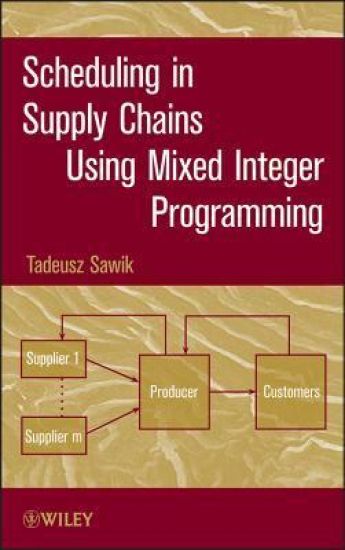
Scheduling in Supply Chains Using Mixed Integer Programming
A unified, systematic approach to applying mixed integer programming solutions to integrated scheduling in customer-driven supply chains Supply chain management is a rapidly developing field, and the recent improvements in modeling, preprocessing, solution algorithms, and mixed integer programming (MIP) software have made it possible to solve large-scale MIP models of scheduling problems, especially integrated scheduling in supply chains. Featuring a unified and systematic presentation, Scheduling in Supply Chains Using Mixed Integer Programming provides state-of-the-art MIP modeling and solutions approaches, equipping readers with the knowledge and tools to model and solve real-world supply chain scheduling problems in make-to-order manufacturing. Drawing upon the author's own research, the book explores MIP approaches and examples-which are modeled on actual supply chain scheduling problems in high-tech industries-in three comprehensive sections: Short-Term Scheduling in Supply Chains presents various MIP models and provides heuristic algorithms for scheduling flexible flow shops and surface mount technology lines, balancing and scheduling of Flexible Assembly Lines, and loading and scheduling of Flexible Assembly SystemsMedium-Term Scheduling in Supply Chains outlines MIP models and MIP-based heuristic algorithms for supplier selection and order allocation, customer order acceptance and due date setting, material supply scheduling, and medium-term scheduling and rescheduling of customer orders in a make-to-order discrete manufacturing environmentCoordinated Scheduling in Supply Chains explores coordinated scheduling of manufacturing and supply of parts as well as the assembly of products in supply chains with a single producer and single or multiple suppliers; MIP models for a single- or multiple-objective decision making are also provided Two main decision-making approaches are discussed and compared throughout. The integrated (simultaneous) approach, in which all required decisions are made simultaneously using complex, monolithic MIP models; and the hierarchical (sequential) approach, in which the required decisions are made successively using hierarchies of simpler and smaller-sized MIP models. Throughout the book, the author provides insight on the presented modeling tools using AMPL® modeling language and CPLEX solver. Scheduling in Supply Chains Using Mixed Integer Programming is a comprehensive resource for practitioners and researchers working in supply chain planning, scheduling, and management. The book is also appropriate for graduate- and PhD-level courses on supply chains for students majoring in management science, industrial engineering, operations research, applied mathematics, and computer science.
Production Planning and Scheduling in Flexible Assembly Systems

Production Planning and Scheduling in Flexible Assembly Systems

Tadeusz Sawik

Springer-Verlag Berlin and Heidelberg GmbH Co. K
1998
nidottu
Flexibleassemblysystems(FASs)haveemergedasaresultofthedevelop- mentsinmanufacturingandcomputertechnology. Currentmarketrequire- mentscharacterizedby -increasingnumberofdifferenttypesandversionsofproducts, -smallerbatchsizes,and -shorterlife-timeofproducts, stronglydeterminethecompetitivenessinproductionassemblyandaddi- tionallycontributetothedevelopmentofflexibleautomatedassembly. For example,attheendof1986[33]40%ofJapaneserobotswerespecialized inassemblyascomparedwithonly10%ofEuropeanrobots. Theremain- ing90%wereusedinwelding,painting,andhandling. Theintroductionof flexibleautomatedassemblytohigh-techsectorswhereassemblycostsare criticalistheaimofmajorEuropeanprojectssuchasESPRITandBRITE programmesandtheFAMOS-EUREKAproject,e. g. ,[33,34]. Thebookdealswithproductionplanningandschedulinginflexibleassem- blysystems. ThereaderisfamiliarizedwiththeFASplanningandschedul- ingissuesforwhichvariousoperationsresearchmodellingandsolutionap- proachesarediscussed. Inparticular,applicationsofintegerprogrammingto theFASshort-termplanningandfastcombinatorialheuristicstotheFAS schedulingarediscussed. Thematerialinthebookhasbeendividedintosevenchapters. Chapter1presentstheoverallstructureandhardwarecomponentsand featuresofaflexibleassemblysystem. TheFASsclassificationisprovided andillustratedwithindustrialapplicationsofmechanicalpartassemblyand printedcircuitboard(PCB)assembly. Chapter2discussesmajorissuesinthedesign,planningandschedulingof flexibleassembly. BasicconfigurationsofFASsandmaterialflownetworksare presentedandvariousapproachestodesignforautomatedassemblyandto assemblyplanningarediscussed. TheFASproductionplanningandschedul- ingareconsideredwithinahierarchicalframeworkwithmachineloadingand assemblyroutingatanupperlevelandmachineandvehicleschedulingata lowerlevel. Finally,specificissuesinplanningandschedulingofPCBassem- blyarediscussed. VIII Preface InChapter3variousbi-objectiveintegerprogrammingmodelsandso- lutionapproachesarepresentedformachineloadingandassembly-routing inFASs. Aninteractiveprocedureisproposedforsimultaneousloadingand routingbasedonweightingapproachandalexicographicalgorithmisgiven forsequentialloadingandroutingwithalinearrelaxationloadingheuristic andanetworkflowroutingmodel. Numericalexamplesillustratepossible applicationsofthemodellingandsolutionapproachespresented. InChapter4thesequentialmodellingandsolutionapproachproposedin Chapter3hasbeenextendedforabicriterionmachineloadingandassembly routingwithsimultaneousassemblyplanselectioninageneralFASandina flexibleassemblyline. Numericalexamplesareprovidedtoillustratepossible applicationsoftheapproachproposed. Chapter5presentsmathematicalprogrammingformulationsforsimul- taneousloadingandschedulinginflexibleassemblycells. Theformulations areillustratedwithpracticalapplicationsinmechanicalpartassemblywith arobotassemblycellandinPCBassemblyonacomponentplacementma- chine. Chapter6isdevotedtoproductionschedulinginflexibleassemblylines whereseveralassemblystagesinseriesareeitherseparatedbyfiniteinter- mediatebuffersortherearenobuffersbetweenthestages,andeachstage consistsofoneormoreidenticalparallelmachines. Fastpush-typeschedul- ingheuristicsareproposedforthelinewithlimitedintermediatebuffersor thelinewithnoin-processbuffers. Foracomparison,apull-typeschedul- ingstrategyisillustratedwithsomerecentresultsfortheJust-In-Timeand multilevelschedulingofflexibleassemblylines. Numericalexamplesprovide thereaderwithpossibleapplicationsofthevariousmodellingandsolution approachespresented. InChapter7simultaneousschedulingofassemblystationsandautomated guidedvehiclesisdiscussedforageneralFASandtwodifferentsolutionap- proachesarepresented:(i)amulti-levelapproach,inwhichfirstmachine loadingandassemblyroutingproblemissolvedandthen,giventaskassign- mentsandassemblyroutesselected,detailedmachineandvehicleschedules aredetermined;(ii)asingle-levelapproach,inwhichmachineandvehicle schedulesaredirectlydeterminedwithnoinitialloadingandroutingdeci- mentscharacterizedby -increasingnumberofdifferenttypesandversionsofproducts, -smallerbatchsizes,and -shorterlife-timeofproducts, stronglydeterminethecompetitivenessinproductionassemblyandaddi- tionallycontributetothedevelopmentofflexibleautomatedassembly. For example,attheendof1986[33]40%ofJapaneserobotswerespecialized inassemblyascomparedwithonly10%ofEuropeanrobots. Theremain- ing90%wereusedinwelding,painting,andhandling. Theintroductionof flexibleautomatedassemblytohigh-techsectorswhereassemblycostsare criticalistheaimofmajorEuropeanprojectssuchasESPRITandBRITE programmesandtheFAMOS-EUREKAproject,e. g. ,[33,34]. Thebookdealswithproductionplanningandschedulinginflexibleassem- blysystems. ThereaderisfamiliarizedwiththeFASplanningandschedul- ingissuesforwhichvariousoperationsresearchmodellingandsolutionap- proachesarediscussed. Inparticular,applicationsofintegerprogrammingto theFASshort-termplanningandfastcombinatorialheuristicstotheFAS schedulingarediscussed. Thematerialinthebookhasbeendividedintosevenchapters. Chapter1presentstheoverallstructureandhardwarecomponentsand featuresofaflexibleassemblysystem. TheFASsclassificationisprovided andillustratedwithindustrialapplicationsofmechanicalpartassemblyand printedcircuitboard(PCB)assembly. Chapter2discussesmajorissuesinthedesign,planningandschedulingof flexibleassembly. BasicconfigurationsofFASsandmaterialflownetworksare presentedandvariousapproachestodesignforautomatedassemblyandto assemblyplanningarediscussed. TheFASproductionplanningandschedul- ingareconsideredwithinahierarchicalframeworkwithmachineloadingand assemblyroutingatanupperlevelandmachineandvehicleschedulingata lowerlevel. Finally,specificissuesinplanningandschedulingofPCBassem- blyarediscussed. VIII Preface InChapter3variousbi-objectiveintegerprogrammingmodelsandso- lutionapproachesarepresentedformachineloadingandassembly-routing inFASs. Aninteractiveprocedureisproposedforsimultaneousloadingand routingbasedonweightingapproachandalexicographicalgorithmisgiven forsequentialloadingandroutingwithalinearrelaxationloadingheuristic andanetworkflowroutingmodel. Numericalexamplesillustratepossible applicationsofthemodellingandsolutionapproachespresented. InChapter4thesequentialmodellingandsolutionapproachproposedin Chapter3hasbeenextendedforabicriterionmachineloadingandassembly routingwithsimultaneousassemblyplanselectioninageneralFASandina flexibleassemblyline. Numericalexamplesareprovidedtoillustratepossible applicationsoftheapproachproposed. Chapter5presentsmathematicalprogrammingformulationsforsimul- taneousloadingandschedulinginflexibleassemblycells. Theformulations areillustratedwithpracticalapplicationsinmechanicalpartassemblywith arobotassemblycellandinPCBassemblyonacomponentplacementma- chine. Chapter6isdevotedtoproductionschedulinginflexibleassemblylines whereseveralassemblystagesinseriesareeitherseparatedbyfiniteinter- mediatebuffersortherearenobuffersbetweenthestages,andeachstage consistsofoneormoreidenticalparallelmachines. Fastpush-typeschedul- ingheuristicsareproposedforthelinewithlimitedintermediatebuffersor thelinewithnoin-processbuffers. Foracomparison,apull-typeschedul- ingstrategyisillustratedwithsomerecentresultsfortheJust-In-Timeand multilevelschedulingofflexibleassemblylines. Numericalexamplesprovide thereaderwithpossibleapplicationsofthevariousmodellingandsolution approachespresented. InChapter7simultaneousschedulingofassemblystationsandautomated guidedvehiclesisdiscussedforageneralFASandtwodifferentsolutionap- proachesarepresented:(i)amulti-levelapproach,inwhichfirstmachine loadingandassemblyroutingproblemissolvedandthen,giventaskassign- mentsandassemblyroutesselected,detailedmachineandvehicleschedules aredetermined;(ii)asingle-levelapproach,inwhichmachineandvehicle schedulesaredirectlydeterminedwithnoinitialloadingandroutingdeci- sionsrequired. Foreachapproachaschedulingalgorithmbasedondynamic complexdispatchingrulesisproposedandnumericalexamplesareprovided toillustrateandcomparethetwoschedulingapproaches. Thematerialpresentedinthebookisillustratedwithnumerousexamples, figuresandextensivetables. Thereaderisprovidedwithdetailedmathemat- icalmodelsoftheFASplanningandschedulingproblemsanddescriptions ofthesolutionalgorithmsproposed. Theirapplicationsareillustratedwith manynumericalexamplesandresultsofvariouscomputationalexperiments withthemodelsandalgorithmsarereported. Preface IX Thebookisaimedprimarilyatstudentsandprofessionalsinproduction andoperationsmanagement,industrialandsystemsengineering,andauto- matedmanufacturing. Thisbookbenefitedfromnumerousdiscussionswithmycolleagues. Pro- fessorAndreasDrexlandDr. RainerKolischfromtheChristian-Albrechts UniversityofKieldeservespecialthanksforthecarefulreadingofvarious partsofthemanuscriptandtheirvaluablecomments. ThebookhasbeenpreparedwithpartialsupportbyKBNresearchgrant #8TllF01513,AGHgrant#10. 200. 10,andTEMPUS-PHAREproject #S_JEP-09434-95. TadeuszSawik DepartmentofComputerIntegratedManufacturing FacultyofManagement UniversityofMiningandMetallurgy Krakow,Poland TableofContents 1. FlexibleAssemblySystems-HardwareComponentsand Features...1 1. 1 BasiccomponentsofaFAS...1 1. 1. 1Robots...1 1. 1. 2 PeripheraJequipment...4 1. 2 Classificationof'flexibleassemblysystems 5 1. 3 Examplesofindustrialinstallations...8 1. 3. 1 Mechanicalassembly...8 1. 3. 2 Printedcircuitboardassembly...9 2. IssuesinDesign,PlanningandSchedulingofFlexible Assembly...17 2. 1 FASdesignissues...18 2. 2 Networkdesignformaterialflowsystems...22 2. 3 Designforassembly...27 2. 4 Assemblyplanning 30 2. 5 Planningandscheduling...32 2. 5. 1 Machineloadingandassemblyrouting...35 2. 5. 2 Machineandvehiclescheduling 37 2. 5. 3 Planningandschedulinginelectronicsassembly...38 3. LoadingandRoutingDecisionsinFlexibleAssembly Systems 41 3. 1 Descriptionofaflexibleassemblysystem...43 3. 2 Optimizationofstationworkloadsandproductmovements. . 44 3. 3 Designandbalancingofflexibleassemblylines...50 3. 4 Numericalexamples 52 3. 5 Simultaneousloadingandrouting 56 3. 5. 1 Problemformulations...56 3. 5. 2 Aninteractiveheuristicforloadingandrouting 60 3. 5. 3 Numericalexamples...61 3. 6 Sequentialloadingandrouting...68 3. 6. 1 Problemformulations...