Kirjojen hintavertailu. Mukana 12 305 401 kirjaa ja 12 kauppaa.

Kirjailija

Takeshi Inomata

Kirjat ja teokset yhdessä paikassa: 7 kirjaa, julkaisuja vuosilta 2000-2019, suosituimpien joukossa Warfare and the Fall of a Fortified Center. Vertaile teosten hintoja ja tarkista saatavuus suomalaisista kirjakaupoista.

7 kirjaa

Kirjojen julkaisuhaarukka 2000-2019.

Royal Courts Of The Ancient Maya

Royal Courts Of The Ancient Maya

Takeshi Inomata; Stephen D. Houston

Routledge
2019
sidottu
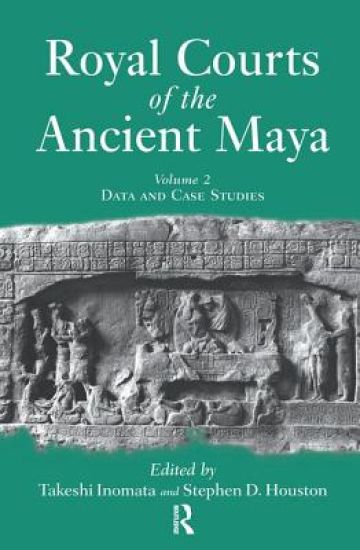
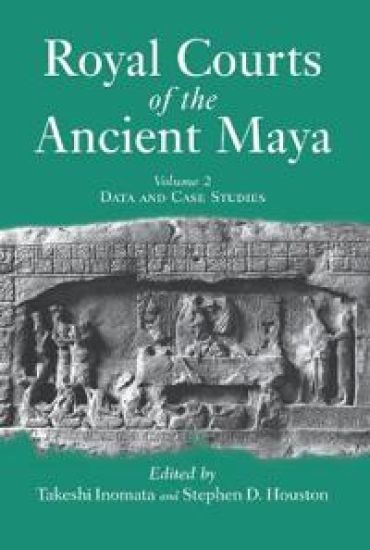
This book discusses courts at specific centers and areas, presenting data from major research projects. It examines the beginning of the Copan dynasty and the possibility of its foreign origin. The book addresses the functions and meanings of thrones, referring to archaeological data from Uaxactun.
Royal Courts Of The Ancient Maya

Royal Courts Of The Ancient Maya

Takeshi Inomata; Stephen D. Houston

Routledge
2019
sidottu
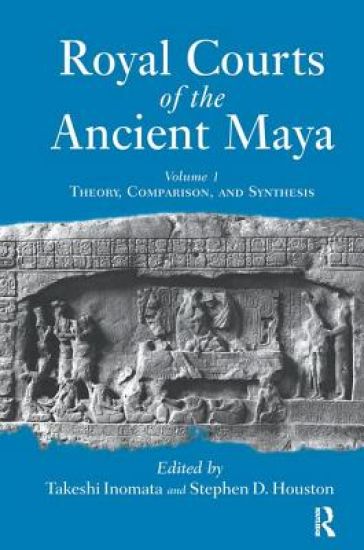
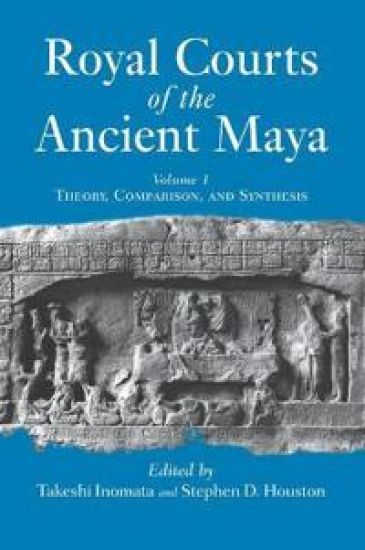
This book provides theory, comparison, and synthesis to establish a carefully considered framework for approaching the study of courts and their functions throughout the world of the ancient Maya. It is based on the annual meeting of the American Anthropological Association.
The Classic Maya

The Classic Maya

Stephen D. Houston; Takeshi Inomata

Cambridge University Press
2009
sidottu
In the first millennium AD, the Classic Maya created courtly societies in and around the Yucatan Peninsula that have left some of the most striking intellectual and aesthetic achievements of the ancient world, including large settlements like Tikal, Copan, and Palenque. This book is the first in-depth synthesis of the Classic Maya. It is richly informed by new decipherment of hieroglyphs, decades of intensive excavation and survey. Structured by categories of person in society, it reports on kings, queens, nobles, gods, and ancestors, as well as the many millions of farmers and other figures who lived in societies predicated on sacred kingship and varying political programs. The Classic Maya presents a tandem model of societies bound by moral covenants and convulsed by unavoidable tensions between groups, affected by demographic trends and changing environments. It will serve as the basic source for all readers interested in the civilisation of the Maya.
Warfare and the Fall of a Fortified Center

Warfare and the Fall of a Fortified Center

Takeshi Inomata

Vanderbilt University Press
2007
sidottu
This volume presents for the first time the detailed data and dramatic findings of Inomata's investigations of this Classic period second capital of the ancient Maya Petexbatun kingdom. As widely discussed in journals and the media, the autonomous Aguateca subproject of the Vanderbilt Petexbatun research recovered remarkable new evidence on the violent end of a Maya center. This monograph presents descriptions and interpretations of the excavations and surveys, site maps, and recovered ceramics and artifacts, as well as a wide range of applied analyses of this data. The sprawling defensive fortifications of this center, its already formidable natural location, and its final destruction and burning represent one of the most remarkable sets of evidence of the collapse of a Classic Maya kingdom. Inomata discusses the implications of his findings for theories of the end of Classic Maya civilization. This work also provides unique insights into the details of Classic Maya households, elite life, and social and economic roles. Such insights are possible because the epicenter of Aguateca was suddenly and rapidly abandoned and burned at the end of its occupation shortly after A.D. 800. Inomata applied the methods of meticulous horizontal excavation and point plotting of many artifacts to document this Pompeii-like situation, remarkable in its potential for understanding Maya life. The results of these investigations, reported both here and in an upcoming VIMA volume, have yielded a new understanding of variability in ancient Maya household size, structure function, and economic and social roles, challenging standing interpretations of Classic Maya population dynamics, domestic configurations, economic specialization, and social structure. Together with the extensive Aguateca site survey and excavations, the investigations presented in this volume provide a new, close view of the final years, and even the last moments, of a Classic Maya kingdom.
Archaeology Of Settlement Abandonment of Middle America

Archaeology Of Settlement Abandonment of Middle America

Takeshi Inomata; Ronald Webb

University of Utah Press,U.S.
2003
nidottu
Mesoamerican archaeologists have long been interested in the collapse of political systems or civilizations but have been slow to undertake detailed abandonment analyses of specific settlements. The Archaeology of Settlement Abandonment in Middle America explores some of the old questions in Middle American archaeology in light of the newer theoretical approach provided by abandonment studies. Unlike much of the abandonment work previously done in the American Southwest, a number of contributions to this volume examine relatively large population centers.Among the original contributions in this collection is the discovery that deposits resulting from termination rituals are more common than previously thought. Several chapters point out that structures and places can continue to serve ritual functions even after abandonment. Another finding is that the causes of abandonment--warfare, economic marginalization, or natural cataclysm--are likely to have varied effects on different social groups, which in turn sheds light on occupational histories in specific sites preceding major abandonments.
Royal Courts Of The Ancient Maya

Royal Courts Of The Ancient Maya

Stephen Houston; Takeshi Inomata

Westview Press Inc
2001
pokkari
The two volumes of Royal Courts of the Ancient Maya provide current archaeological perspectives on Maya courts conceived as vital, functioning social groups composed of lords, courtiers, scribes, priests, and entertainers, among many others. In addition to archaeological data on the architecture and other spatial attributes of courts, the studies in the two volumes bring to bear on the topic the most recent evidence from inscriptions, vase paintings, murals and friezes, and ethnohistoric records in order to flesh out a portrait of the actors and roles that made up Maya courts through time and across space. The attributes of courts are explored in the Maya highlands and lowlands, from the origins of early kingship through the Classic period to the Postclassic and Terminal epochs. Pertinent comparisons are also drawn from the Aztecs and other ancient and contemporary societies. Volume 1: Theory, Comparison, and Synthesis establishes a carefully considered framework for approaching the study of courts and their functions throughout the world of the ancient Maya. Volume 2: Data and Case Studies provides authoritatively current data and insights from key Maya sites, including Copán, Tikal, Caracol, Bonampak, and Calakmul.
Royal Courts Of The Ancient Maya

Royal Courts Of The Ancient Maya

Stephen Houston; Takeshi Inomata

Westview Press Inc
2000
pokkari
The two volumes of Royal Courts of the Ancient Maya provide current archaeological perspectives on Maya courts conceived as vital, functioning social groups composed of lords, courtiers, scribes, priests, and entertainers, among many others. In addition to archaeological data on the architecture and other spatial attributes of courts, the studies in the two volumes bring to bear on the topic the most recent evidence from inscriptions, vase paintings, murals and friezes, and ethnohistoric records in order to flesh out a portrait of the actors and roles that made up Maya courts through time and across space. The attributes of courts are explored in the Maya highlands and lowlands, from the origins of early kingship through the Classic period to the Postclassic and Terminal epochs. Pertinent comparisons are also drawn from the Aztecs and other ancient and contemporary societies. Volume 1: Theory, Comparison, and Synthesis establishes a carefully considered framework for approaching the study of courts and their functions throughout the world of the ancient Maya. Volume 2: Data and Case Studies provides authoritatively current data and insights from key Maya sites, including Copán, Tikal, Caracol, Bonampak, and Calakmul.