
Kirjojen hintavertailu. Mukana 12 152 606 kirjaa ja 12 kauppaa.

Kirjailija

Talia Dan-Cohen

Kirjat ja teokset yhdessä paikassa: 3 kirjaa, julkaisuja vuosilta 2006-2021, suosituimpien joukossa A Simpler Life. Vertaile teosten hintoja ja tarkista saatavuus suomalaisista kirjakaupoista.

3 kirjaa

Kirjojen julkaisuhaarukka 2006-2021.

A Simpler Life

A Simpler Life

Talia Dan-Cohen

Cornell University Press
2021
sidottu
A Simpler Life approaches the developing field of synthetic biology by focusing on the experimental and institutional lives of practitioners in two labs at Princeton University. It highlights the distance between hyped technoscience and the more plodding and entrenched aspects of academic research. Talia Dan-Cohen follows practitioners as they wrestle with experiments, attempt to publish research findings, and navigate the ins and outs of academic careers. Dan-Cohen foregrounds the practices and rationalities of these pursuits that give both researchers' lives and synthetic life their distinctive contemporary forms. Rather than draw attention to avowed methodology, A Simpler Life investigates some of the more subtle and tectonic practices that bring knowledge, doubt, and technological intervention into new configurations. In so doing, the book sheds light on the more general conditions of contemporary academic technoscience.
A Simpler Life

A Simpler Life

Talia Dan-Cohen

Cornell University Press
2021
pokkari
A Simpler Life approaches the developing field of synthetic biology by focusing on the experimental and institutional lives of practitioners in two labs at Princeton University. It highlights the distance between hyped technoscience and the more plodding and entrenched aspects of academic research. Talia Dan-Cohen follows practitioners as they wrestle with experiments, attempt to publish research findings, and navigate the ins and outs of academic careers. Dan-Cohen foregrounds the practices and rationalities of these pursuits that give both researchers' lives and synthetic life their distinctive contemporary forms. Rather than draw attention to avowed methodology, A Simpler Life investigates some of the more subtle and tectonic practices that bring knowledge, doubt, and technological intervention into new configurations. In so doing, the book sheds light on the more general conditions of contemporary academic technoscience.
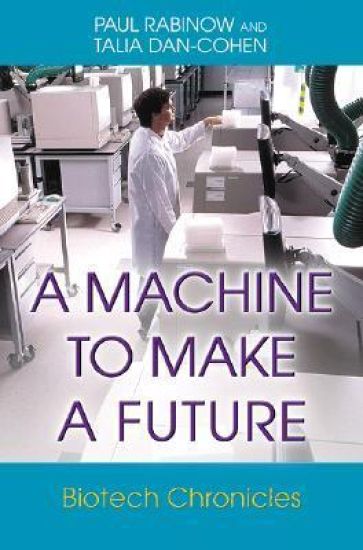
A Machine to Make a Future

A Machine to Make a Future

Paul Rabinow; Talia Dan-Cohen

Princeton University Press
2006
pokkari
A Machine to Make a Future represents a remarkably original look at the present and possible future of biotechnology research in the wake of the mapping of the human genome. The central tenet of Celera Diagnostics--the California biotech company whose formative work during 2003 is the focus of the book--is that the emergent knowledge about the genome, with its profound implications for human health, can now be turned into a powerful diagnostic apparatus--one that will yield breakthrough diagnostic and therapeutic products (and, potentially, profit). Celera's efforts--assuming they succeed--may fundamentally reshape the fabric of how health and health care are understood, practiced, and managed. Presenting a series of interviews with all of the key players in Celera Diagnostics, Paul Rabinow and Talia Dan-Cohen open a fascinating window on the complexity of corporate scientific innovation. This marks a radical departure from other books on the biotech industry by chronicling the vicissitudes of a project during a finite time period, in the words of the actors themselves. Ultimately, the authors conclude, Celera Diagnostics is engaged in a future characterized not by geniuses and their celebrated discoveries but by a largely anonymous and widely distributed profusion of data and results--a "machine to make a future." In their new afterword, Rabinow and Dan-Cohen revisit Celera Diagnostics as its mighty machine grinds along, wondering, along with the scientists, "what constitutes success and what constitutes failure?" The pathos of the situation turns on how one poses the question as much as how one answers it.