Kirjojen hintavertailu. Mukana 12 657 676 kirjaa ja 12 kauppaa.

Kirjailija

Tamanpreet Kaur

Kirjat ja teokset yhdessä paikassa: 13 kirjaa, julkaisuja vuosilta 2019-2025, suosituimpien joukossa Rainfed Agriculture and Watershed Management. Vertaile teosten hintoja ja tarkista saatavuus suomalaisista kirjakaupoista.

13 kirjaa

Kirjojen julkaisuhaarukka 2019-2025.

Rainfed Agriculture and Watershed Management

Rainfed Agriculture and Watershed Management

Sohan Singh Walia; Karmjeet Kaur; Tamanpreet Kaur

SPRINGER VERLAG, SINGAPORE
2025
nidottu
This book provides a comprehensive explanation of rainfed farming, dryland agriculture, and watershed management concepts. Despite utilizing all available water resources for irrigation, approximately half of the cultivated land will still rely on rainfall. With limited scope for expanding cultivated areas, meeting future food demands becomes an immense challenge. It is within this context that the significance of dryland agriculture emerges. Indian agriculture relies heavily on the monsoon, making water crucial for sustainable development. Unequal distribution of the global average rainfall (about 1000 mm) contributes to disparities in agriculture and socio-economic conditions. Around 70% of India's agriculture depends on rainfall, producing nearly 44% of the food and supporting 40% of the human and 60% of the livestock population. Even with full irrigation potential, half of cultivated land still relies on rain. Approximately 30% of the country is prone to drought and waterscarcity, posing challenges for rainfed agriculture. Inefficient water use affects other inputs, emphasizing the need for resource management and indigenous systems. This book serves as a valuable resource for farmers, students, and scholars by providing guidance on various aspects of rainfed agriculture, dryland farming, and watershed resource management techniques. It aims to optimize the use of irrigation water and foster sustainable agricultural development. Additionally, it caters to the needs of graduate and postgraduate students studying agriculture, offering specific insights relevant to their designated course on rainfed agriculture and watershed management.
Earthworms and Vermicomposting

Earthworms and Vermicomposting

Sohan Singh Walia; Tamanpreet Kaur

SPRINGER VERLAG, SINGAPORE
2025
nidottu
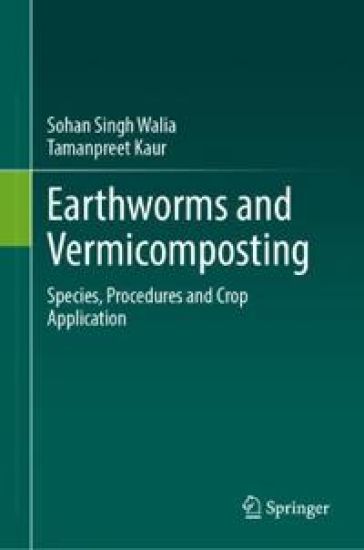
This book explains the lifecycle of earthworms, biological features, multiplication of worms, species of earthworms that are suitable for vermicomposting, different sources of vermicompost, nutrient recovery and different procedures for making of vermicompost and importance of application of vermicompost in cereal, fruit and vegetable crops. The tremendous increase in population, urbanization, industrialization and agricultural production results in accumulation quantities of solid wastes. This has created serious problem in the environment. In order to dispose this waste safely it should be converted effectively. This is achieved by bio-composting and vermicomposting of farm, urban and agro-industrial waste. It is being increasing realized that composting is an environment friendly process, convert wide variety of wastes into valuable agricultural inputs. Compost is excellent source of humus and plant nutrients, on application of which improve soil biophysical properties and organic matter status of the soil. India generates about 350 million tonnes of agricultural waste every year. Agricultural wastes include crop residues, weeds, leaf litter, sawdust, forest waste, and livestock waste. Under appropriate conditions, worms eat agricultural waste and reduce the volume by 40 to 60%. Vermicompost produced by the activity of earthworms is rich in macro and micro-nutrients, vitamins, growth hormones, enzymes such as proteases, amylases, lipase, cellulase and chitinase and immobilized microflora. This book will assist farmers, students and scholars to guide them about lifecycle of earthworms, biological features, multiplication of worms, species of earthworms that are suitable for vermicomposting and different procedures for making of vermicompost. This book will also benefit students of agriculture at graduate and post graduate level as students have a designated course on vermicomposting.
Basics of Integrated Farming Systems

Basics of Integrated Farming Systems

Sohan Singh Walia; Tamanpreet Kaur

SPRINGER VERLAG, SINGAPORE
2024
nidottu
This volume on Integrated Farming Systems explains the diverse components that can be included in the agriculture sector. It is a practical guide to increasing a farm's productivity, profitability, and sustainability. The use of integrated farming systems has become essential with the growing population and the decreased availability of land resulting in the need to optimize the existing resources. By combining different farm enterprises like dairy, poultry, and fishery, farmers can achieve vertical expansion and increase their income and employment opportunities.This comprehensive guide covers all aspects of integrated farming systems, from the different components that can be included to the benefits of recycling crop residues and the by-products within the farm. With practical advice for small and marginal farmers, this book offers a roadmap for improving productivity and ensuring balanced nutrition for farm families. The book is suitable for a vast audience, from afarmer looking to increase profits and sustainability, a student of agriculture at the graduate or post-graduate level, or a researcher in the field of farming systems. It is an essential resource for reaping the benefits of integrated farming systems.
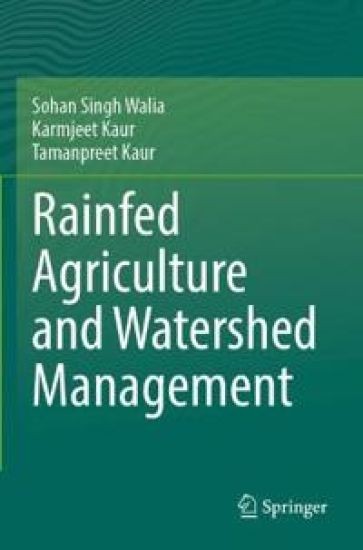
Rainfed Agriculture and Watershed Management

Rainfed Agriculture and Watershed Management

Sohan Singh Walia; Karmjeet Kaur; Tamanpreet Kaur

SPRINGER VERLAG, SINGAPORE
2024
sidottu
This book provides a comprehensive explanation of rainfed farming, dryland agriculture, and watershed management concepts. Despite utilizing all available water resources for irrigation, approximately half of the cultivated land will still rely on rainfall. With limited scope for expanding cultivated areas, meeting future food demands becomes an immense challenge. It is within this context that the significance of dryland agriculture emerges.Indian agriculture relies heavily on the monsoon, making water crucial for sustainable development. Unequal distribution of the global average rainfall (about 1000 mm) contributes to disparities in agriculture and socio-economic conditions. Around 70% of India's agriculture depends on rainfall, producing nearly 44% of the food and supporting 40% of the human and 60% of the livestock population. Even with full irrigation potential, half of cultivated land still relies on rain. Approximately 30% of the country is prone to drought and waterscarcity, posing challenges for rainfed agriculture. Inefficient water use affects other inputs, emphasizing the need for resource management and indigenous systems.This book serves as a valuable resource for farmers, students, and scholars by providing guidance on various aspects of rainfed agriculture, dryland farming, and watershed resource management techniques. It aims to optimize the use of irrigation water and foster sustainable agricultural development. Additionally, it caters to the needs of graduate and postgraduate students studying agriculture, offering specific insights relevant to their designated course on rainfed agriculture and watershed management.
Earthworms and Vermicomposting

Earthworms and Vermicomposting

Sohan Singh Walia; Tamanpreet Kaur

SPRINGER VERLAG, SINGAPORE
2024
sidottu
This book explains the lifecycle of earthworms, biological features, multiplication of worms, species of earthworms that are suitable for vermicomposting, different sources of vermicompost, nutrient recovery and different procedures for making of vermicompost and importance of application of vermicompost in cereal, fruit and vegetable crops. The tremendous increase in population, urbanization, industrialization and agricultural production results in accumulation quantities of solid wastes. This has created serious problem in the environment. In order to dispose this waste safely it should be converted effectively. This is achieved by bio-composting and vermicomposting of farm, urban and agro-industrial waste. It is being increasing realized that composting is an environment friendly process, convert wide variety of wastes into valuable agricultural inputs. Compost is excellent source of humus and plant nutrients, on application of which improve soil biophysical properties and organic matter status of the soil. India generates about 350 million tonnes of agricultural waste every year. Agricultural wastes include crop residues, weeds, leaf litter, sawdust, forest waste, and livestock waste. Under appropriate conditions, worms eat agricultural waste and reduce the volume by 40 to 60%. Vermicompost produced by the activity of earthworms is rich in macro and micro-nutrients, vitamins, growth hormones, enzymes such as proteases, amylases, lipase, cellulase and chitinase and immobilized microflora. This book will assist farmers, students and scholars to guide them about lifecycle of earthworms, biological features, multiplication of worms, species of earthworms that are suitable for vermicomposting and different procedures for making of vermicompost. This book will also benefit students of agriculture at graduate and post graduate level as students have a designated course on vermicomposting.
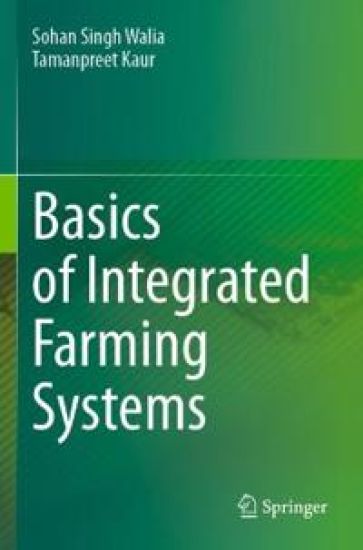
Basics of Integrated Farming Systems

Basics of Integrated Farming Systems

Sohan Singh Walia; Tamanpreet Kaur

SPRINGER VERLAG, SINGAPORE
2023
sidottu
This volume on Integrated Farming Systems explains the diverse components that can be included in the agriculture sector. It is a practical guide to increasing a farm's productivity, profitability, and sustainability. The use of integrated farming systems has become essential with the growing population and the decreased availability of land resulting in the need to optimize the existing resources. By combining different farm enterprises like dairy, poultry, and fishery, farmers can achieve vertical expansion and increase their income and employment opportunities.This comprehensive guide covers all aspects of integrated farming systems, from the different components that can be included to the benefits of recycling crop residues and the by-products within the farm. With practical advice for small and marginal farmers, this book offers a roadmap for improving productivity and ensuring balanced nutrition for farm families. The book is suitable for a vast audience, from afarmer looking to increase profits and sustainability, a student of agriculture at the graduate or post-graduate level, or a researcher in the field of farming systems. It is an essential resource for reaping the benefits of integrated farming systems.
Restaurations post-endodontiques

Restaurations post-endodontiques

Sameer Makkar; Uzma Mushtaq; Tamanpreet Kaur

International Book Market Service Ltd
2022
pokkari
Le meilleur plan pour r ussir est de commencer avec la finalit en t te. Avant d'initier le traitement, le praticien doit examiner soigneusement la dent pour d tecter les caries et les fractures. Il doit valuer la restaurabilit , la fonction occlusale et la sant parodontale de la dent. Si ces facteurs sont jug s satisfaisants, la dent peut tre incluse dans un plan de traitement complet. Actuellement, on pense que la fuite coronaire est aussi importante que la fuite apicale et qu'elle a un effet significatif sur le r sultat du traitement endodontique. Il est donc recommand de proc der une restauration imm diate apr s un traitement de canal. Il n'est pas n cessaire de reporter la restauration pendant de longues p riodes pour tre certain du succ s du traitement endodontique et cela pourrait mettre la dent en danger. Le succ s du traitement repose sur un scellement coronaire efficace qui emp chera la r infection du canal et une restauration ad quate r sistera aux contraintes fonctionnelles appliqu es la structure dentaire restante. Le succ s de l'endodontie d pend galement de la qualit du traitement canalaire et de la construction en temps voulu de la restauration post-endodontique.
Restauri postendodontici

Restauri postendodontici

Sameer Makkar; Uzma Mushtaq; Tamanpreet Kaur

International Book Market Service Ltd
2022
pokkari
Il miglior piano per il successo iniziare con il fine. Prima di iniziare il trattamento, lo specialista deve esaminare attentamente il dente per verificare la presenza di carie e fratture. Il dente deve essere valutato per la restaurabilit , la funzione occlusale e la salute parodontale. Se questi fattori sono ritenuti soddisfacenti, il dente pu essere incluso in un piano di trattamento completo. Attualmente si ritiene che la perdita coronale sia importante quanto quella apicale e che abbia un effetto significativo sull'esito del trattamento endodontico. Pertanto, si raccomanda un restauro immediato dopo il trattamento canalare. Rimandare il restauro per lunghi periodi di tempo per avere la certezza del successo endodontico non necessario e potrebbe mettere a rischio il dente. Il successo del trattamento dipende da un sigillo coronale efficace che impedisca la reinfezione canalare e da un restauro adeguato che resista alle sollecitazioni funzionali applicate alla struttura dentale rimanente. Il successo endodontico dipende anche dalla qualit del trattamento canalare e dalla costruzione tempestiva del restauro postendodontico.
Restaurações pós Endodônticas

Restaurações pós Endodônticas

Sameer Makkar; Uzma Mushtaq; Tamanpreet Kaur

International Book Market Service Ltd
2022
pokkari
O melhor plano para o sucesso come ar com o fim em mente. Antes de iniciar o tratamento, o m dico deve examinar cuidadosamente o dente para detectar c rie e fractura. O dente deve ser avaliado quanto restaura o, fun o oclusal, e sa de periodontal. Se estes factores forem considerados satisfat rios, o dente pode ser inclu do num plano de tratamento abrangente. Actualmente, pensa-se que a fuga coronal t o importante como a fuga apical e tem um efeito significativo sobre o resultado do tratamento endod ntico. Por conseguinte, recomenda-se a restaura o imediata ap s o tratamento de canal radicular. O adiamento da restaura o por longos per odos de tempo para se ter a certeza do sucesso endod ntico desnecess rio e pode colocar o dente em risco. O sucesso do tratamento depende de um selo coronal eficaz que evitar a reinfec o do canal e uma restaura o adequada resistir s tens es funcionais aplicadas estrutura dent ria remanescente. O sucesso endod ntico depende tamb m da qualidade do tratamento do canal radicular e da constru o atempada da restaura o p s endod ntica.
Postendodontische Versorgungen

Postendodontische Versorgungen

Sameer Makkar; Uzma Mushtaq; Tamanpreet Kaur

International Book Market Service Ltd
2022
pokkari
Der beste Plan f r den Erfolg ist, mit dem Ziel vor Augen zu beginnen. Vor Beginn der Behandlung sollte der Behandler den Zahn sorgf ltig auf Karies und Frakturen untersuchen. Der Zahn sollte auf seine Restaurierbarkeit, seine Okklusionsfunktion und seine parodontale Gesundheit untersucht werden. Wenn diese Faktoren als zufriedenstellend erachtet werden, kann der Zahn in einen umfassenden Behandlungsplan aufgenommen werden. Derzeit geht man davon aus, dass die koronale Leckage ebenso wichtig ist wie die apikale Leckage und einen erheblichen Einfluss auf das Ergebnis der endodontischen Behandlung hat. Daher wird eine sofortige Restauration nach einer Wurzelkanalbehandlung empfohlen. Ein Aufschieben der Restauration ber einen l ngeren Zeitraum, um sicher zu sein, dass die Endodontie erfolgreich ist, ist unn tig und k nnte den Zahn gef hrden. Der Behandlungserfolg h ngt von einer wirksamen koronalen Versiegelung ab, die eine Reinfektion des Kanals verhindert, und von einer ad quaten Restauration, die den funktionellen Belastungen der verbleibenden Zahnsubstanz standh lt. Der endodontische Erfolg h ngt auch von der Qualit t der Wurzelkanalbehandlung und der rechtzeitigen Anfertigung der postendodontischen Restauration ab.