Kirjojen hintavertailu. Mukana 12 595 353 kirjaa ja 12 kauppaa.

Kirjailija

Tamar Garb

Kirjat ja teokset yhdessä paikassa: 5 kirjaa, julkaisuja vuosilta 1994-2024, suosituimpien joukossa Portia Zvavahera. Vertaile teosten hintoja ja tarkista saatavuus suomalaisista kirjakaupoista.

5 kirjaa

Kirjojen julkaisuhaarukka 1994-2024.

Portia Zvavahera

Portia Zvavahera

Tamar Garb; Sinazo Chiya; Tandazani Dhlakama; Pumla Gobodo-Madikizela; Fiona Bradley; Andrew Nairne

KETTLE'S YARD GALLERY
2024
nidottu
Portia Zvavahera is one of the outstanding artists of her generation. Born in Harare, Zimbabwe in 1985, she has developed a unique combination of print/painting techniques to register a private world of dreams, fantasies and figural constructions. She received her art education in Zimbabwe in the early 2000s, and has become recognised in the past decade as one of the foremost representatives of African figuration, showcased at the Venice Biennale in 2022, and in a number of commercial gallery exhibitions in South Africa, the US and the UK. She has not yet had a solo show in a public museum in Europe. This new publication accompanies a major exhibition, curated by Tamar Garb, which will include reproductions of brand new works created on the occasion of this exhibition alongside a selection of recent and older paintings which reveal the depth and richness of Zvavahera’s practice. The focus will be on the theme of dreams, fantasy and figuration, and large details will highlight Zvavahera’s innovative amalgamation of printmaking and painting techniques that build rich surfaces to create her private cosmology of creatures and contexts. The book will feature a significant new essay from curator Tamar Garb and will centre around an extensive conversation between Garb, Sinazo Chiya, Tandazani Dhlakama and Pumla Gobodo-Madikizela discussing Zvavahera’s engagement with eros, intimacy and female-centred experience. The book will open up how Zvavahera’s works emerge from dreams; being figurative without being illustrative, registering a world of feminine experience and fantasy.
Close Up

Close Up

Theodora Vischer; Andreas Beyer; Tamar Garb; Peter Geimer; Anna-Carola Krausse; Sylvie Patry; Uwe M. Schneede

Hatje Cantz
2021
nidottu
The portrait offers the possibility of observation and introspection, and is at the same time one of the most private and representative artistic genres. But what distinguishes the specifically female gaze? On the occasion of the major fall exhibition 2021 at Fondation Beyeler, this catalog brings together nine women artists from Europe and America from the beginning of modernism to the present day, whose works represent an outstanding contribution to the history of the portrait. The individual view of the artists on themselves and on their surroundings in the course of time is expressed. In the catalog, renowned authors explore the individual artists and their fascinating ways of reflecting on themselves and on others. The featured artists are Mary Cassatt, Marlene Dumas, Frida Kahlo, Lotte Laserstein, Paula Modersohn-Becker, Berthe Morisot, Alice Neel, Elizabeth Peyton, and Cindy Sherman.
The Body in Time

The Body in Time

Tamar Garb

University of Washington Press
2008
pokkari
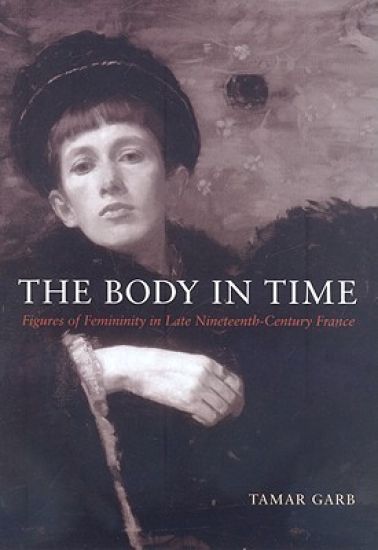
The Body in Time looks at two different genres in relation to the construction of femininity in late nineteenth-century France: Degas's representation of ballet dancers and the transforming tradition of female portraiture. Class, gender, power, and agency are at stake in both arenas, but they play themselves out in different ways via different pictorial languages.Degas's depictions of anonymous young female ballerinas at the Paris Opera reflect his fascination with the physical exertions and prosaic setting of the dancer's sexualized body. Unlike the standard Romantic depictions of the ballerina, Degas's dancers are anonymous spread-legged workers on public display. Female portraiture and self-portraiture, in contrast, depicted the unique and the distinctive: privileged women, self-assured individuals transgressing gender conventions.Focusing on Degas's representation of the dancer, Tamar Garb examines the development of Degas's oeuvre from its early Realist documentary ambitions to the abstracted Symbolist renderings of the feminine as cypher in his later works. She argues that despite the apparent depletion of social significance and specificity, Degas's later works remain deeply enmeshed in contemporary gendered ways of viewing and experiencing art and life.Garb also looks at the transformation in the genre of portraiture heralded by the "new woman," examining the historical expectations of female portraiture and demonstrating how these expectations are challenged by new notions of female autonomy and interiority. Women artists such as Anna Klumpke, Rosa Bonheur, and Anna Bilinska deployed the language of Realism in their own self-representation.The figure of femininity remained central to the personal, political, and pictorial imperatives of artists across the spectrum of modern aesthetics. Gender and genre intersect throughout this book to show how these categories mutually impact one another.
The Painted Face

The Painted Face

Tamar Garb

Yale University Press
2007
sidottu
The meaning of a painted portrait and even its subject may be far more complex than expected, Tamar Garb reveals in this book. She charts for the first time the history of French female portraiture from its heyday in the early nineteenth century to its demise in the early twentieth century, showing how these paintings illuminate evolving social attitudes and aesthetic concerns in France over the course of the century. The author builds the discussion around six canonic works by Ingres, Manet, Cassatt, Cézanne, Picasso, and Matisse, beginning with Ingres’s idealized portrait of Mme de Sennones and ending with Matisse’s elegiac last portrait of his wife. During the hundred years that separate these works, the female portrait went from being the ideal genre for the expression of painting’s capacity to describe and embellish “nature,” to the prime locus of its refusal to do so. Picasso’s Cubism, and specifically Ma Jolie, provides the fulcrum of this shift.
Sisters of the Brush

Sisters of the Brush

Tamar Garb

Yale University Press
1994
sidottu
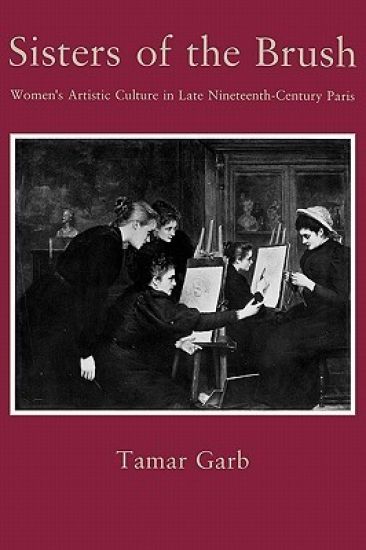
The Union of Women Painters and Sculptors was founded in Paris in 1881 to represent the interests of women artists and to facilitate the exhibition of their work. This lively and informative book traces the history of the first fifteen years of the organization and places it in the contexts of the Paris art world and the development of feminism in the late nineteenth century.Tamar Garb explores how the Union campaigned to have women artists written about in the press and admitted to the Salon jury and into the prestigious Ecole des Beaux-Arts and describes how the organization's leaders took their campaigns into the French parliament itself. Although the women of the Union were often quite conservative politically, socially, and stylistically, says Garb, they believed that women had a special gift that would enhance France's cultural reputation and maintain the uplifting moral-cultural position that seemed in jeopardy at the turn of the century. Focusing on the developments that made the prominence of the organization possible, Garb discusses the growth of the women's movement, educational reforms, institutional changes in the art world, and critical debates and contemporary scientific thought. She examines contemporary perceptions of both art and femininity, showing how the understanding of one affected the image of the other.This book reverses conventional accounts of late nineteenth-century French art, offering a new picture of the Paris art world from the point of view of a group of women who were marginalized by its dominant institutions.