
Kirjojen hintavertailu. Mukana 12 390 323 kirjaa ja 12 kauppaa.

Kirjailija

Tanya Saroj Bakhru

Kirjat ja teokset yhdessä paikassa: 4 kirjaa, julkaisuja vuosilta 2024-2026, suosituimpien joukossa What Do We Know and What Should We Do About… Abortion?. Vertaile teosten hintoja ja tarkista saatavuus suomalaisista kirjakaupoista.

4 kirjaa

Kirjojen julkaisuhaarukka 2024-2026.

What Do We Know and What Should We Do About… Abortion?

What Do We Know and What Should We Do About… Abortion?

Tanya Saroj Bakhru; Grace E Howard

SAGE PUBLICATIONS LTD
2026
sidottu
Abortion is a critical health care issue that demands informed discourse and action. This book explores the complexities of abortion through a social science lens, empowering readers to understand the lived realities of individuals accessing abortion services. It delves into the historical, cultural, and technological shifts that shape perceptions of abortion, while emphasizing the urgent need for equitable access to safe services. In this book, you will encounter: An interdisciplinary approach that combines fields such as sociology, public health, and law, enhancing your understanding of abortion’s societal implications; Global perspectives on abortion practices in countries like India, Ireland and South Korea, equipping you to engage in informed discussions about reproductive rights worldwide; Case studies of successful advocacy, illustrating how human rights frameworks can drive meaningful policy change. This book is aimed at students, activists, and anyone seeking a deeper understanding of abortion in today’s world. The What Do We Know and What Should We Do About...? series offers readers short, up-to-date overviews of key issues often misrepresented, simplified or misunderstood in modern society and the media. Each book is written by a leading social scientist with an established reputation in the relevant subject area. "If you want to learn a lot about what matters most, in as short a time as possible, this is the series for you." – Danny Dorling, Halford Mackinder Professor of Geography, University of Oxford

What Do We Know and What Should We Do About… Abortion?

What Do We Know and What Should We Do About… Abortion?

Tanya Saroj Bakhru; Grace E Howard

SAGE PUBLICATIONS LTD
2026
nidottu
Abortion is a critical health care issue that demands informed discourse and action. This book explores the complexities of abortion through a social science lens, empowering readers to understand the lived realities of individuals accessing abortion services. It delves into the historical, cultural, and technological shifts that shape perceptions of abortion, while emphasizing the urgent need for equitable access to safe services. In this book, you will encounter: An interdisciplinary approach that combines fields such as sociology, public health, and law, enhancing your understanding of abortion’s societal implications; Global perspectives on abortion practices in countries like India, Ireland and South Korea, equipping you to engage in informed discussions about reproductive rights worldwide; Case studies of successful advocacy, illustrating how human rights frameworks can drive meaningful policy change. This book is aimed at students, activists, and anyone seeking a deeper understanding of abortion in today’s world. The What Do We Know and What Should We Do About...? series offers readers short, up-to-date overviews of key issues often misrepresented, simplified or misunderstood in modern society and the media. Each book is written by a leading social scientist with an established reputation in the relevant subject area. "If you want to learn a lot about what matters most, in as short a time as possible, this is the series for you." – Danny Dorling, Halford Mackinder Professor of Geography, University of Oxford
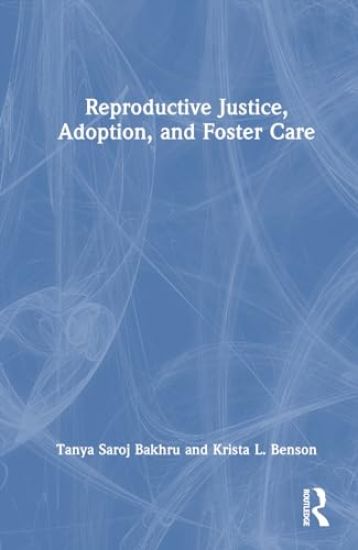
Reproductive Justice, Adoption, and Foster Care

Reproductive Justice, Adoption, and Foster Care

Tanya Saroj Bakhru; Krista L. Benson

TAYLOR FRANCIS LTD
2024
sidottu
Understanding practices of family separation and child removal necessitates considering the impacts of globalizing capitalism, colonialism, empire building and the establishment and normalization of systemic racism.In Reproductive Justice, Adoption, and Foster Care, the authors situate the colonial legacies of family separation, what it means to center the right parent, and Reproductive Justice and transnational feminist frameworks in conversation with one another in order to elucidate a more nuanced and comprehensive approach to recognizing the significance of contemporary examples of family separation. In doing so, the book showcases the connections between adoption and foster care within the intellectual and activist frameworks of human rights, Critical Adoption Studies, Reproductive Justice, and transnational feminisms. Epistemologically, Reproductive Justice and transnational feminisms meet at the point where both consider and interrogate globalizing capitalism, neoliberal economic and political ideologies, and the ways that various people—mostly people of color, poor people, women, children, and Indigenous people—are considered disposable. Critical Adoption Studies also importantly highlights the ways that adoption and foster care function as forms of family formation and as mechanisms of globalizing capitalism and state formation. Thus, it is critical that any exploration of the reproductive experiences of marginalized individuals interrogate and complicate notions of “choice” to advocate for justice.Reproductive Justice, Adoption, and Foster Care will be of interest to students of sociology, psychology, and social work, as well as scholars, activists, policymakers, and adoption and foster care practitioners.
Reproductive Justice, Adoption, and Foster Care

Reproductive Justice, Adoption, and Foster Care

Tanya Saroj Bakhru; Krista L. Benson

TAYLOR FRANCIS LTD
2024
nidottu
Understanding practices of family separation and child removal necessitates considering the impacts of globalizing capitalism, colonialism, empire building and the establishment and normalization of systemic racism.In Reproductive Justice, Adoption, and Foster Care, the authors situate the colonial legacies of family separation, what it means to center the right parent, and Reproductive Justice and transnational feminist frameworks in conversation with one another in order to elucidate a more nuanced and comprehensive approach to recognizing the significance of contemporary examples of family separation. In doing so, the book showcases the connections between adoption and foster care within the intellectual and activist frameworks of human rights, Critical Adoption Studies, Reproductive Justice, and transnational feminisms. Epistemologically, Reproductive Justice and transnational feminisms meet at the point where both consider and interrogate globalizing capitalism, neoliberal economic and political ideologies, and the ways that various people—mostly people of color, poor people, women, children, and Indigenous people—are considered disposable. Critical Adoption Studies also importantly highlights the ways that adoption and foster care function as forms of family formation and as mechanisms of globalizing capitalism and state formation. Thus, it is critical that any exploration of the reproductive experiences of marginalized individuals interrogate and complicate notions of “choice” to advocate for justice.Reproductive Justice, Adoption, and Foster Care will be of interest to students of sociology, psychology, and social work, as well as scholars, activists, policymakers, and adoption and foster care practitioners.