Kirjojen hintavertailu. Mukana 12 390 323 kirjaa ja 12 kauppaa.

Kirjailija

Tara Brabazon

Kirjat ja teokset yhdessä paikassa: 19 kirjaa, julkaisuja vuosilta 2005-2025, suosituimpien joukossa Unique Urbanity?. Vertaile teosten hintoja ja tarkista saatavuus suomalaisista kirjakaupoista.

19 kirjaa

Kirjojen julkaisuhaarukka 2005-2025.

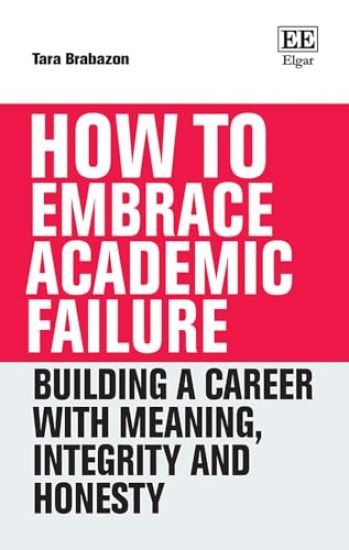
How to Embrace Academic Failure

How to Embrace Academic Failure

Tara Brabazon

EDWARD ELGAR PUBLISHING LTD
2025
sidottu
This compelling book explores current attitudes towards failure in academia. Tara Brabazon argues that success and failures are rarely linked and instead failure can be harnessed as both a diagnostic and a literacy to improve research integrity, authenticity, accountability and consciousness.Brabazon demonstrates how instances of failure can facilitate an awareness of asymmetrical power dynamics and injustice in academic life. How To Embrace Academic Failure illustrates how to create personal, professional and organizational change as a result of failure. It offers practical strategies for using failure to enhance academic careers and improve research ethics and teaching. Brabazon concludes by presenting an idealised academic future where a culture of failure provides transparency, rigour, ethical leadership and followership.This insightful book is a vital resource for students and scholars of higher education management, business leadership and the sociology of education. Academics in critical university studies and early career researchers will also benefit from Brabazon’s novel perspective on the post-pandemic, claustropolitan university.

12 Rules for (Academic) Life

12 Rules for (Academic) Life

Tara Brabazon

SPRINGER VERLAG, SINGAPORE
2022
sidottu
These are strange times. Climate crises. Health crises. Collapsing systems. Influencers. And yes - Jordan Peterson.We are currently living in a (Post) Peterson Paradigm. This book – 12 Rules for (Academic) Life - explores what has happened to teaching, learning and politics through this odd and chaotic intervention. Deploying feminism, this lens and theory offers a glass-sharpened view of this moment in international higher education. It is organized through twelve mantras for higher education in this interregnum, and offers new, radical, edgy and passionate methodologies, epistemologies and ontologies for a University sector searching for a purpose. This is a feminist book which targets a feminist audience, both inside and outside higher education. It presents a clear focus on how this Peterson moment can be managed and challenged, when in future such academics deploy social media in this way. This book is also a partof higher education studies, exploring the role of the public / critical / dissenting / organic intellectual in debates about the political economy, identity/politics and leadership.A question of our time – through a climate emergency, a pandemic and polarized politics – is why Professor Jordan Peterson gained profile and notoriety. The Jordan Peterson moment commenced in September 2016 with his YouTube video, “Professor against political correctness,” and concluded with his debate with Slavoj Zizek on April 19, 2019. From this moment, his credibility was dented, if not destroyed.Jordan Peterson infused scholarly debates with Punch and Judy extremism and misunderstandings. Instead, this book offers research rather than certainty, interpretation rather than dogma, evidence rather than opinion, and theory rather than ‘moral truth.’ The goal is to recalibrate this (Post) Peterson Paradigm, to take stock of how this moment occurred, and how to create a revision of higher education.
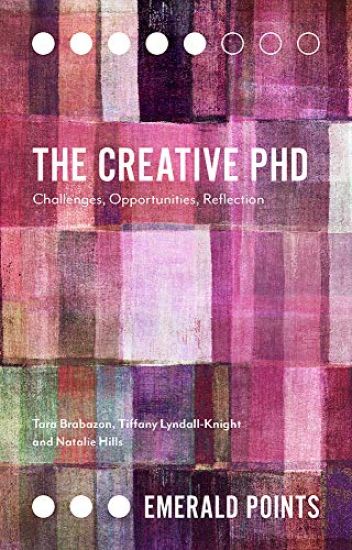
The Creative PhD

The Creative PhD

Tara Brabazon; Tiffany Lyndall-Knight; Natalie Hills

Emerald Publishing Limited
2020
nidottu
Doctorates awarded based on artefact and exegeses, and enabled through creative-led research, are a minority enrolment which suffer from wildly diverse examination expectations and assumptions about quality. Widening the disciplinary parameters and currency of this kind of doctorate, The Creative PhD is the first book that challenges the standards, structure and value of this research. The authors, themselves leading authorities on doctoral education, break fresh ground by demonstrating that rather than being intrinsically wedded to the creative arts or media studies, arts-based research practice doctorates can transcend traditional humanities subjects, becoming instead a model of organizing knowledge, developing methodologies and presenting research. Offering a critical reflection on the contemporary state of the PhD, the authors probe and reshape creative-led research to increase transparency for doctoral students, supervisors and examiners, inviting readers to access a new pathway to how original research is created, supervised and assessed.
Trump Studies

Trump Studies

Tara Brabazon; Steve Redhead; Runyararo S. Chivaura

Emerald Publishing Limited
2018
nidottu
Why do citizens vote against their own best interest? Trump Studies addresses this key question; probing the value of thinking, reading, writing and interpretation during times of economic, social and political uncertainty. With a compelling voice and academic rigour, the authors explore how and why xenophobia and sexism are the grammar of contemporary popular culture and politics. The Brexit result and the Trump victory cannot be studied in a laboratory; the silent majority will not sit in a petri dish, waiting to be researched. The theories and methodologies developed into this book not only explain these two mega and meta events, they create space for ideas that challenge and dissent, and make the case for the role and value of universities in a time when evidence, expertise and facts often dissolve into opinion, emotion and fake news. Donald Trump does not matter. Trump Studies does matter - and this is a siren call to all intellectuals to intervene and transform the currency of theory in empiricist times.
Digital Dieting

Digital Dieting

Tara Brabazon

CRC Press Inc
2017
nidottu
Imagine if a student spent as much time managing information as celebrities doted on dieting? While eating too much food may be the basis of a moral panic about obesity, excessive information is rarely discussed as a crisis of a similar scale. Obviously, plentiful and high quality food is not a problem if eating is balanced with exercise. But without the skills of media and information literacy, students and citizens wade through low quality online information that fills their day yet does not enable intellectual challenge, imagination and questioning. Digital Dieting: From Information Obesity to Intellectual Fitness probes the social, political and academic difficulties in managing large quantities of low quality information. But this book does not diagnose a crisis. Instead, Digital Dieting provides strategies to develop intellectual fitness that sorts the important from the irrelevant and the remarkable from the banal. In April 2010, and for the first time, Facebook received more independent visitors than Google. Increasingly there is a desire to share rather than search. But what is the impact of such a change on higher education? If students complain that the reading is ’too hard’, then one response is to make it easier. If students complain that assignments are too difficult, then one way to manage this challenge is to make the assignments simpler. Both are passive responses that damage the calibre of education and universities in the long term. Digital Dieting: From Information Obesity to Intellectual Fitness provides active, conscious, careful and applicable strategies to move students and citizens from searching to researching, sharing to thinking, and shopping to reading.
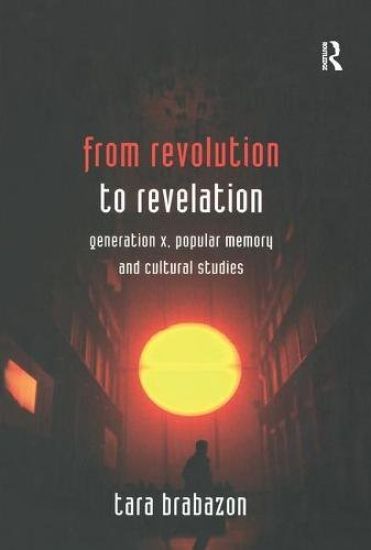
From Revolution to Revelation

From Revolution to Revelation

Tara Brabazon

Routledge
2017
sidottu
From Revolution to Revelation offers a new paradigm for Cultural Studies. Tara Brabazon explores our understanding of our own past and the collective past we share with others through popular culture. She investigates Generation X, thepost-youth generation born between 1961 and 1981, and the popular cultural literacies that are the basis of this imagining community. She looks at the ways in which popular culture offers a vehicle for memory, providing the building blocks of identity - the politics and passion of life captured in an unforgettable song, an amazing nightclub, or an unexpected goal in extra time. For a fan, the joy and exhilaration is enough, but it is the task of cultural studies to understand why particular cultural forms survive the passage of time and space. Brabazon argues, with Lawrence Grossberg, that Cultural Studies isthe Generation X of the academic world. She tracks its journey away from Marxism and subcultural theory and looks at its future. In particular she explores the possibilities of popular memory studies in reclaiming and repairing the discipline of Cultural Studies - making it as relevant and as revelatory as in its revolutionary past.
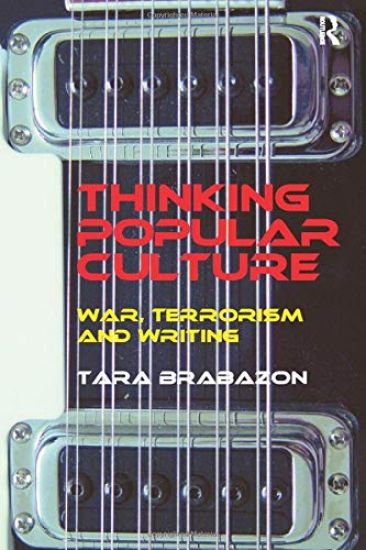
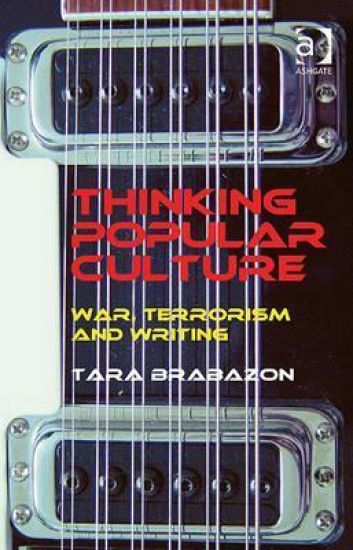
Thinking Popular Culture

Thinking Popular Culture

Tara Brabazon

Routledge
2016
nidottu
This book is about war and popular culture, and war in popular culture. Tara Brabazon summons, probes, questions and reclaims popular culture, challenging the assumptions of war, whiteness, Christianity, modernity and progress that have dominated our lives since September 11. Addressing modes of thinking, design, music and visual media, Thinking Popular Culture offers a journey through courageous, interventionist and thoughtful ideas, performers and cultures. It welcomes those who ask difficult questions of those in power. Addressing the lack of imagination and dissent that characterizes this new century, it is essential reading for any scholar of cultural studies and popular culture, media and journalism, creative writing and terrorism studies.
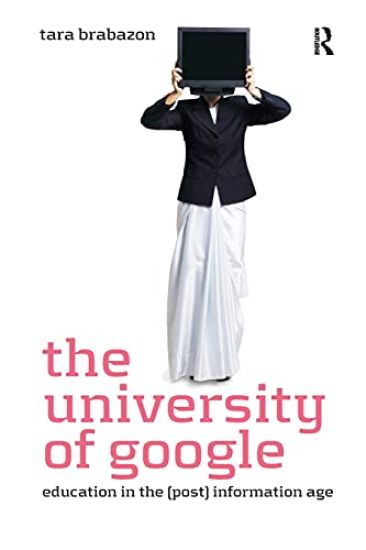
The University of Google

The University of Google

Tara Brabazon

Routledge
2016
nidottu
Looking at schools and universities, it is difficult to pinpoint when education, teaching and learning started to haemorrhage purpose, aspiration and function. Libraries and librarians have been starved of funding. Teachers cram their curriculum with 'skill development' and 'generic competencies' because knowledge, creativity and originality are too expensive to provide to unmotivated students and parents obsessed with league tables, not learning. Meanwhile, the internet offers a glut of information on everything-under-the-sun, a mere mouse-click away. Bored surfers fill their cursors and minds with irrelevancies. We lose the capacity to sift, discard and judge. Information is no longer for social good, but for sale. Tara Brabazon argues that this information fetish has been profoundly damaging to our learning institutions and to the ambitions of our students and educators. In The University of Google she projects a defiant and passionate vision of education as a pathway to renewal, where research is based on searching and students are on a journey through knowledge, rather than consumers in the shopping centre of cheap ideas. Angry, humorous and practical in equal measure, The University of Google is based on real teaching experience and on years of engaged and sometimes exasperated reflection on it. It is far from a luddite critique of the information age. Tara Brabazon celebrates the possibilities of digital platforms in education, but deplores the consequences of placing funding on technology and not teachers. In doing so, she opens a new debate on how to make our educational system both productive and provocative in the (post-) information age.
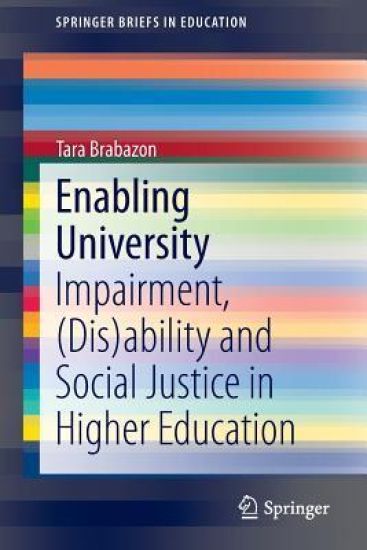
Enabling University

Enabling University

Tara Brabazon

Springer International Publishing AG
2015
nidottu
This work takes the most recent, interdisciplinary research and demonstrates how to make higher education institutions open, accessible and socially just for staff and students with disabilities. Combining the scholarly fields of media platform management, information literacy, internet studies, mobility studies and disability studies, this book offers a guide and method to consider how students and staff with differing needs move through university processes, spaces and interfaces. It captures the challenges and potentials of both the online and offline university. The key concept of the book is universal design. This term and theory is used to move beyond the medical and social model of disability that disconnect and separate the issues of disability and impairment from core societal concerns. This book confirms that most of us will be touched by impairment through our lives. When matched with the necessity to retrain and gain new skills for a post-recession future, there must be a renewed commitment to not only the widening participation agenda of higher education, but also the enabling of universities for men and women with impairments.
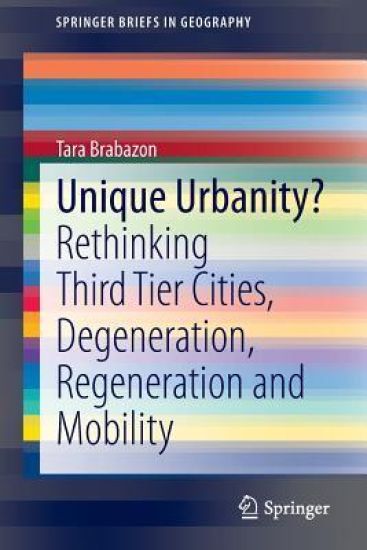
Unique Urbanity?

Unique Urbanity?

Tara Brabazon

Springer Verlag, Singapore
2014
nidottu
This book investigates small cities - cities and towns that are not well known or internationally branded, but are facing structural economic and social issues after the Global Financial Crisis. They need to invent, develop and manage new reasons for their existence. The strengths and opportunities are often underplayed when compared to larger cities. These small cities do not have the profile of New York, London, Tokyo or Cairo, or second-tier cities like San Francisco, Manchester, Osaka or Alexandria. This book traces the current state of the creative industries literature after the GFC, but with a specific focus. The specific – and worsening – conditions in third-tier cities are logged. The social and economic challenges within these regions are great, particularly with regard to health and health services, education, employment, social mobility and physical activity. This is not a study that merely diagnoses problems but raises strategies for third-tier cities to create both a profile and growth. The current research field is synthesized to reveal how cities are defined, constituted, developed and, in many cases, suffering decline. There is an imperative to build relationships with other urban environments. The book enters these under-discussed locations and reveal the scarred layering of injustice, signified by depopulation, dis-investment, economic decline and a reduction in public services for health, transportation and education, while also developing specific and innovative models for improvement. The vista summoned in Unique Urbanity is international, with strong attention to trans-local strategies that offer wide relevance, currency and opportunities for policy makers. While third-tier cities are often hidden, marginalized, invisible or demeaned, Unique Urbanity shows that innovation, imagination and creativity can emerge in small places.
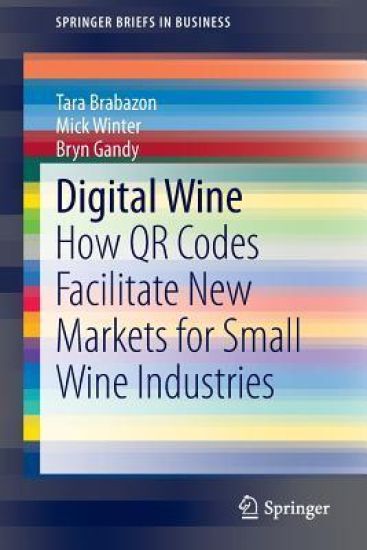
Digital Wine

Digital Wine

Tara Brabazon; Mick Winter; Bryn Gandy

Springer Verlag, Singapore
2014
nidottu
This book explores the way in which QR codes (Quick Response codes) can help the wine industry facilitate distribution and more effectively market and sell their product. It examines the interventions, invention and opportunities brought about by QR codes for the wine industry. It also investigates how QR codes can help enable regional development as well as information and knowledge about winemakers and regions. The book begins with an introduction to QR codes. It explains how to use them as well as shows how QR codes combine analogue and online promotion and information dissemination. Next, the book explores strategies and examples from the creative industries, small nation theory and emerging wine industries. It then goes on to examine how to integrate QR codes with wine media, including marketing the bottle and using QR codes to build new wine regions. The book concludes with a case study of how Aotearoa/New Zealand wine producers deploy QR codes. QR codes can store and digitally present, a range of helpful data, including URL links, geo-coordinates and text and can be scanned by smart phones, making them a useful marketing and business tool. Presenting detail research on how QR codes can enhance the relationship between producers and consumers as well as aid regional development in the wine industry, this book will be of interest to academics focusing on Wine Studies, small and medium sized enterprises (SMEs) and practitioners and researchers from the creative industries sector. In addition, while this book focuses on the wine industry, the information that it presents about QR codes is relevant and applicable for an array of industries that require a tether between analogue and digital, physical and virtual, especially food and primary production.
Digital Dieting

Digital Dieting

Tara Brabazon

Routledge
2013
sidottu
Imagine if a student spent as much time managing information as celebrities doted on dieting? While eating too much food may be the basis of a moral panic about obesity, excessive information is rarely discussed as a crisis of a similar scale. Obviously, plentiful and high quality food is not a problem if eating is balanced with exercise. But without the skills of media and information literacy, students and citizens wade through low quality online information that fills their day yet does not enable intellectual challenge, imagination and questioning. Digital Dieting: From Information Obesity to Intellectual Fitness probes the social, political and academic difficulties in managing large quantities of low quality information. But this book does not diagnose a crisis. Instead, Digital Dieting provides strategies to develop intellectual fitness that sorts the important from the irrelevant and the remarkable from the banal. In April 2010, and for the first time, Facebook received more independent visitors than Google. Increasingly there is a desire to share rather than search. But what is the impact of such a change on higher education? If students complain that the reading is ’too hard’, then one response is to make it easier. If students complain that assignments are too difficult, then one way to manage this challenge is to make the assignments simpler. Both are passive responses that damage the calibre of education and universities in the long term. Digital Dieting: From Information Obesity to Intellectual Fitness provides active, conscious, careful and applicable strategies to move students and citizens from searching to researching, sharing to thinking, and shopping to reading.
Popular Music

Popular Music

Tara Brabazon

SAGE Publications Ltd
2011
sidottu
An incredibly wide-ranging critical account of popular music. The book is an essential resource for all staff and students in the field' - John Storey, Centre for Research in Media and Cultural Studies, University of Sunderland Organized in accessible sections and covering the main themes of research and teaching it examines: • The key approaches to understanding popular music • The main settings of exchange and consumption • The role of technology in the production of popular music • The main genres of popular music • The key debates of the present day Barbazon writes with verve and penetration. Her approach starts with how most people actually consume music today and transfers this onto the plain of study. The book enables teachers and students to shuffle from one topic to the other whilst providing an unparalleled access the core concepts and issues. As such, it is the perfect study guide for undergraduates located in this exciting and expanding field. Tara Brabazon is Professor of Communication at University of Ontario Institute of Technology (UOIT).
Popular Music

Popular Music

Tara Brabazon

SAGE Publications Ltd
2011
nidottu
An incredibly wide-ranging critical account of popular music. The book is an essential resource for all staff and students in the field' - John Storey, Centre for Research in Media and Cultural Studies, University of Sunderland Organized in accessible sections and covering the main themes of research and teaching it examines: • The key approaches to understanding popular music • The main settings of exchange and consumption • The role of technology in the production of popular music • The main genres of popular music • The key debates of the present day Barbazon writes with verve and penetration. Her approach starts with how most people actually consume music today and transfers this onto the plain of study. The book enables teachers and students to shuffle from one topic to the other whilst providing an unparalleled access the core concepts and issues. As such, it is the perfect study guide for undergraduates located in this exciting and expanding field. Tara Brabazon is Professor of Communication at University of Ontario Institute of Technology (UOIT).
Thinking Popular Culture

Thinking Popular Culture

Tara Brabazon

Ashgate Publishing Limited
2008
sidottu
This book is about war and popular culture, and war in popular culture. Tara Brabazon summons, probes, questions and reclaims popular culture, challenging the assumptions of war, whiteness, Christianity, modernity and progress that have dominated our lives since September 11. Addressing modes of thinking, design, music and visual media, Thinking Popular Culture offers a journey through courageous, interventionist and thoughtful ideas, performers and cultures. It welcomes those who ask difficult questions of those in power. Addressing the lack of imagination and dissent that characterizes this new century, it is essential reading for any scholar of cultural studies and popular culture, media and journalism, creative writing and terrorism studies.
Playing on the Periphery

Playing on the Periphery

Tara Brabazon

Routledge
2008
nidottu
Part of the Sport in the Global Society series, this innovative and creative text explores collective history, memory, and sport culture, tracking the passage of sports away from England. The author investigates why ‘elite’ English sports – such as rugby and cricket – became national sports in New Zealand and Australia, and asks why ‘working class’ English sports – such as football – have travelled less well to these areas. Focusing on these sports, the author tracks narratives and myths, tracing the passage of colonial truths, behaviours and practices.Clearly defined sections in the book focus on:* sport and tourism* sport and history* sport and memory.Using a refreshingly broad range of sources to analyze differences between popular culture and sporting memory, this book offers new perspectives on sport and makes an interesting reference for masters and postgraduate readers in sport and cultural studies.
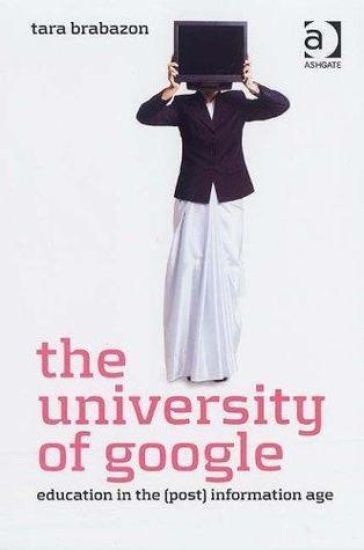
The University of Google

The University of Google

Tara Brabazon

Ashgate Publishing Limited
2007
sidottu
Looking at schools and universities, it is difficult to pinpoint when education, teaching and learning started to haemorrhage purpose, aspiration and function. Libraries and librarians have been starved of funding. Teachers cram their curriculum with 'skill development' and 'generic competencies' because knowledge, creativity and originality are too expensive to provide to unmotivated students and parents obsessed with league tables, not learning. Meanwhile, the internet offers a glut of information on everything-under-the-sun, a mere mouse-click away. Bored surfers fill their cursors and minds with irrelevancies. We lose the capacity to sift, discard and judge. Information is no longer for social good, but for sale. Tara Brabazon argues that this information fetish has been profoundly damaging to our learning institutions and to the ambitions of our students and educators. In The University of Google she projects a defiant and passionate vision of education as a pathway to renewal, where research is based on searching and students are on a journey through knowledge, rather than consumers in the shopping centre of cheap ideas. Angry, humorous and practical in equal measure, The University of Google is based on real teaching experience and on years of engaged and sometimes exasperated reflection on it. It is far from a luddite critique of the information age. Tara Brabazon celebrates the possibilities of digital platforms in education, but deplores the consequences of placing funding on technology and not teachers. In doing so, she opens a new debate on how to make our educational system both productive and provocative in the (post-) information age.
Playing on the Periphery

Playing on the Periphery

Tara Brabazon

Routledge
2006
sidottu
Part of the Sport in the Global Society series, this innovative and creative text explores collective history, memory, and sport culture, tracking the passage of sports away from England. The author investigates why ‘elite’ English sports – such as rugby and cricket – became national sports in New Zealand and Australia, and asks why ‘working class’ English sports – such as football – have travelled less well to these areas. Focusing on these sports, the author tracks narratives and myths, tracing the passage of colonial truths, behaviours and practices.Clearly defined sections in the book focus on:* sport and tourism* sport and history* sport and memory.Using a refreshingly broad range of sources to analyze differences between popular culture and sporting memory, this book offers new perspectives on sport and makes an interesting reference for masters and postgraduate readers in sport and cultural studies.
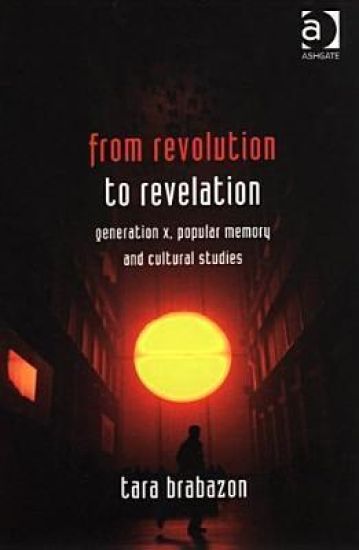
From Revolution to Revelation

From Revolution to Revelation

Tara Brabazon

Ashgate Publishing Limited
2005
nidottu
From Revolution to Revelation offers a new paradigm for Cultural Studies. Tara Brabazon explores our understanding of our own past and the collective past we share with others through popular culture. She investigates Generation X, the ’post-youth’ generation born between 1961 and 1981, and the popular cultural literacies that are the basis of this imagining community. She looks at the ways in which popular culture offers a vehicle for memory, providing the building blocks of identity - the politics and passion of life captured in an unforgettable song, an amazing nightclub, or an unexpected goal in extra time. For a fan, the joy and exhilaration is enough, but it is the task of cultural studies to understand why particular cultural forms survive the passage of time and space. Brabazon argues, with Lawrence Grossberg, that Cultural Studies is ’the Generation X of the academic world’. She tracks its journey away from Marxism and subcultural theory and looks at its future. In particular she explores the possibilities of popular memory studies in reclaiming and repairing the discipline of Cultural Studies - making it as relevant and as revelatory as in its revolutionary past.