Kirjojen hintavertailu. Mukana 12 390 323 kirjaa ja 12 kauppaa.

Kirjailija

Tara Fenwick

Kirjat ja teokset yhdessä paikassa: 6 kirjaa, julkaisuja vuosilta 2010-2016, suosituimpien joukossa Professional Responsibility and Professionalism. Vertaile teosten hintoja ja tarkista saatavuus suomalaisista kirjakaupoista.

6 kirjaa

Kirjojen julkaisuhaarukka 2010-2016.

Professional Responsibility and Professionalism
Responsibility and professionalism are increasingly issues of concern for professional associations, employers and educators alike. When bad things happen, professionals are often held personally accountable for complex situations. Professional Responsibility and Professionalism advances our approaches to professional responsibility from individual-centred, virtue-based prescriptions towards understanding and responding effectively to the multifaceted challenges encountered today by professionals working in dynamic complexity. The author applies a sociomaterial examination to specific examples drawn from different professional contexts of practice. She examines important implications for what professional responsibility and accountability might mean individually and collectively, and what it might be becoming when demands increasingly conflict, and when we accept that capacities for action are performed into existence in emergent and precarious webs of both human and non-human forces.The chapters explore some of the most prominent questions in professional responsibility, including:What does professional responsibility, and accountability, mean in the escalating complexities and conflicts confronting today’s professionals?How does professional responsibility become developed and enacted, and through what social and material entanglements?How should responsibility be determined in multi-agency and interprofessional practice?What happens when professional decisions are delegated to software algorithms and diagnostic instruments?How are new governing regimes of professional work, such as innovation imperatives, excessive audit and logics of blame and scapegoating, reconfiguring responsibility?How can professionals respond simultaneously to individuals in need, the obligations of their profession, the demands of their employer and an anxious society?A major concern addressed by each chapter, and the book as a whole, is educating professionals in and for responsibility. Specific dilemmas and strategies are offered for educators in universities, workplaces and professional development contexts who seek new approaches to helping professionals learn to critically understand and practise responsibility today.This book will appeal to a wide audience of education researchers and post-graduate students studying professional practice, professionalism and education across a wide range of disciplines. Health professionals, professionals working in private practices, such as law, architecture and engineering, newer professions such as social work and policing, and educational professionals at all levels will find stories and strategies reflecting key issues of their practice in this detailed exploration of professional responsibility and accountability.
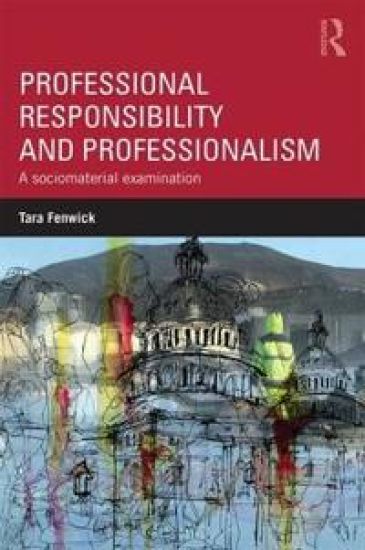
Professional Responsibility and Professionalism
Responsibility and professionalism are increasingly issues of concern for professional associations, employers and educators alike. When bad things happen, professionals are often held personally accountable for complex situations. Professional Responsibility and Professionalism advances our approaches to professional responsibility from individual-centred, virtue-based prescriptions towards understanding and responding effectively to the multifaceted challenges encountered today by professionals working in dynamic complexity. The author applies a sociomaterial examination to specific examples drawn from different professional contexts of practice. She examines important implications for what professional responsibility and accountability might mean individually and collectively, and what it might be becoming when demands increasingly conflict, and when we accept that capacities for action are performed into existence in emergent and precarious webs of both human and non-human forces.The chapters explore some of the most prominent questions in professional responsibility, including:What does professional responsibility, and accountability, mean in the escalating complexities and conflicts confronting today’s professionals?How does professional responsibility become developed and enacted, and through what social and material entanglements?How should responsibility be determined in multi-agency and interprofessional practice?What happens when professional decisions are delegated to software algorithms and diagnostic instruments?How are new governing regimes of professional work, such as innovation imperatives, excessive audit and logics of blame and scapegoating, reconfiguring responsibility?How can professionals respond simultaneously to individuals in need, the obligations of their profession, the demands of their employer and an anxious society?A major concern addressed by each chapter, and the book as a whole, is educating professionals in and for responsibility. Specific dilemmas and strategies are offered for educators in universities, workplaces and professional development contexts who seek new approaches to helping professionals learn to critically understand and practise responsibility today.This book will appeal to a wide audience of education researchers and post-graduate students studying professional practice, professionalism and education across a wide range of disciplines. Health professionals, professionals working in private practices, such as law, architecture and engineering, newer professions such as social work and policing, and educational professionals at all levels will find stories and strategies reflecting key issues of their practice in this detailed exploration of professional responsibility and accountability.
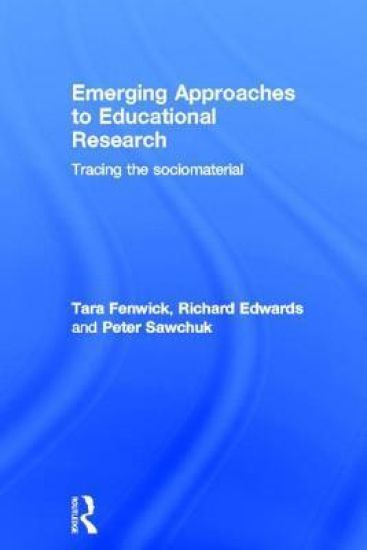
Emerging Approaches to Educational Research

Emerging Approaches to Educational Research

Tara Fenwick; Richard Edwards; Peter Sawchuk

Routledge
2011
nidottu
The last fifteen years have seen much conceptual and methodological innovation in research on education and learning across the lifecourse, bringing both fresh insights and new dilemmas. This innovation was initially fuelled by the growing influence of conceptual framings often named as either post-structural or postmodern. The works of Foucault, Derrida and Lyotard have variously found their way into the canons of educational research, and in more recent years, the influence of the work of Deleuze and Guattari has also grown. This work has proved controversial both in the challenges it has raised for the purposes and practices of education and training but also over the assumptions underpinning such work.As part of and also in response to the influence of post-structuralism and postmodernism in the social sciences, there have emerged and developed a further range of conceptual and methodological framings which are more relational, system and practice-focussed. Several of these framings work with a non-linear understanding of causality and embrace unpredictability in the world and undecidability in our understanding of it. They also challenge any notion of a strong boundary between the social and natural sciences. This book explores the most significant four of these framings, how they are being taken up in research in education and learning across the lifecourse, as well as their possibilities and limitations: complexity science cultural historical activity theory (CHAT) actor-network theory (ANT) spatiality theories.Illustrated throughout with examples drawn from educational contexts across the life courses, including schooling, post-compulsory education and training, educational policy, workplace and community-based education in North America, the UK, and Australia this vital guide to understanding fresh ways of conducting and understanding educational research will prove essential reading for everyone undertaking educational research in the modern world.
Emerging Approaches to Educational Research

Emerging Approaches to Educational Research

Tara Fenwick; Richard Edwards; Peter Sawchuk

Routledge
2011
sidottu
The last fifteen years have seen much conceptual and methodological innovation in research on education and learning across the lifecourse, bringing both fresh insights and new dilemmas. This innovation was initially fuelled by the growing influence of conceptual framings often named as either post-structural or postmodern. The works of Foucault, Derrida and Lyotard have variously found their way into the canons of educational research, and in more recent years, the influence of the work of Deleuze and Guattari has also grown. This work has proved controversial both in the challenges it has raised for the purposes and practices of education and training but also over the assumptions underpinning such work.As part of and also in response to the influence of post-structuralism and postmodernism in the social sciences, there have emerged and developed a further range of conceptual and methodological framings which are more relational, system and practice-focussed. Several of these framings work with a non-linear understanding of causality and embrace unpredictability in the world and undecidability in our understanding of it. They also challenge any notion of a strong boundary between the social and natural sciences. This book explores the most significant four of these framings, how they are being taken up in research in education and learning across the lifecourse, as well as their possibilities and limitations: complexity science cultural historical activity theory (CHAT) actor-network theory (ANT) spatiality theories.Illustrated throughout with examples drawn from educational contexts across the life courses, including schooling, post-compulsory education and training, educational policy, workplace and community-based education in North America, the UK, and Australia this vital guide to understanding fresh ways of conducting and understanding educational research will prove essential reading for everyone undertaking educational research in the modern world.
Actor-Network Theory in Education

Actor-Network Theory in Education

Tara Fenwick; Richard Edwards

Routledge
2010
sidottu
Actor-Network Theory (ANT) has enjoyed wide uptake in the social sciences in the past three decades, particularly in science and technology studies, and is increasingly attracting the attention of educational researchers. ANT studies bring to the fore the material – objects of all kinds – and de-centre the human and the social in educational issues. ANT sensibilities are interested in the ways human and non-human elements become interwoven. Since its first introduction, actor-network theory has undergone significant shifts and evolutions and as a result, it is not considered to be a single or coherent theoretical domain, but as developing diversely in response to various challenges.This book offers an introduction to Actor-Network Theory for educators to consider in three ways. One mode is the introduction of concepts, approaches and debates around Actor-Network Theory as a research approach in education. A second mode showcases educational studies that have employed ANT approaches in classrooms, workplaces and community settings, drawn from the UK, USA, Canada, Europe and Australia. These demonstrate how ANT can operate in highly diverse ways whether it focuses on policy critique, curriculum inquiry, engagements with digital media, change and innovation, issues of accountability, or exploring how knowledge unfolds and becomes materialized in various settings. A third mode looks at recent 'after-ANT' inquiries which open an array of important new approaches. Across these diverse environments and uptakes, the authors trace how learning and practice emerge, show what scales are at play, and demonstrate what this means for educational possibilities.
Actor-Network Theory in Education

Actor-Network Theory in Education

Tara Fenwick; Richard Edwards

Routledge
2010
nidottu
Actor-Network Theory (ANT) has enjoyed wide uptake in the social sciences in the past three decades, particularly in science and technology studies, and is increasingly attracting the attention of educational researchers. ANT studies bring to the fore the material – objects of all kinds – and de-centre the human and the social in educational issues. ANT sensibilities are interested in the ways human and non-human elements become interwoven. Since its first introduction, actor-network theory has undergone significant shifts and evolutions and as a result, it is not considered to be a single or coherent theoretical domain, but as developing diversely in response to various challenges.This book offers an introduction to Actor-Network Theory for educators to consider in three ways. One mode is the introduction of concepts, approaches and debates around Actor-Network Theory as a research approach in education. A second mode showcases educational studies that have employed ANT approaches in classrooms, workplaces and community settings, drawn from the UK, USA, Canada, Europe and Australia. These demonstrate how ANT can operate in highly diverse ways whether it focuses on policy critique, curriculum inquiry, engagements with digital media, change and innovation, issues of accountability, or exploring how knowledge unfolds and becomes materialized in various settings. A third mode looks at recent 'after-ANT' inquiries which open an array of important new approaches. Across these diverse environments and uptakes, the authors trace how learning and practice emerge, show what scales are at play, and demonstrate what this means for educational possibilities.