Kirjojen hintavertailu. Mukana 12 226 111 kirjaa ja 12 kauppaa.

Kirjailija

Tarek Masoud

Kirjat ja teokset yhdessä paikassa: 4 kirjaa, julkaisuja vuosilta 2014-2015, suosituimpien joukossa The Arab Spring. Vertaile teosten hintoja ja tarkista saatavuus suomalaisista kirjakaupoista.

4 kirjaa

Kirjojen julkaisuhaarukka 2014-2015.

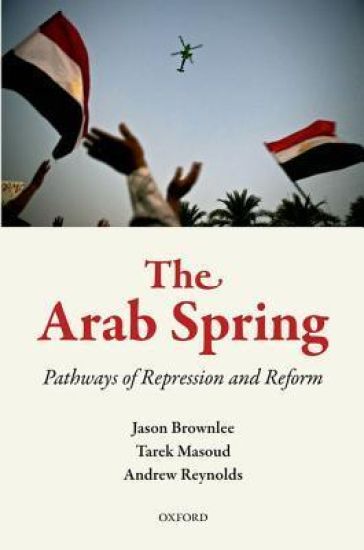
The Arab Spring

The Arab Spring

Jason Brownlee; Tarek Masoud; Andrew Reynolds

Oxford University Press
2015
sidottu
Several years after the Arab Spring began, democracy remains elusive in the Middle East. The Arab Spring that resides in the popular imagination is one in which a wave of mass mobilization swept the broader Middle East, toppled dictators, and cleared the way for democracy. The reality is that few Arab countries have experienced anything of the sort. While Tunisia made progress towards some type of constitutionally entrenched participatory rule, the other countries that overthrew their rulersEgypt, Yemen, and Libyaremain mired in authoritarianism and instability. Elsewhere in the Arab world uprisings were suppressed, subsided or never materialized. The Arab Springs modest harvest cries out for explanation. Why did regime change take place in only four Arab countries and why has democratic change proved so elusive in the countries that made attempts? This book attempts to answer those questions. First, by accounting for the full range of variance: from the absence or failure of uprisings in such places as Algeria and Saudi Arabia at one end to Tunisias rocky but hopeful transition at the other. Second, by examining the deep historical and structure variables that determined the balance of power between incumbents and opposition. Brownlee, Masoud, and Reynolds find that the success of domestic uprisings depended on the absence of a hereditary executive and a dearth of oil rents. Structural factors also cast a shadow over the transition process. Even when opposition forces toppled dictators, prior levels of socioeconomic development and state strength shaped whether nascent democracy, resurgent authoritarianism, or unbridled civil war would follow.
The Arab Spring

The Arab Spring

Jason Brownlee; Tarek Masoud; Andrew Reynolds

Oxford University Press
2015
nidottu
Several years after the Arab Spring began, democracy remains elusive in the Middle East. The Arab Spring that resides in the popular imagination is one in which a wave of mass mobilization swept the broader Middle East, toppled dictators, and cleared the way for democracy. The reality is that few Arab countries have experienced anything of the sort. While Tunisia made progress towards some type of constitutionally entrenched participatory rule, the other countries that overthrew their rulersEgypt, Yemen, and Libyaremain mired in authoritarianism and instability. Elsewhere in the Arab world uprisings were suppressed, subsided or never materialized. The Arab Springs modest harvest cries out for explanation. Why did regime change take place in only four Arab countries and why has democratic change proved so elusive in the countries that made attempts? This book attempts to answer those questions. First, by accounting for the full range of variance: from the absence or failure of uprisings in such places as Algeria and Saudi Arabia at one end to Tunisias rocky but hopeful transition at the other. Second, by examining the deep historical and structure variables that determined the balance of power between incumbents and opposition. Brownlee, Masoud, and Reynolds find that the success of domestic uprisings depended on the absence of a hereditary executive and a dearth of oil rents. Structural factors also cast a shadow over the transition process. Even when opposition forces toppled dictators, prior levels of socioeconomic development and state strength shaped whether nascent democracy, resurgent authoritarianism, or unbridled civil war would follow.
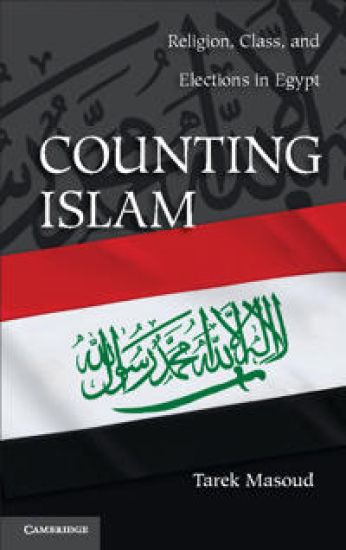
Counting Islam

Counting Islam

Tarek Masoud

Cambridge University Press
2014
sidottu
Why does Islam seem to dominate Egyptian politics, especially when the country's endemic poverty and deep economic inequality would seem to render it promising terrain for a politics of radical redistribution rather than one of religious conservativism? This book argues that the answer lies not in the political unsophistication of voters, the subordination of economic interests to spiritual ones, or the ineptitude of secular and leftist politicians, but in organizational and social factors that shape the opportunities of parties in authoritarian and democratizing systems to reach potential voters. Tracing the performance of Islamists and their rivals in Egyptian elections over the course of almost forty years, this book not only explains why Islamists win elections, but illuminates the possibilities for the emergence in Egypt of the kind of political pluralism that is at the heart of what we expect from democracy.
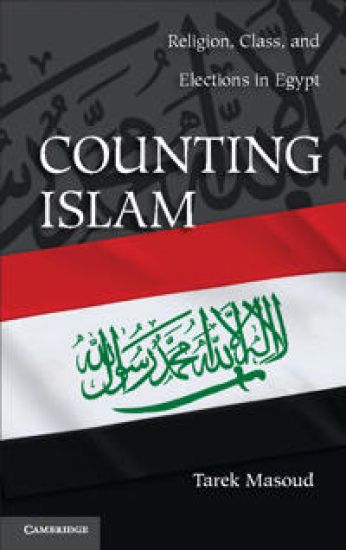
Counting Islam

Counting Islam

Tarek Masoud

Cambridge University Press
2014
pokkari
Why does Islam seem to dominate Egyptian politics, especially when the country's endemic poverty and deep economic inequality would seem to render it promising terrain for a politics of radical redistribution rather than one of religious conservativism? This book argues that the answer lies not in the political unsophistication of voters, the subordination of economic interests to spiritual ones, or the ineptitude of secular and leftist politicians, but in organizational and social factors that shape the opportunities of parties in authoritarian and democratizing systems to reach potential voters. Tracing the performance of Islamists and their rivals in Egyptian elections over the course of almost forty years, this book not only explains why Islamists win elections, but illuminates the possibilities for the emergence in Egypt of the kind of political pluralism that is at the heart of what we expect from democracy.