Kirjojen hintavertailu. Mukana 12 137 452 kirjaa ja 12 kauppaa.

Kirjailija

Tariq Modood

Kirjat ja teokset yhdessä paikassa: 9 kirjaa, julkaisuja vuosilta 2005-2024, suosituimpien joukossa Essays on Secularism and Multiculturalism. Vertaile teosten hintoja ja tarkista saatavuus suomalaisista kirjakaupoista.

9 kirjaa

Kirjojen julkaisuhaarukka 2005-2024.

The New Governance of Religious Diversity

The New Governance of Religious Diversity

Tariq Modood; Thomas Sealy

JOHN WILEY AND SONS LTD
2024
sidottu
Religious diversity is a key feature of countries across the world today, but it also presents governments with very real challenges. Controversies around religious free speech, symbols, social values and morals, and the role of faith leaders as critical voices, are just a few of the issues that have given rise to fierce social, political and scholarly debate. So how do states include and accommodate religious diversity and should this change? What are the key difficulties facing states when it comes to governing religious diversity? Understanding this complex phenomenon means thinking through secularism, liberalism, multiculturalism and nationalism in theory and practice. In this new book, Tariq Modood and Thomas Sealy draw on original research to present new ways of analysing the governance of religious diversity in different regions of the world. Identifying the key challenges at stake, they also argue for a new statement of multiculturalism in relation to the governance of religious diversity, that of ‘multiculturalised secularism’, which represents a constructive and productive response to the reality of religiously plural societies.
The New Governance of Religious Diversity

The New Governance of Religious Diversity

Tariq Modood; Thomas Sealy

JOHN WILEY AND SONS LTD
2024
nidottu
Religious diversity is a key feature of countries across the world today, but it also presents governments with very real challenges. Controversies around religious free speech, symbols, social values and morals, and the role of faith leaders as critical voices, are just a few of the issues that have given rise to fierce social, political and scholarly debate. So how do states include and accommodate religious diversity and should this change? What are the key difficulties facing states when it comes to governing religious diversity? Understanding this complex phenomenon means thinking through secularism, liberalism, multiculturalism and nationalism in theory and practice. In this new book, Tariq Modood and Thomas Sealy draw on original research to present new ways of analysing the governance of religious diversity in different regions of the world. Identifying the key challenges at stake, they also argue for a new statement of multiculturalism in relation to the governance of religious diversity, that of ‘multiculturalised secularism’, which represents a constructive and productive response to the reality of religiously plural societies.
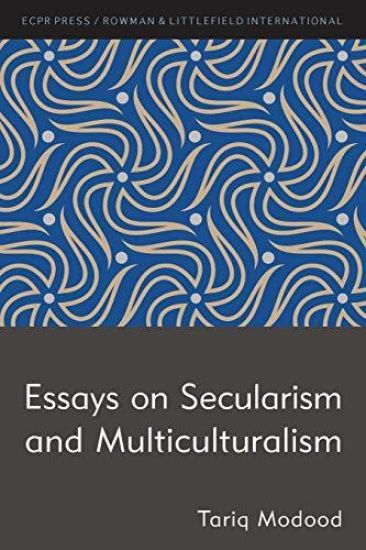
Essays on Secularism and Multiculturalism
Whether the recently settled religious minorities, Muslims, in particular, can be accommodated as religious groups in European countries has become a central political question and threatens to create long-term fault lines. In this collection of essays, Tariq Modood argues that to grasp the nature of the problem we have to see how Muslims have become a target of a cultural racism, Islamophobia. Yet, the problem is not just one of anti-racism but of an understanding of multicultural citizenship, of how minority identities, including those formed by race, ethnicity and religion, can be incorporated into national identities so all can have a sense of belonging together. This means that the tendency amongst some to exclude religious identities from public institutions and the re-making of national identities has to be challenged. Modood suggests that this can be done in a principled yet pragmatic way by drawing on Western Europe’s moderate political secularism and eschewing forms of secularism that offer religious groups a second-class citizenship.
Essays on Secularism and Multiculturalism
Whether the recently settled religious minorities, Muslims, in particular, can be accommodated as religious groups in European countries has become a central political question and threatens to create long-term fault lines. In this collection of essays, Tariq Modood argues that to grasp the nature of the problem we have to see how Muslims have become a target of a cultural racism, Islamophobia. Yet, the problem is not just one of anti-racism but of an understanding of multicultural citizenship, of how minority identities, including those formed by race, ethnicity and religion, can be incorporated into national identities so all can have a sense of belonging together. This means that the tendency amongst some to exclude religious identities from public institutions and the re-making of national identities has to be challenged. Modood suggests that this can be done in a principled yet pragmatic way by drawing on Western Europe’s moderate political secularism and eschewing forms of secularism that offer religious groups a second-class citizenship.
Multiculturalism

Multiculturalism

Tariq Modood

Polity Press
2013
nidottu
At a time when many public commentators are turning against multiculturalism in response to fears about militant Islam, immigration or social cohesion, Tariq Modood, one of the world's leading authorities on multiculturalism, provides a distinctive contribution to these debates. He contends that the rise of Islamic terrorism has neither discredited multiculturalism nor heralded a clash of civilizations. Instead, it has highlighted a central challenge for the 21st century - the urgent need to include Muslims in contemporary conceptions of democratic citizenship. In the second edition of this popular and compelling book, Modood updates his original argument with two new chapters. He reassesses the relationship between multiculturalism, cosmopolitanism and assimilation, demonstrating that multiculturalism is crucial for successful integration. He also argues that while multiculturalism poses a significant challenge to existing forms of secularism, this challenge should not be exaggerated into a crisis. In so doing, Modood adds new vigor to the claim that multiculturalism remains a living force which is shaping our polities, even as its death is repeatedly announced. This book will appeal to students, researchers and teachers of politics, sociology and public policy, as well as to anyone interested in the prospects of multiculturalism today.
Multiculturalism

Multiculturalism

Tariq Modood

Polity Press
2013
sidottu
At a time when many public commentators are turning against multiculturalism in response to fears about militant Islam, immigration or social cohesion, Tariq Modood, one of the world's leading authorities on multiculturalism, provides a distinctive contribution to these debates. He contends that the rise of Islamic terrorism has neither discredited multiculturalism nor heralded a clash of civilizations. Instead, it has highlighted a central challenge for the 21st century - the urgent need to include Muslims in contemporary conceptions of democratic citizenship. In the second edition of this popular and compelling book, Modood updates his original argument with two new chapters. He reassesses the relationship between multiculturalism, cosmopolitanism and assimilation, demonstrating that multiculturalism is crucial for successful integration. He also argues that while multiculturalism poses a significant challenge to existing forms of secularism, this challenge should not be exaggerated into a crisis. In so doing, Modood adds new vigor to the claim that multiculturalism remains a living force which is shaping our polities, even as its death is repeatedly announced. This book will appeal to students, researchers and teachers of politics, sociology and public policy, as well as to anyone interested in the prospects of multiculturalism today.
Multicultural Politics

Multicultural Politics

Tariq Modood; Craig Calhoun

University of Minnesota Press
2005
nidottu
If, as W. E. B. Du Bois observed, the problem of the twentieth century was the problem of the color line, the problem of the twenty-first century may be one that reaches back to premodernity: religious identity. Even before 9/11 it was becoming evident that Muslims, not blacks, were perceived as the "other" most threatening to Western society, even in a relatively pluralist nation such as Britain. In Multcultural Politics, one of the most respected thinkers on ethnic minority experience in England describes how what began as a black-white division has been complicated by cultural racism, Islamophobia, and a challenge to secular modernity. Tariq Modood explores the tensions that have risen among advocates of multiculturalism as Muslims assert themselves to catch up with existing equality agendas while challenging some of the secularist, liberal, and feminist assumptions of multiculturalists. If an Islam-West divide is to be avoided in our time, Modood suggests, then Britain, with its relatively successful ethnic pluralism and its easygoing attitude toward religion, will provide a particularly revealing case and promising site for understanding.
Multicultural Politics

Multicultural Politics

Tariq Modood

Edinburgh University Press
2005
nidottu
Muslims have come to be perceived as the 'Other' that is most threatening to British society. This book argues that what begins as a narrative of racial exclusion and black-white division has been complicated by cultural racism, Islamophobia and an unexpected challenge to secular modernity. Moreover, the idea of 'race' as underclass has had to contend with the creation of middle class formations and high levels of participation in higher education among some non-white groups. These plural divisions are not intractable but require us to rethink simplistic and monistic ideas about racism, secularism, liberalism and what it means to be British. Tariq Modood has developed a unique and influential perspective out of his sense that the concerns of South Asians lie at the heart of 'race relations' in Britain. This book gathers together a number of his key sociological, political and theoretical interventions, together with a substantial new Introduction and Conclusion, allowing readers to engage with a distinctive analysis of race and religion. Key Features: * Combines a discussion of racism and Muslim politics in Britain * Offers an interdisciplinary combination of empirical sociology with political theory of multiculturalism * Challenges the secularist bias of liberals and social scientists