Kirjojen hintavertailu. Mukana 12 151 724 kirjaa ja 12 kauppaa.

Kirjailija

Taylor Hagood

Kirjat ja teokset yhdessä paikassa: 12 kirjaa, julkaisuja vuosilta 2008-2024, suosituimpien joukossa Theodore Pratt. Vertaile teosten hintoja ja tarkista saatavuus suomalaisista kirjakaupoista.

12 kirjaa

Kirjojen julkaisuhaarukka 2008-2024.

Theodore Pratt

Theodore Pratt

Taylor Hagood

ROWMAN LITTLEFIELD
2024
sidottu
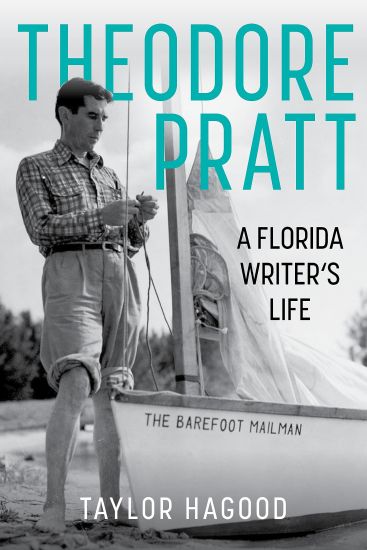
The author of fifteen books set in the Sunshine State, Theodore Pratt (1901-1969) enjoyed an unofficial title of "Literary Laureate of Florida" in the middle of the twentieth century. His writings particularly capture the culture of south Florida, most famously in his "Florida Trilogy"--beginning with his most famous book, The Barefoot Mailman (1943), and running through The Flame Tree (1948) and The Big Bubble (1949)-- which covers south Florida's transition from early pioneering days to glittering playground of the wealthy. Along with the trilogy, he wrote powerfully of the Florida Keys in Mercy Island (1941), the Everglades in Escape to Eden (1953), and Chief Osceola in an outdoor drama and novel both entitled Seminole (1953/1954). Pratt conducted research for his books that resulted in an archive useful to researchers today and a story/essay collection, Florida Roundabout (1959), that provides a deeply revealing portrait of poor whites in the state. This biography brings Pratt's life and career to Florida enthusiasts, educators, the young writers he targeted, and literary scholars who focus on southern literature, Florida literature, and middlebrow twentieth-century American film and literature. Written as a narrative in reader-friendly prose, the biography captures the nostalgia of vintage Florida, promising appeal to general readers.
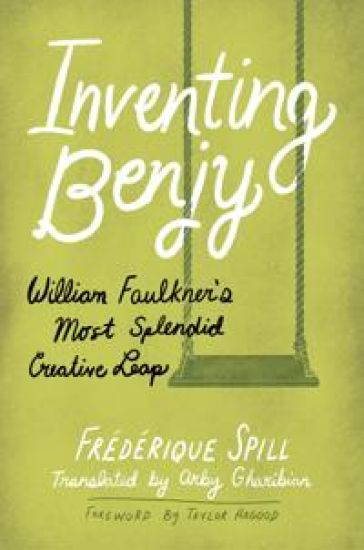
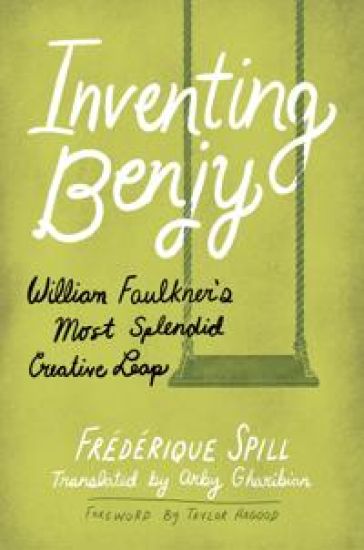
Inventing Benjy

Inventing Benjy

Frédérique Spill; Taylor Hagood

UNIVERSITY PRESS OF MISSISSIPPI
2024
sidottu
Inventing Benjy: William Faulkner’s Most Splendid Creative Leap is a groundbreaking work at the intersection of Faulkner studies and disability studies. Originally published in 2009 by Presses de la Sorbonne Nouvelle as L’Idiotie dans l’œuvre de Faulkner, this translation brings the book to English-language readers for the first time. Author Frédérique Spill begins with a sustained look at the monologue of Benjy Compson, the initial first-person narrator in Faulkner’s The Sound and the Fury. Spill questions the reasons for this narrative choice, bringing readers to consider Benjy’s monologue, which is told by a narrator who is deaf and cognitively disabled, as an impossible discourse. This paradoxical discourse, which relies mostly on senses and sensory perception, sets the foundation of a sophisticated poetics of idiocy. Using this form of writing, Faulkner shaped perspective from a disabled character, revealing a certain depth to characters that were previously only portrayed on a shallow level. This style encompasses some of the most striking forms and figures of his leap into modern(ist) writing. In that respect, Inventing Benjy thoroughly examines Benjy’s discourse as an experimental workshop in which objects and words are exclusively modelled by the senses. This study regards Faulkner’s decision to place a disabled character at the center of perception as the inaugural and emblematic gesture of his writing. Closely examining excerpts from Faulkner’s novels and a few short stories, Spill emphasizes how the corporal, temporal, sensorial, and narrative figures of "idiocy" are reflected throughout Faulkner’s work. These writing choices underlie some of his most compelling inventions and certainly contribute to his unmistakable writing style. In the process, Faulkner’s writing takes on a phenomenological dimension, simultaneously dismantling and reinventing the intertwined dynamics of perception and language.
Inventing Benjy

Inventing Benjy

Frédérique Spill; Taylor Hagood

UNIVERSITY PRESS OF MISSISSIPPI
2024
pokkari
Inventing Benjy: William Faulkner’s Most Splendid Creative Leap is a groundbreaking work at the intersection of Faulkner studies and disability studies. Originally published in 2009 by Presses de la Sorbonne Nouvelle as L’Idiotie dans l’œuvre de Faulkner, this translation brings the book to English-language readers for the first time. Author Frédérique Spill begins with a sustained look at the monologue of Benjy Compson, the initial first-person narrator in Faulkner’s The Sound and the Fury. Spill questions the reasons for this narrative choice, bringing readers to consider Benjy’s monologue, which is told by a narrator who is deaf and cognitively disabled, as an impossible discourse. This paradoxical discourse, which relies mostly on senses and sensory perception, sets the foundation of a sophisticated poetics of idiocy. Using this form of writing, Faulkner shaped perspective from a disabled character, revealing a certain depth to characters that were previously only portrayed on a shallow level. This style encompasses some of the most striking forms and figures of his leap into modern(ist) writing. In that respect, Inventing Benjy thoroughly examines Benjy’s discourse as an experimental workshop in which objects and words are exclusively modelled by the senses. This study regards Faulkner’s decision to place a disabled character at the center of perception as the inaugural and emblematic gesture of his writing. Closely examining excerpts from Faulkner’s novels and a few short stories, Spill emphasizes how the corporal, temporal, sensorial, and narrative figures of "idiocy" are reflected throughout Faulkner’s work. These writing choices underlie some of his most compelling inventions and certainly contribute to his unmistakable writing style. In the process, Faulkner’s writing takes on a phenomenological dimension, simultaneously dismantling and reinventing the intertwined dynamics of perception and language.
Stringbean

Stringbean

Taylor Hagood

UNIVERSITY OF ILLINOIS PRESS
2023
nidottu
The artist’s impact on country music and how his death changed the genre A beloved member of the country music community, David “Stringbean” Akeman found nationwide fame as a cast member of Hee Haw. The 1973 murder of Stringbean and his wife forever changed Nashville’s sense of itself. Millions of others mourned not only the slain couple but the passing of the way of life that country music had long represented. Taylor Hagood merges the story of Stringbean’s life with an account of murder and courtroom drama. Mentored by Uncle Dave Macon and Bill Monroe, Stringbean was a bridge to country’s early days. His instrumental savvy and old-time singing style drew upon a deep love for traditional country music that, along with his humor and humanity, won him the reverence of younger artists and made his violent death all the more shocking. Hagood delves into the unexpected questions and uneasy resolutions raised by the atmosphere of retribution surrounding the murder trial and recounts the redemption story that followed decades later.
Stringbean

Stringbean

Taylor Hagood

UNIVERSITY OF ILLINOIS PRESS
2023
sidottu
The artist’s impact on country music and how his death changed the genre A beloved member of the country music community, David “Stringbean” Akeman found nationwide fame as a cast member of Hee Haw. The 1973 murder of Stringbean and his wife forever changed Nashville’s sense of itself. Millions of others mourned not only the slain couple but the passing of the way of life that country music had long represented. Taylor Hagood merges the story of Stringbean’s life with an account of murder and courtroom drama. Mentored by Uncle Dave Macon and Bill Monroe, Stringbean was a bridge to country’s early days. His instrumental savvy and old-time singing style drew upon a deep love for traditional country music that, along with his humor and humanity, won him the reverence of younger artists and made his violent death all the more shocking. Hagood delves into the unexpected questions and uneasy resolutions raised by the atmosphere of retribution surrounding the murder trial and recounts the redemption story that followed decades later.
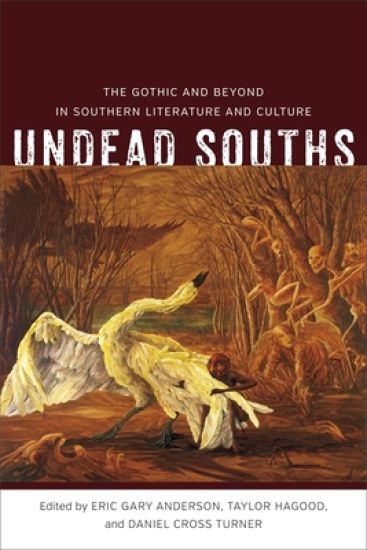
Undead Souths

Undead Souths

Eric Gary Anderson; Taylor Hagood; Daniel Cross Turner

LOUISIANA STATE UNIVERSITY PRESS
2022
pokkari
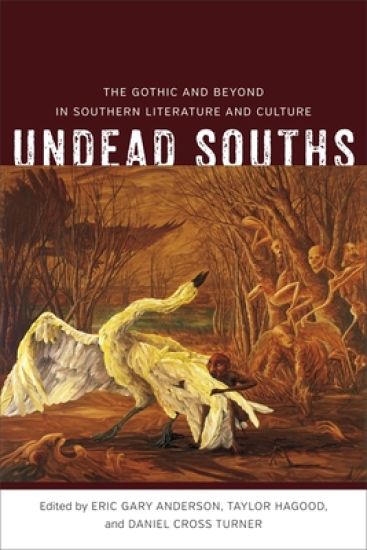
Depictions of the undead in the American South are not limited to our modern versions, such as the vampires in True Blood and the zombies in The Walking Dead. As Undead Souths reveals, physical emanations of southern undeadness are legion, but undeadness also appears in symbolic, psychological, and cultural forms, including the social death endured by enslaved people, the Cult of the Lost Cause that resurrected the fallen heroes of the Confederacy as secular saints, and mourning rites revived by Native Americans forcibly removed from the American Southeast.To capture the manifold forms of southern haunting and horror, Undead Souths explores a variety of media and historical periods, establishes cultural crossings between the South and other regions within and outside of the U.S., and employs diverse theoretical and critical approaches. The result is an engaging and inclusive collection that chronicles the enduring connection between southern culture and the refusal of the dead to stay dead.
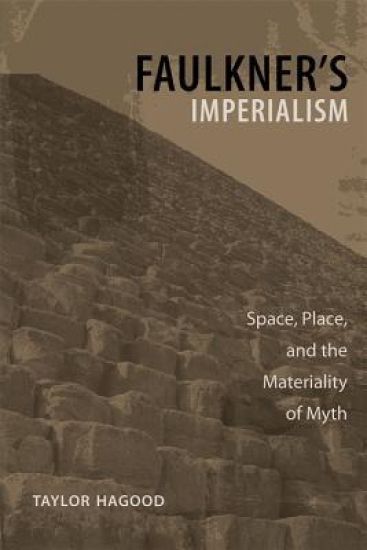
Faulkner's Imperialism

Faulkner's Imperialism

Taylor Hagood

Louisiana State University Press
2018
nidottu
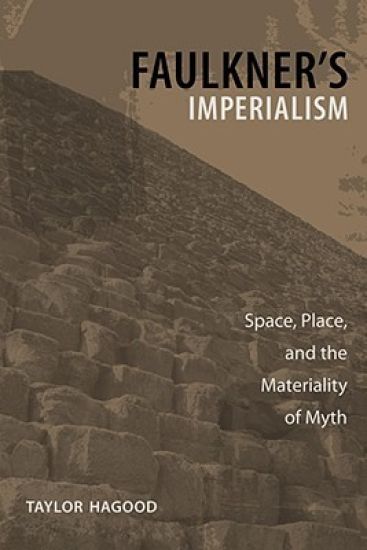
In Faulkner's Imperialism, Taylor Hagood explores two staples of Faulkner's world: myth and place. Using an interdisciplinary approach to examine economic, sociological, and political factors in Faulkner's writing, he applies postcolonial theory, cultural materialism, and the work of the New Southernists to analyse how these themes intersect to encode narratives of imperialism and anti-imperialism. The resulting discussion highlights the deeply embedded imperial impulses underpinning not just Yoknapatawpha and Mississippi, but the Midwest, the Caribbean, France, and a host of often-overlooked corners of the Faulknerian map. One of the few books that considers the broad geographic canvas evoked in the famed writer's work, Faulkner's Imperialism moves beyond South-versus-North paradigms to encompass all the spaces within Faulkner's created cosmos, addressing their interrelationships in a precise, holistic way.
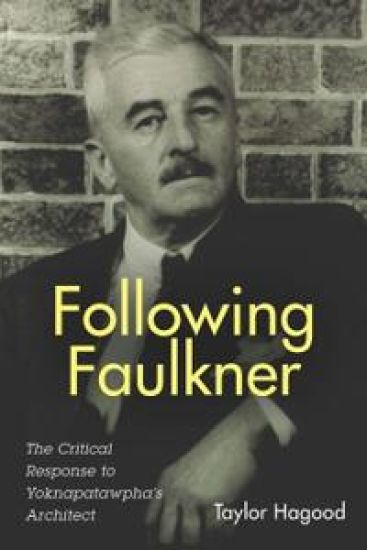
Following Faulkner

Following Faulkner

Taylor Hagood

Camden House Inc
2017
sidottu
An examination of how Faulkner's work has been analyzed, elucidated, and promoted by a massive body of scholarly work spanning over seven decades. William Faulkner seems to have sprung a full-blown genius from a remote part of the American South. Yet Faulkner spent much of his life striving to emulate and overshadow - both as a writer and as a person - his great-grandfatherand namesake, Colonel William Falkner, a dueling, railroad-building, soldiering figure who loomed not just as a legend in Faulkner's family and community but also as a literary forebear, a published novelist, travel writer, and poet. Looking back on his career, Faulkner would mention that early on he had ridden his great-grandfather's coattails, but by the mid-twentieth century it was clear that it was the great-grandson who was leading the literary world:readers, young writers of fiction, and literary critics were following him as one who had found extraordinary ways to capture and express the most challenging aspects of modern life. Taylor Hagood's book centers on the concept of following to examine how Faulkner's work has been analyzed, elucidated, and promoted by a massive body of scholarly work spanning over seven decades. It narrates the development of Faulkner criticism, taking as its premisethe idea that Faulkner forges a fiery path through modernism and into postmodernism that literary critics have been constantly rushing to follow. Taylor Hagood is Associate Professor of English at Florida Atlantic University. His book Faulkner: Writer of Disability (LSU Press, 2014) won the C. Hugh Holman Award for Best Book in Southern Literary Studies in 2015.
Undead Souths

Undead Souths

Eric Gary Anderson; Taylor Hagood; Daniel Cross Turner

Louisiana State University Press
2015
sidottu
Depictions of the undead in the American South are not limited to our modern versions, such as the vampires in True Blood and the zombies in The Walking Dead. As Undead Souths reveals, physical emanations of southern undeadness are legion, but undeadness also appears in symbolic, psychological, and cultural forms, including the social death endured by enslaved people, the Cult of the Lost Cause that resurrected the fallen heroes of the Confederacy as secular saints, and mourning rites revived by Native Americans forcibly removed from the American Southeast.To capture the manifold forms of southern haunting and horror, Undead Souths explores a variety of media and historical periods, establishes cultural crossings between the South and other regions within and outside of the U.S., and employs diverse theoretical and critical approaches. The result is an engaging and inclusive collection that chronicles the enduring connection between southern culture and the refusal of the dead to stay dead.
Faulkner, Writer of Disability

Faulkner, Writer of Disability

Taylor Hagood

Louisiana State University Press
2015
sidottu
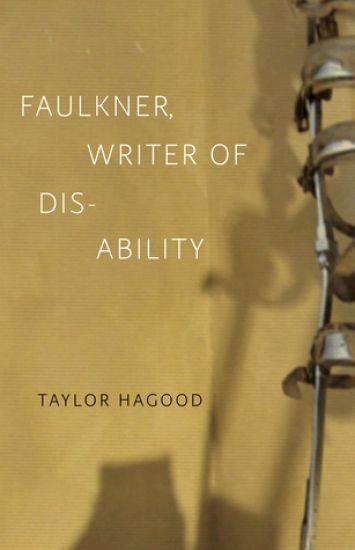
From the emerging field of disability studies, Taylor Hagood offers the first book-length consideration of impairment in William Faulkner's life and writing. Blending biography, textual analysis, and theory in an experimental style, Hagood explores in both form and content the constructs of normality and their power. Hagood brings to light little-known and rarely discussed ways in which Faulkner's personal and familial background were marked by disability and discusses the ways the writer incorporates disability into his fiction. He reevaluates Faulkner's so-called ""idiots""-Benjy Compson, Ike Snopes, and others-as characters whose narratives both satisfy and shock the reader. Hagood also examines the roles that impairment and abnormality play in texts such as the stories ""The Leg"" and ""The Kingdom of God"" and the novels A Fable and Flags in the Dust. Highly original readings result, including new understandings of: the centrality of the visually impaired Pap in Sanctuary; the disability-centric social order based on interdependence in Pylon; and the disabled speech of Linda Snopes Kohl in The Mansion. Hagood argues that Faulkner's poetics are deeply invested in disability, both in promoting a disability-inclusive fictional world and in exposing and subverting the devaluation of disabled bodies and minds. Hagood draws on firsthand knowledge of his native of Ripley, Mississippi, the ancestral home of the Faulkners, to offer readers otherwise inaccessible contextual information. Moreover, by framing each section of his study within a different kind of discourse-newspaper style, biography, email, and advertisement-he uses the very structure of the book to underscore the questions of normalcy prevalent in disability studies. This rich and unconventional study offers insight into a Faulkner haunted by experiences of disablement and compelled to narrate them in his own writing.
Faulkner's Imperialism

Faulkner's Imperialism

Taylor Hagood

Louisiana State University Press
2008
sidottu
In Faulkner's Imperialism, Taylor Hagood explores two staples of Faulkner's world: myth and place. Using an interdisciplinary approach to examine the economic, sociological, and political factors in Faulkner's writing, he applies postcolonial theory, cultural materialism, and the work of the New Southernists to analyse the ways myth and place come together to encode narratives of imperialism - and anti-imperialism - in the worlds in which Faulkner lived and the one that he created. The resulting discussion highlights the deeply embedded imperial impulses underpinning not just Yoknapatawpha and Mississippi, but the Midwest, the Caribbean, France, and a host of often-overlooked corners of the Faulknerian map.Faulkner defines space in his fiction by creating places through culturally compelling narratives. Although these narrative spaces often have imperial roots, Hagood reveals how the oppressed can subvert these ""mythic places"" by turning the myths against their oppressors. The Greco-Roman myths long recognised as part of Faulkner's fictional world, for example, define racially hybrid spaces ostensibly designed to articulate white patriarchal narratives of imperial control but which actually carry within their very dreams of Arcady an anti-imperial narrative. In Faulkner's Mississippi Delta, which he modeled after the Nile Delta, plantation owners evoke the imperial power of ancient Egypt to confirm their own cultural ascendancy even while African Americans use biblical narratives of the Israelites enslaved in Egypt to speak against the power that controls them. Faulkner also used places he personally experienced - such as New Orleans, a city that he recognised as containing multiple layers of imperial design - to dramatize the constant struggle between the oppressor and the oppressed. Rather than reading the roles of myth and place according to conventional myth criticism or typical place models used by other Faulkner scholars, Hagood examines the intertextuality within Faulkner's writing, as well as the relationship of his writing to others' work, in an attempt to understand how the texts fit together and speak to one another. One of the few books that examine Faulkner's work as a whole, Faulkner's Imperialism moves beyond South-versus-North paradigms to encompass all the spaces within Faulkner's created cosmos, considering their interrelationships in a precise, holistic way.