Kirjojen hintavertailu. Mukana 12 152 606 kirjaa ja 12 kauppaa.

Kirjailija

Ted Honderich

Kirjat ja teokset yhdessä paikassa: 25 kirjaa, julkaisuja vuosilta 1990-2016, suosituimpien joukossa Actual Consciousness. Vertaile teosten hintoja ja tarkista saatavuus suomalaisista kirjakaupoista.

25 kirjaa

Kirjojen julkaisuhaarukka 1990-2016.

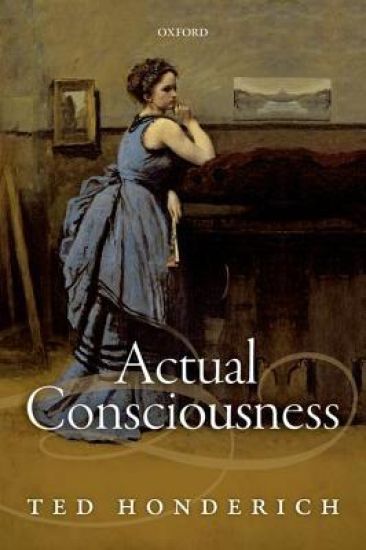
Actual Consciousness

Actual Consciousness

Ted Honderich

Oxford University Press
2016
nidottu
What is it for you to be conscious? There is no agreement whatever in philosophy or science: it has remained a hard problem, a mystery. Is this partly or mainly owed to the existing theories not even having the same subject, not answering the same question? In Actual Consciousness, Ted Honderich sets out to supersede dualisms, objective physicalisms, abstract functionalism, externalisms, and other positions in the debate. He argues that the theory of Actualism, right or wrong, is unprecedented, in nine ways. (1) It begins from gathered data and proceeds to an adequate initial clarification of consciousness in the primary ordinary sense. This consciousness is summed up as something's being actual. (2) Like basic science, Actualism proceeds from this metaphorical or figurative beginning to what is wholly literal and explicit--constructed answers to the questions of what is actual and what it is for it to be actual. (3) In so doing, the theory respects the differences of consciousness within perception, consciousness that is thinking in a generic sense, and consciousness that is generic wanting. (4) What is actual with your perceptual consciousness is a subjective physical world out there, very likely a room, differently real from the objective physical world, that other division of the physical world. (5) What it is for the myriad subjective physical worlds to be actual is for them to be subjectively physical, which is exhaustively characterized. (6) What is actual with cognitive and affective consciousness is affirmed or valued representations. The representations being actual, which is essential to their nature, is their being differently subjectively physical from the subjective physical worlds. (7) Actualism, naturally enough when you think of it, but unlike any other existing general theory of consciousness, is thus externalist with perceptual consciousness but internalist with respect to cognitive and affective consciousness. (8) It satisfies rigorous criteria got from examination of the failures of the existing theories. In particular, it explains the role of subjectivity in thinking about consciousness, including a special subjectivity that is individuality. (9) Philosophers and scientists have regularly said that thinking about consciousness requires just giving up the old stuff and starting again. Actualism does this. Science is served by this main line philosophy, which is concentration on the logic of ordinary intelligence--clarity, consistency and validity, completeness, generality.

Essays on Freedom of Action (Routledge Revivals)
Essays on Freedom of Action, first published in 1973, brings together original papers by contemporary British and American philosophers on questions which have long concerned philosophers and others: the question of whether persons are wholly a part of the natural world and their actions the necessary effects of causal processes, and the question of whether our actions are free, and such that we can be held responsible for them, even if they are the necessary effects of casual processes. This volume will be of interest not only to those who are primarily concerned with philosophy but also to students in those many other disciplines in which freedom and determinism arise as problems.
Essays on Freedom of Action (Routledge Revivals)
Essays on Freedom of Action, first published in 1973, brings together original papers by contemporary British and American philosophers on questions which have long concerned philosophers and others: the question of whether persons are wholly a part of the natural world and their actions the necessary effects of causal processes, and the question of whether our actions are free, and such that we can be held responsible for them, even if they are the necessary effects of casual processes. This volume will be of interest not only to those who are primarily concerned with philosophy but also to students in those many other disciplines in which freedom and determinism arise as problems.
Actual Consciousness

Actual Consciousness

Ted Honderich

Oxford University Press
2014
sidottu
What is it for you to be conscious? There is no agreement whatever in philosophy or science: it has remained a hard problem, a mystery. Is this partly or mainly owed to the existing theories not even having the same subject, not answering the same question? In Actual Consciousness, Ted Honderich sets out to supersede dualisms, objective physicalisms, abstract functionalism, general externalisms, and other positions in the debate. He argues that the theory of Actualism, right or wrong, is unprecedented, in nine ways. (1) It begins from gathered data and proceeds to an adequate initial clarification of consciousness in the primary ordinary sense. This consciousness is summed up as something's being actual. (2) Like basic science, Actualism proceeds from this metaphorical or figurative beginning to what is wholly literal and explicit--constructed answers to the questions of what is actual and what it is for it to be actual. (3) In so doing, the theory respects the differences of consciousness within perception, consciousness that is thinking in a generic sense, and consciousness that is generic wanting. (4) What is actual with your perceptual consciousness is a part or stage of a subjective physical world out there, very likely a room, a world differently real from the objective physical world, that other division of the physical world. (5) What it is for the myriad subjective physical worlds to be actual is for them to be subjectively physical, which is exhaustively characterized. (6) What is actual with cognitive and affective consciousness is affirmed or valued representations. The representations being actual, which is essential to their nature, is their being differently subjectively physical from the subjective physical worlds. (7) Actualism, naturally enough when you think of it, but unlike any other existing general theory of consciousness, is thus externalist with perceptual consciousness but internalist with respect to cognitive and affective consciousness. (8) It satisfies rigorous criteria got from examination of the failures of the existing theories. In particular, it explains the role of subjectivity in thinking about consciousness, including a special subjectivity that is individuality. (9) Philosophers and scientists have regularly said that thinking about consciousness requires just giving up the old stuff and starting again. Actualism does this. Science is served by this main line philosophy, which is concentration on the logic of ordinary intelligence--clarity, consistency and validity, completeness, generality.

Humanity, Terrorism, Terrorist War

Humanity, Terrorism, Terrorist War

Ted Honderich

Continuum International Publishing Group Ltd.
2006
sidottu
With large questions of right and wrong, there is a division of labour. So, with the attack on three subway trains and a bus in London on July 7, 2005. Of what moral relevance, if any, was the fact that the British army had been engaged in the killing of greatly more of a people with whom the terrorists identified? Of what relevance, as a newspaper article asked a week later, was the fact that the British prime minister put his own people at risk in the service of a foreign power? So begins Ted Honderich's intelligent and thoughtful analysis in "Terrorism and Humanity". What Honderich says will doubtless cause a great deal of controversy too (his last book on this subject was initially banned in Germany on the grounds it was anti-Semitic, only to be re-published by a Jewish press). However, his views will also be acceptable to a great many Jews (he puts forward arguments to justify the founding of Israel and its secure perpetual existence). Looking in detail at the situation in Palestine, 9/11, the war in Iraq and the events of 7/7, Ted Honderich offers neither a sensationalist rant nor an academic treatise. Instead "Terrorism and Humanity" provides a thoughtful and perceptive exploration of the "biggest" issue facing the western world today.
Punishment

Punishment

Ted Honderich

Pluto Press
2005
pokkari
Ted Honderich's Punishment is the best-known book on the justifications put forward for state punishment. This enlarged and developed edition brings his writing to a new audience. With new chapters on determinism and responsibility, plus a new conclusion, the book also remains true to its original realism about almost all talk of retribution and proportionality. Honderich investigates all the commonsensical notions of why and when punishment is morally necessary, engaging with the language of public debate by politicians and other public figures. Honderich then puts forward his own argument that punishment is legitimate when it is in accord with the principle of humanity. Written in a clear, sharp style and seasoned with a dry wit, this is the most important work on the reasoning behind our penal systems. It is a pleasure to read for philosophers and non-philosophers alike.
Punishment

Punishment

Ted Honderich

Pluto Press
2005
sidottu
Ted Honderich's Punishment is the best-known book on the justifications put forward for state punishment. This enlarged and developed edition brings his writing to a new audience. With new chapters on determinism and responsibility, plus a new conclusion, the book also remains true to its original realism about almost all talk of retribution and proportionality. Honderich investigates all the commonsensical notions of why and when punishment is morally necessary, engaging with the language of public debate by politicians and other public figures. Honderich then puts forward his own argument that punishment is legitimate when it is in accord with the principle of humanity. Written in a clear, sharp style and seasoned with a dry wit, this is the most important work on the reasoning behind our penal systems. It is a pleasure to read for philosophers and non-philosophers alike.
Conservatism

Conservatism

Ted Honderich

Pluto Press
2005
pokkari
This is a new edition of a classic work by one of the world's leading progressive political philosophers. Ted Honderich examines ideology and reality in British and American politics in order to establish the true distinctions of conservatism. Conservatives often claim to believe in reform, but not change, to rely on instinct rather than abstract theories. So what is the conservative rationale? Does conservatism have a philosophical founding principle that unifies it? Ted Honderich’s search for the fundamental principle of conservatism is an enlightening one. He examines influential thinkers in the conservative tradition, from Edmund Burke and Adam Smith to Michael Oakeshott and Robert Nozick. He brings rigorous analytic philosophy to bear on the Republican party in the United States, and the Conservative party and the New Labour party in Britain.
Conservatism

Conservatism

Ted Honderich

Pluto Press
2005
sidottu
This is a new edition of a classic work by one of the world's leading progressive political philosophers. Ted Honderich examines ideology and reality in British and American politics in order to establish the true distinctions of conservatism. Conservatives often claim to believe in reform, but not change, to rely on instinct rather than abstract theories. So what is the conservative rationale? Does conservatism have a philosophical founding principle that unifies it? Ted Honderich’s search for the fundamental principle of conservatism is an enlightening one. He examines influential thinkers in the conservative tradition, from Edmund Burke and Adam Smith to Michael Oakeshott and Robert Nozick. He brings rigorous analytic philosophy to bear on the Republican party in the United States, and the Conservative party and the New Labour party in Britain.
On Determinism and Freedom

On Determinism and Freedom

Ted Honderich

Edinburgh University Press
2005
sidottu
The most recalcitrant problem of philosophy, free will, laid out and taken beyond unsatisfactory standard solutions by Britain's foremost working philosopher. Determinism comes in many forms, some confused, some inconsistent, some incomplete. Some philosophers maintain that determinism is incompatible with true freedom. And others, that determinism is no threat to our freedom. But are these philosophers really assigning an 'unfreedom' to us and merely pretending that we are responsible for our choices and acts of love and violence? Ted Honderich argues that there are strong reasons to think both positions wrong. Developing from where his earlier work left off, he considers there is a new and more difficult problem of determinism. It too can lead to the thought that we are unfree but morally responsible. As he demonstrates, the hardest and deepest question in philosophy needs a really different answer.
On Consciousness

On Consciousness

Ted Honderich

Edinburgh University Press
2004
sidottu
Is your consciousness neural events in your head? Is it anything in there? On Consciousness offers answers to the question of the very nature of consciousness, and the separate question of how consciousness is related to the brain. It begins with Anomalous Monism, a doctrine seemingly to the effect that mind and brain are one thing with two kinds of properties not lawfully connected. It goes on to consider the thinking of neuroscientists and then functionalists. It reconsiders Honderich's own Union Theory, and the anti-individualism that disconnects the mind from the brain. These doctrines are examined in terms of whether they satisfy our agreed criteria for decent accounts of consciousness. The book leads up to the question: 'What is it like for you to be aware of the room you are in?' The bold new answer is: 'It is for the room in a way to exist'. Such an answer gives rise to analyses of reflective and affective consciousness as well, such as thinking and feeling. On Consciousness respects the most resilient proposition in the history of the philosophy of mind - that consciousness isn't just cells. It also makes all of consciousness a proper subject for science.
On Political Means and Social Ends

On Political Means and Social Ends

Ted Honderich

Edinburgh University Press
2003
sidottu
The moral and political arguments, judgements and commitments of Britain's outstanding radical philosopher. What society ought we to have, and what can we do to try to get it? This book sets out to answer these questions beginning with a new essay on the foundation of a liberalism of means and ends, John Stuart Mill's On Liberty. It goes on to consider the culmination of liberal thinking in John Rawls' A Theory of Justice. It argues that liberalism is good intentions not carried forward into rational commitment. Conservatism, in its past and its present guises, is also made clear in its reality. So too is the leftism of the past, including G. A. Cohen's attempt to save Karl Marx's theory of history. Both are discarded. The book argues for another political and social morality - the generosity and fellow-feeling of the Principle of Humanity. It is a consequentialist rather than a mysterious morality, and its essential idea is that we should take rational steps to rescue the badly-off from lives of wretchedness and other distress. This is the commitment that led to Ted Honderich's human and passionate response to 9/11, After the Terror - the most controversial book of serious philosophy published in Britain since A. J. Ayer's Language, Truth and Logic in 1936. A further chapter considers hierarchic democracy - the democracy we have as distinct from the democracy we think we have - and the necessity of mass civil disobedience. The book ends with an essay that adds to the thinking of After the Terror, particularly on the moral right of the Palestinians to their resistance.
Terrorism for Humanity

Terrorism for Humanity

Ted Honderich

Pluto Press
2003
sidottu
This book raises important questions about the uses and ethics of political violence - questions that are all the more pertinent in the light of recent events and the 'war on terror'. What can be said for and against terrorism and political violence? When is such terrorism right, if it ever is, and when is it wrong? Ted Honderich challenges the presuppositions, inconsistencies and prejudices of liberal-democratic thinking. He tackles such emotive subjects as the IRA, the PLO and the ANC, arguing the importance of understanding the justification for political violence in all manifestations. Exploring the moral issues that lie at the heart of these difficult questions, Honderich reminds us that political philosophy should be an attempt to inquire with an open mind - and that to open one's mind is not necessarily to lose one's convictions.
Terrorism for Humanity

Terrorism for Humanity

Ted Honderich

Pluto Press
2003
pokkari
This book raises important questions about the uses and ethics of political violence - questions that are all the more pertinent in the light of recent events and the 'war on terror'. What can be said for and against terrorism and political violence? When is such terrorism right, if it ever is, and when is it wrong? Ted Honderich challenges the presuppositions, inconsistencies and prejudices of liberal-democratic thinking. He tackles such emotive subjects as the IRA, the PLO and the ANC, arguing the importance of understanding the justification for political violence in all manifestations. Exploring the moral issues that lie at the heart of these difficult questions, Honderich reminds us that political philosophy should be an attempt to inquire with an open mind - and that to open one's mind is not necessarily to lose one's convictions.
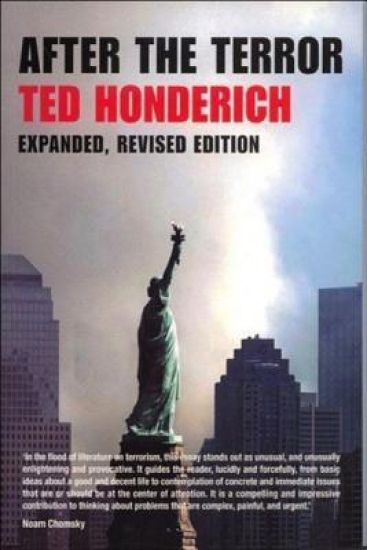
After the Terror

After the Terror

Ted Honderich

Edinburgh University Press
2003
nidottu
'To be on an airliner and look around and see the people and be able to stick to the plan of flying it into a skyscraper is to be hideous, and to persist if they come to know the plan is to be monstrous.' 'For the 3,000 deaths there are lines of responsibility into the past, as real as chains of command, containing earlier and later perpetrators. We in our democracies are in them, and in particular those of us who have got themselves into our governments.' After The Terror This philosophical and moral reflection describes two worlds - ours of good lives and another of bad lives - and questions our complicity in allowing the bad lives to happen. With what morality are we to think of this? And of September 11th, and about our counter-attack, and what to do now? After the Terror is not moral philosophy detached from reality. It enquires into the 'natural fact' of morality and the worked-out moralities of philosophers. It reaches to the moral core of our lives. Ted Honderich asks why the events of September 11th were wrong and what terrorism tells us about ourselves and our obligations. He does not respect the moral confidence of our leaders and others. He defends a morality of humanity that requires us to think about our lives, and to act up against our democratic governments. Features: *A serious work of philosophy that looks at the moral issues in the aftermath of September 11th *Written by a famous philosopher who is widely published *A courageous, sceptical book that asks tough questions and makes us think about our values *Written with passion, conviction and honesty
After the Terror

After the Terror

Ted Honderich

Edinburgh University Press
2002
sidottu
'To be on an airliner and look around and see the people and be able to stick to the plan of flying it into a skyscraper is to be hideous, and to persist if they come to know the plan is to be monstrous.' 'For the 3,000 deaths there are lines of responsibility into the past, as real as chains of command, containing earlier and later perpetrators. We in our democracies are in them, and in particular those of us who have got themselves into our governments.' After The Terror This philosophical and moral reflection describes two worlds - ours of good lives and another of bad lives - and questions our complicity in allowing the bad lives to happen. With what morality are we to think of this? And of September 11th, and about our counter-attack, and what to do now? After the Terror is not moral philosophy detached from reality. It enquires into the 'natural fact' of morality and the worked-out moralities of philosophers. It reaches to the moral core of our lives. Ted Honderich asks why the events of September 11th were wrong and what terrorism tells us about ourselves and our obligations. He does not respect the moral confidence of our leaders and others. He defends a morality of humanity that requires us to think about our lives, and to act up against our democratic governments. Features: *A serious work of philosophy that looks at the moral issues in the aftermath of September 11th *Written by a famous philosopher who is widely published *A courageous, sceptical book that asks tough questions and makes us think about our values *Written with passion, conviction and honesty
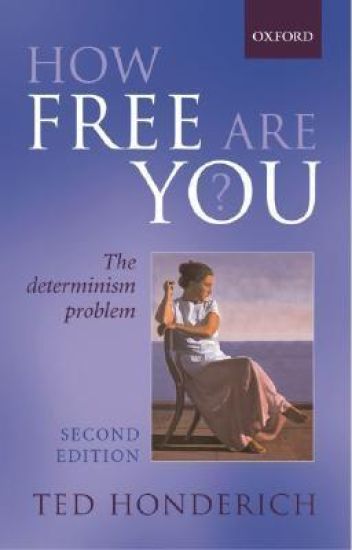
How Free Are You?

How Free Are You?

Ted Honderich

Oxford University Press
2002
nidottu
This text sets out a determinist philosophy of mind, and asks if there is such a clear version of free will. It goes on to ask whether or not determinism is true and what can we conclude about our lives if it is. Both the compatabilist and incompatabilist traditions are explored.
Philosopher A Kind Of Life

Philosopher A Kind Of Life

Prof Ted Honderich; Ted Honderich

Routledge
2002
nidottu
The story of Ted Honderich, philosopher, a story of a perilous philosophical life, marked by critical examination, and a compelling personal life full of human drama. This is the story of Ted Honderich's perilous progress from boyhood in Canada to the Grote Professorship of Mind and Logic at University College London, A. J. Ayer's chair. It is compelling, candid and revealing about the beginning and the goal, and everything in between: early work as a journalist on The Toronto Star, travels with Elvis Presley, arrival in Britain, loves and friendships, academic rivalries and battles, marriages and affairs, self-interest and empathy. It sets out resolutely to explain how and why it all happened.It is as much a narrative of Ted Honderich's philosophy. He makes hard problems real. Philosophy from consciousness and determinism to political violence and democracy comes into sharp focus.Along the way, questions keep coming up. Does the free marriage owe anything to the analytic philosophy? What are the costs of truth? Are the politics of England slowly making it an ever-better place? Is an action's rightness independent of the mixture of motives out of which it came?