
Kirjailija
Ted Kooser
Kirjat ja teokset yhdessä paikassa: 39 kirjaa, julkaisuja vuosilta 1980-2026, suosituimpien joukossa How to Gamble If You Must. Vertaile teosten hintoja ja tarkista saatavuus suomalaisista kirjakaupoista.
39 kirjaa
Kirjojen julkaisuhaarukka 1980-2026.
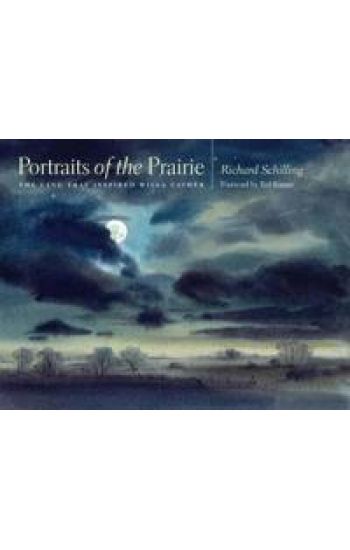
"As I looked about me I felt that the grass was the country, as the water is the sea. The red of the grass made all the great prairie the colour of wine-stains, or of certain seaweeds when they are first washed up. And there was so much motion in it; the whole country seemed, somehow, to be running."—My Ántonia, Willa Cather It is often called "Catherland"—Webster County, Nebraska, where the quintessential American novelist Willa Cather spent her childhood and found inspiration for her stories of European immigrants on the prairie. Richard Schilling, with his watercolor paintings and ink sketches, conducts us to that land, to scenes that might have influenced Cather, but as they appear today. Schilling's images take us to Red Cloud, Cather's childhood home; to the Willa Cather Memorial Prairie, a botanical jewel of mixed-grass prairie restored to its pre-1900 condition; and on to "the divide," the high prairie land between the Little Blue River to the north and the Republican River to the south. Each evocative original watercolor is paired with an excerpt from Cather's work and with the author's own musings on the history, geography, and ecology of the landscape.
This anthology of contemporary American poetry, short fiction, and nonfiction, explores issues of identity, oppression, injustice, and social change. Living American writers produced each piece between 1980 and the present; works were selected based on literary merit and the manner in which they address one or more pressing social issues. William Reichard has assembled some of the most respected literary artists of our time, asking whose voices are ascendant, whose silenced, and why. The work as a whole reveals shifting perspectives and the changing role of writing in the social justice arena over the last few decades.
This anthology of contemporary American poetry, short fiction, and nonfiction, explores issues of identity, oppression, injustice, and social change. Living American writers produced each piece between 1980 and the present; works were selected based on literary merit and the manner in which they address one or more pressing social issues. William Reichard has assembled some of the most respected literary artists of our time, asking whose voices are ascendant, whose silenced, and why. The work as a whole reveals shifting perspectives and the changing role of writing in the social justice arena over the last few decades.
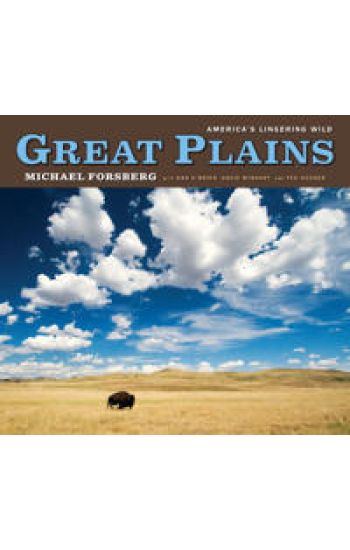
The Great Plains were once among the greatest grasslands on the planet. But as the United States and Canada grew westward, the Plains were plowed up, fenced in, overgrazed, and otherwise degraded. Today, this fragmented landscape is the most endangered and least protected ecosystem in North America. But all is not lost on the prairie. Through lyrical photographs, essays, historical images, and maps, this beautifully illustrated book gets beneath the surface of the Plains, revealing the lingering wild that still survives and whose diverse natural communities, native creatures, migratory traditions, and natural systems together create one vast and extraordinary whole. Three broad geographic regions are covered in detail in Great Plains, evoked in the unforgettable and often haunting images taken by Michael Forsberg. Between the fall of 2005 and the winter of 2008, he traveled roughly 100,000 miles across twelve states and three provinces, from southern Canada to northern Mexico, to complete the photographic fieldwork for this project, underwritten by the Nature Conservancy. Complementing his images and firsthand accounts are essays by Great Plains scholar David Wishart and acclaimed writer Dan O'Brien. Each section of the book begins with a thorough overview by Wishart, while O'Brien - a wildlife biologist and rancher as well as a writer - uses his powerful literary voice to put the Great Plains into a human context, connecting their natural history with man's uses and abuses. The Great Plains are a dynamic but often forgotten landscape - overlooked, undervalued, misunderstood, and in desperate need of conservation. This book helps lead the way forward, informing and inspiring readers to recognize the wild spirit and splendor of this irreplaceable part of the planet.
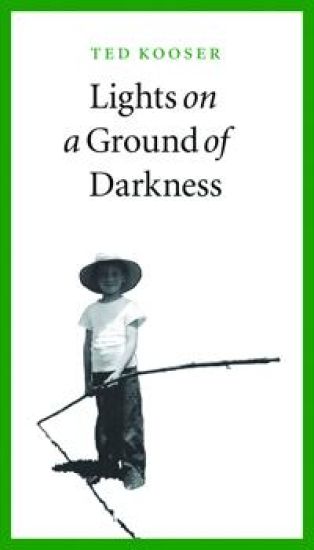
Like the yellow, pink, and blue irises that had been transplanted from house to house over the years, the stories of poet Ted Kooser's family had been handed down until, as his mother lay ill and dying, he felt an urgency to write them down. With a poet's eye for detail, Kooser captures the beauty of the landscape and the vibrancy of his mother's Iowa family, the Mosers, in precise, evocative language. The center of the family's love is Kooser's uncle, Elvy, a victim of cerebral palsy. Elvy's joys are fishing, playing pinochle, and drinking soda from the ice chest at his father's roadside Standard Oil station. Kooser's grandparents, their kin, and the activities and pleasures of this extended family spin out and around the armature of Elvy's blessed life. Kooser has said that writing this book was the most important work he has ever undertaken because it was his attempt to keep these beloved people alive against the relentless erosion of time.

For Valentine's Day 1986, Ted Kooser wrote "Pocket Poem" and sent the tender, thoughtful composition to fifty women friends, starting an annual tradition that would persist for the next twenty-one years. Printed on postcards, the poems were mailed to a list of recipients that eventually grew to more than 2,500 women all over the United States. Valentines collects Kooser's twenty-two years of Valentine's Day poems, complemented with illustrations by Robert Hanna and a new poem appearing for the first time. Kooser's valentine poems encompass all the facets of the holiday: the traditional hearts and candy, the brilliance and purity of love, the quiet beauty of friendship, and the bittersweetness of longing. Some of the poems use the word valentine, others do not, but there is never any doubt as to the purpose of Kooser's creations.
"Kooser is straightforward, possesses an American essence, is humble, gritty, ironic and has a gift for detail and a deceptive simplicity."--Seattle Post-IntelligencerThis signed, limited edition celebrates the Pulitzer Prize-winning collection by former Poet Laureate Ted Kooser. Delights and Shadows is one of the best-selling poetry books in America, and Ted Kooser--editor of the weekly column "American Life in Poetry"--is a beloved poet. While serving as poet laureate, he stated, "I hope to interest more people in poetry. I hope to perform a service as a poet, giving people something they can use." Kooser certainly succeeded.While Delights and Shadows has been lavishly reviewed in major media throughout the country, reader responses about the book have poured into Copper Canyon Press. A reader from rural New York wrote, "Kooser's tenth book of poems is a work of profound insight into the core of human existence and feeling." Another from Virginia wrote, "An instantly attractive collection by a poet unknown to me, who sees remarkable things in everyday objects. Today I ordered five more of his previous books at a local store." Ted Kooser, author of thirteen books of poetry and nonfiction, is the former poet laureate of the United States. He lives in Nebraska.

Ted Kooser has been writing and publishing poetry for more than forty years. In the pages of The Poetry Home Repair Manual, Kooser brings those decades of experience to bear. Here are tools and insights, the instructions (and warnings against instructions) that poets-aspiring or practicing-can use to hone their craft, perhaps into art. Using examples from his own rich literary oeuvre and from the work of a number of successful contemporary poets, the author schools us in the critical relationship between poet and reader, which is fundamental to what Kooser believes is poetry’s ultimate purpose: to reach other people and touch their hearts. Much more than a guidebook to writing and revising poems, this manual has all the comforts and merits of a long and enlightening conversation with a wise and patient old friend-a friend who is willing to share everything he’s learned about the art he’s spent a lifetime learning to execute so well.
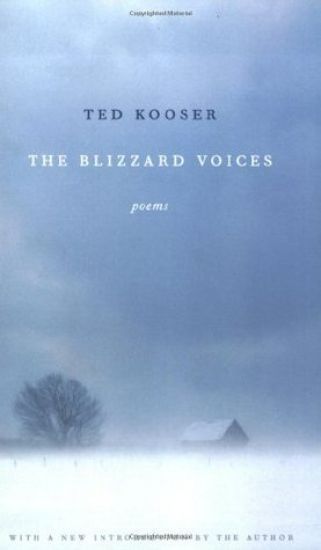
2007 Book Sense Poetry Top Ten selection 2007 Midwest Booksellers' Choice Award for Poetry, honoring Tom Pohrt (Illustrator) This book is a collection of poems recording the devastation unleashed on the Great Plains by the blizzard of January 12, 1888. The Blizzard Voices is based on the actual reminiscences of the survivors as recorded in documents from the time and written reminiscences from years later. Here are the haunting voices of the men and women who were teaching school, working the land, and tending the house when the storm arrived and changed their lives forever.
Sometimes setting pen to paper requires bravery, and writing well means breaking free of the rules learned in school. Liberating and emboldening the beginning writer are the goals of Ted Kooser and Steve Cox in this spirited book of practical wisdom that brings to bear decades of invaluable experience in writing, teaching, editing, and publishing. Unlike "how to write" books that dwell on the angst and the agony of the trade, "Writing Brave and Free" is upbeat and accessible. The focus here is the work itself: how to get started and how to keep going, and never is heard a discouraging word such as "no," "not," or "never." Because of the wealth of their experience, the authors can offer the sort of practical publishing advice that novices need and yet rarely find.Organized in brief, user-friendly chapters - on everything from sensory details to a work environment, from creating suspense to revising and taking criticism - the book allows aspiring (and practicing) writers to dip in anywhere and find something of value. Ted Kooser, the nation's Poet Laureate and winner of the Pulitzer Prize in Poetry, is a professor of English at the University of Nebraska-Lincoln. In addition to his many volumes of poetry, he is the author of "Local Wonders: Seasons in the Bohemian Alps" and "The Poetry Home Repair Manual: Practical Advice for Beginning Poets", both available from the University of Nebraska Press. Steve Cox, a lifelong editor and publisher, is now a freelance writer and the director emeritus of the University of Arizona Press.
Sometimes setting pen to paper requires bravery, and writing well means breaking free of the rules learned in school. Liberating and emboldening the beginning writer are the goals of Ted Kooser and Steve Cox in this spirited book of practical wisdom that brings to bear decades of invaluable experience in writing, teaching, editing, and publishing. Unlike "how to write" books that dwell on the angst and the agony of the trade, Writing Brave and Free is upbeat and accessible. The focus here is the work itself: how to get started and how to keep going, and never is heard a discouraging word such as "no," "not," or "never." Because of the wealth of their experience, the authors can offer the sort of practical publishing advice that novices need and yet rarely find. Organized in brief, user-friendly chapters—on everything from sensory details to a work environment, from creating suspense to revising and taking criticism—the book allows aspiring (and practicing) writers to dip in anywhere and find something of value.
Named U.S. Poet Laureate for 2004-2006, Ted Kooser is one of America's masters of the short metaphorical poem. Dana Gioia has remarked that Kooser has written more perfect poems than any poet of his generation. In Flying at Night: Poems 1965-1985, Kooser has selected poems from two of his earlier works, Sure Signs and One World at a Time (1985). Taken together or read one at a time, these poems clearly show why William Cole, writing in the Saturday Review, called Ted Kooser "a wonderful poet," and why Peter Stitt, writing in the Georgia Review, proclaimed him "a skilled and cunning writer. . . . An authentic 'poet of the American people.'"
Winner of the Pulitzer Prize in PoetryTed Kooser, who served as United States Poet Laureate (2004-2006), is a poet who works toward clarity and accessibility, so that each distinctive poem appears to be as fresh and bright and spontaneous as a good watercolor painting. He is a haiku-like imagist who imbues his poems with tender wisdom," and draws inspiration from the overlooked details of daily life. Praise for Delights and Shadows: Ted Kooser...has a genius for making the ordinary sacred.--The New York TimesA sense of wonder and compassion runs through this Pulitzer Prize winning volume... Kooser's poetry is understated yet manages to skillfully illuminate the small moments of life.--Christian Science Monitor Kooser] brushes poems over ordinary objects, revealing metaphysical themes that way an investigator dusts for fingerprints. His language is so controlled and convincing that one can't help but feel significant truths behind his lines.--The Philadelphia InquirerThere is a sense of quiet amazement at the core of all Kooser's work, but it especially seems to animate his new collection of poems, Delights & Shadows. Every delight is shadowed by darkness in this book of small wonders and hard dualisms.--Edward Hirsch, The Washington PostDelights and Shadows is a book with a deep stillness at its center, perfectly self-contained.--Carol Muske-Dukes, Los Angeles TimesKooser's ninth collection of poems reflects the simple and remarkable things of everyday life. That he often sees things we do not would be delight enough, but more amazing is exactly what he sees. Nothing escapes him; everything is illuminated....Highly recommended.--Library JournalFew poets depict the Midwest so accurately or with such tender regard... Kooser excels at the brief, imagistic poem.--The Kansas City StarDelights and Shadows raises the voice of the poet above everything else. Each short, vivid poem on the page reads as if it were being spoken aloud. Details about cemeteries, dictionaries, a doctor's waiting room, and a jar of buttons bristle with sound and awareness. Kooser's ability to use brief lyrics to compose a music of discovery and regeneration makes his work radiant and consuming... This is not an extended, complex or experimental kind of writing, but poetry that rings true, allowing the human sound of being to exist on the page.--Bloomsbury ReviewHere is the gift and fragility of life.--The Wichita EagleKooser is a master of the subjective description. Empathetic without sentimentality, his eye ranges over all sorts of everyday subjects and finds material everywhere... wherever the unpredictable particularity of the world can be glimpsed... Perhaps Kooser's success lies in his determination to see the... things of this world with such clarity and passion that their underlying mysteries, delights, and shadows also become clear, if only for a moment.--The Georgia ReviewYou can almost see Kooser behind the poems, watching the world like a sketch artist... Kooser displays the same kind of fluid strokes Degas used in his ballet pictures...He is an exquisite miniaturist of daily life.--The Hartford CourantThe poet finds magic in activities and objects typically considered mundane... Metaphors are the treasure of these short, imagistic poems, emphasizing the wonder and delight latent in what is often merely taken for granted.--Harvard ReviewKooser has written more perfect poems than any poet of his generation. --Dana GioiaKooser is straightforward, possesses an American essence, is humble, gritty, ironic and has a gift for detail and a deceptive simplicity.--Seattle Post-IntelligencerAs Poet Laureate of the United States, Ted Kooser launched the weekly poetry column American Life in Poetry, which appears in over 100 newspapers nationwide. He is the author of ten books of poems, including the collaboration with Jim Harrison, Braided Creek: A Conversation in Poetry (isbn 9781556591877).
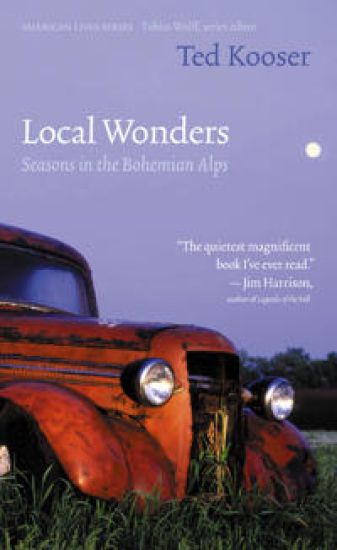
Ted Kooser describes with exquisite detail and humor the place he calls home in the rolling hills of southeastern Nebraska—an area known as the Bohemian Alps. Nothing is too big or too small for his attention. Memories of his grandmother's cooking are juxtaposed with reflections about the old-fashioned outhouse on his property. When casting his eye on social progress, Kooser reminds us that the closing of local schools, thoughtless county weed control, and irresponsible housing development destroy more than just the view. In the end, what makes life meaningful for Kooser are the ways in which his neighbors care for one another and how an afternoon walking with an old dog, or baking a pie, or decorating the house for Christmas can summon memories of his Iowa childhood. This writer is a seer in the truest sense of the word, discovering the extraordinary within the ordinary, the deep beneath the shallow, the abiding wisdom in the pithy Bohemian proverbs that are woven into his essays.
Ted Kooser describes with exquisite detail, humour, and savvy the place he calls home in the Bohemian Alps of southeastern Nebraska. Like others in rural areas, he has what he calls 'wolf vision,' and he sees every change in the landscape around him. Nothing is too big or too small for his attention. Memories of his grandmother's cooking are juxtaposed with reflections about the old-fashioned outhouse on his property. In the end, what makes life meaningful for Ted Kooser are the ways his neighbours care for one another and how an afternoon walking with an old dog, or baking a pie, or decorating the house for Christmas can summon memories of his Iowa childhood. This writer is a seer in the truest sense of the word. When others have become acclimated to change, the writer reminds all of us that the closing of local schools, thoughtless county weed control, and irresponsible housing development destroy more than just the view. Communities are at stake, as are families, our health, and arguably our very souls. Ted Kooser is an adjunct professor of English at the University of Nebraska. A retired insurance executive, his poetry has appeared in nine special collections and eight books including "Winter Morning Walks: 100 Postcards to Jim Harrison" and "Weather Central."
Ted Kooser’s third book in the Pitt Poetry Series is a selection of poems published in literary journals over a ten year period by a writer whose work has been praised for its clarity and accessiblity, its mastery of figurative language, and its warmth and charm.
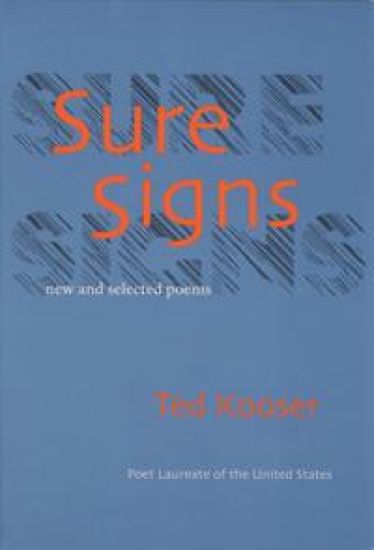
Named U.S. Poet Laureate for 2004-2006, Ted Kooser is one of America's masters of the short metaphorical poem. Dana Gioia has remarked that Kooser has written more perfect poems than any poet of his generation. Long admired and praised by other poets, Kooser is also accesible to the reader not familiar with contemporary poetry.