

Kirjailija
Ted Peters
Kirjat ja teokset yhdessä paikassa: 16 kirjaa, julkaisuja vuosilta 1994-2025, suosituimpien joukossa Before The Morning Light. Vertaile teosten hintoja ja tarkista saatavuus suomalaisista kirjakaupoista.
16 kirjaa
Kirjojen julkaisuhaarukka 1994-2025.
How can we think about God's action in a quantum world of indeterminacy? in a world that began with a Big Bang? in a world in which life evolved and is continually evolving? in a world governed by entropy and heading toward its eventual heat death? These are some of the most perplexing questions that have arisen from the rapid scientific and techno
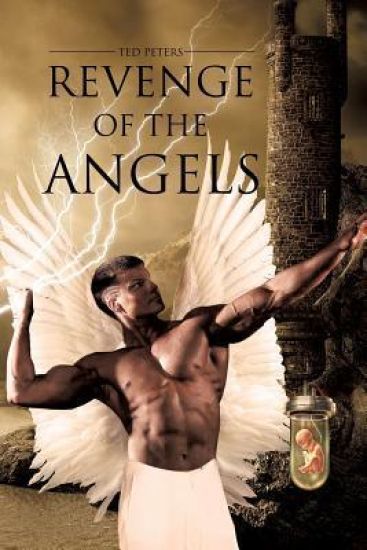
A pastor with a kind heart. A black op with a deadly aim. All wrapped up in one amazing woman...Blood sacrifice. Could there be anything more evil? What happens when the symbols of grace get turned upside down? Are we left without hope?Set in the Adirondack Mountains, the clash between good and evil escapes its local confines to threaten the nation and even engulf the globe. The selling of souls to perdition fuels the fires of hell so that we on Earth cannot avoid the heat.Discover Leona's Law: You know it's the voice of Satan when you hear the call to shed innocent blood.

A pastor with a kind heart. A black op with a deadly aim. All wrapped up in one amazing woman....When you've given your conscience to God and your country is in peril, how fiercely are you willing to fight? This is the question for Leona Foxx, who leads a double life. She is unwillingly called back into CIA espionage while serving as a parish pastor on the South Side of Chicago. Leona's skills as a defender of America against threats both foreign and domestic conflict with her conscience, a conscience shaped by her faith and her compassion for both friends and enemies.In this, her first adventure, Leona uncovers a terrorist plot hatched by American mercenaries who intend to blame Iran. She takes off her clerical collar and picks up her .45 Kimber Super Match II to rally a counter-terrorist alliance of street gang members and professional crime fighters.Discover how even a saint cannot avoid sinning boldly. Get your copy of For God and Country today

Leona Foxx is a black op with a white collar, who worships at two altars, her country and her God. She fights with ferocity for both.The black op with the white collar, Leona Foxx, takes on renegade Transhumanists making themselves kingmakers by selling espionage technology. Leona's strategy is to turn superintelligence against itself in order to preserve global peace. Can a mere human prevail against the posthuman? If you want to grasp the promises and risks of enhancing human intelligence in a world riddled with competition for supremacy, buy this book.
""UFOs: God's Chariots?" offers a fascinating critical survey of the aerial phenomenon since it essentially began in 1947 . Highly recommended for reading and reflection." --Robert Ellwood, Professor of World Religions, University of Southern California "Peters' astrotheology takes us on a wise adventure into a lively cosmos, where neither 'belief ' nor 'unbelief ' answers the questions about UFOs and ETI." --Catherine Keller, Professor of Theology, Drew University Are UFOs celestial saviors, coming to save Earth from self-destruction? Are UFOnauts advancing human evolution by birthing hybrid children? Is it time for a new "astrotheology" that enshrines the UFO phenomenon at the same level as the space sciences at NASA and SETI? "UFOs: God's Chariots?" uncovers and exposes the clandestine spiritual dimensions within the UFO phenomenon. UFOs vibrate with transcendence, omniscience, perfection, and redemption. "UFOs: God's Chariots?" delves deeply into government conspiracies, analyzes the newest models of close encounter interpretation, and reveals the results of The Peters ETI Religious Crisis Survey, in which self-identified believers were asked if making contact with an intelligent extraterrestrial civilization would undermine our historic religious traditions. They said no. Does this mean we're ready to share our pews with aliens?
Unknown to most outside observers, from the earliest days of embryonic stem cell research through today's latest developments, Christian theologians have been actively involved with leading laboratory research scientists to determine the ethical implications of stem cell research. And contrary to popular expectation, these Christians have been courageously advocating in favor of research. Three of these dynamic theologians tell their story in Sacred Cells? Why Christians Should Support Stem Cell Research. Sacred Cells? takes readers through the twists and turns of stem cell development, providing a brief history of the science and an overview of the competing ethical frameworks people use in approaching the heated debate. Each new scientific advance, from the cloning of Dolly the sheep to the use of engineered cells in humans, had to be carefully considered before proceeding. Rejecting the widely held belief that the ethics of stem cell research turn on the moral status of the embryo, the authors carefully weigh a diversity of ethical problems. Ultimately, they embrace stem cell research and the prospect of increased health and well being it offers.

Unknown to most outside observers, from the earliest days of embryonic stem cell research through today's latest developments, Christian theologians have been actively involved with leading laboratory research scientists to determine the ethical implications of stem cell research. And contrary to popular expectation, these Christians have been courageously advocating in favor of research. Three of these dynamic theologians tell their story in Sacred Cells? Why Christians Should Support Stem Cell Research. Sacred Cells? takes readers through the twists and turns of stem cell development, providing a brief history of the science and an overview of the competing ethical frameworks people use in approaching the heated debate. Each new scientific advance, from the cloning of Dolly the sheep to the use of engineered cells in humans, had to be carefully considered before proceeding. Rejecting the widely held belief that the ethics of stem cell research turn on the moral status of the embryo, the authors carefully weigh a diversity of ethical problems. Ultimately, they embrace stem cell research and the prospect of increased health and well being it offers.
With theological and scientific expertise, Peters and Hewlett provide a careful and balanced analysis of the wide spectrum of debate between religious faith and biological evolution. Sensitive to the nuances of current, often contentious, argument, the authors clearly distinguish the major players and offer their own constructive theological vision.
Science challenges faith to seek fuller understanding, and faith challenges science to be socially and ethically responsible. This book begins with faith in God the Creator of the world, and then expands our understanding of creation in light of Big Bang cosmology and new discoveries in physics. Examining the expanding frontier of genetic research, Ted Peters draws out implications for theological understandings of human nature and human freedom. Issues discussed include: methodology in science and theology; eschatology in cosmology and theology; freedom and responsibility in evolution and theology; and genetic determinism, genetic engineering, and cloning in relation to freedom, the comodification of human life, and equitable distribution of the fruits of genetic technology. The dialogue model of relationship between science and religion, proposed in this book, provides a common ground for the disparate voices among theologians, scientists, and world religions. This common ground has the potential to breathe new life into current debates about the world in which we live, move, and have our being.
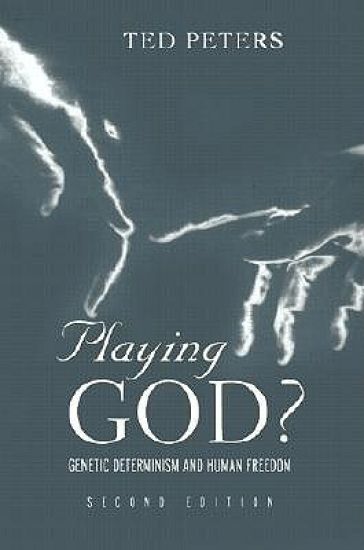
Since the original publication of Playing God? in 1996, three developments in genetic technology have moved to the center of the public conversation about the ethics of human bioengineering. Cloning, the completion of the human genome project, and, most recently, the controversy over stem cell research have all sparked lively debates among religious thinkers and the makers of public policy. In this updated edition, Ted Peters illuminates the key issues in these debates and continues to make deft connections between our questions about God and our efforts to manage technological innovations with wisdom.
How can we think about God's action in a quantum world of indeterminacy? in a world that began with a Big Bang? in a world in which life evolved and is continually evolving? in a world governed by entropy and heading toward its eventual heat death? These are some of the most perplexing questions that have arisen from the rapid scientific and technological advances of the twentieth century.Science and Theology: The New Consonance grapples with these seeming conundrums by asking both scientists and religious thinkers to reflect upon possible solutions. In this exciting, new edited volume, physicists think about the connection between physics and faith and biologists discuss evolution, ethics, and the future. Complementing these viewpoints, theologians address these same issues from a religious standpoint.Chapter authors include Nobel Prize?winning physicist and inventor of the laser, Charles Townes, along with Pope John Paul II. The resulting interplay between science and theology presses toward consonance, encouraging comparisons, crossovers, and complementarity.
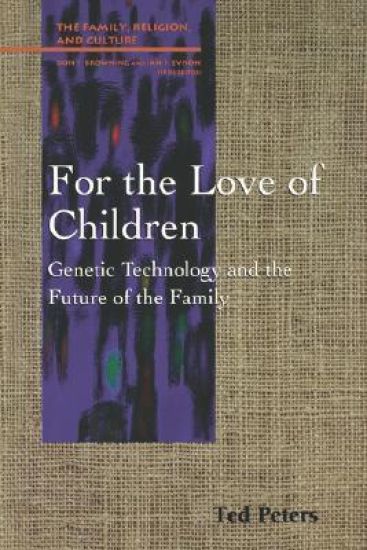
Choices in reproductive technology have multiplied at a staggering rate. Is our society prepared to decide on issues about procreation (artificial insemination and invitro fertilization) or genetic engineering ("designer children" and selective abortion)? How can we protect children--both born and unborn--who are conceived in these ways from being regarded as merchandise in the expanding marketplace of genetic services? Ted Peters sets out the challenges of these new technologies with clarity and precision. He looks anew at Christian theology and proposes an ethic "for the love of children." Peters contends that only by affirming all children and their claims upon parents will society deal constructively and ethically with the many reproductive choices available now and in the future.The Family, Culture, and Religion series offers informed and responsible analyses of the state of the American family from a religious perspective and provides practical assistance for the family's revitalization.
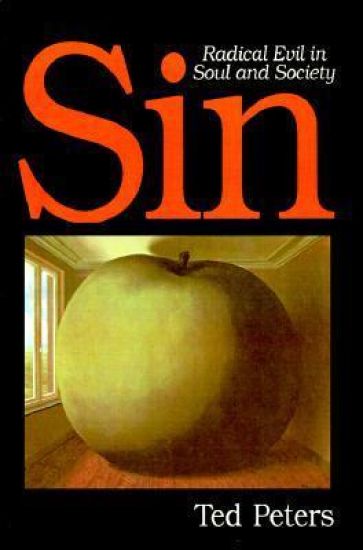
Using numerous illustrations from everyday life as well as the social sciences, Peter examines the kinds of evil - both personal and societal - that we all confront on a daily basis.