Kirjojen hintavertailu. Mukana 12 464 698 kirjaa ja 12 kauppaa.
Kirjailija
Tennessee Williams
Kirjat ja teokset yhdessä paikassa: 134 kirjaa, julkaisuja vuosilta 1948-2025, suosituimpien joukossa Mister Paradise. Vertaile teosten hintoja ja tarkista saatavuus suomalaisista kirjakaupoista.
Reclams "Fremdsprachen-Lektüreschlüssel" beziehen sich auf den fremdsprachigen Originaltext (wenn möglich in Reclams Roter Reihe), sind aber auf Deutsch verfasst und unterstützen ebenso die Lektüre der deutschen Übersetzung. Eine "Checkliste" enthält Aufgaben zur Verständniskontrolle in der Fremdsprache. Unter dem Darstellungstext stehen Übersetzungshilfen und Schlüsselbegriffe in der Fremdsprache, um die Bearbeitung dieser Aufgaben und ein fremdsprachiges Referieren über das Werk zu erleichtern. Die Lektüreschlüssel erschließen einzelne literarische Werke. Um eine Interpretation als Zentrum gruppieren sich 10 wichtige Verständniszugänge: - Erstinformation zum Werk - Inhaltsangabe - Personen (Konstellationen) - Werk-Aufbau - (Strukturskizze) - Wortkommentar - Interpretation - Autor und Zeit - Rezeption - "Checkliste" zur Verständniskontrolle - Lektüretipps mit Filmempfehlungen - Raum für Notizen.
When Memoirs was first published in 1975, it created quite a bit of turbulence in the media--though long self-identified as a gay man, Williams' candour about his love life, sexual encounters, and drug use was found shocking in and of itself, and such revelations by America's greatest living playwright were called "a raw display of private life" by The New York Times Book Review. As it turns out, more than thirty years later, Williams' look back at his life is not quite so scandalous as it once seemed; he recalls his childhood in Mississippi and St. Louis, his prolonged struggle as a "starving artist," the "overnight" success of The Glass Menagerie in 1945, the death of his long-time companion Frank Merlo in 1962, and his confinement to a psychiatric ward in 1969 and subsequent recovery from alcohol and drug addiction, all with the same directness, compassion, and insight that epitomize his plays.
Patriarken Big Daddy i familien Pollitt er rammet av uhelbredelig kreft og samler familien til 65-års dag på plantasjen. Den eldste sønnen Gooper higer etter farsarven, mens broren hans Brick er alkoholisert og i et ulykkelig ekteskap. Dette er en historie om en familie som er fengslet av fortiden, og som blir ødelagt at følelser som begjær, grådighet og misunnelse.
A definitive collection of poetic works by the eminent playwright features substantial piece variants, poems from his plays, and accompanying explanatory notes, in a volume that is complemented by a CD recording of the author's reading of his "Blue Mountain Ballads" and other works. Reprint.
The greatest playwright of the American South, Tennessee Williams used his talent throughout his life to create brief plays exploring many of the themes that dominated his best-known works. Here, thirteen never-before-published one-act dramas reveal some of his most poignant and hilarious characters. From the indefatigable, witty and tough drag queens of And Tell Sad Stories of the Death of Queens to the disheartened poet Mister Paradise, and the extravagant mistress in The Pink Bedroom, these are tales of isolated figures struggling against a cruel world, who refuse to lose sight of their dreams.
It is a very short list of 20th-century American plays that continueto have the same power and impact as when they first appeared 57 yearsafter its Broadway premiere, Tennessee Williams' A Streetcar Named Desireis one of those plays. The story famously recounts how the faded andpromiscuous Blanche DuBois is pushed over the edge by her sexy andbrutal brother-in-law, Stanley Kowalski. Streetcar launched thecareers of Marlon Brando, Jessica Tandy, Kim Hunter and Karl Malden, and solidified the position of Tennessee Williams as one of the mostimportant young playwrights of his generation, as well as that of EliaKazan as the greatest American stage director of the '40s and '50s.Whobetter than America's elder statesman of the theater, Williams'contemporary Arthur Miller, to write as a witness to the lightning thatstruck American culture in the form of A Streetcar Named Desire?Miller's rich perspective on Williams' singular style of poeticdialogue, sensitive characters, and dramatic violence makes this aunique and valuable new edition of A Streetcar Named Desire.This definitive new edition will also include Williams' essay "TheWorld I Live In," and a brief chronology of the author's life.
It is a very short list of 20th-century American plays that continueto have the same power and impact as when they first appeared 57 yearsafter its Broadway premiere, Tennessee Williams' A Streetcar Named Desireis one of those plays. The story famously recounts how the faded andpromiscuous Blanche DuBois is pushed over the edge by her sexy andbrutal brother-in-law, Stanley Kowalski. Streetcar launched thecareers of Marlon Brando, Jessica Tandy, Kim Hunter and Karl Malden, and solidified the position of Tennessee Williams as one of the mostimportant young playwrights of his generation, as well as that of EliaKazan as the greatest American stage director of the '40s and '50s.Whobetter than America's elder statesman of the theater, Williams'contemporary Arthur Miller, to write as a witness to the lightning thatstruck American culture in the form of A Streetcar Named Desire?Miller's rich perspective on Williams' singular style of poeticdialogue, sensitive characters, and dramatic violence makes this aunique and valuable new edition of A Streetcar Named Desire.This definitive new edition will also include Williams' essay "TheWorld I Live In," and a brief chronology of the author's life.
One of America's greatest living playwrights, as well as a friend and colleague of Williams, Albee has written a concise introduction to the play from a playwright's perspective, examining the candor, sensuality, power, and impact of "Cat on a Hot Tin Roof," then and now.
It is a very short list of 20th-century American plays that continueto have the same power and impact as when they first appeared 57 yearsafter its Broadway premiere, Tennessee Williams' A Streetcar Named Desireis one of those plays. The story famously recounts how the faded andpromiscuous Blanche DuBois is pushed over the edge by her sexy andbrutal brother-in-law, Stanley Kowalski. Streetcar launched thecareers of Marlon Brando, Jessica Tandy, Kim Hunter and Karl Malden, and solidified the position of Tennessee Williams as one of the mostimportant young playwrights of his generation, as well as that of EliaKazan as the greatest American stage director of the '40s and '50s.Whobetter than America's elder statesman of the theater, Williams'contemporary Arthur Miller, to write as a witness to the lightning thatstruck American culture in the form of A Streetcar Named Desire?Miller's rich perspective on Williams' singular style of poeticdialogue, sensitive characters, and dramatic violence makes this aunique and valuable new edition of A Streetcar Named Desire.This definitive new edition will also include Williams' essay "TheWorld I Live In," and a brief chronology of the author's life.
"York Notes Advanced" aim to help make the study of literature more fulfilling and lead to exam success. They should also be of interest to the general reader, as they cover the widest range of popular literature titles. This title covers "The Glass Menagerie" by Tennessee Williams.
The drama takes it form from the shifting scenes of memory, and Williams's surrogate self invites us to focus, in turn, on the various inhabitants or his dilapidated rooming house in the Vieux Carré: the comically desperate landlady, Mrs. Wire; Jane, a properly brought-up young woman from New York making at last grab at pleasure with Tye, the vulgar but appealing strip-joint barker; two decayed gentlewomen politely starving in the garret; and the dying painter Nightingale, who tries to teach the young writer something about love--both of the body and of the heart. This is a play about the education of the artist, and education in loneliness and despair, in giving and not giving, but most of all in seeing, hearing, feeling, and learning that "writers are shameless spies," who pay dearly for their knowledge and who cannot forget. Building on two decades of Williams scholarship since Vieux Carré was originally published, Robert Bray, editor of The Tennessee Williams Annual Review, has provided a new introduction for this edition, giving the most authoritative account yet of its background and genesis.
Archie Lee Meighan's cotton gin business is foundering in the face of Silva Vacarro's Syndicate Gin. On the day Archie's furniture is repossessed he takes action, burning down the Syndicate Gin. Silva then pays Archie and his wife Baby Doll a visit, seeing the latter as the key to justice.
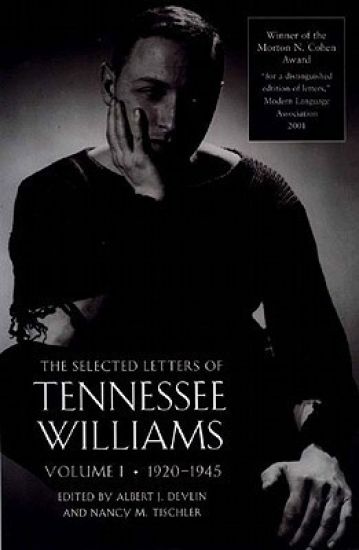
Winner of the Morton N. Cohen Award for a Distinguished Edition of Letters, Modern Language Association, 2001. When first published in 2000, Volume I of The Selected Letters of Tennessee Williams was hailed as "indispensable" (Choice), "a carefully researched, fully documented study," (Buffalo News) and "a model edition of a significant set of letters by one of America's leading writers" (MLA citation for the Morton N. Cohen Award). This volume will help a widening circle of the great American playwright's readers appreciate that he was also "a prodigy of the letter" (Allan Jalon, San Francisco Chronicle) and that "his letters are among the century's finest" (John Lahr, The New Yorker). Tennessee Williams wrote to family, friends, and fellow artists with equal measures of piety, wit, and astute self-knowledge. Presented with a running commentary to separate Williams's often hilarious, but sometimes devious, counter-reality from truth, the letters form a virtual autobiography of the great American dramatist. Volume I of The Selected Letters of Tennessee Williams: 1920-1945 includes 330 letters written to nearly seventy correspondents and chosen from a group of 900 letters collected by two leading Williams scholars: Albert J. Devlin, professor of English at the University of Missouri, and Nancy M. Tischler, Professor Emerita of English at Pennsylvania State University.
Fugitive Kind, one of Tennessee Williams's earliest plays, is one of his richest in dramatic material. Written in 1937 when the playwright was still Thomas Lanier Williams, Fugitive Kind introduces the character who will inhabit most of his later plays: the marginal man or woman who, through no personal fault, is a misfit in society but who demonstrates an admirable will to survive. Signature Tennessee Williams' characters, situations, and even the title (which was used as The Fugitive Kind for the 1960 film based on Orpheus Descending) have their genesis here. At age twenty-six, Williams was still learning his craft and this, his second full-length play, shows his debt to sources as diverse as thirties gangster films (The Petrified Forest, Winterset) and Romeo and Juliet. Fugitive Kind, with its star-crossed lovers and big city slum setting, takes place in a flophouse on the St. Louis waterfront in the shadow of Eads Bridge, where Williams spent Saturdays away from his shoe factory job and met his characters: jobless wayfarers on the dole, young writers and artists of the WPA, even gangsters and G-men. Fugitive Kind was also Williams's second play to be produced by The Mummers, a St. Louis theatre group devoted to drama of social protest. Called "vital and absorbing" by a contemporary review in The St. Louis Star-Times, this play reveals the young playwright's own struggle between his radical-socialist sympathies and his poetic inclinations, and signals his future reputation as our most compassionate lyric dramatist.
When Tennessee Williams read Spring Storm aloud to his playwriting class at the University of Iowa in 1938, he was met with silence and embarrassment. His professor, the renowned E. C. Mabie, remarked as he got up and dismissed the seminar, "Well, we all have to paint our nudes!" Tom's earlier comment in his journal that the play "is well-constructed, no social propaganda, and is suitable for the commercial stage" seems accurate enough in 1999, but woefully naive deep in the Depression when the play's sexual explicitness—particularly its matter-of-fact acceptance of a woman's right to her own sexuality—would have been seen as not only shocking but also politically radical. Spring Storm would later be disavowed by the author as "simply a study of Sex—a blind animal urge or force (like the regenerative force of April) gripping four lives and leading them into a tangle of cruel and ugly relations." But the solid and deft characterizations of the four young people whose lives intertwine—the sexually alive Heavenly Critchfield, her earthy lover Dick Miles, Heavenly's wealthy but tongue-tied admirer Arthur Shannon, and the repressed librarian Hertha Nielson who loves Arthur—are archetypes of characters we will meet again and again in the Williams canon. Epic in scope, a bit melodramatic in execution, tragic in outcome, Spring Storm created a wave of excitement among theatre insiders when it was given a staged reading at The Ensemble Studio Theatre's Octoberfest '96. This edition has been prepared, with an illuminating introduction, by Dan Isaac, who initiated the Octoberfest production.
Sixty years ago a young Tennessee Williams wrote a play looking toward the year 2001. Stairs to the Roof is a rare and different Williams' work: a love story, a comedy, an experiment in meta-theater, with a touch of early science fiction. Tennessee Williams called Stairs to the Roof "a prayer for the wild of heart who are kept in cages" and dedicated it to "all the little wage earners of the world." It reflects the would-be poet's "season in hell" during the Depression when he had to quit college to type orders eight hours a day at the International Shoe Factory in St. Louis. Stairs is Williams' revenge, expressed through his alter ego, Benjamin Murphy, the clerk who stages a one-man rebellion against the clock, the monotony of his eight-to-five job, and all the dehumanizing forces of an increasingly mechanized and commercial society. Ben's swift-moving series of fantastic adventures culminate in an escape from the ordinary that is an endorsement of the American dream. In 1941 with the world at war and civilization in danger of collapse, Williams dared to imagine a utopian future as Ben leads us up his stairs towards the Millennium. Stairs to the Roof was produced only twice, once at the Playbox in Pasadena, California, in 1945, and subsequently at the Pasadena Playhouse in 1947. Now, in an edition meticulously prepared by noted Williams scholar Allean Hale, Williams fans can share this play of youthful optimism.
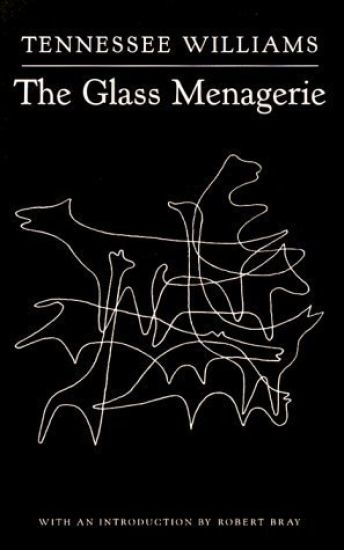
Menagerie was Williams's first popular success and launched the brilliant, if somewhat controversial, career of our pre-eminent lyric playwright. Since its premiere in Chicago in 1944, with the legendary Laurette Taylor in the role of Amanda, the play has been the bravura piece for great actresses from Jessica Tandy to Joanne Woodward, and is studied and performed in classrooms and theatres around the world. The Glass Menagerie (in the reading text the author preferred) is now available only in its New Directions Paperbook edition. A new introduction by prominent Williams scholar Robert Bray, editor of The Tennessee Williams Annual Review, reappraises the play more than half a century after it won the New York Drama Critics Circle Award: "More than fifty years after telling his story of a family whose lives form a triangle of quiet desperation, Williams's mellifluous voice still resonates deeply and universally." This edition of The Glass Menagerie also includes Williams's essay on the impact of sudden fame on a struggling writer, "The Catastrophe of Success," as well as a short section of Williams's own "Production Notes." The cover features the classic line drawing by Alvin Lustig, originally done for the 1949 New Directions edition.