Kirjojen hintavertailu. Mukana 12 595 353 kirjaa ja 12 kauppaa.

Kirjailija

Terence Cuneo

Kirjat ja teokset yhdessä paikassa: 11 kirjaa, julkaisuja vuosilta 2007-2024, suosituimpien joukossa Ritualized Faith. Vertaile teosten hintoja ja tarkista saatavuus suomalaisista kirjakaupoista.

11 kirjaa

Kirjojen julkaisuhaarukka 2007-2024.

The Moral Universe

The Moral Universe

John Bengson; Terence Cuneo; Russ Shafer-Landau

Oxford University Press
2024
sidottu
The Moral Universe marks an importance advance in metaethical thinking, offering the most sustained and sophisticated development of nonnaturalistic moral realism to date. Employing a novel philosophical method, it addresses central questions in metaethics concerning the nature of moral reality, its fundamental laws, its relation to the natural world, and its normative authority.The authors advance new ways of answering these questions, contending that moral standards regarding what to do and how to be are not only objectively authoritative, but essentially so.Rather than arising from personal schemes or collective ideals, morality flows from the nature of things. One of the principal aims of the book is to show how this view accommodates and explains a wide range of data concerning the metaphysical and normative dimensions of morality. Along the way, the book offers novel characterizations of moral realism and nonnaturalism, defends and explains the existence of substantive moral conceptual truths, supplies a new treatment of moral supervenience, substantiates the categoricity and importance of moral reasons, and presents a strategy for identifying the source of morality. Exemplifying a commitment to the integrity of moral philosophy,The Moral Universe also tackles fundamental issues in value theory and normative ethics in the service of developing a systematic, explanatorily potent version of nonnaturalist realism.
The Moral Universe

The Moral Universe

John Bengson; Terence Cuneo; Russ Shafer-Landau

Oxford University Press
2024
nidottu
The Moral Universe marks an importance advance in metaethical thinking, offering the most sustained and sophisticated development of nonnaturalistic moral realism to date. Employing a novel philosophical method, it addresses central questions in metaethics concerning the nature of moral reality, its fundamental laws, its relation to the natural world, and its normative authority.The authors advance new ways of answering these questions, contending that moral standards regarding what to do and how to be are not only objectively authoritative, but essentially so.Rather than arising from personal schemes or collective ideals, morality flows from the nature of things. One of the principal aims of the book is to show how this view accommodates and explains a wide range of data concerning the metaphysical and normative dimensions of morality. Along the way, the book offers novel characterizations of moral realism and nonnaturalism, defends and explains the existence of substantive moral conceptual truths, supplies a new treatment of moral supervenience, substantiates the categoricity and importance of moral reasons, and presents a strategy for identifying the source of morality. Exemplifying a commitment to the integrity of moral philosophy,The Moral Universe also tackles fundamental issues in value theory and normative ethics in the service of developing a systematic, explanatorily potent version of nonnaturalist realism.
Philosophical Methodology

Philosophical Methodology

John Bengson; Terence Cuneo; Russ Shafer-Landau

Oxford University Press
2022
sidottu
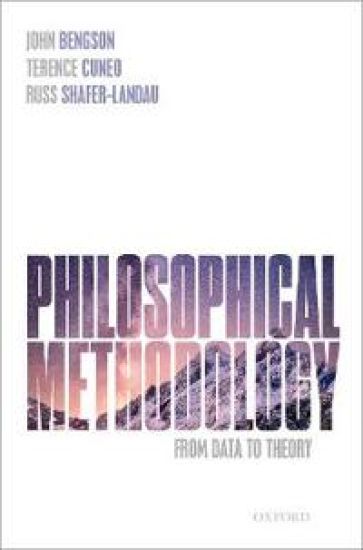
Philosophical Methodology is a book addressed to the entire philosophical community. It develops a novel account of the structure and goals of inquiry, offers the first systematic discussion of philosophical data, and assesses extant philosophical methods. Introducing a new method for doing philosophy, it positions theorists to better understand their topics while also revealing how philosophy can continue to make progress in answering its foremost questions.
Philosophical Methodology

Philosophical Methodology

John Bengson; Terence Cuneo; Russ Shafer-Landau

Oxford University Press
2022
nidottu
Philosophical Methodology is a book addressed to the entire philosophical community. It develops a novel account of the structure and goals of inquiry, offers the first systematic discussion of philosophical data, and assesses extant philosophical methods. Introducing a new method for doing philosophy, it positions theorists to better understand their topics while also revealing how philosophy can continue to make progress in answering its foremost questions.
Thomas Reid on the Ethical Life

Thomas Reid on the Ethical Life

Terence Cuneo

Cambridge University Press
2020
pokkari
This Element presents the rudiments of Thomas Reid's agency-centered ethical theory. According to this theory, an ethical theory must address three primary questions. What is it to be an agent? What is ethical reality like, such that agents could know it? And how can agents respond to ethical reality, commit themselves to being regulated by it, and act well in doing so? Reid's answers to these questions are wide-ranging, borrowing from the rational intuitionist, sentimentalist, Aristotelian, and Protestant natural law traditions. This Element explores how Reid blends together these influences, how he might respond to concerns raised by rival traditions, and specifies what distinguishes his approach from those of other modern philosophers.
Speech and Morality

Speech and Morality

Terence Cuneo

Oxford University Press
2018
nidottu
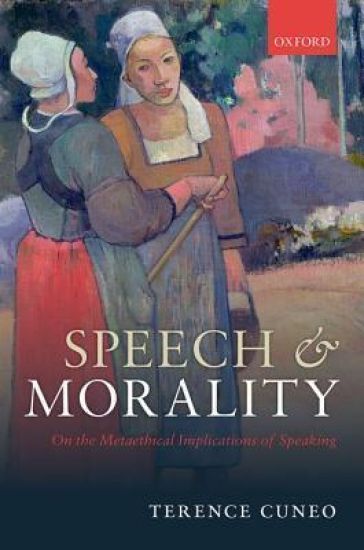
Terence Cuneo develops a novel line of argument for moral realism. The argument he defends hinges on the normative theory of speech, according to which speech acts are generated by an agent's altering her normative position with regard to her audience, gaining rights, responsibilities, and obligations of certain kinds. Some of these rights, responsibilities, and obligations, Cuneo suggests, are moral. And these moral features are best understood along realist lines, in part because they explain how it is that we can speak. If this is right, a necessary condition of being able to speak is that there are moral rights, responsibilities, and obligations of a broadly realist sort.
Ritualized Faith

Ritualized Faith

Terence Cuneo

Oxford University Press
2018
nidottu
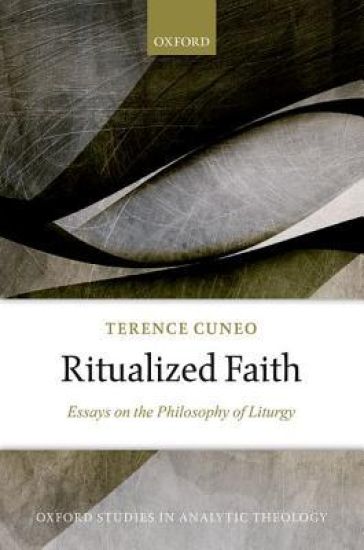
Central to the lives of the religiously committed are not simply religious convictions but also religious practices. The religiously committed, for example, regularly assemble to engage in religious rites, including corporate liturgical worship. Although the participation in liturgy is central to the religious lives of many, few philosophers have given it attention. In this collection of essays, Terence Cuneo turns his attention to liturgy, contending that the topic proves itself to be philosophically rich and rewarding. Taking the liturgical practices of Eastern Christianity as its focal point, Ritualized Faith examines issues such as what the ethical importance of ritualized religious activities might be, what it is to immerse oneself in such activities, and what the significance of liturgical singing and iconography are. In doing so, Cuneo makes sense of these liturgical practices and indicates why they deserve a place in the religiously committed life.
Ritualized Faith

Ritualized Faith

Terence Cuneo

Oxford University Press
2016
sidottu
Central to the lives of the religiously committed are not simply religious convictions but also religious practices. The religiously committed, for example, regularly assemble to engage in religious rites, including corporate liturgical worship. Although the participation in liturgy is central to the religious lives of many, few philosophers have given it attention. In this collection of essays, Terence Cuneo turns his attention to liturgy, contending that the topic proves itself to be philosophically rich and rewarding. Taking the liturgical practices of Eastern Christianity as its focal point, Ritualized Faith examines issues such as what the ethical importance of ritualized religious activities might be, what it is to immerse oneself in such activities, and what the significance of liturgical singing and iconography are. In doing so, Cuneo makes sense of these liturgical practices and indicates why they deserve a place in the religiously committed life.
Speech and Morality

Speech and Morality

Terence Cuneo

Oxford University Press
2014
sidottu
Terence Cuneo develops a novel line of argument for moral realism. The argument he defends hinges on the normative theory of speech, according to which speech acts are generated by an agent's altering her normative position with regard to her audience, gaining rights, responsibilities, and obligations of certain kinds. Some of these rights, responsibilities, and obligations, Cuneo suggests, are moral. And these moral features are best understood along realist lines, in part because they explain how it is that we can speak. If this is right, a necessary condition of being able to speak is that there are moral rights, responsibilities, and obligations of a broadly realist sort.
The Normative Web

The Normative Web

Terence Cuneo

Oxford University Press
2010
nidottu
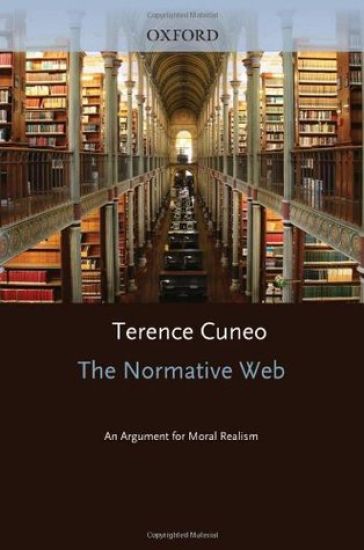
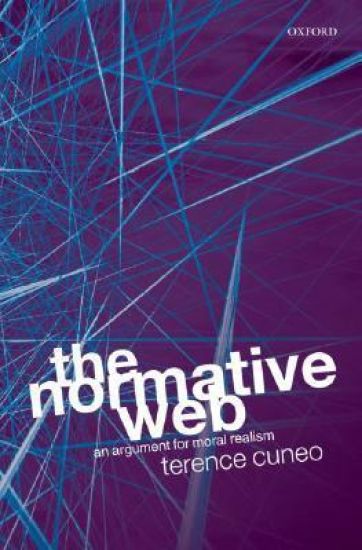
Antirealist views about morality claim that moral facts or truths do not exist. Does this imply that other types of normative facts, such as epistemic facts, do not exist? The Normative Web develops a positive answer to this question. Terence Cuneo argues that moral and epistemic facts are sufficiently similar so that, if moral facts do not exist, then epistemic facts do not exist. But epistemic facts do exist: to deny their existence would commit us to an extreme version of epistemological scepticism. Therefore, Cuneo concludes, moral facts do exist. And if moral facts exist, then moral realism is true. It is sometimes said that moral realists rarely offer arguments for their position, settling instead for mere defenses of a view they find intuitively plausible. By contrast, The Normative Web provides not merely a defense of robust realism in ethics, but a positive argument for this position. In so doing, it engages with a range of antirealist positions in epistemology such as error theories, expressivist views, and reductionist views of epistemic reasons. These positions, Cuneo claims, come at a prohibitively high theoretical cost. Given this cost, it follows that realism about both epistemic and moral facts is a position that we should find highly attractive.
The Normative Web

The Normative Web

Terence Cuneo

Clarendon Press
2007
sidottu
Antirealist views about morality claim that moral facts or truths do not exist. Do these views imply that other types of normative facts, such as epistemic ones, do not exist? The Normative Web develops a positive answer to this question. Terence Cuneo argues that the similarities between moral and epistemic facts provide excellent reason to believe that, if moral facts do not exist, then epistemic facts do not exist. But epistemic facts, it is argued, do exist: to deny their existence would commit us to an extreme version of epistemological skepticism. Therefore, Cuneo concludes, moral facts exist. And if moral facts exist, then moral realism is true. In so arguing, Cuneo provides not simply a defense of moral realism, but a positive argument for it. Moreover, this argument engages with a wide range of antirealist positions in epistemology such as error theories, expressivist views, and reductionist views of epistemic reasons. If the central argument of The Normative Web is correct, antirealist positions of these varieties come at a very high cost. Given their cost, Cuneo contends, we should find realism about both epistemic and moral facts highly attractive.